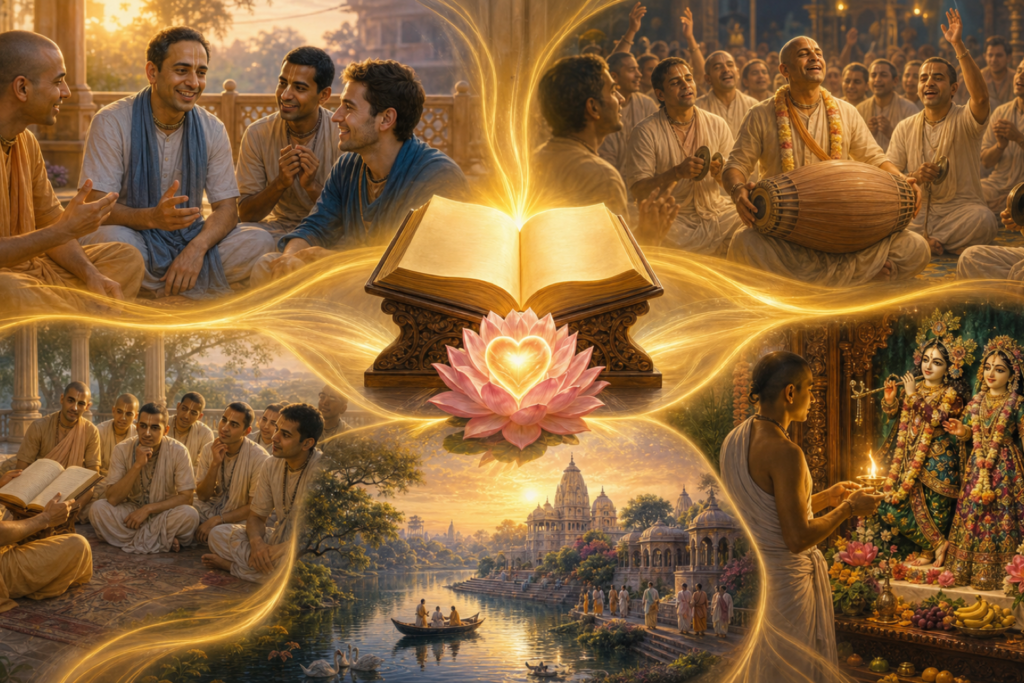
The Vishnu Purana, counted among the Eighteen Mahapuranas, stands as a revered Hindu scripture that weaves narrative, theology, and ethical instruction into a cohesive whole. As a foundational text of the Vaishnava tradition, it preserves stories and teachings that continue to shape cultural memory, devotional practice, and moral imagination across generations.
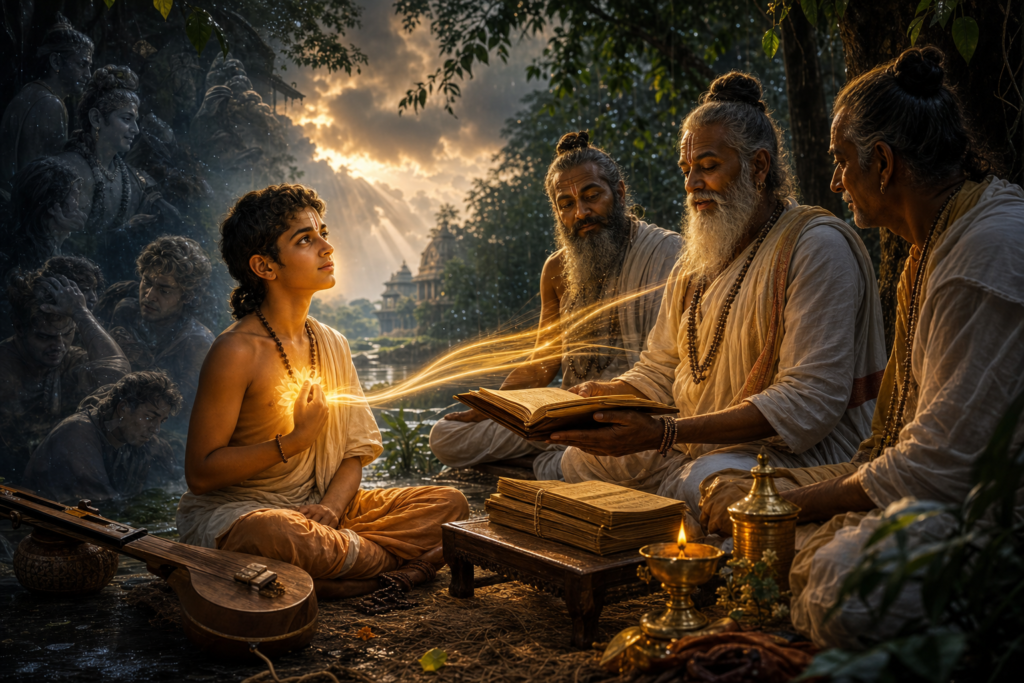
At its heart, the text illuminates the nature and compassion of Lord Vishnu through richly layered narratives of his avatāras and through the lives of exemplary devotees such as Nārada, Prahlāda, Tumburu, and Dhruva. These stories model steadfast devotion (bhakti), courage in the face of adversity, the transformative power of perseverance, and the harmonizing force of sacred music and service. The narrative arc thus offers both spiritual insight and practical guidance for daily life.
Within Vaishnava theology, the Vishnu Purana presents Vishnu as the Supreme Being whose protective grace sustains the cosmos. At the same time, its ethical and spiritual teachings align with the broader Hindu ethos that honors many valid paths to the divine. Read in this spirit, the Purana supports unity in spiritual diversity and resonates with shared values recognized across dharmic traditions, including Buddhism, Jainism, and Sikhism.
Readers frequently find these tales deeply relatable. Prahlāda’s unwavering faith encourages resilience under pressure; Dhruva’s focused devotion exemplifies disciplined practice; and Nārada’s and Tumburu’s narratives highlight how knowledge, music, and seva can elevate the mind and purify intent. Families often revisit these stories as moral touchstones, drawing emotional strength and ethical clarity for contemporary challenges.
The Purana’s virtuescompassion (karuṇā), truthfulness (satya), self-restraint, and non-harmecho principles celebrated widely in the dharmic world, including the Jain ideal of ahimsa, the Buddhist emphasis on compassion and mindfulness, and the Sikh tradition of seva and truthful living. Such convergence underscores a shared spiritual heritage, inviting readers to see these narratives as bridges that foster harmony rather than boundaries that divide.
For new explorers of Hindu scriptures and Puranas, a practical approach is to begin with the narrative portionsparticularly the lives of Prahlāda and Dhruvabefore engaging the more philosophical sections on cosmology, dharma, and the cycles of time. This layered reading reveals how mythic storytelling, historical memory, and spiritual instruction interlace to form a durable ethical framework relevant to personal growth and community well-being.
Ultimately, the stories of the Vishnu Purana endure because they speak to universal human concerns: how to act righteously, how to remain devoted amidst change, and how to cultivate inner stability while serving the common good. Approached with openness, these timeless tales invite a deeper appreciation of India’s spiritual heritage and encourage unity across diverse paths of faith and practice.
Inspired by this post on Hindu Pad.