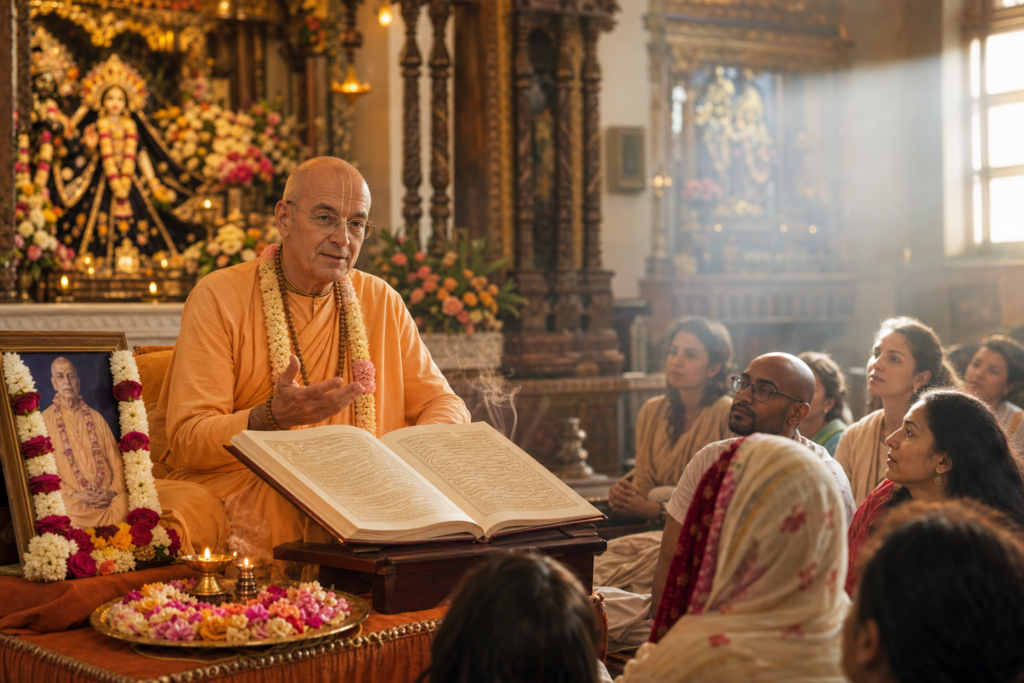
What is the power of divine names? Across the Vedas, Upanishads, Ramayana, and Mahabharata, the remembrance of the sacredthrough nama-smarana, mantra, and japaemerges as a disciplined path to inner clarity and ethical renewal. Acknowledging that no human being is infallible, these traditions present divine names as a steadying practice that redirects the mind toward dharma, cultivates humility, and transforms remorse into responsibility.
Scriptural teachings consistently emphasize the sanctity of sound. The Vedas and Upanishads explore the potency of shabda-brahman, where sacred sound is more than utterance; it is a conduit to knowledge, stillness, and truth. Within the epic ethos of the Ramayana and the Mahabharata, remembrance of the name (nama-japa) is portrayed as a stabilizing force that aligns intention, speech, and action with righteous living. While narratives vary, the underlying principle is consistent: divine names orient consciousness toward the highest good.
From a practical standpoint, divine names address a profound human reality: error is inevitable, yet growth is possible. Regular chanting and mindful repetition help loosen the grip of distraction, anger, and regret. As attention settles, one’s ethical compass strengthens, enabling constructive choices in thought and behavior. In this way, devotion and self-discipline become mutually reinforcingbhakti supporting viveka (discernment) and sustained moral action.
This wisdom is shared across the dharmic family. In Hindu practice, recitations such as Hare Krishna or Om Namah Shivaya nurture devotion and focus; in Buddhism, Namo Buddhaya and Om Mani Padme Hum cultivate compassion and awareness; in Jainism, the Namokar Mantra, beginning with Namo Arihantanam, purifies intention; in Sikh tradition, the remembrance of Waheguru centers the heart in the Divine. Though distinct in language and form, these practices converge on unity in spiritual diversityeach honoring sacred sound as a pathway to inner peace and ethical clarity.
A simple, sustainable routine can begin with silent japa in the morning, supported by measured breathing and a steady rhythm of remembrance. Short periods of chanting during transitions in the daybefore work, at dusk, or before resthelp anchor attention. Whether practiced as silent japa, soft recitation, or collective kirtan, the key is sincerity, steadiness, and mindful awareness of meaning. Integrating mantra with meditation or gentle pranayama further deepens concentration and calm.
Over time, the power of divine names expresses itself not as escapism but as ethical alignment. The mind becomes clearer, emotions soften, and habitual reactivity yields to measured response. The practice supports repentance where needed, forgiveness where possible, and courage where duty calls. It also expands empathyturning personal peace into social harmonyso that spiritual growth contributes to the well-being of family, community, and society.
In sum, the enduring teachings of the Vedas, Upanishads, Ramayana, and Mahabharata affirm that divine names refine attention, elevate intention, and fortify character. By embracing shared practices across Hinduism, Buddhism, Jainism, and Sikhism, seekers can find a unifying path that honors diversity while nurturing a common aspiration: to live with clarity, compassion, and unwavering commitment to dharma.
Inspired by this post on Hindu Pad.