How does karma relate to the painful death of young children or the loss of a baby in the womb? In dharmic thought, karma is profound and subtle—often compared to the immeasurable depth of an ocean. Its workings are not linear, and its full scope cannot be mapped with certainty. What remains consistent across teachings is that karma operates as a law of cause and effect across lifetimes, while human responses of compassion, care, and wisdom shape the present and future.
Across Hinduism, Buddhism, Jainism, and Sikhism, a unifying insight emerges: innocent suffering is not to be interpreted as blame or punishment. Instead, traditions emphasize humility before the mystery of karma, coupled with active compassion for those who grieve. A child’s brief life may reflect prārabdha karma—the portion of past actions that becomes operative in a given birth—without implying moral fault in the child or the parents. The emphasis remains on tenderness, solidarity, and dharmic conduct in the face of loss.
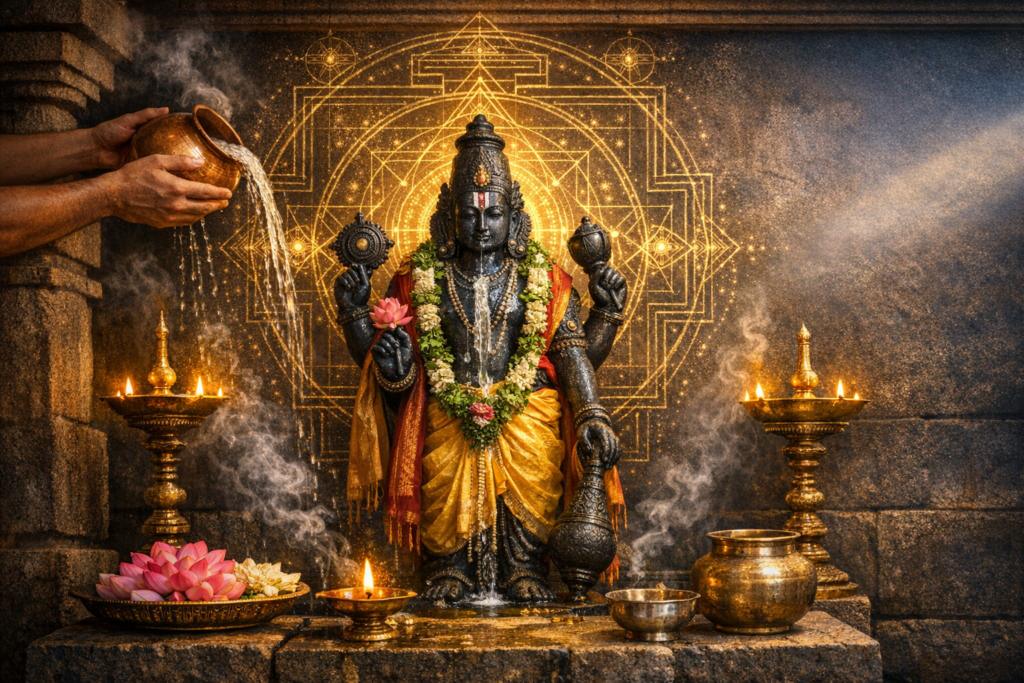
In many Hindu perspectives, the jīva (individual soul) journeys through saṁsāra, completing impressions (saṁskāras) and karmic residues over multiple lives. When an infant passes in the womb or shortly after birth, some schools describe it as the rapid completion of a minimal karmic remainder rather than a punitive outcome. The atman remains untouched in its essence, and the appropriate human response is śānti (peace), prārthanā (prayer), dāna (charity), and sevā (service) offered with love.
Buddhist teachings highlight causes and conditions (pratītya-samutpāda): suffering arises from interdependent factors rather than a single reason. This view encourages gentle awareness, mettā (loving-kindness), and karuṇā (compassion) toward all involved. The practice of mindful presence and compassionate action becomes the path to healing, while acknowledging that ultimate explanations for particular events often remain beyond ordinary knowing.
Jain philosophy frames karma as subtle matter that binds to the jīva through actions and intentions. The loss of a child is never a cue for blame; rather, it invites ahiṁsā (non-violence in thought and deed), pratikraman (introspective repentance), and deepened ethical living. Gentle restraint, care for life, and community support are seen as sacred duties that purify future courses of action.
Sikh wisdom centers on Hukam, the divine order, and remembrance through Naam. While reasons for suffering may remain hidden, the path forward emphasizes ardas (prayer), collective support, and sarbat da bhala (the welfare of all). The community’s embrace, practical help, and remembrance of the divine provide solace and moral strength without speculating on fault.
It is vital to avoid deterministic or reductionist readings of karma. Not all pain directly maps onto a single prior act; life unfolds through personal, collective, and environmental conditions. Dharmic ethics therefore focus on what can be shaped now: compassionate choices, supportive relationships, and restorative actions. In this sense, grief becomes a crucible for cultivating dayā (compassion), kṣamā (forbearance), and sat-karmas (wholesome deeds).
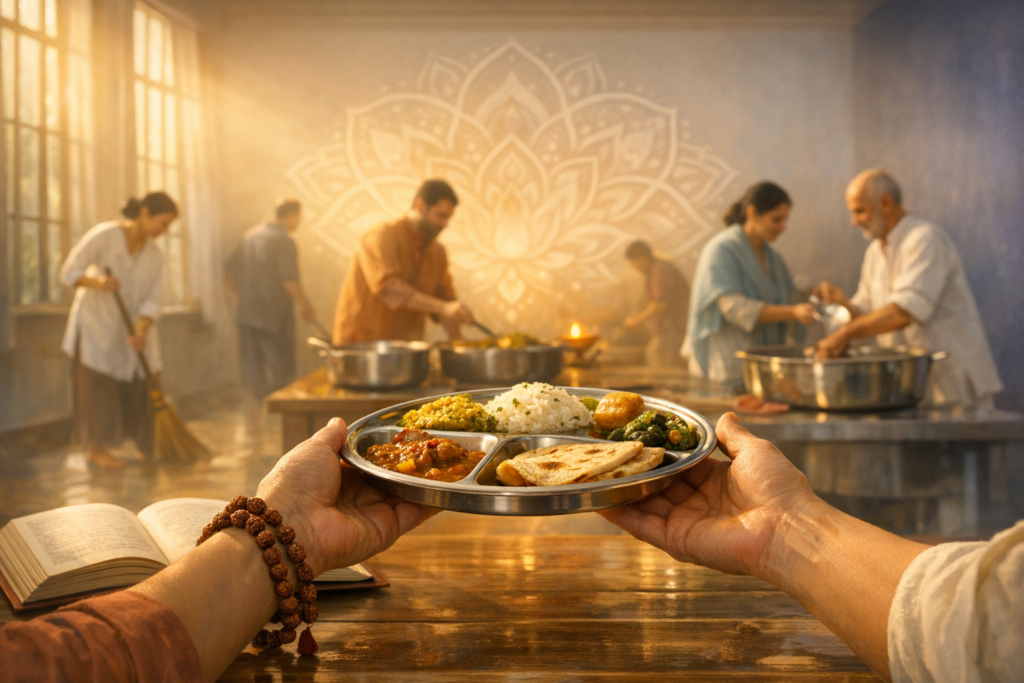
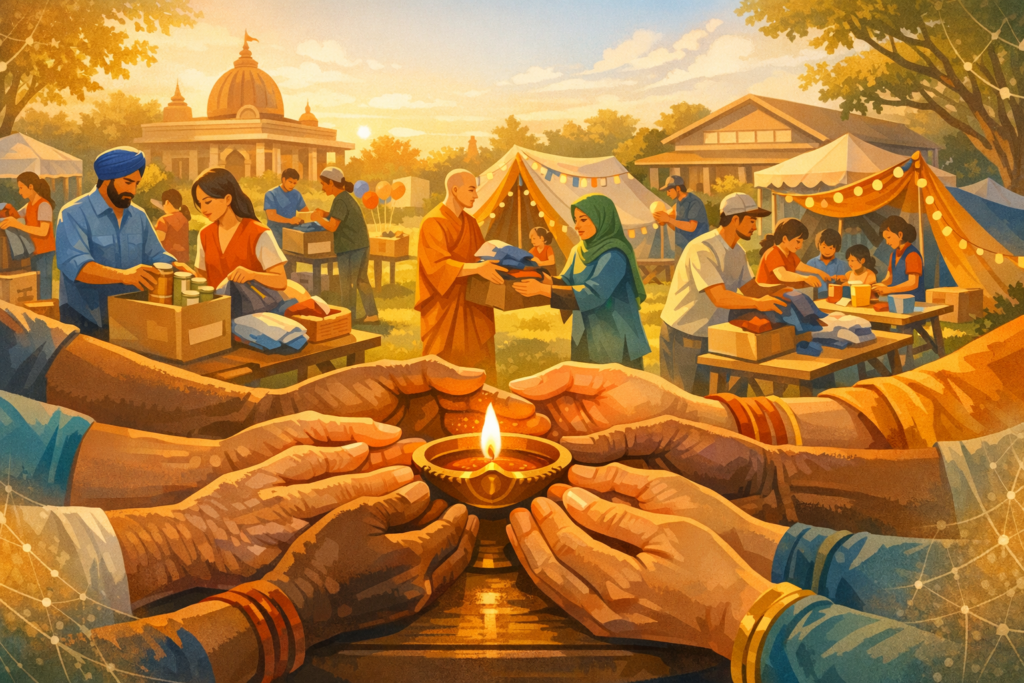
Families and communities often find meaning through time-honored practices: prārthanā and japa, śrāddha or remembrance rituals where appropriate, dāna made in the child’s name, mettā meditation, pratikraman, ardas, and shared sevā. These practices do not attempt to “solve” the mystery of karma; rather, they honor the departed, steady the heart, and transform sorrow into compassionate presence. Acts such as feeding the needy, supporting maternal health initiatives, planting trees, or offering service at temples and gurdwaras can become living memorials that nurture healing.
Ethically, assigning blame—especially to parents or mothers—is contrary to dharmic compassion. Wise counsel, emotional support, community care, and, where helpful, professional grief support align with the spirit of dharma. The shared aim across dharmic traditions is to meet suffering with gentleness, uphold dignity, and cultivate inner and outer harmony.
Ultimately, karma remains too vast to be fully grasped, and humility is the prudent stance. What can be known is the power of love, prayer, and responsible action in the present. Honoring the memory of a child with compassion-centered living aligns with the heart of dharma and strengthens unity across Hinduism, Buddhism, Jainism, and Sikhism. In this unity, grief finds companionship, and hope becomes a quiet, trustworthy guide.
Inspired by this post on Hindu Pad.