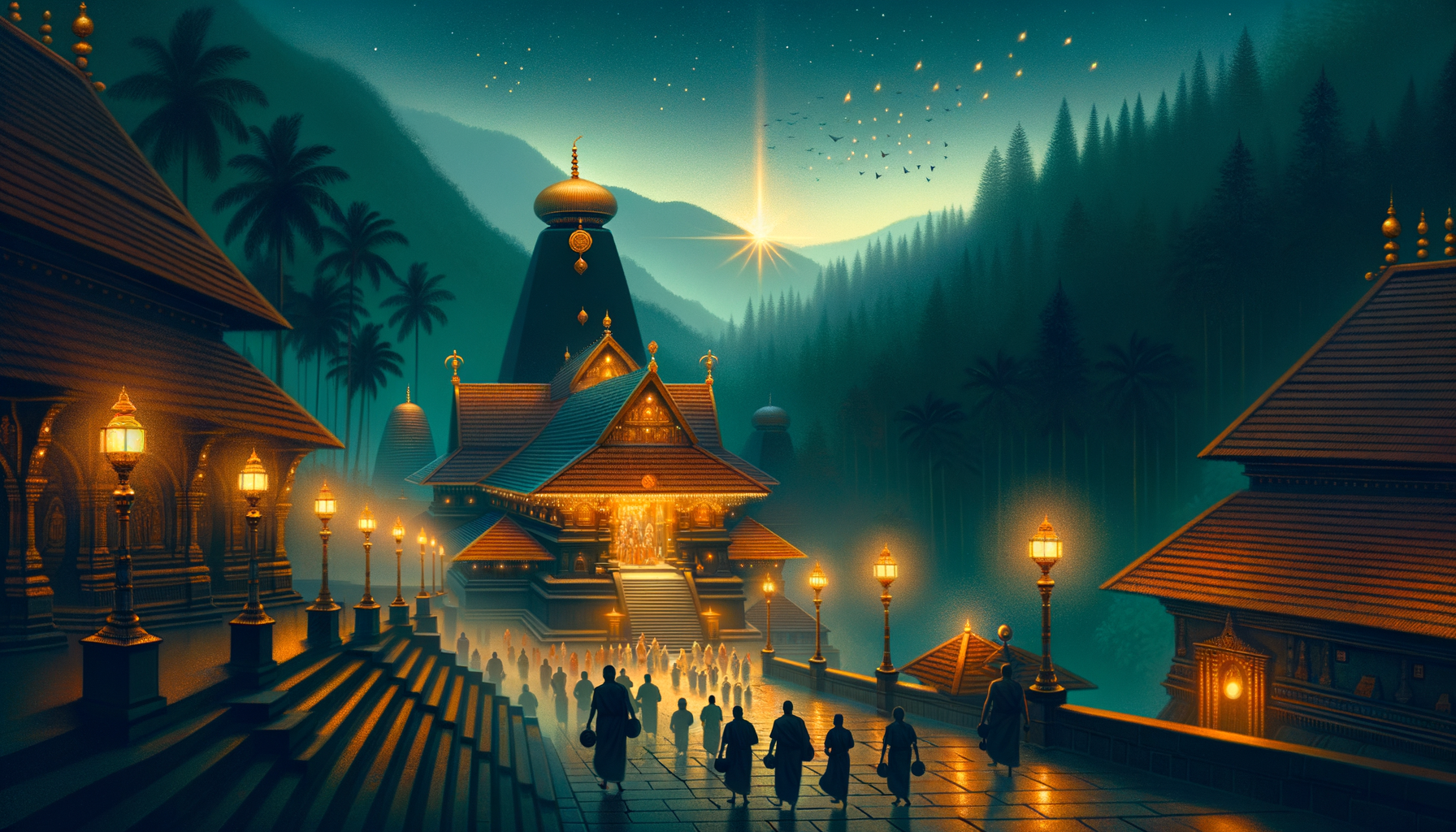
Makaravilakku 2026 marks the sacred culmination of the Sabarimala pilgrimage season, celebrated at the Sabarimala Ayyappa Temple in Kerala. In 2026, the Makara Vilakku observance falls on 14 January, aligning with Makar Sankramana (Makar Sankranti). The observance centers on Makara Jyoti Darshanam, drawing millions of Ayyappa devotees who gather for a week-long sequence of rites, processions, and collective worship.
Traditionally situated within the Mandala–Makaravilakku season, this festival highlights the transition of the Sun into Makara (Capricorn) and the adornment of the deity with the Thiruvabharanam. The climactic evening deeparadhana coincides with the revered sighting of the Makara Jyoti, a sacred light witnessed on the distant horizon and venerated as an auspicious sign for spiritual renewal.
The devotional landscape of the festival is shaped by disciplined observances. Many pilgrims undertake a 41-day vratham, carry the irumudi kettu, and journey through the forested approach of Sabarimala. These practices cultivate self-restraint, collective responsibility, and reverencequalities that define the ethos of the Sabarimala pilgrimage tradition.
Core rituals during the festival include abhishekam, ney abhishekam (ghee offering), bhajans, and the soulful rendering of Harivarasanam. Bathing at the Pampa River, participating in pradakshina, and witnessing the evening deeparadhana deepen the sense of inner purification and shared devotion. The rhythms of Kerala culture and temple customs frame these observances with precision and dignity.
The symbolism of light during Makara Vilakku extends beyond a single shrine or sect; it embodies a pan-dharmic ideal of inner awakening. The emphasis on discipline, compassion, non-violence, humility, and service resonates with the shared values of Hinduism, Buddhism, Jainism, and Sikhism. In this sense, Makaravilakku becomes a moment of unityhonoring diverse spiritual paths while affirming a common aspiration toward wisdom and ethical living.
From a cultural perspective, the festival showcases community solidarity and temple stewardship, with volunteers and institutions facilitating pilgrim welfare, crowd management, and environmental care. Responsible participationminimizing waste, respecting forest ecology, and following designated routessupports both safety and sanctity at Sabarimala.
For 2026, the key date is 14 January, with the week leading up to it featuring heightened rituals, the Thiruvabharanam procession, and continuous darshan. Pilgrims are encouraged to follow official advisories for timings, entry protocols, and weather conditions, given the terrain and seasonal influx. Thoughtful planning allows devotees to experience the Makara Jyoti Darshanam with calm and focus.
Makaravilakku thus offers an academically significant case of living tradition: a festival where calendrical astronomy (Makar Sankramana), ritual continuity, and collective devotion converge. Observed with care, it provides a meaningful framework for personal transformation and communal harmonyanchored in Sabarimala’s sacred geography and illuminated by the enduring ideal of inner light.
Inspired by this post on Hindu Pad.