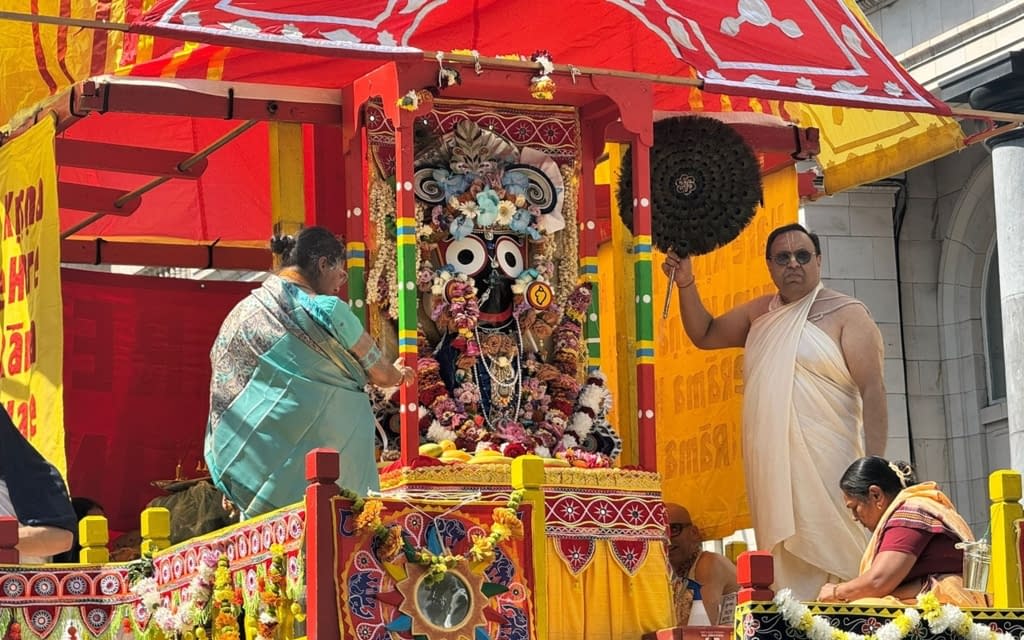
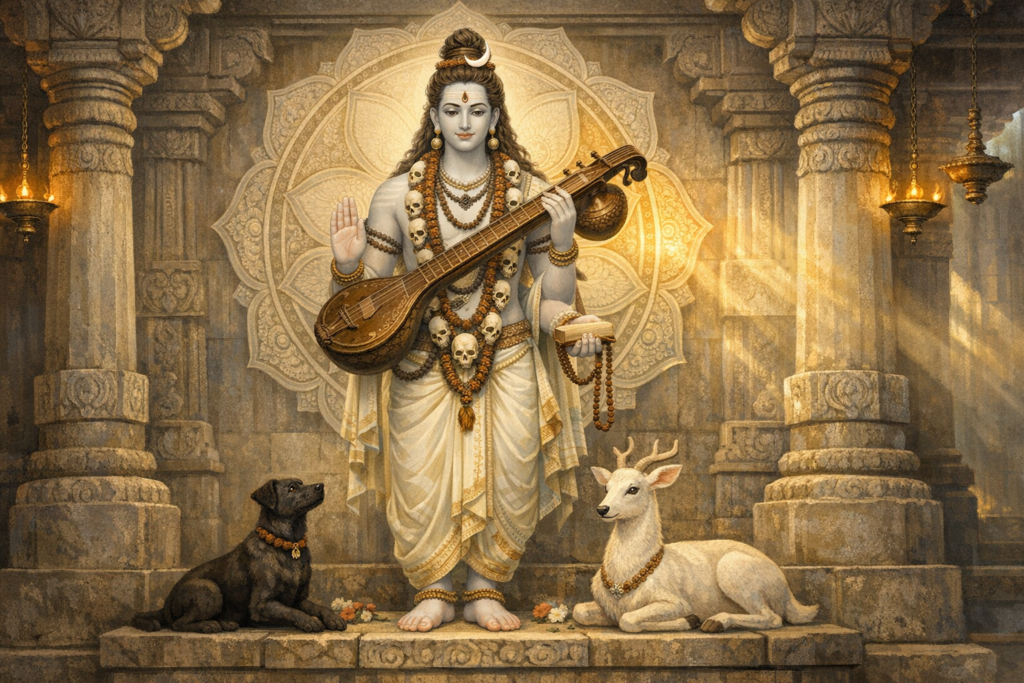
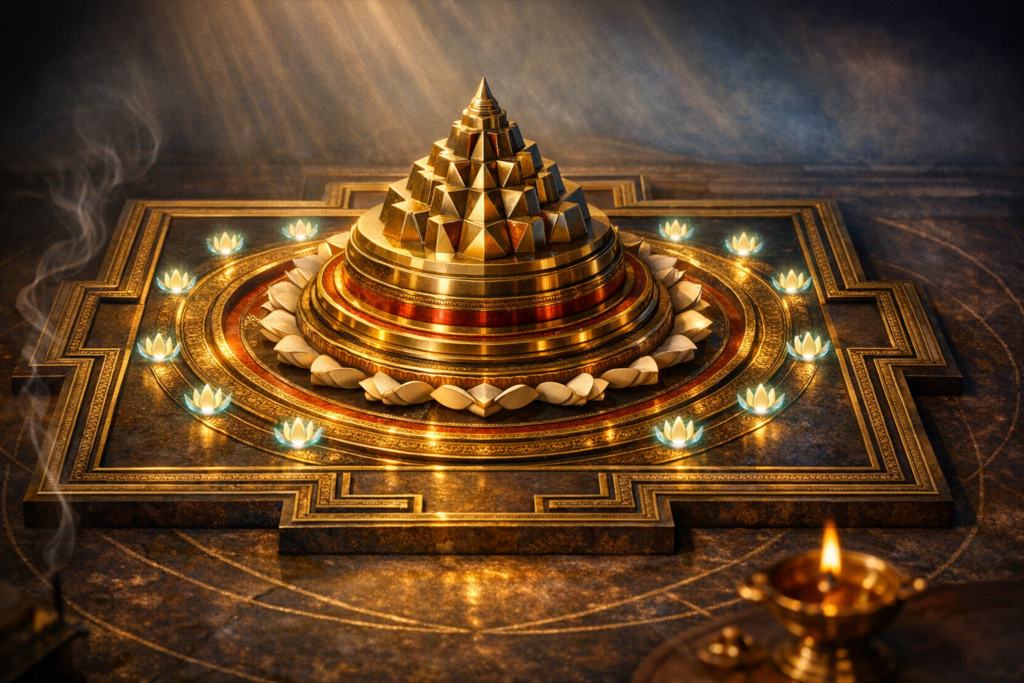
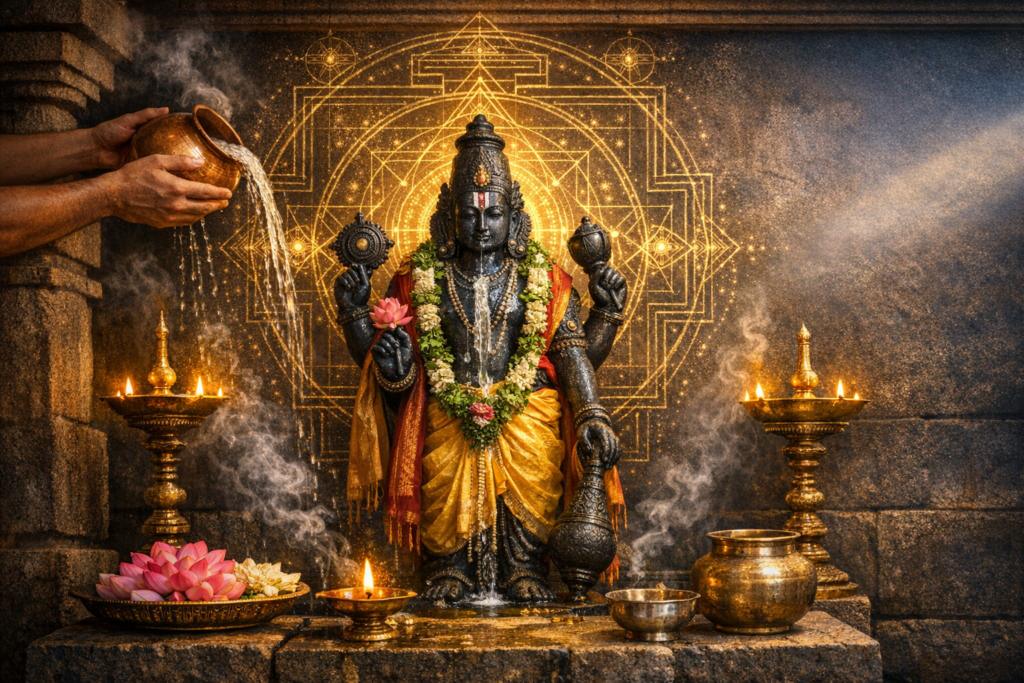
Panchopachara puja occupies a central place in Hindu worship, uniting household practice and temple ritual through a simple yet profound sequence of five sacred offerings. Observed across diverse sampradayas, this rite invites a contemplative encounter with the divine and frames devotion as an experience accessible to all, from daily home altar observances to grand temple ceremonies.
Panchopachara (pañcopacāra) derives from Sanskrit—pancha meaning five and upachara meaning reverential offering—signifying a complete, elemental act of devotion. Rather than emphasizing complexity, the rite foregrounds clarity and intention, allowing practitioners to honor the Ishta Devata with dignity and depth, whether through elaborate arrangements or with the most modest resources.
Classical sources in the Agamas and Puranas attest to the widespread use of these five offerings, and their continuity across the history of Sanatana Dharma underscores a shared liturgical grammar. In practice, the Panchopachara puja provides a stable framework that accommodates regional aesthetics, sectarian nuances, and personal bhava, while preserving a recognizable, time-tested structure.
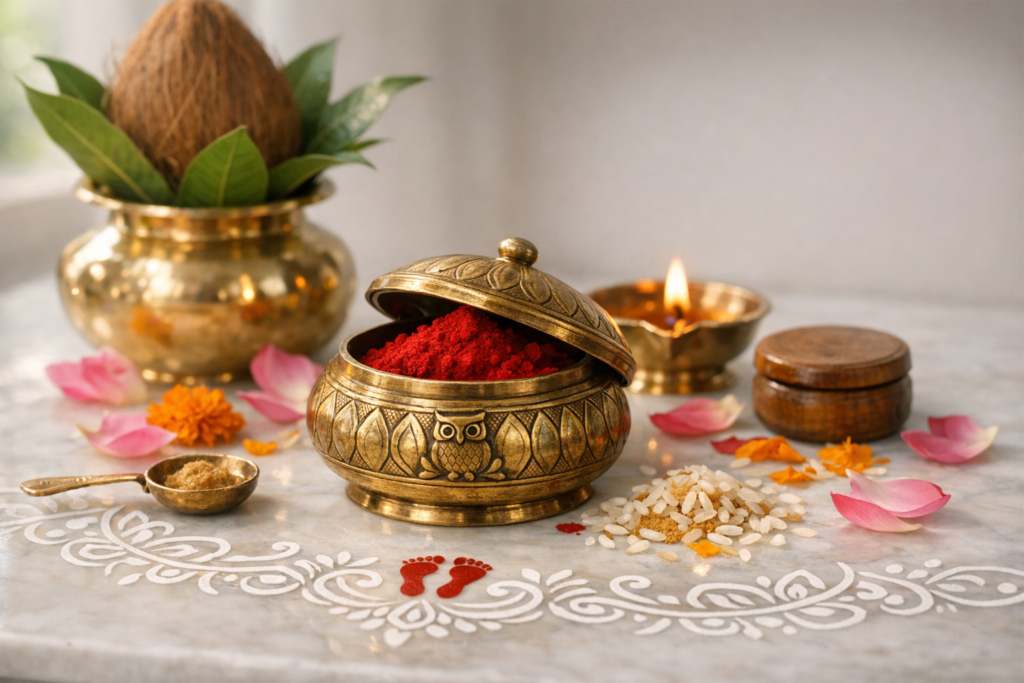
The five sacred offerings—gandha (fragrant paste), pushpa (flowers), dhupa (incense), dipa (lamp), and naivedya (food)—speak to the five senses and mirror the elements engaged in Hindu worship. Together they constitute a complete devotional arc: invocation, adornment, purification, illumination, and nourishment, aligning outer ritual with inner contemplation.
Gandha, commonly sandalwood paste or another fragrant unguent, signifies cooling grace and auspiciousness. Applied to the murti or symbol of the divine, it embodies purification and welcome, grounding the mind in the present through touch and scent. In many homes and temples, this simple act marks the transition from worldly activity to sacred attention.
Pushpa, the offering of flowers, expresses beauty, impermanence, and heartfelt honoring. Practitioners often select fresh, unsprayed blooms, recognizing that fragrance and color are gifts returned to their source. The act invites reflection on inner qualities—purity, humility, and the willingness to let go—thereby transforming a sensory gesture into ethical intent.
Dhupa, or incense, conveys the ascent of prayer and the subtle cleansing of the ritual space. As the smoke rises and disperses, it reminds participants that devotion refines thought and speech. In temple rituals and home puja alike, the gentle diffusion of incense harmonizes the atmosphere, supporting concentration and calm.
Dipa, the lighted lamp, embodies knowledge (jnana) and the removal of inner obscuration. The steady flame serves as a visual meditation, inviting practitioners to attune to clarity and compassion. In many traditions, waving the lamp before the deity (arati) symbolizes the offering of one’s own awareness, returning light for Light.
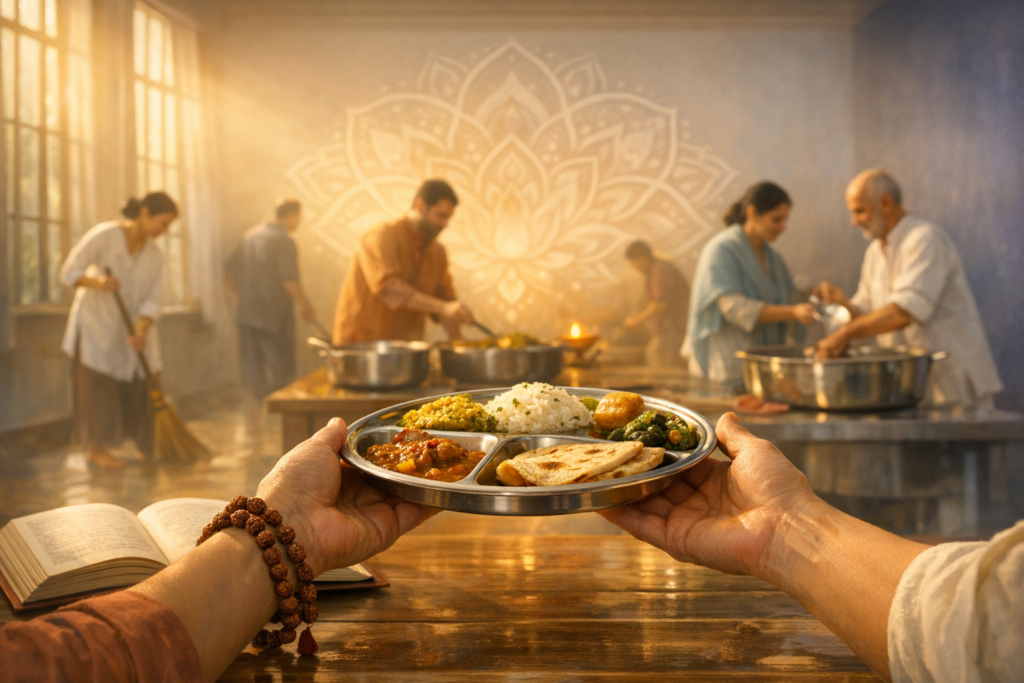
Naivedya, the offering of food, completes the cycle with gratitude and reciprocity. Fruits, cooked grains, or simple water become prasad through dedication, and sharing this sanctified food reinforces community and care. The gesture affirms that nourishment—material and spiritual—flows through the divine to all beings.
In household practice, Panchopachara puja is often performed after a brief sankalpa (statement of intention), dhyana (visualization), and avahana (invocation). Even with minimal means—a pinch of fragrant powder, a single flower, a stick of incense, a cotton wick in oil, and a small portion of food—the rite remains complete. Many families note that the ritual’s consistency cultivates steadiness and a gentle joy in daily life.
The ethos of Panchopachara resonates across dharmic traditions. Lighting lamps in Buddhist and Jain shrines, the offering of karah prasad and the spirit of langar in Sikh institutions, and shared practices of mindfulness and service all reflect the same underlying values of gratitude, purity, and compassion. Without conflating distinct paths, these parallels highlight a common commitment to inner transformation and communal well-being.
From a psychological perspective, the five offerings coordinate the senses toward a unifying purpose, gently quieting distraction and cultivating one-pointedness. Practitioners frequently describe a shift from external action to inward stillness as the puja progresses—an experiential confirmation that ritual symbolism and contemplative attention reinforce each other.
For those seeking a practical sequence: begin with a calm preparation of the space, invoke the presence of the chosen deity, and proceed with gandha, pushpa, dhupa, dipa, and naivedya. Conclude with arati, a prayer for the welfare of all beings, and the respectful distribution of prasad. Such a rhythm integrates ritual symbolism, ethical intention, and devotional practice into a coherent whole.
Ultimately, Panchopachara puja offers a complete framework for Hindu worship—clear enough for newcomers, profound enough for lifelong sadhana. Its enduring appeal lies in its balance of form and essence: by honoring the divine with five essential offerings, practitioners discover a path that nurtures reverence, fosters unity among dharmic traditions, and illuminates everyday life with meaning.
Inspired by this post on Hindu Blog.