Panchayatana Puja stands as a refined and inclusive mode of Hindu worship that embodies the principle of unity in diversity central to Sanatana Dharma. Rooted in the Smarta tradition and often associated with the systematizing influence of Adi Shankaracharya, it centers on the simultaneous veneration of five deities—Shiva, Vishnu, Devi, Surya, and Ganapati—while allowing the practitioner’s chosen Ishta Devata to be placed at the center of the altar. The arrangement expresses a philosophical insight: the many forms point to one underlying reality (Brahman), a vision that resonates across dharmic traditions.
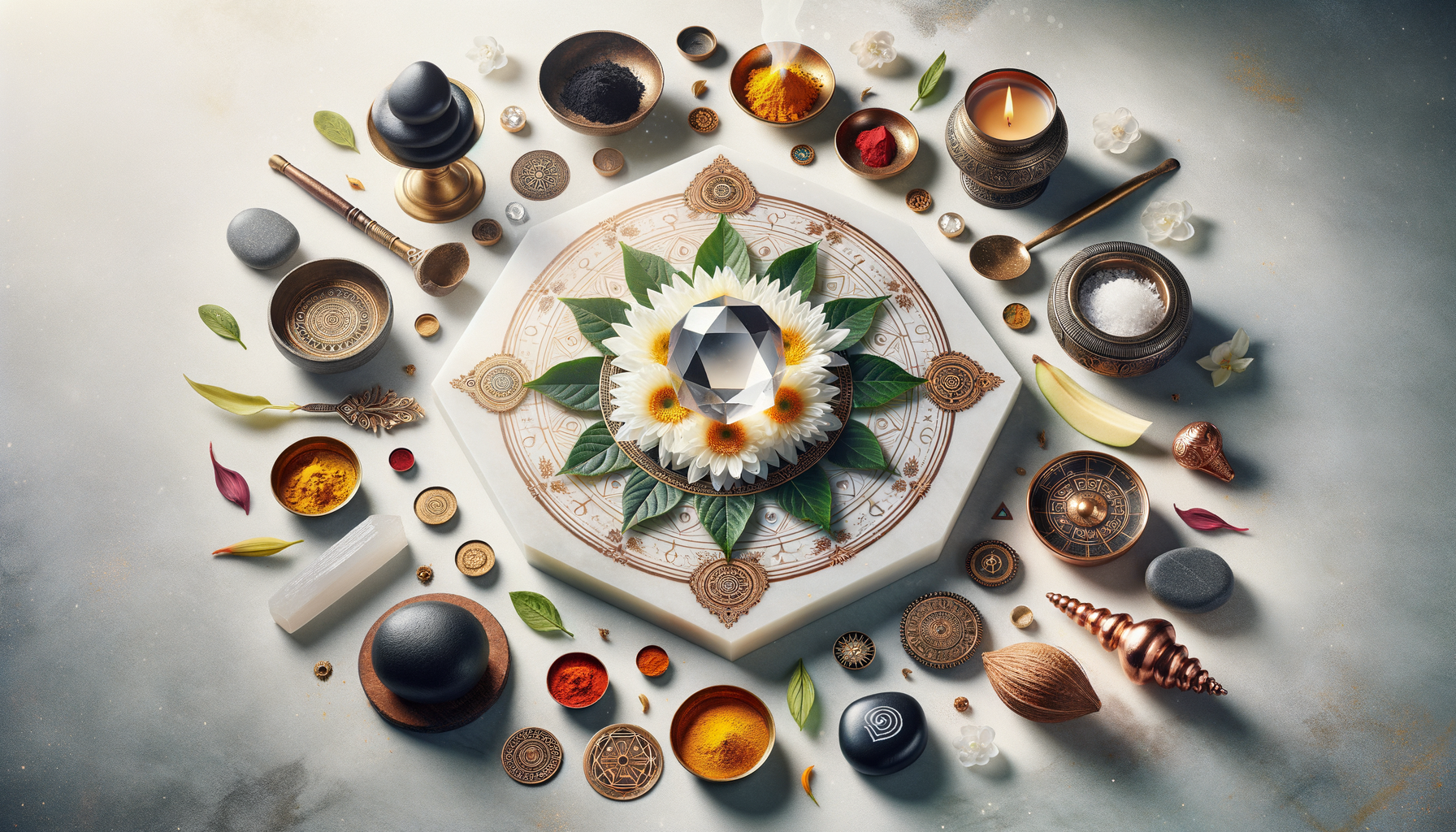
At its heart, Panchayatana Puja employs natural elements to communicate profound theological ideals. The altar is typically arranged in a quincunx (one at the center and four around), creating a mandala that symbolizes cosmic harmony. Whether in a temple or a home shrine, this spatial design invites contemplation on balance, interdependence, and the shared divinity present in all forms.
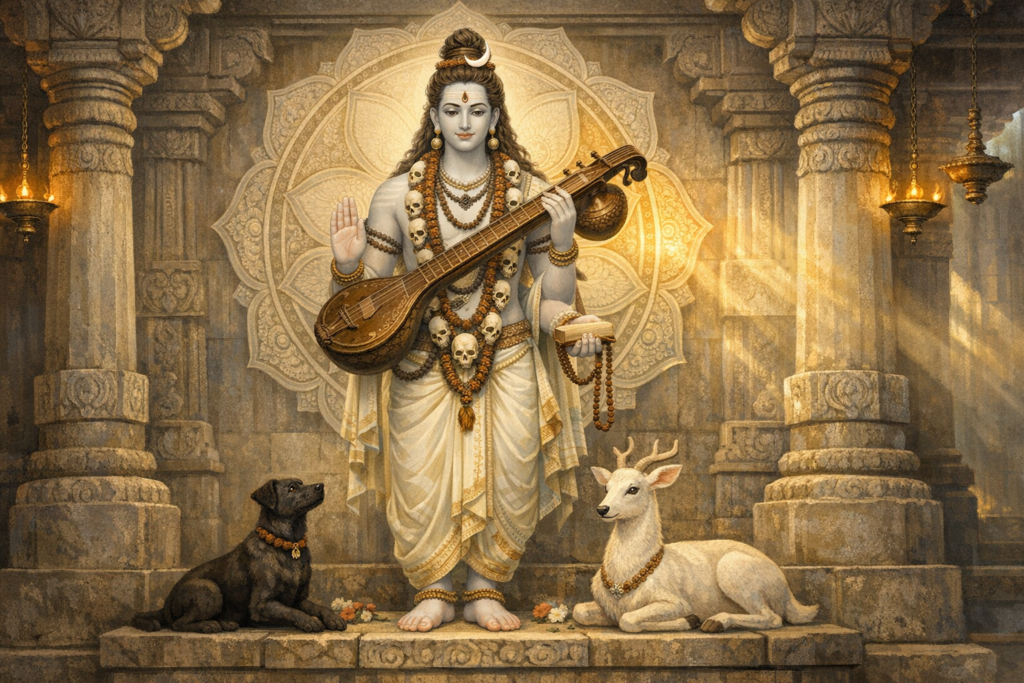
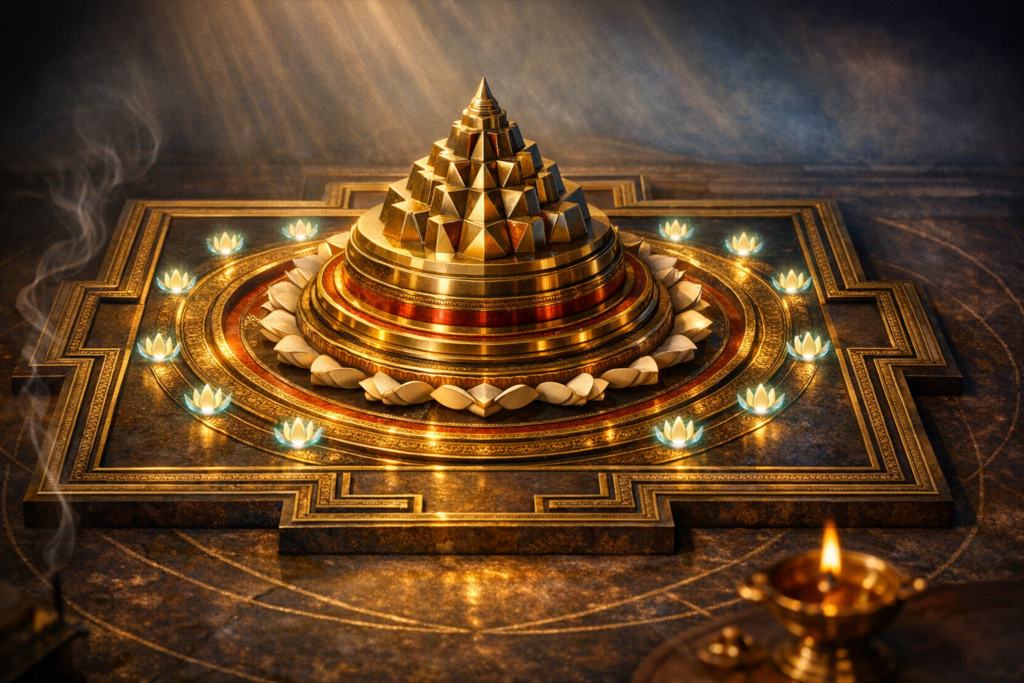
Iconic and aniconic representations both find place in this worship. Murtis (images), yantras (geometric representations), and sacred stones are used according to lineage and regional custom. Common aniconic forms include the shaligrama (widely revered for Vishnu) and the bana-linga (associated with Shiva). In many lineages, a sphatika (crystal) is employed for Surya, while regionally revered shilas or icons represent Devi and Ganapati. Variation is not an aberration but an affirmation of Sanatana Dharma’s adaptive genius.
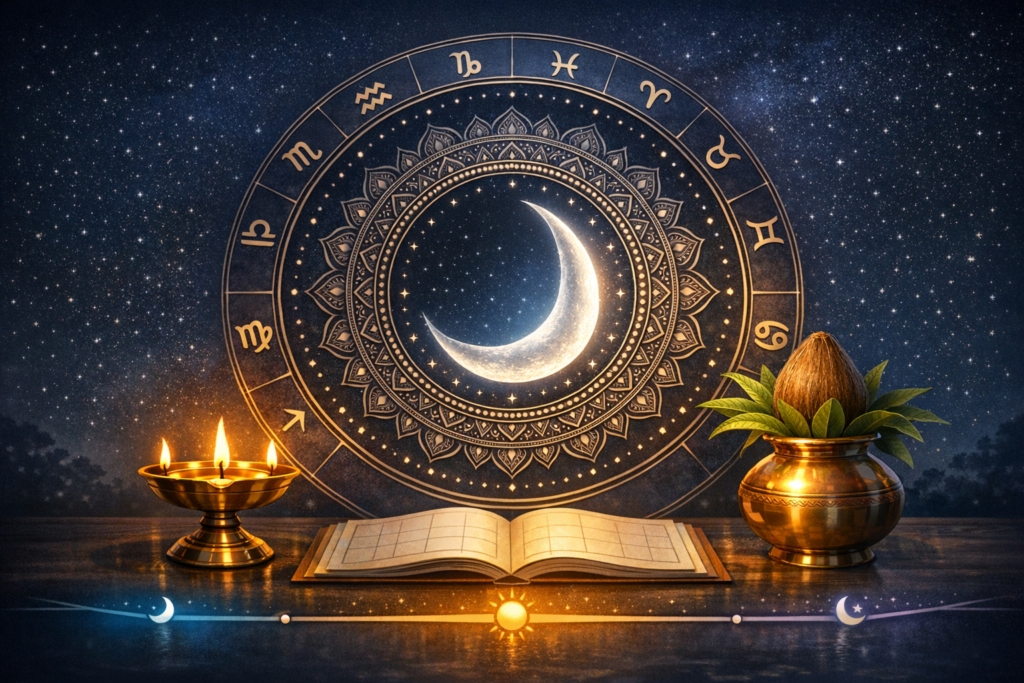
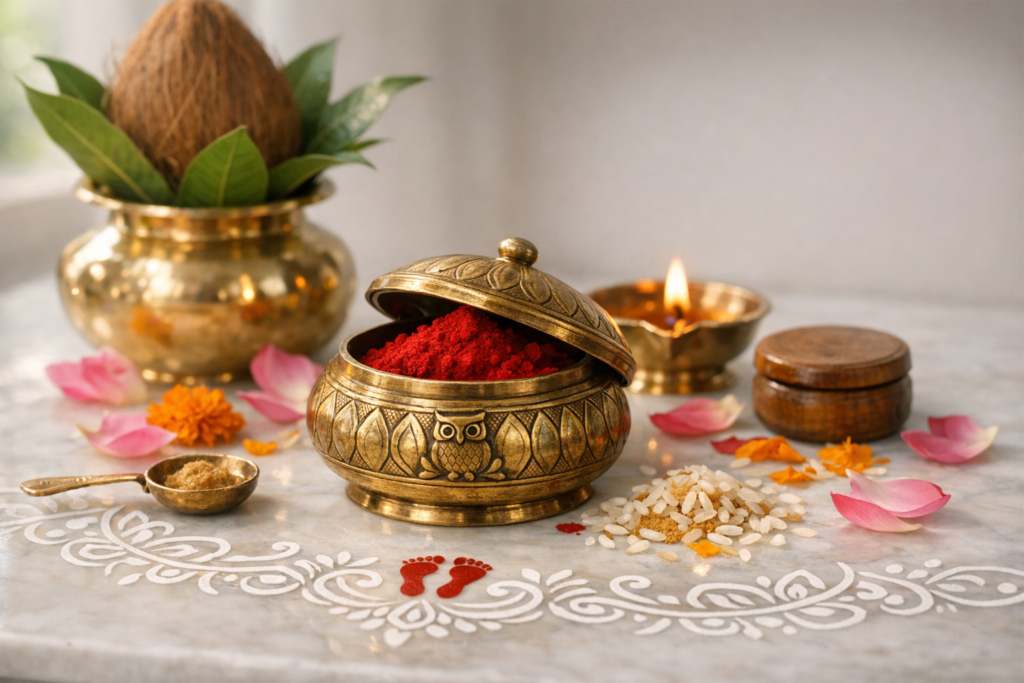
Natural elements function as living symbols throughout the puja. Water in the kalasha (often adorned with mango leaves and a coconut) signifies abundance, purity, and the continuity of life. The lamp (deepa) represents the inner light of awareness and the dispelling of avidya (ignorance). Incense (dhupa) evokes the subtle dimension of fragrance and air, guiding attention toward the unseen; the bell (ghanta) marks the transition from the everyday to the sacred, its sound associated with akasha (space).
Flowers and leaves embody gratitude and alignment with the natural world. Bilva leaves are traditionally offered to Shiva, while Tulsi leaves are offered to Vishnu, each signifying devotional intimacy and ecological reverence. Turmeric and kumkum reflect auspiciousness and the sanctity of embodied life; sandalwood paste (gandha) cools and centers the mind. These materials engage the senses and remind practitioners that worship is a full-bodied conversation with the cosmos.
The five elements (pancha bhutas) are subtly woven into the ritual sequence. Earth is present in flowers, grains, and the very stones or icons; Water flows through purification and abhisheka; Fire appears as the lamp and, when performed, in homa; Air is evoked through incense and breath; Space is invoked by mantra, silence, and the bell’s resonance. Through these, the puja becomes a contemplative practice that integrates body, breath, and awareness.
Sound is a core symbolic medium. Mantras consecrate the space and align attention with sacred meaning. The conch (shankha), used in many households, heralds auspicious beginnings and steadies communal focus. When recited with sincerity, even brief stotras and nama-japa can transform the altar into a site of inner clarity and quiet joy.
Naivedya (food offerings)—fruits, cooked items, or simple morsels—express the return of life’s gifts to their source. The act is less about opulence and more about intention: ordinary food becomes extraordinary through mindful offering. After worship, prasada nourishes the community, reaffirming the ethic of sharing that runs through Hindu rituals.
Home practice is often simple yet deeply meaningful. A small Panchayatana set with the Ishta Devata at the center, surrounded by the other four, a lamp, water vessel, incense, and flowers can sustain a daily rhythm of remembrance. Many households describe a palpable serenity when the lamp is lit and the bell is rung—an emotional cadence that steadies the mind and binds families in shared purpose.
There is also a pedagogical dimension. Elders often use Panchayatana Puja to explain philosophical ideas to children: how multiple forms can coexist without conflict; how nature’s elements participate in sacred life; how devotion can be expressed through both silence and song. Such instruction transmits values of humility, reverence, and inclusivity.
In terms of historical and philosophical context, Panchayatana Puja exemplifies the Smarta synthesis: it holds together various streams—Shaiva, Vaishnava, Shakta, Saura, and Ganapatya—within a non-sectarian framework. This inclusive vision, affirming many paths toward one truth, harmonizes with broader dharmic ideals also cherished in Buddhism, Jainism, and Sikhism: ethical living, inner cultivation, and respect for diverse modes of seeking.
Ecological sensibility is implicit in the ritual’s reliance on natural elements. Many communities now emphasize biodegradable offerings, mindful water use, and respectful sourcing of flowers and leaves. Such practices demonstrate how traditional worship can model environmental responsibility without losing ritual depth.
Regional diversity enriches practice. Some lineages emphasize stone-icons; others prefer metal murtis (including panchaloha). Certain families keep inherited sets with distinct motifs, while others incorporate a simple yantra for daily worship. The guiding principle remains consistent: honor one’s parampara (lineage), maintain clarity of intent, and cultivate devotion with steadiness.
For those wishing to begin, a measured approach is often recommended: arrange the altar in the quincunx pattern; purify with water and mantra; offer light, incense, and flowers; chant a brief stotra to each deity; conclude with simple naivedya. Regularity, more than complexity, tends to deepen experience. Over time, the altar becomes a locus of ethical reflection, gratitude, and inner balance.
Ultimately, the symbolism of Panchayatana Puja is a living reminder that multiplicity is not a threat to unity but its fullest expression. Through natural elements and graceful forms, the ritual teaches that wisdom can be approached from many angles. In nurturing reverence for all deities and all elements, it fosters harmony within the household and contributes to a wider culture of mutual respect across dharmic traditions.
Inspired by this post on Hindu Blog.