During the Sanatan Hindu Ekta Padyatra in Mathura on October 16, Bageshwar Dham’s Dhirendra Krishna Shastri articulated a pledge to support the construction of Krishna Lala’s Janmabhoomi Temple and invoked the idea of a Hindu Rashtra. The message, delivered before a gathering of devotees, emphasized unity, cultural continuity, and the safeguarding of sacred spaces central to India’s civilizational memory.
Viewed through a dharmic lens, the appeal to unity aligns with shared ethical principles across Hinduism, Buddhism, Jainism, and Sikhism—namely compassion, ahimsa, seva, and satya. In this sense, the public articulation can be understood as a call to strengthen cultural heritage and social harmony while respecting constitutional processes, pluralism, and equal rights for all communities.
The reference to Krishna Janmabhoomi underscores Mathura’s enduring significance in India’s cultural heritage. For many, the name “Krishna Lala” evokes tender devotion and a living connection to sacred geography. As custodians of ancient memory, communities often experience such sites not only as monuments of the past but as centers of ethical renewal that encourage service, responsibility, and mutual respect in public life.
The Sanatan Hindu Ekta Padyatra foregrounds the theme of “ekta”—unity—by highlighting a broad dharmic inheritance that transcends sectarian boundaries. In practice, this unity flourishes when dialogue remains open, diverse voices are heard, and differences are approached with civility, scholarship, and empathy. These principles are essential for a cohesive public discourse on places of worship and cultural identity.
Participants and observers frequently describe an emotional resonance around sacred spaces like Krishna Janmabhoomi, where devotion inspires ethical action. Such sentiment gains constructive meaning when channeled into inclusive community initiatives: heritage conservation, educational outreach, interfaith understanding among dharmic traditions, and welfare programs that serve the most vulnerable without distinction.
In contemporary public debate, the term “Hindu Rashtra” carries varied interpretations. Situated within India’s democratic and constitutional framework, it may be read as an aspiration to advance dharmic values—truthfulness, non-violence, justice, and social duty—through lawful, peaceful, and inclusive means. This interpretation places emphasis on universal dignity and the rule of law, affirming that cultural revival is most sustainable when it protects pluralism and safeguards the rights of all citizens.
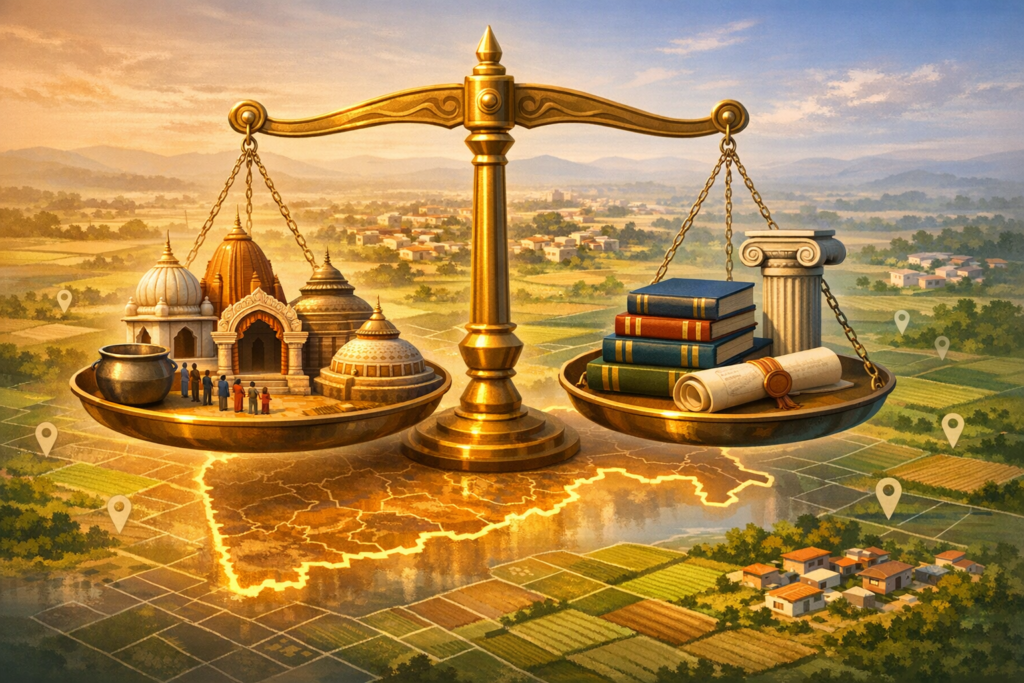
Any proposal concerning sacred sites is best progressed through transparent procedures, rigorous historical and archaeological scholarship, and community consensus. Such an approach honors both faith and evidence, fosters trust among stakeholders, and strengthens India’s long-standing traditions of coexistence. It also ensures that reverence for heritage translates into practical outcomes that elevate social harmony.
In sum, the Mathura message attributed to Dhirendra Krishna Shastri offers an opportunity to re-center public conversation on dharmic unity, ethical citizenship, and responsible stewardship of cultural heritage. When shared values across Hindu, Buddhist, Jain, and Sikh paths inform collective action, the result is a resilient social fabric that transforms devotion into service and memory into constructive, inclusive progress.
Inspired by this post on Struggle for Hindu Existence.