On 13 October 2025, a public letter addressed to the Hon’ble Chief Justice of India, Shri B. R. Gavai, raised a precise and important concern: the frequent shorthand “Don’t call it ‘Babasaheb’s Constitution’.” Echoing views earlier articulated by Ex CBI Director M. Nageswar Rao, the letter argues that this phrasing, though affectionate, lacks historical accuracy and risks obscuring the Constitution’s collective authorship.
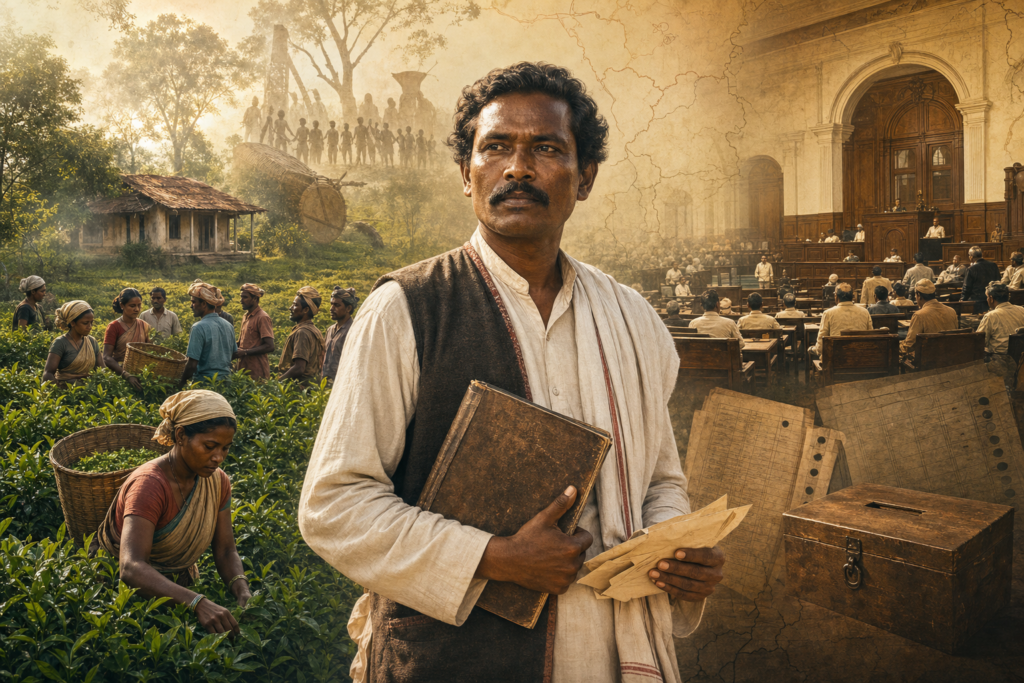
The Constitution of India emerged from the sustained, deliberative work of the Constituent Assembly (1946–1949), with the Drafting Committee chaired by Dr. B. R. Ambedkar. Its architecture reflects the inputs of numerous members and advisersamong them B. N. Rau (Constitutional Adviser), Alladi Krishnaswamy Ayyar, K. M. Munshi, T. T. Krishnamachari, and N. Gopalaswami Ayyangaralongside informed borrowings from comparative constitutional models. To describe the document as the creation of a single individual, however revered, oversimplifies both process and provenance.
Historical accuracy sits alongside reverence. Dr. B. R. Ambedkar’s leadership, scholarly acumen, and commitment to justiceparticularly the articulation of Fundamental Rights and safeguards for equalitymake him an indispensable, towering figure in India’s constitutional journey. Yet he operated within, and often acknowledged, a demanding collective enterprise that also drew from diverse global sources and India’s own legal continuities. Precision in language therefore enhances, rather than diminishes, his legacy.
For citizens across dharmic traditionsHinduism, Buddhism, Jainism, and Sikhismthe Constitution functions as a shared covenant that protects plural ways of life while fostering unity in diversity. When public discourse credits the full spectrum of contributors and the institutional labor of the Constituent Assembly, it strengthens a sense of joint ownership. That shared ownership deepens civic solidarity and aligns with the inclusive ethical commitments embedded in dharmic thought.
From an academic perspective, three facts are central: first, the Constituent Assembly framed the Constitution; second, the Drafting Committee, under Ambedkar’s chairmanship, systematized text and reconciled competing visions; third, the document synthesizes Indian experience with comparative influences (e.g., parliamentary practice, federal design, judicial review, and directive principles). These layersdeliberation, drafting, and synthesistogether yield the final text adopted on 26 November 1949.
Given this record, the following usage is historically sound in education, media, and official communication: “the Constitution of India,” “the Constitution framed by the Constituent Assembly,” and “the Drafting Committee chaired by Dr. B. R. Ambedkar.” Such phrasings honor Ambedkar’s indispensable leadership while acknowledging the Assembly’s collective authorship and the scholarly role of B. N. Rau and other key contributors.
Many students first encounter India’s constitutional story through simplified labels. Public ceremonies, classroom discussions, and commemorationsRepublic Day and Constitution Day among themoffer opportunities to model precise language. When precision becomes habitual, learners gain a more accurate map of how ideas, committees, and comparative models were woven into a single, coherent constitutional fabric.
In this light, the critique of the phrase “Babasaheb’s Constitution” is not a dismissal of affection but an affirmation of fidelity to the record. Upholding historical accuracy simultaneously safeguards Ambedkar’s legacy, respects colleagues in the Assembly, and nourishes interfaith and intrafaith cohesion among dharmic communities. A shared, fact-based vocabulary strengthens civic literacy, honours collective effort, and advances the unity that India’s Constitution both embodies and protects.
Inspired by this post on Struggle for Hindu Existence.