
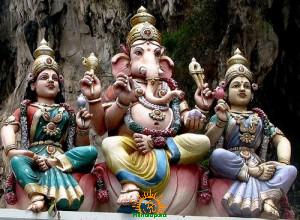
Why Lord Ganesha’s marriage story matters
The Story of Lord Ganesha’s Marriage with Siddhi and Buddhi is far more than an account of a divine wedding. It is a sacred narrative about intelligence, accomplishment, family duty, emotional conflict, and the many ways Hindu communities understand the same deity. Often described as the Ganapathi marriage Katha, the story explains why Ganesha is portrayed beside Siddhi and Buddhi in some temples and works of art, while other traditions revere him as a Brahmachari. Its enduring appeal lies precisely in this combination of narrative warmth and philosophical depth: a family disagreement becomes a meditation on what it truly means to understand the world.
No single version contains every familiar episode. The textual account in the Shiva Purana, regional forms of worship, temple iconography, and later folklore preserve related but distinct traditions. A careful reading therefore distinguishes between the Purana’s marriage narrative, the moral story involving Parvati and a cat, and the popular tale in which Ganesha’s mouse companions obstruct wedding processions. Treating these strands as complementary traditions preserves their meaning without forcing them into an artificial chronology.
The clearest textual foundation appears in the Shiva Purana’s Rudra-samhita, Kumara-khanda. Chapter 19 narrates the contest between Ganesha and Kartikeya, while Chapter 20 describes the marriage and its aftermath. Chapter numbering can differ among editions and translations, so the section name is more reliable than a number alone. The text should be approached as Purāṇic sacred literature with theological and ethical purposes, not as a modern historical record.
The challenge that tested more than physical speed
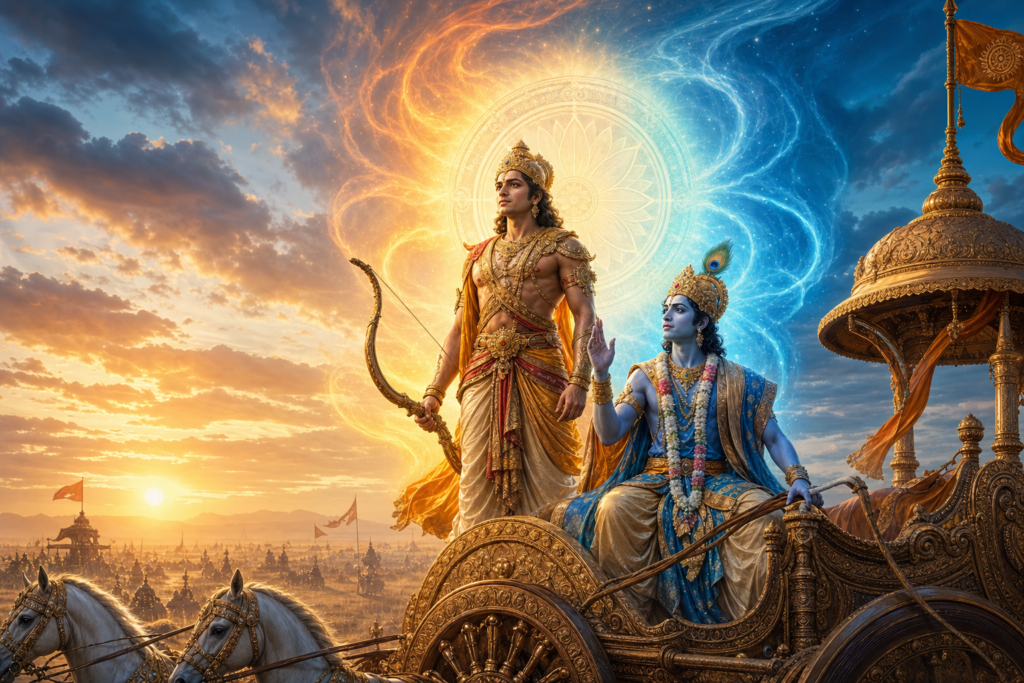
According to the Shiva Purana, Shiva and Parvati saw that their sons, Ganesha and Kartikeya, had reached marriageable age. Both sons wished to marry first, and their disagreement placed the parents in the difficult position of appearing to favor one child over the other. Shiva and Parvati established a seemingly equal condition: the son who travelled around the entire earth and returned first would have his marriage celebrated first. The challenge appeared simple, but it measured two very different kinds of ability.
Kartikeya immediately departed on his swift peacock. His response expressed courage, energy, and confidence in direct action. Ganesha, whose vehicle was the mouse and whose body was not suited to such a race, remained behind and reflected. The text does not present this pause as laziness. It identifies Ganesha repeatedly with penetrating intelligence and shows him examining the meaning of the task before acting. He recognized that merely imitating his brother would place him at a disadvantage and would fail to use the faculty for which he was renowned.
Ganesha bathed ceremonially, arranged two seats, and requested Shiva and Parvati to sit upon them. He worshipped his parents, circumambulated them seven times, and bowed before them seven times. He then declared that he had completed the required journey. When his parents asked how he could claim to have circled the earth without leaving home, Ganesha explained that sacred teachings equated reverent circumambulation of one’s parents with circumambulation of the world. For a devoted child, he argued, the parents’ feet constituted an accessible place of pilgrimage.
This was not presented as a secret loophole. Ganesha performed the act openly and defended it through a reasoned interpretation of dharma. Shiva and Parvati accepted his argument, praised his intelligence, and recognized that wisdom could overcome a difficulty that physical strength alone could not resolve. The chapter reinforces this principle by invoking the familiar image of a smaller but intelligent creature overcoming a powerful lion. Its central contrast is therefore not between effort and idleness, but between unexamined speed and reflective understanding.
The episode remains emotionally relatable because many people encounter rules that seem to reward another person’s natural strengths. Ganesha neither abandons the challenge nor denies Kartikeya’s ability. He asks what the command means at its deepest level and responds in a way consistent with his own gifts. His victory consequently represents intellectual adaptability, reverence, and self-knowledge. It suggests that a genuine obstacle may require a better definition of the problem rather than greater force.
Kartikeya’s perspective must not be erased from the story. After completing the physical journey, he returned and learned that Ganesha had already married. In this Shiva Purana account, Narada’s report intensified his sense that he had been deceived, and Kartikeya withdrew to the Krauncha mountain. The narrative therefore contains both celebration and hurt, inviting reflection on fairness within families. Other traditions differ substantially: Tamil devotional culture famously venerates Murugan with Valli and Devasena. The Shiva Purana’s conclusion about Kartikeya should therefore be identified as the conclusion of this particular account rather than a universal claim about every regional tradition.
The marriage of Ganesha, Siddhi, and Buddhi
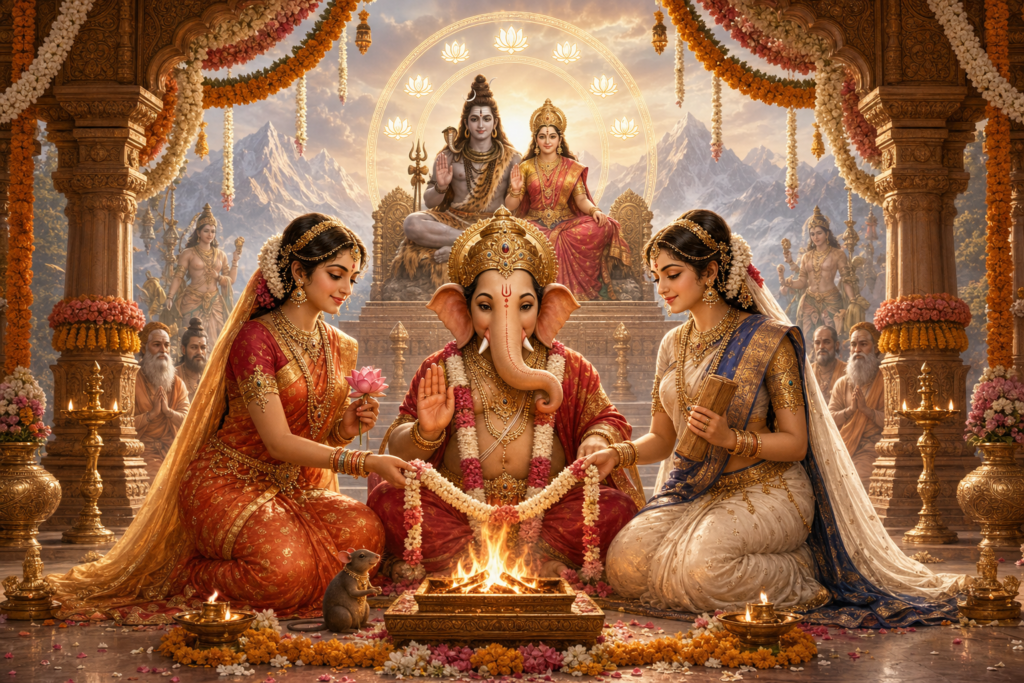
Once Shiva and Parvati accepted Ganesha’s completion of the challenge, Prajapati Vishvarupa learned that a marriage was being planned. He had two daughters named Siddhi and Buddhi, and the Shiva Purana describes them as possessing divine qualities. Vishvarupa was pleased to offer them in marriage, and Shiva and Parvati joyfully arranged the union. This detail corrects a frequent simplification: in this passage, Siddhi and Buddhi are daughters of Prajapati Vishvarupa, not simply “daughters of Brahma.” Prajapati is a title associated with a progenitor and should not automatically be treated as another personal name for Brahma.
The Purāṇic description of the ceremony is concise. Vishvakarman makes the arrangements, while gods and sages assemble to celebrate. The text stresses communal joy, auspiciousness, and the approval of Ganesha’s parents rather than providing a technical manual of wedding rites. Elaborate conversations, courtship scenes, and region-specific ceremonies found in modern retellings should therefore be recognized as later narrative development unless supported by another identified source.
The chapter does not record speeches from Siddhi and Buddhi about the proposal. Some retellings add that they chose Ganesha or expressed their acceptance, but that detail is not stated in the brief Shiva Purana passage. Academic accuracy requires acknowledging this silence rather than inventing dialogue. At the same time, devotional art and ritual traditions honor Siddhi and Buddhi as divine consorts, not as anonymous rewards in a contest.
After the marriage, the Shiva Purana names two sons. Siddhi gives birth to Kshema, while Buddhi gives birth to Labha. Kshema carries the semantic range of welfare, security, preservation, or well-being; Labha signifies gain, benefit, or acquisition. These names extend the theological pattern of the wedding. Ganesha’s household becomes a symbolic map in which discernment and accomplishment are associated with beneficial gain and secure welfare.
This symbolism should not be reduced to a promise of effortless wealth. The narrative places intelligence, worship, ethical reasoning, and disciplined action before its images of attainment and gain. In that sequence, prosperity becomes meaningful when it is guided by sound judgment and directed toward durable well-being. The marriage story thus complements Ganesha’s better-known identity as the guardian of beginnings and the remover of obstacles.
What Siddhi, Buddhi, and Riddhi signify
The names of Ganesha’s consorts possess important philosophical meanings. Siddhi can denote accomplishment, attainment, success, perfection, or an extraordinary spiritual capability, depending on context. Buddhi denotes intelligence, understanding, judgment, and the faculty of discrimination that distinguishes an appropriate course from an inappropriate one. Riddhi, prominent in many popular and iconographic traditions, signifies prosperity, increase, flourishing, or abundance. These semantic fields overlap at their edges, but the names are not exact synonyms.
The pairing also varies. The Shiva Purana passage specifically names Siddhi and Buddhi. Many northern and western Indian representations instead place Ganesha with Riddhi and Siddhi, emphasizing prosperity and accomplishment. Some traditions refer to all three powers, while others treat the figures as attendants, Shaktis, or personified qualities rather than narrating an ordinary domestic relationship. This variation explains why a single retelling may unexpectedly shift between Buddhi and Riddhi.
Material evidence confirms that these are established traditions rather than recent internet inventions. A sandstone sculpture dated 1164 in the Norton Simon Museum bears an inscription identifying the female figures on Ganesha’s knees as Siddhi, meaning success, and Buddhi, meaning intelligence. By contrast, a Maharashtrian chromolithograph dated approximately 1900–1915 in The Metropolitan Museum of Art depicts the enthroned deity with Riddhi and Siddhi. Text and art therefore preserve more than one durable configuration.
An early nineteenth-century Kangra image in the Art Institute of Chicago is catalogued with female attendants presumed to represent Riddhi, Siddhi, and Buddhi—prosperity, attainment, and intellect. Such works demonstrate that iconography cannot always be compressed into one fixed family tree. The identities of figures depend upon inscriptions, regional conventions, accompanying attributes, and the interpretive history of each object.
Personification is central to the theological structure. Abstract capacities become divine presences who can be contemplated, honored, and represented in relationship. A symbolic interpretation does not require Siddhi and Buddhi to be dismissed as decorative accessories; nor does devotional recognition prevent their names from carrying philosophical meaning. The two levels can coexist: they are honored divine figures within worship and embodiments of the powers associated with Ganesha.
Why some traditions regard Ganesha as a Brahmachari
Several South Indian traditions revere Ganesha, often called Vinayaka or Pillaiyar, as a Brahmachari and therefore unmarried. This pattern is significant but not universal across the entire region. Likewise, the married form is not limited to one narrow area. Temple practice, family custom, sectarian theology, festival storytelling, and artistic convention can emphasize different manifestations of the same deity. Regional diversity is therefore better understood as a feature of Hindu tradition than as evidence that one community must be mistaken.
A popular moral story helps explain the celibate interpretation. As a child, Ganesha played roughly with a cat and pulled its tail. When he later approached Parvati, he saw that she bore the effects of the animal’s suffering. She revealed that the divine maternal power was present in living beings and that harm inflicted upon the cat had also reached her. Shocked by this recognition, Ganesha came to regard feminine life as an expression of the Divine Mother.
One conclusion of the cat story is that Ganesha chose not to marry because every woman was, in this theological sense, connected with his mother. Another telling says that he sought a bride who possessed Parvati’s incomparable qualities and could find no one who matched that ideal. These conclusions should be treated as related folklore rather than forced into the Shiva Purana’s marriage sequence. Their primary purpose is ethical: the child learns empathy after discovering that suffering concealed from immediate sight remains real.
The cat episode also carries an ecological and compassionate insight. Divine presence is recognized not only in powerful celestial beings but in a vulnerable animal subjected to careless play. The emotional turning point occurs when Ganesha understands the effect of his action from the injured being’s perspective. Reverence for life, restraint, and responsibility are values capable of supporting dialogue across Hindu, Buddhist, Jain, and Sikh communities, even though each tradition articulates them through its own texts and doctrines.
The married and celibate forms need not cancel one another. Married Ganesha can express the auspicious integration of wisdom, accomplishment, and prosperity. Ganesha as Brahmachari can express disciplined concentration, purity of purpose, and devotion to the Divine Mother. Child Ganesha can embody openness to correction. Sacred iconography regularly presents a deity through multiple forms because each form illuminates a different spiritual relationship.
The folklore of the mouse companions and disrupted weddings
Another popular account begins with Ganesha’s difficulty in finding a suitable match. Troubled that others were marrying while no bride appeared for him, he called upon mouse companions to dig holes along the routes taken by wedding processions. Carts became stuck, journeys were interrupted, and complaints eventually reached Brahma. In some versions, Brahma then created or presented Riddhi and Siddhi; in others, the names are Siddhi and Buddhi. The resulting marriage ends the disruption and restores the movement of other weddings.
This episode does not appear in the same form in Shiva Purana Chapters 19–20 and should be labeled as a folk variant. Its narrative logic nevertheless reflects Ganesha’s complex authority over obstacles. He is not merely imagined as a mechanical remover of every difficulty; devotional theology also treats him as the lord who governs obstacles and may place them before actions that lack proper preparation or alignment. The folklore dramatizes that authority through a humorous domestic conflict.
The tale should not be interpreted as an ethical endorsement of damaging another person’s celebration. The obstructed processions function as a narrative device that brings an unresolved grievance to divine attention. A reflective reading sees the episode as a warning about frustration that spreads outward when it is not addressed wisely. Resolution arrives when exclusion gives way to recognition, relationship, and restored social harmony.
Ganesha’s own vahana is normally a single mouse or rat in iconography, whereas the folk account may describe an entire group carrying out his command. That difference is worth preserving. Later commentators often interpret the small, restless animal as desire, appetite, or the darting mind brought under conscious direction. Such symbolism is illuminating when identified as interpretation, but it should not be mistaken for an explanation supplied by every textual source.
The philosophical architecture of the divine marriage
The marriage can be read as a theology of integrated action. Buddhi supplies discernment: the capacity to understand conditions, interpret principles, and choose intelligently. Siddhi represents realization or successful completion. Riddhi, where she appears, adds flourishing and prosperity. Kshema signifies the preservation of well-being, while Labha denotes beneficial gain. Together, the names describe a movement from wise judgment through effective action toward results capable of being sustained.
This pattern is especially relevant to Ganesha’s role at beginnings. A student beginning an examination, a family entering a new home, an artist starting a work, or a community launching a public undertaking does not need success in isolation. Each needs the intelligence to define the objective, the discipline to complete it, and the judgment to ensure that the result is beneficial. This is why the marriage story deepens, rather than merely decorates, Ganesha’s association with education, enterprise, travel, and new ventures.
The story also places a moral limit on prosperity. Gain without Buddhi can become reckless acquisition; intelligence without Siddhi can remain unrealized potential; accomplishment without Kshema can prove unstable; and outward prosperity without dharma can create further obstacles. Although this exact formula is an interpretive synthesis rather than a verse from the Shiva Purana, it follows the semantic relationships created by the names and offers a disciplined way to apply the narrative.
Marriage here is therefore more than a reward won in a race. It represents the conjunction of powers necessary for auspicious life. Ganesha does not stand apart from intelligence and accomplishment as though they were external possessions. In theological and iconographic interpretation, they belong to his manifested power. The household image presents wisdom, attainment, welfare, and gain as interdependent rather than competing goals.
The emotional dimension is equally important. Ganesha experiences a limitation, Kartikeya experiences disappointment, Shiva and Parvati must judge between competing claims, and the family’s decision produces consequences. No figure needs to be reduced to a villain. The account becomes more mature when Ganesha’s insight and Kartikeya’s hurt are both acknowledged. It then speaks not only about winning but about the difficult relationship between formal equality, different abilities, and perceived fairness.
Pradakshina, pilgrimage, and the sacred center
Ganesha’s seven circumambulations are a form of pradakshina, the ritual movement in which a revered person, image, shrine, or sacred center is kept to the participant’s right. It is embodied theology: the moving person places the sacred reality at the center and organizes movement around it. In the story, Ganesha does not claim that he physically traversed oceans and continents. He claims ritual and ethical equivalence based on the sacred status of Shiva and Parvati.
The argument elevates service to parents as a nearby tirtha, or place of spiritual crossing. It does not reject pilgrimage in general; rather, it warns against pursuing distant merit while neglecting an immediate duty of gratitude and care. The episode assumes a loving family context in which the parents are described as embodiments of virtue. It should not be misused to excuse cruelty, coercion, or the suspension of ethical discernment in harmful relationships.
The number seven is explicit in the chapter, but the passage does not assign a detailed list of seven symbolic meanings to each circuit. Later interpreters may connect the number with cosmological or ritual sets, yet academic restraint requires distinguishing those associations from the text’s own explanation. Here, the essential point is completeness: Ganesha performs the circumambulation repeatedly, worships, bows, and then supports the action with a reasoned appeal to sacred authority.
The episode can also be read as an affirmation of spiritual accessibility. Kartikeya’s path requires extraordinary speed and worldwide travel; Ganesha discovers sacred geography within the home. The story does not diminish the heroic journey, but it refuses to make physical mobility the only measure of spiritual achievement. Intelligence reveals that the sacred may be approached through attentive relationship as well as distance.
How to distinguish scripture, folklore, and interpretation
A responsible account separates three levels. The first is textual: the Shiva Purana narrates the sibling contest, Ganesha’s seven circuits around his parents, the marriage to Vishvarupa’s daughters Siddhi and Buddhi, and the births of Kshema and Labha. The second is traditional variation: regional worship may present Ganesha as celibate or pair him with Riddhi and Siddhi. The third is folklore and commentary: the cat, the obstructed wedding processions, and many symbolic explanations develop the story’s ethical implications in memorable forms.
This distinction does not create a hierarchy in which living traditions are dismissed. It clarifies what kind of authority each claim possesses. A Purāṇic passage, a temple image, an oral Katha, and a modern philosophical reflection answer different questions. Confusion arises only when a detail from one level is silently attributed to another—for example, when Brahma is called the father of the brides in a summary of a passage that actually names Prajapati Vishvarupa.
The term “mythology” also requires care. In academic study, a myth is not necessarily a falsehood; it is a culturally authoritative narrative that organizes meaning through divine action, symbol, ritual, and memory. Devotees may understand the same account as sacred history or divine lila. Respectful discussion can acknowledge both approaches without presenting theological claims as experimentally verifiable facts or reducing devotion to mere fiction.
Purāṇic literature has circulated through manuscripts, recitations, translations, regional adaptations, and later compilations. Spellings and chapter numbers consequently vary: Ganesha may appear as Ganapati or Ganapathi, and Sanskrit names may be transliterated with or without diacritical marks. Such variation does not by itself indicate a different character. Changes from Buddhi to Riddhi, however, affect the symbolic identity of a consort and should be discussed rather than silently normalized.
Reading the story during Ganesh Chaturthi
During Ganesh Chaturthi, the marriage narrative can be presented in a sequence that respects both devotion and evidence. The Shiva Purana account may be narrated first, followed by a clearly identified regional or folk variant. Reflection can then turn to the meanings of Siddhi, Buddhi, Riddhi, Kshema, and Labha. This method allows children, families, and serious students to enjoy the Katha while learning that religious traditions preserve meaning through more than one literary and artistic form.
The most productive questions concern the story’s ethical structure. What distinguishes speed from wisdom? When does an obstacle require greater effort, and when does it require a new interpretation? What kind of gain deserves to be called beneficial? How can accomplishment be joined to discernment and welfare? Such questions transform the narrative from a charming contest into a sustained inquiry about education, family responsibility, leadership, and personal conduct.
The account also offers a constructive model for unity within diversity. A household that worships Ganesha with Siddhi and Buddhi need not invalidate a community that reveres him as a Brahmachari. A devotee familiar with Riddhi and Siddhi need not erase the Shiva Purana’s Buddhi. Recognizing source, region, and purpose allows distinct traditions to stand beside one another without hostility. This approach supports harmony within Hinduism and respectful engagement across the wider family of Dharmic traditions.
The enduring lesson of Ganesha’s marriage
At the heart of Lord Ganesha’s marriage to Siddhi and Buddhi lies a powerful proposition: wisdom is not passive knowledge but the ability to perceive the sacred principle hidden within a difficult situation. Ganesha succeeds because he combines reflection with ritual action, devotion with argument, and self-knowledge with respect for his parents. His marriage then gives that victory a larger symbolic form by joining the remover of obstacles with intelligence and attainment.
The story’s appeal endures because its world is recognizably human even when its figures are divine. Siblings compete, parents make consequential decisions, expectations collide with unequal abilities, and success produces both joy and disappointment. The narrative does not eliminate these tensions. It places them within a framework of dharma and asks how insight can transform limitation without denying another person’s experience.
Whether Ganesha is contemplated with Siddhi and Buddhi, honored with Riddhi and Siddhi, or worshipped as a Brahmachari, the central devotional insight remains coherent. True success requires more than arriving first. It requires intelligent discernment, compassionate responsibility, disciplined accomplishment, and results that contribute to genuine welfare. That union of wisdom and success is the deepest meaning of the divine marriage.
Inspired by this post on Hindu Pad.




Leave a Reply
You must be logged in to post a comment.