
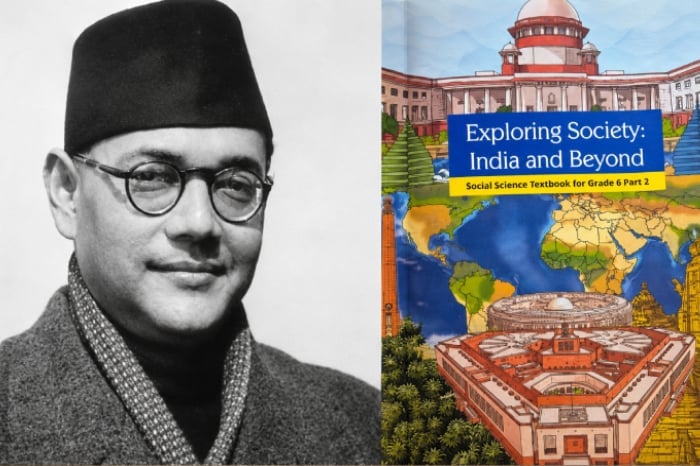
Why this revision matters. A removed name, an added sentence and a reframed account of Partition may appear to be ordinary editorial adjustments. In a Class 8 textbook, however, such choices influence how millions of young readers first understand the Indian freedom struggle, constitutional institutions and the moral complexity of political action. NCERT’s revised Social Science volume therefore deserves attention not only for what it now says, but also for what it no longer names, what it newly emphasizes and how those decisions alter the relationship between fact, interpretation and historical memory.
The revised book is Part 2 of Exploring Society: India and Beyond, prepared within the wider curricular transition associated with the National Curriculum Framework for School Education 2023. Released in early July 2026 after the previous version was withdrawn, it changes considerably more than the disputed lesson on the judiciary. A detailed comparison published by The Indian Express identifies revisions concerning Netaji Subhas Chandra Bose, V. D. Savarkar, the Partition of India, discrimination and the functioning of courts.
The changes in brief. The new edition replaces the specific reference to Adolf Hitler in the passage on Bose with the general expression “anti-British forces.” It adds a statement connecting V. D. Savarkar with a demand for Swaraj in 1925. It recasts the Indian National Congress’s position on Partition, presenting the claim that acceptance was the only available course as a “matter of debate.” It removes the earlier discussion of judicial corruption and case backlog, expands material on Public Interest Litigation, tribunals and alternative dispute resolution, and adds economic background to a passage defining discrimination.
These are confirmed textual changes, but they are not automatically historical verdicts. An insertion establishes that a subject has been included; it does not prove that the treatment is complete. A deletion establishes that wording has disappeared; it does not prove that the underlying event did not occur. Sound analysis must therefore separate three questions: what the earlier edition stated, what the revised edition states, and what the broader documentary record supports.
The judiciary controversy that triggered the withdrawal. NCERT’s own press release dated 25 February 2026 states that Part 2 had been issued on 24 February. It acknowledged that inappropriate material and an error of judgement had entered Chapter 4, then titled “The Role of Judiciary in our Society.” The Ministry of Education’s Department of School Education and Literacy directed that distribution be placed on hold, while NCERT said the chapter would be rewritten in consultation with an appropriate authority.
On 26 February, the Supreme Court took suo motu cognisance of the matter in Writ Petition (Civil) No. 1 of 2026. Its official order directed the seizure and removal of physical and digital copies, imposed what it called a “complete blanket ban” on further dissemination of that version, and issued show-cause notices concerning possible contempt proceedings. Those directions concerned the withdrawn book and should not be confused with a final adjudication of every historical or institutional proposition it contained.
An important qualification appears within the Court’s own reasoning. The order affirmed the democratic value of dissent, deliberation and legitimate scrutiny of public institutions. Its objection was that criticism had been presented to young students in a decontextualized and insufficiently balanced manner while the judiciary’s constitutional contributions, legal-aid initiatives and role in protecting democratic government received inadequate treatment. The dispute was therefore framed as a question of pedagogical balance and institutional context, not as a declaration that courts are beyond reasoned criticism.
NCERT subsequently issued an unconditional public apology and formally recalled the volume, as recorded in its recall advisory. The Union government then constituted an expert review mechanism that included former Supreme Court judges Indu Malhotra and Aniruddha Bose and former Attorney General K. K. Venugopal. The composition and mandate of that review process were reported when the proposed redrafting arrangement was placed before the Court. The revised book now acknowledges that the judiciary chapter was rewritten following the Court’s directions and expert examination.
What the new judiciary lesson teaches. The revised chapter places greater weight on the constitutional role of the Supreme Court and High Courts, constitutional remedies, Public Interest Litigation, specialized tribunals and alternative dispute resolution. Reported examples include the Hussainara Khatoon litigation on undertrial prisoners, M. C. Mehta’s environmental cases and the Vishaka guidelines addressing workplace sexual harassment. It also introduces institutions such as the National Green Tribunal, consumer fora and other specialized adjudicatory bodies. A detailed account of the rewritten chapter describes a more conventional civics lesson centred on constitutional remedies and access to justice.
This redesign offers clear educational value. A thirteen-year-old benefits from understanding where courts derive authority, how a person may seek a constitutional remedy and why mechanisms such as mediation or tribunals exist. Yet institutional respect and institutional literacy are not identical to institutional idealization. A mature curriculum can explain the judiciary’s indispensable constitutional role while also introducing age-appropriate discussion of delays, unequal access and reform. The strongest lesson would show that democratic confidence grows through both achievement and accountable improvement.
The withdrawn edition named 51 people in its development team, whereas reports say the revised edition lists 48. Three names associated with the disputed chapter no longer appear. This bibliographic fact should not be treated as a judicial finding of personal culpability. In May 2026, the Supreme Court recalled an earlier direction restricting three academics from publicly funded academic work. That later order did not revive the withdrawn textbook, but it remains essential to an accurate account of the proceedings and the principle of procedural fairness.
Netaji Subhas Chandra Bose and the removal of Hitler’s name. The earlier version reportedly stated that Bose sought Hitler’s assistance in raising an army and briefly identified the German ruler as a dictator associated with racist Nazi ideology and expansionist war. The revised sentence says instead that Bose sought support from “anti-British forces.” The new formulation preserves Bose’s immediate strategic objective—ending British colonial rule—but removes the identity and political character of one of the regimes from which he sought assistance.
The larger historical record is not ambiguous about the existence of Bose’s German connection. After escaping British surveillance in India in 1941, Bose reached Berlin, established the Free India Centre with German assistance and supported the formation of the Indian Legion from Indian prisoners of war. He met Hitler in May 1942. In 1943, he travelled by German and Japanese submarines to East Asia, where he assumed leadership of the Indian National Army and the movement associated with Azad Hind. These stages are documented through the United Kingdom National Archives, the Netaji Research Bureau’s historical collection and India’s declassified Netaji papers.
Historical accuracy requires two propositions to be held together. Bose’s central purpose was anti-colonial liberation, and his search for external military support arose from a conviction that Britain’s wartime vulnerability created an opportunity for Indian independence. At the same time, Nazi Germany was not merely an unspecified anti-British power; it was a dictatorship organized around racial hierarchy, aggressive expansion and mass persecution. Naming Bose’s diplomatic contact does not by itself establish ideological endorsement, just as explaining his anti-colonial motive does not make the character of the regime historically irrelevant.
The phrase “anti-British forces” consequently offers simplicity at the cost of specificity. Its advantage is that it foregrounds Bose’s strategic calculation and reduces the risk that young readers will equate contact with complete ideological identification. Its disadvantage is that it converts a documented relationship with named Axis powers into an abstract category. A balanced Class 8 treatment could retain the names of Germany and Japan, state Bose’s objective clearly, identify the authoritarian nature of the regimes in concise language, and invite students to consider the ethical dilemmas faced by anti-colonial movements during a global war.
The reported revision must also be described narrowly. Available evidence establishes that references to Hitler and Nazi ideology were removed from this particular passage about Bose. It does not, by itself, establish that every NCERT discussion of Hitler, Nazism or the Second World War has been eliminated. Headlines that expand a localized textual change into a claim about the entire curriculum risk creating a second distortion while attempting to describe the first.
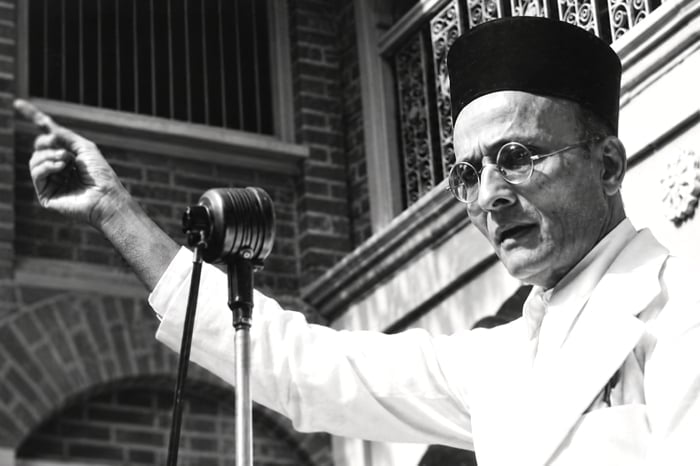
Why the Savarkar addition needs context. The revised chapter adds that a similar demand for Swaraj was expressed by V. D. Savarkar in 1925. Vinayak Damodar Savarkar is also widely addressed by the honorific Swatantryaveer Savarkar. His inclusion broadens the set of political figures presented in the discussion of self-rule and complete independence, but the value of the addition depends on whether students are also given the source, meaning and historical setting of the statement.
The supplied summary uses the form “Swarajya,” while reports comparing the editions quote the textbook as using Swaraj. The two forms belong to a related conceptual vocabulary of self-rule, sovereignty and freedom, but their meaning has varied across language, period and political movement. Swaraj could indicate local self-government, dominion status, moral self-mastery or complete political independence. Treating every historical use as an exact synonym for Purna Swaraj can therefore conceal the very debates that made the term politically powerful.
Research on the term illustrates this complexity. A study in the Journal of the Royal Asiatic Society discusses Savarkar’s emphasis on “Hindavi Swarajya” in his 1925 work Hindu-Pad-Padashahi. Jawaharlal Nehru’s 1928 statement on the independence resolution, meanwhile, explicitly observed that Swaraj could mean complete freedom but had also acquired more limited meanings. These sources do not establish which document NCERT relied upon; they demonstrate why a citation or explanatory note would strengthen the new sentence.
Savarkar’s inclusion should not be interpreted as proof that he alone originated the demand for complete independence. Calls for full freedom emerged from multiple revolutionary, congressional and regional currents before the Congress formally adopted Purna Swaraj at its Lahore session in December 1929. The academically sound approach is additive rather than substitutive: Savarkar’s contribution can be recognized alongside other advocates without converting a diverse political history into a competition for a single title of primacy.
For students, the most useful question is not whether Savarkar should be celebrated or excluded as a total personality. It is what he said, when he said it, what Swaraj meant in that context and how his formulation compared with those of contemporaries. Such an approach replaces both hagiography and caricature with historical inquiry. It also allows Indian freedom fighters with sharply different ideologies to be studied as participants in a shared struggle without erasing their disagreements.
How the Partition narrative has been reframed. The earlier edition reportedly said that Mahatma Gandhi and most Congress leaders opposed Partition but ultimately accepted it as the only way forward. The revised version says Partition was widely opposed, including within the Indian National Congress, and presents the claim that acceptance was the sole available course as a continuing debate. It also removes a sentence characterizing Congress leaders as helpless while communal massacres engulfed the subcontinent.
The new wording improves one important distinction but creates a need for another. Gandhi’s personal opposition, the changing views of senior Congress leaders and the formal decisions of Congress bodies were related but not identical. Gandhi remained deeply opposed to division. Jawaharlal Nehru, Vallabhbhai Patel and other leaders eventually accepted the 3 June 1947 plan under conditions they regarded as extraordinarily dangerous. Congress institutions then approved a settlement that many members considered tragic. Saying simply that “Congress opposed Partition” or that “Congress accepted Partition” can be accurate only when the date, institutional level and individuals concerned are specified.
The decision emerged from a long breakdown rather than a single meeting. The Muslim League’s demand for Pakistan, the failure of constitutional negotiations, the collapse of the Cabinet Mission framework, political rivalry, British imperial withdrawal and escalating communal violence all shaped the available choices. By early 1947, much of the Congress leadership had reluctantly concluded that division was preferable to a prolonged conflict or a weak union vulnerable to paralysis. Historical scholarship, including work published in Modern Asian Studies, describes that movement toward acceptance as gradual and reluctant, with Gandhi as a notable opponent.
Whether Partition had truly become the “only way forward” is a counterfactual question rather than a directly verifiable fact. Historians continue to debate whether a federal settlement, confederation, slower transfer of power, different provincial arrangements or firmer action against communal violence could have produced another outcome. The revised textbook’s phrase “matter of debate” is therefore intellectually defensible, provided that debate is supported with evidence rather than left as a vague invitation to political preference.
Removing the statement that Congress leaders were helpless also changes the treatment of agency. Political leaders faced severe constraints, but “helplessness” can sound exculpatory and can obscure decisions that accelerated or failed to contain the crisis. The opposite error would be to attribute every act of violence to a single party or leader. A responsible account should examine British decisions, League and Congress strategies, provincial governments, militias, local actors and the collapse of administrative protection without converting explanation into collective accusation.
The human scale of Partition must remain central. Census-based research summarized by the Harvard Kennedy School estimates roughly 14.5 million cross-border migrants, while estimates of deaths vary widely because records were fragmented and violence unfolded across several regions. Families were displaced from Punjab, Bengal, Sindh, Delhi and adjoining areas; women endured abduction and sexual violence; children disappeared; and homes, land and sacred places were abandoned. Statistical uncertainty should encourage humility, not diminish the catastrophe.
Partition education also carries an ethical responsibility. Hindus, Muslims and Sikhs were both victims and, in different places, perpetrators of communal violence; members of the same communities also sheltered neighbours and organized relief. No faith tradition should be assigned inherited collective guilt. A curriculum committed to social cohesion can document violence honestly while preserving the dignity of Hindu, Sikh, Buddhist, Jain, Muslim, Christian and other traditions that form India’s plural civilizational experience.
For families whose memories cross the borders of 1947, the difference between “accepted,” “opposed” and “helpless” is not merely semantic. Such words shape how loss, responsibility and survival are transmitted between generations. A child reading the chapter may be encountering a grandparent’s displacement for the first time. The textbook should therefore combine political analysis with oral histories, maps, migration data and accounts of inter-community rescue, allowing trauma to be understood without turning it into a new instrument of hostility.
A less-noticed change concerning discrimination. The chapter “Citizenship: Rights and Duties” now includes economic background alongside caste, religion, ethnicity, disability, race, physical appearance, gender and sexuality in its discussion of discrimination. Pedagogically, this addition acknowledges that poverty and class can affect dignity, access and treatment. Legally, however, a broad educational definition should not be mistaken for an exhaustive restatement of every constitutional or statutory ground. Students benefit when textbooks distinguish moral unfairness, social disadvantage and legally prohibited discrimination while showing how those categories may overlap.
What the combined revisions reveal. The new edition broadens some areas while narrowing others. It expands the civics treatment of legal remedies and adds Savarkar and economic disadvantage. It narrows the Bose passage by removing a named regime and removes critical discussion of judicial backlog. It makes the Partition account more openly contestable while reducing language that portrayed Congress leaders as powerless. No single political label adequately describes this pattern; each edit must be evaluated according to evidence, context and educational purpose.
A rigorous textbook review should apply at least six tests. Claims should be factually verifiable. Interpretive statements should be identified as interpretation. Significant actors should be named with proportional context. Language should be appropriate to the learner’s age without becoming evasive. Contested questions should present credible alternatives rather than false equivalence. Finally, additions and deletions should be transparent enough that teachers can understand why a passage changed.
Source architecture is especially important in history education. A textbook cannot carry the apparatus of a university monograph, but it can provide short endnotes, a bibliography, archival links and a teacher’s guide distinguishing primary records from later interpretations. A claim about Bose’s diplomacy might point to wartime records; a claim about Savarkar’s 1925 formulation should identify the speech, article or book; and a statement about Congress and Partition should distinguish personal views from resolutions adopted by party bodies.
Version control would also improve public trust. Print and digital editions should display an edition date, revision number and concise change log. Schools should receive clear instructions identifying which copies are valid, while archived superseded versions could remain available to qualified researchers where legally permissible. This would prevent outdated passages from circulating as current NCERT content and would allow curriculum changes to be studied without confusion.
Teachers remain crucial because no paragraph can carry every qualification. A well-designed classroom activity could place the earlier and revised sentences side by side and ask students to classify each element as factual statement, interpretation, omission or value judgement. Students could then consult a short set of age-appropriate sources before explaining which formulation is better supported. Such an exercise develops historical reasoning without requiring children to adopt a predetermined partisan conclusion.
Assessment practices should follow the same principle. Students should not lose marks for recognizing that the inevitability of Partition remains debated, nor should they be rewarded for repeating an unsupported claim of historical primacy. Examinations can test chronology, evidence, comparison and causal reasoning. This approach respects both national memory and intellectual independence while reducing the pressure to treat a changing textbook sentence as an unquestionable final truth.
How the headline should be read. It is accurate to report that the revised Class 8 passage no longer explicitly links Bose’s wartime search for support to Hitler and Nazi ideology. It is accurate to report that Savarkar’s 1925 expression of Swaraj has been added and that the Congress-Partition narrative has changed. It is equally important to state that the original withdrawal arose from the judiciary chapter, not from those history passages. The other historical revisions became visible when the replacement edition was compared with the withdrawn text.
The larger lesson. NCERT’s high-stakes rewrite demonstrates that curriculum revision is never merely a matter of shortening or modernizing prose. Naming Hitler provides context but requires care in describing Bose’s motives. Adding Savarkar widens representation but requires a source and a precise definition of Swaraj. Reframing Partition opens legitimate debate but must preserve institutional detail and human suffering. Rewriting the judiciary chapter strengthens constitutional literacy, yet democratic education remains most credible when respect for institutions coexists with evidence-based scrutiny. Historical confidence is built not through silence or slogan, but through accuracy, transparency, plurality and the courage to hold difficult truths together.
Inspired by this post on Hindu Jagruti Samiti.





Leave a Reply
You must be logged in to post a comment.