-
Mughal Nostalgia Exposed: Why Bharat’s Civilizational Memory Matters Now

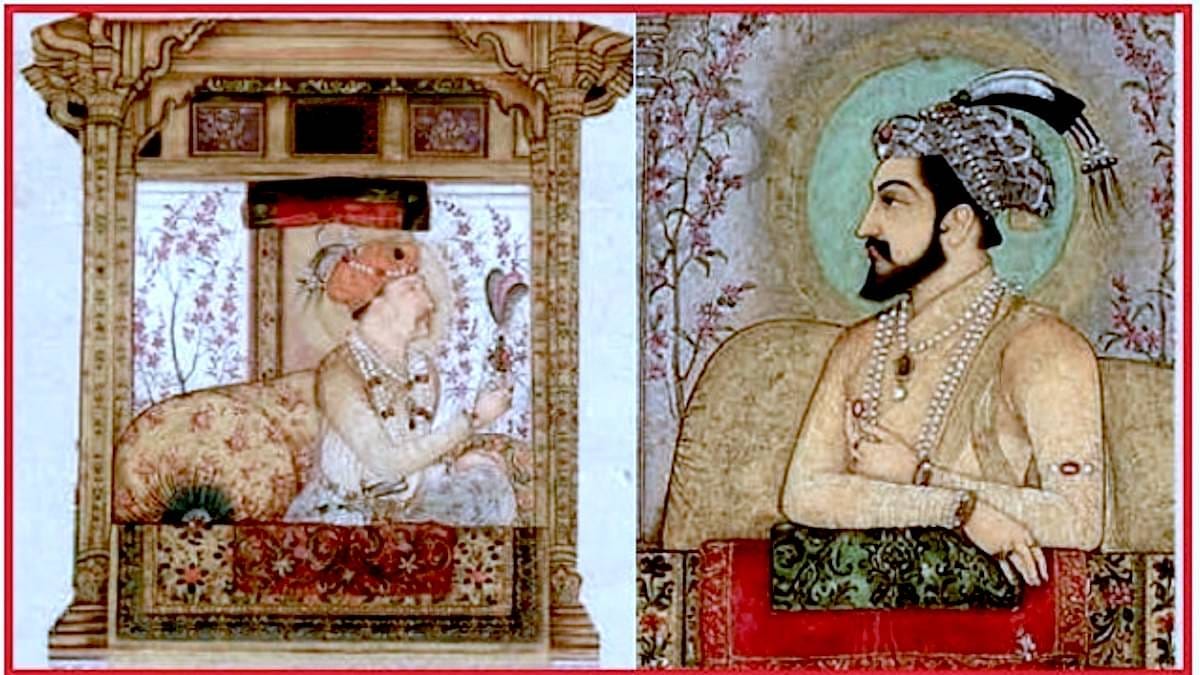
This article examines the controversy around elite media nostalgia for the Mughal Empire and argues that Bharat’s historical memory deserves a fuller, more honest treatment. It explains why Mughal cultural achievements cannot be used to erase conquest, temple destruction, religious coercion, and civilizational disruption. The piece distinguishes between medieval imperial regimes and present-day communities, emphasizing…
-
Restoring Shivaji Maharaj in NCERT Textbooks: Why Maratha History Matters

The Maharashtra Government’s discussions with NCERT and the Central Government over restoring references to Chhatrapati Shivaji Maharaj and the Maratha Empire highlight a major debate in Indian education. The issue is not only about a missing reference or map, but about how textbooks represent civilisational memory, regional history, and historical accuracy. Chhatrapati Shivaji Maharaj’s legacy…
-
NCERT Removes Maratha Expansion Map: Why the Attock–Cuttack Legacy Matters to India’s Students

NCERT’s removal of the map showing Maratha expansion from Attock to Cuttack has sparked a vital discussion about how Indian textbooks balance accuracy, pedagogy, and heritage. This analysis explains what changed, why maps matter for spatial learning, and how the petition before the Bombay High Court frames the issue. It clarifies the historical contextbrief Maratha…
-
Restore Historical Clarity: HJS urges NCERT to reinstate Maratha Empire map in Class 8 textbook

Hindu Janajagruti Samiti (HJS) has requested that NCERT reinstate the Maratha Empire expansion map in the Class 8 history textbook to improve historical accuracy and learning outcomes. Maps help Class 8 learners anchor timelines in geography, making complex eighteenth-century political formations intelligible. A carefully annotated Maratha map would depict core territories, confederal expansions, and key…
-
Supreme Court declines ‘Brahmophobia’ plea: legal clarity on hate speech, caste, and fraternity

The Supreme Court of India declined to entertain a petition seeking formal recognition of “Brahmophobia” as a distinct, punishable form of caste-based hate speech, allowing withdrawal and emphasizing fraternity. This outcome aligns with established jurisprudence: existing penal provisions already address hateful incitement without creating community-specific offences, and any new speech category would be a legislative…
-
Michel Danino: quiet giant of Indian history, NCERT reformer, facing Supreme Court censure

Michel Danino emerges here as a quiet giant of Indian historiographyunassuming yet formidable in method and integrity. His research spans the Sarasvati–Ghaggar–Hakra palaeochannels, Harappan urbanism, critiques of the Aryan Invasion Theory, and readings of the Puranas and epics, all undergirded by cross-disciplinary evidence. Professional roles at IIT Gandhinagar and leadership within NCERT’s textbook development reflect…
-
CBSE’s landmark revamp of NCERT Class 8: Shivaji Maharaj’s history expands to 22 pages, 2,200 words

CBSE has expanded the coverage of Chhatrapati Shivaji Maharaj in the Class 8 NCERT textbook from 68 words to over 2,200 words across 22 pages. The revised chapter, ‘Rise of the Marathas’, provides clearer historical context and a more structured narrative for middle-school learners. This depth strengthens analytical skills by foregrounding chronology, causation, and balanced…
-
NCERT’s new textbook reveals Ghaznavi’s raids and Somnath to foster balanced, inclusive learning

NCERT’s new textbook presents a more detailed, evidence-based account of Mahmud Ghaznavi’s campaigns, including the attack on Somnath, within the fuller context of 11th-century Indian history. The material prioritizes historiographical rigor by drawing on multiple sources and clarifying the political, economic, and cultural drivers of conflict. Students benefit from clearer timelines, geographies, and motives that…
-
Assam Textbooks Drop ‘Great’ for Akbar and Tipu: NCERT’s Neutral Language Move Explained

NCERT has removed the honorific “Great” from references to Akbar and Tipu Sultan in Assam history textbooks, with CM Shri. Himanta Biswa Sarma supporting the change. The shift promotes neutral language, aligning with best practices in historiography and the Indian education system’s focus on evidence-based learning. Students benefit from clearer criteria for evaluating historical figures…
-
The Complete Exposé: Discover How D.N. Jha’s Narratives Distort Indian History and Faith

I take you inside my personal investigation of D.N. Jha’s work and how, in my view, Marxist historians reshaped Indian history. I explain why The Myth of the Holy Cow felt like a direct affront to the Hindu Community and how such narratives influence public memory. You’ll see how I argue that Jha’s approach distorted…
-
The Rot is Deeper than Including or Dropping Lessons on the Mughals in History Textbooks

Commentary on the recent controversy over dropping the chapters on Mughal history from NCERT textbooks. It is the mudslinging season again over history lessons, for a fundamental reason. History was one of the most powerful weapons that the Congress-Left combine had used in order to maintain its hegemony over political power for more than half…