
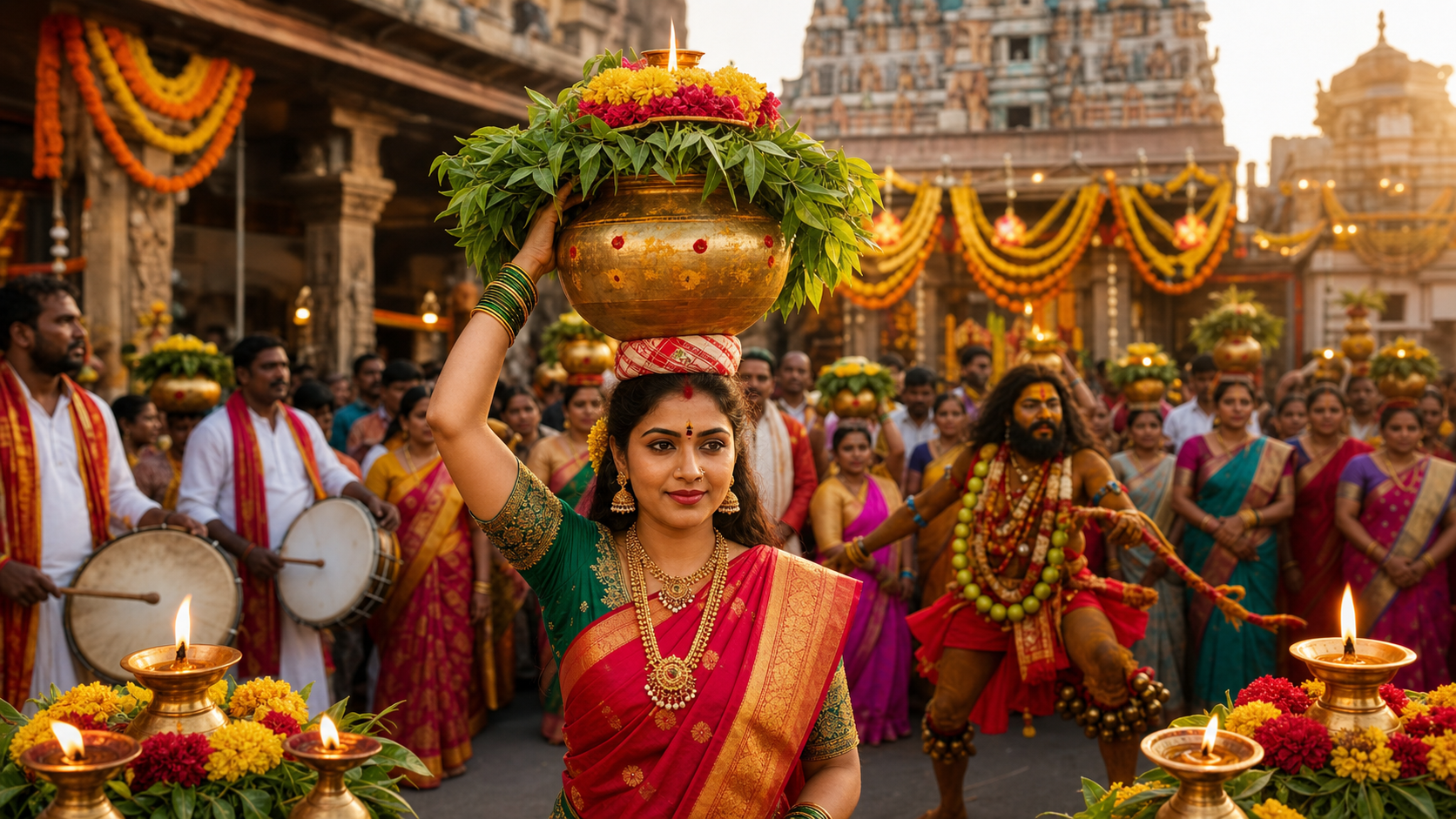
Bonalu 2026, also known as Mahankali Bonalu Jatara or Mahankali Jathara, stands among the most significant Hindu festivals of Telangana, especially in Hyderabad and Secunderabad. In 2026, the major Bonalu observances are traditionally listed for July 19, July 26, August 2 and August 9, with Secunderabad Ujjaini Mahankali Bonalu 2026 falling on August 2. The festival is rooted in devotion to Goddess Mahankali and other local manifestations of Devi, and it is observed with offerings, processions, music, public worship and community participation across historic temples and neighbourhoods.
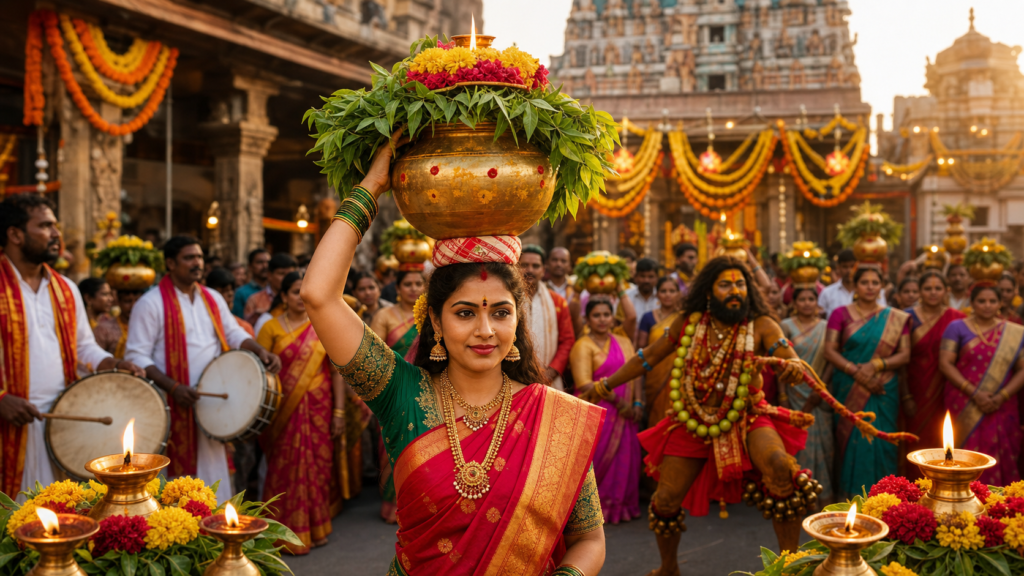
Bonalu is not merely a calendar event. It is a living expression of Telangana culture, Shakti worship, Hindu ritual continuity and urban community memory. In Hyderabad and Secunderabad, the festival gathers families, temple committees, folk performers, priests, women devotees, civic officials and neighbourhood groups into a shared devotional rhythm. The sight of women carrying decorated Bonam pots, the sound of drums, the presence of Pothuraju in processions and the collective movement toward Mahankali temples make Bonalu one of the most recognizable forms of public worship in the Deccan.
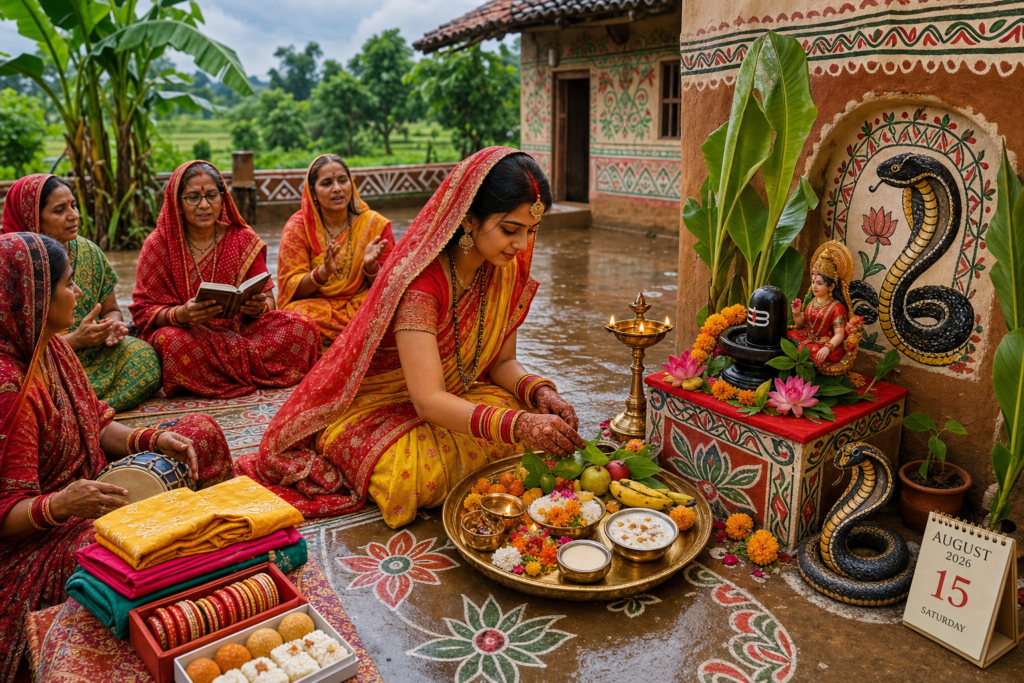
The word Bonam is generally understood as deriving from Bhojanam, meaning a meal or food offering. In ritual practice, the Bonam is a devotional meal prepared for the Goddess, usually consisting of rice cooked with milk and jaggery. The offering is placed in a new brass or earthen pot, decorated with turmeric, vermilion, neem leaves and often a small lamp. Women carry these pots on their heads and offer them to Goddess Mahankali along with turmeric, kumkum, bangles and sari, symbolizing gratitude, surrender, protection and fulfilled vows.
The 2026 Bonalu dates follow the wider Ashada Masam pattern, when Sundays become especially important for different localities and temples. July 19, 2026 is expected to mark one phase of the Hyderabad-Secunderabad observances. July 26, 2026 continues the festival cycle in other areas. August 2, 2026 is especially important because it is the listed date for Secunderabad Ujjaini Mahankali Bonalu, also called Lashkar Bonalu. August 9, 2026 completes the broader sequence in several traditional localities, though temple-level schedules may differ according to local custom and administrative announcements.
Secunderabad Ujjaini Mahankali Bonalu occupies a special place in the festival’s public imagination. The Sri Ujjaini Mahakali Temple in General Bazaar, Secunderabad, is one of the most prominent centres of Ashada Jathara. The temple’s popular history connects it with early nineteenth-century devotional memory, when an epidemic struck the twin cities and devotees associated with Secunderabad are believed to have prayed to Mahankali for protection. The later installation of the Goddess in Secunderabad became part of the sacred narrative through which the temple and the annual Bonalu offering gained enduring significance.
Recent historical discussion has also widened the scholarly understanding of Bonalu. While the nineteenth-century epidemic narrative remains important in local memory, epigraphic references reported from a Vijayanagara-period Telugu inscription suggest that Bonalu-related practices may have existed in Telangana by at least the sixteenth century. This matters because it shows that Bonalu should not be reduced to a single origin story. It is better understood as a layered tradition, carrying folk Shakti worship, temple ritual, local vows, regional identity and historical continuity across several centuries.
Mahankali worship in Bonalu reflects the broader Hindu understanding of Devi as protective, fierce, maternal and compassionate. In Telangana, the Goddess is approached through many local names and forms, including Mahankali, Yellamma, Pochamma, Maisamma, Muthyalamma and Peddamma. This diversity is not a contradiction but a hallmark of Dharmic religious life. The same sacred feminine power is encountered through local geography, family vows, village deities, temple traditions and inherited community practices.
The role of women is central to Bonalu. Their preparation and carrying of the Bonam is not a decorative ritual; it is the theological and emotional centre of the festival. The pot becomes a vessel of food, gratitude, prayer and embodied devotion. The act of balancing it on the head, walking through crowded streets and presenting it before the Goddess reflects discipline, faith and the intimate relationship between household worship and public temple culture. In many families, Bonalu is remembered through mothers, grandmothers and daughters who preserve the ritual vocabulary across generations.
Pothuraju is another powerful element of the Bonalu procession. Traditionally regarded as the brother of Mahankali and protector of the community, Pothuraju appears in bright ritual form, often with turmeric-smeared body, bells, red clothing and energetic dance movements. His presence before the procession has symbolic value: he clears the path, channels martial energy and marks the festival as both protective and celebratory. The drums around him are not background sound; they shape the pace, intensity and emotional charge of the Jatara.
Rangam, also called the oracle ritual or Bhavishyavani, usually takes place on the day after the main Bonalu celebration at important temples such as Ujjaini Mahankali. In this ritual, a woman associated with the temple tradition speaks in an oracular mode before devotees. Academically, Rangam may be viewed as a form of sacred performance, communal consultation and ritualized interpretation of the year ahead. Devotionally, it is received by many devotees as the voice and guidance of the Mother Goddess.
Ghatam is another major ritual feature of Bonalu. A decorated copper pot representing the Goddess is carried in procession, usually by a priest whose body may be anointed with turmeric. The Ghatam moves through streets and temple routes, making the presence of the Goddess visible beyond the sanctum. The eventual immersion of the Ghatam marks completion, transition and the return of sacred energy from public procession to cosmic and ritual order.
The festival geography of Bonalu is spread across many sacred centres. Golconda often begins the Ashada Bonalu cycle. Secunderabad’s Ujjaini Mahankali Temple becomes a major focus during Lashkar Bonalu. The Old City of Hyderabad, including Lal Darwaza Mahankali Temple and Akkanna Madanna Mahankali Temple, carries its own historic intensity. Balkampet Yellamma Temple, Katta Maisamma Temple, Pochamma temples, Muthyalamma temples and several neighbourhood shrines participate in the wider ritual network. Together these sites create a sacred map of Hyderabad and Secunderabad.
Bonalu’s strength lies in its ability to unite domestic devotion and public culture. A family may begin the day by preparing the Bonam at home, but the offering reaches completion only through temple darshan and collective participation. This movement from kitchen to street to sanctum is significant. It shows how Hindu festivals often dissolve rigid boundaries between private piety and shared civic life. Food, music, clothing, vows, processions and darshan become part of one integrated ritual ecology.
The festival also preserves Telangana folk arts. Drum traditions, devotional songs, Pothuraju dance, Thottelu offerings, decorated processional structures and local performance forms all contribute to the atmosphere of Bonalu. These are not merely cultural additions to worship; they are vehicles through which memory is transmitted. For many observers, the first emotional impact of Bonalu comes through sound: drums echoing through narrow streets, temple bells, chants and the collective call of devotees moving toward the Goddess.
From a cultural heritage perspective, Bonalu deserves careful documentation because it demonstrates how urban India preserves older ritual forms while adapting to modern crowd management, traffic systems, public safety needs and civic administration. Hyderabad and Secunderabad are rapidly changing metropolitan spaces, yet Bonalu continues to make neighbourhood identity visible. Streets become processional routes, markets become devotional corridors and temples become centres of both sacred and social coordination.
The festival’s emotional appeal is closely connected to gratitude. Devotees approach Mahankali not only for prosperity but also for protection from disease, danger, uncertainty and suffering. This protective dimension has deep historical resonance, especially because many local narratives connect the festival with epidemics and community survival. Even in modern times, the symbolism remains meaningful. Bonalu reminds people that public health, social protection, food, family and faith are interconnected in the lived experience of communities.
For those studying Hindu traditions, Bonalu offers an important example of Shakti worship outside purely Sanskritic or elite frameworks. It belongs to temple Hinduism, folk Hinduism, regional culture and household devotion at the same time. Its practices include formal puja, vows, offerings, processions, music, trance-like devotional expression and symbolic embodiment. This complexity makes the festival academically rich and spiritually compelling.
Bonalu also reflects the unity of Dharmic traditions through its emphasis on reverence, gratitude, non-separation of community and sacred life, respect for local tradition and continuity of inherited practices. While the festival is distinctly Hindu and Shakta in form, its deeper ethical themes resonate across Hinduism, Buddhism, Jainism and Sikhism: disciplined offering, community responsibility, remembrance, humility before the sacred and service to a larger moral order.
Visitors attending Bonalu 2026 should understand that the festival is both devotional and crowded. Major temple areas in Secunderabad and Hyderabad may draw large numbers of devotees, especially on August 2 at Ujjaini Mahankali Temple. Practical preparation matters: respectful dress, patience in queues, awareness of local traffic diversions, care around processions and sensitivity toward ongoing rituals are essential. The festival should be approached not as a spectacle alone but as a sacred public observance.
The most meaningful way to understand Bonalu is to see how many layers converge in one offering. The decorated pot carries rice, milk and jaggery, but it also carries memory, vow, gratitude, feminine strength, regional identity and the continuing presence of Devi in everyday life. In that sense, Bonalu 2026 is not only a festival date to remember. It is a reminder that Telangana’s spiritual heritage remains alive because communities continue to cook, carry, sing, dance, gather and offer together.
Bonalu 2026 in Hyderabad and Secunderabad will therefore be observed as a powerful Mahankali Jatara of devotion, cultural heritage and collective thanksgiving. The key dates to remember are July 19, July 26, August 2 and August 9, with Secunderabad Ujjaini Mahankali Bonalu on August 2. For devotees, scholars and cultural observers alike, it offers a profound view into Telangana’s Shakti traditions, temple networks, women-centred ritual practice and enduring Dharmic cultural unity.
Inspired by this post on Hindu Pad.



Leave a Reply
You must be logged in to post a comment.