
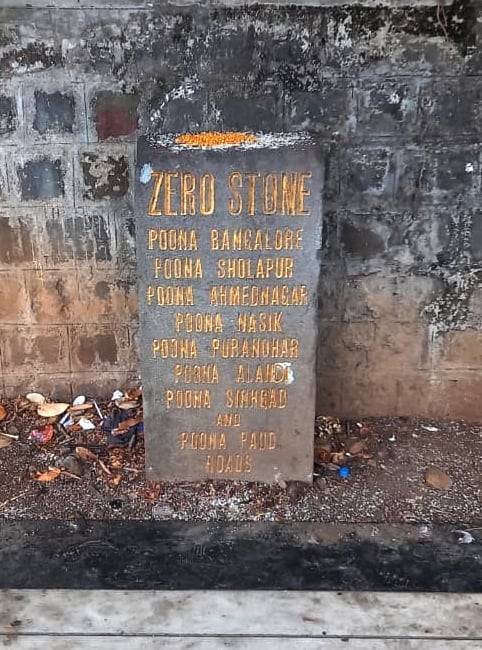
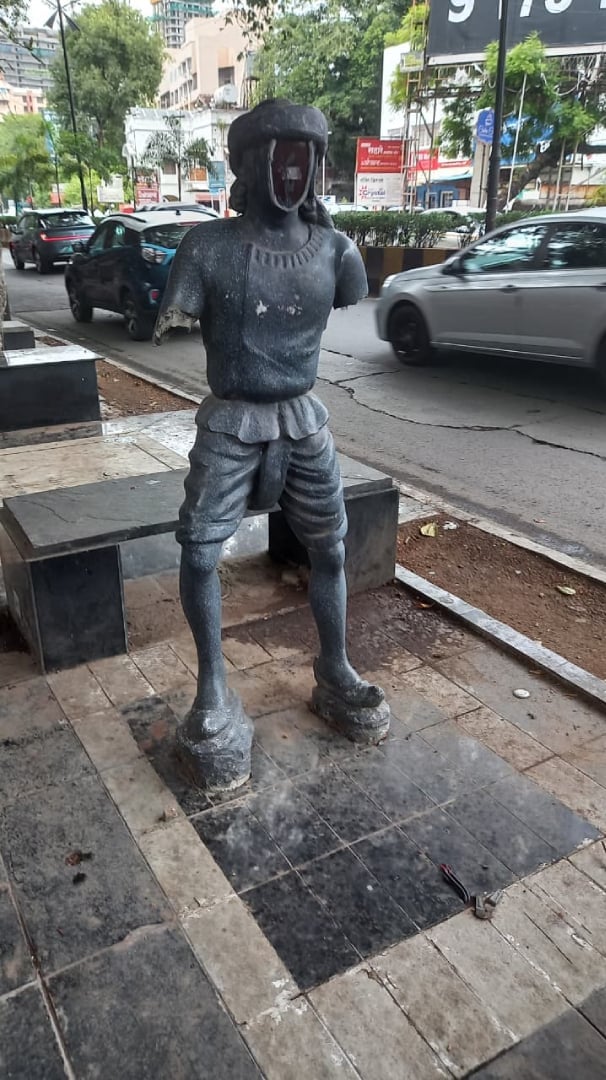
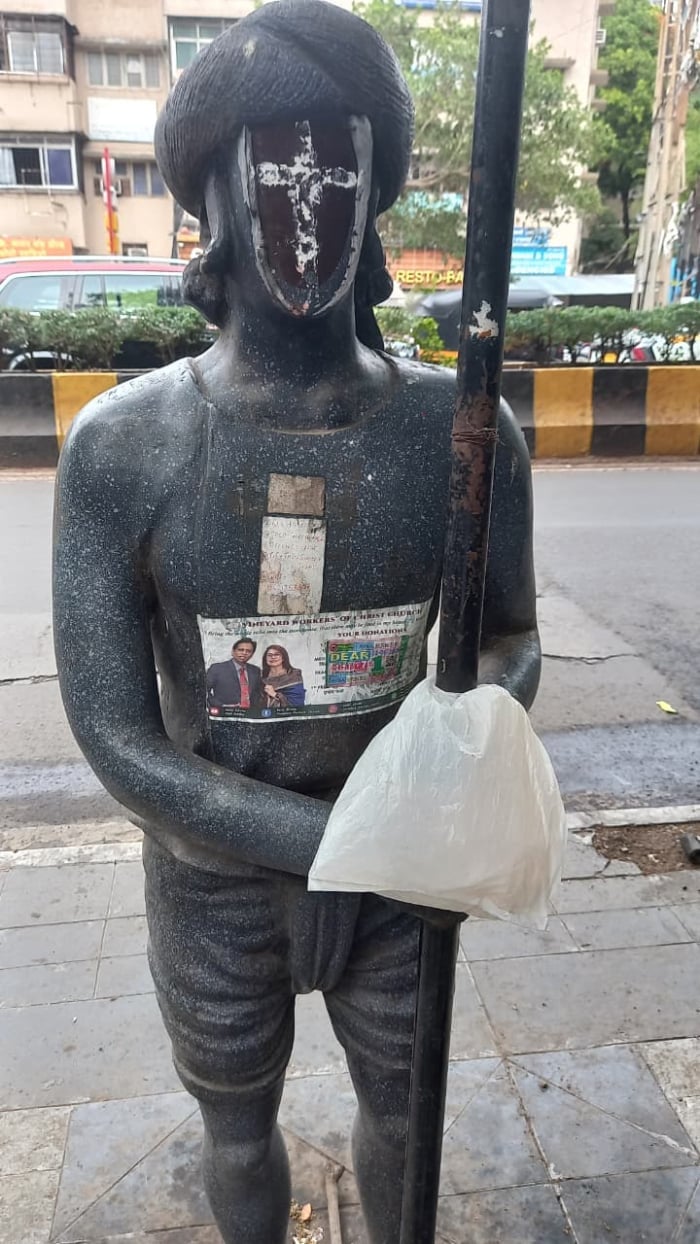
Pune’s historic 150-year-old ‘Zero Stone’ now stands as a troubling example of how a city can inherit a valuable public monument and still fail to protect it with the seriousness it deserves. A special survey has drawn attention to its deteriorating condition, noting vandalised statues, broken lighting, and neglected surroundings. The issue is not merely cosmetic. It reflects a wider weakness in civic maintenance, heritage documentation, public education, and the everyday ethics of caring for shared cultural spaces.
A zero stone is more than an old marker placed in a public location. Historically, such stones functioned as reference points for measurement, orientation, roads, administrative mapping, and urban identity. In a city like Pune, where layers of Maratha, colonial, educational, military, industrial, and modern technological history overlap, a monument of this kind has the character of a civic archive. It silently records how space was measured, how authority understood the city, and how public geography became part of everyday life.
The reported damage to Pune’s Zero Stone therefore has significance beyond one structure. Vandalised statues indicate a breakdown in respect for public heritage. Broken lighting points to poor maintenance and weak monitoring. Neglected surroundings suggest that the site has not been integrated into a sustained conservation plan. Together, these details reveal a familiar pattern: heritage is publicly praised when convenient, but often administratively ignored when it requires routine care, budgetary discipline, technical expertise, and civic vigilance.
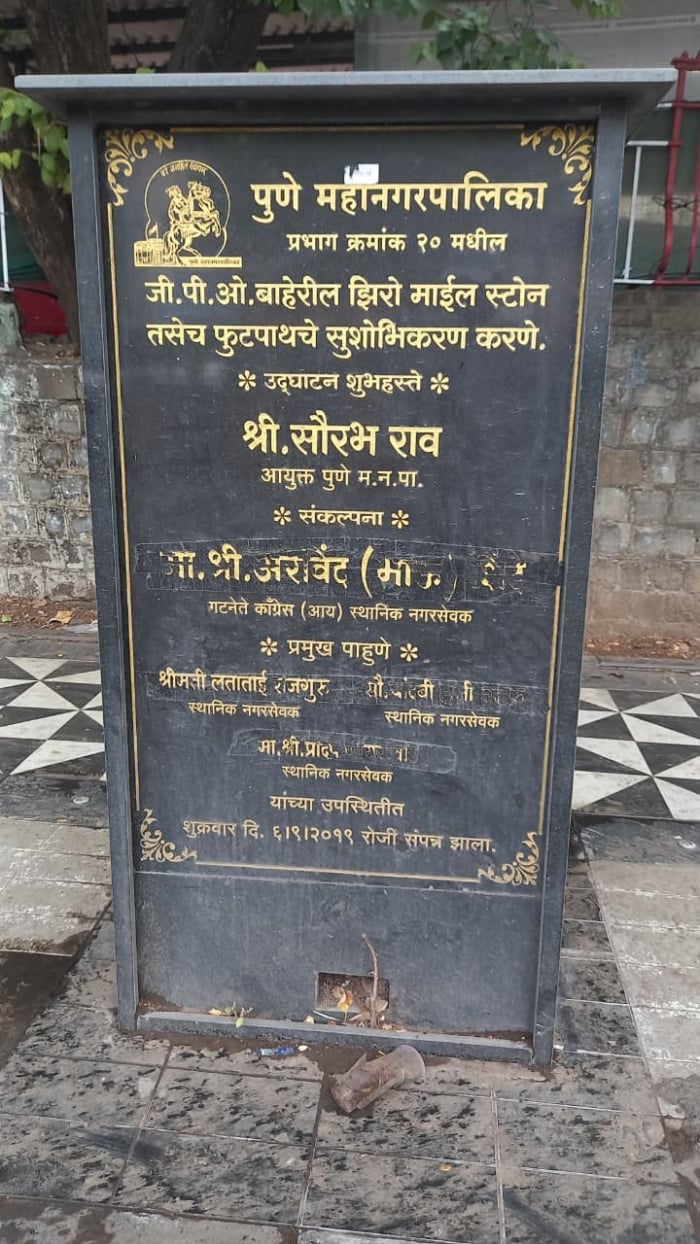
Pune has long been one of India’s important historical cities. Its memory includes Peshwa-era power, British-era institutional development, social reform movements, nationalist politics, educational growth, and post-independence urban expansion. The city’s heritage does not exist only in grand forts, celebrated temples, archives, and large institutional buildings. It also survives in smaller markers, inscriptions, boundary stones, old roads, water systems, markets, libraries, schools, bridges, and public monuments that help reconstruct the lived geography of earlier generations.
This is why the neglect of the Zero Stone should be read as a warning. When a city loses attention to small but meaningful historical objects, it gradually weakens its ability to understand its own development. Heritage conservation is not limited to preserving spectacular monuments. It also involves protecting modest structures that explain how cities were measured, administered, connected, and remembered. In that sense, the Zero Stone belongs to the wider category of historical monuments, heritage sites, and civic landmarks that require active stewardship.
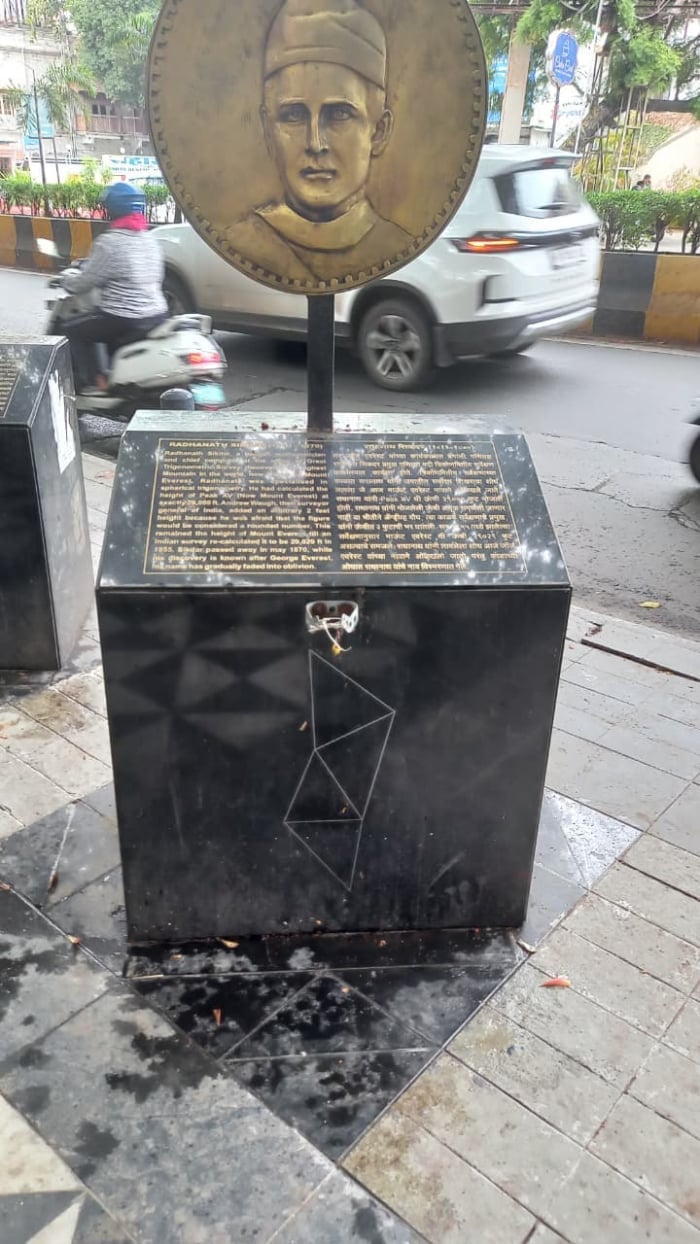
The special survey’s observations raise three core concerns. The first is physical conservation. Any stone marker exposed to weather, pollution, traffic vibration, biological growth, and human interference needs periodic condition assessment. Conservation specialists would normally examine surface erosion, cracks, staining, structural stability, prior repairs, drainage, and the effect of surrounding construction. Without such assessment, damage can become permanent before it is formally recorded.
The second concern is site management. A monument cannot be protected only by repairing the central object while ignoring its environment. Lighting, pathways, signage, landscaping, visibility, drainage, security, and pedestrian access all influence how people behave around a heritage site. Broken lights and neglected surroundings create a sense of abandonment. Once a site looks abandoned, vandalism becomes easier, public respect declines, and administrative neglect becomes self-reinforcing.
The third concern is public awareness. Many citizens may pass such a monument without knowing its age, purpose, or significance. Lack of awareness does not excuse vandalism, but it does help explain why heritage sites become invisible in plain sight. Clear interpretive signage, school-level heritage walks, local history mapping, and digital documentation can transform an ignored stone into an educational resource. A city protects what it understands, and it understands what its institutions choose to explain.
Administrative apathy is often most visible in small failures. A broken light is not just a broken light when it stands beside a 150-year-old public monument. It is evidence that no accountable system is inspecting the site at regular intervals. Vandalised statues are not only acts of individual misconduct. They also indicate weak deterrence, poor surveillance, and insufficient community ownership. Neglected surroundings are not a minor inconvenience. They show that heritage maintenance has not been treated as a continuing public responsibility.
In technical terms, Pune’s Zero Stone needs a conservation approach that begins with documentation. The first step should be a measured survey of the monument and its immediate precinct. High-resolution photography, 3D scanning where feasible, mapping of cracks and surface decay, archival comparison, and preparation of a condition report would create a baseline. Without a baseline, future repairs risk becoming improvised, and future deterioration becomes difficult to measure scientifically.
The second step should be preventive conservation. Preventive conservation is often less expensive than major restoration because it addresses risks before they become severe. For the Zero Stone, this would include controlled cleaning by trained personnel, removal of harmful vegetation or deposits, improved drainage, functioning lighting, protective but non-intrusive barriers, and routine inspection. Any intervention must respect the original material and avoid aggressive repairs that damage the monument’s authenticity.
The third step should be interpretation. A heritage marker without explanation is vulnerable to indifference. A simple, well-designed information panel should explain the age of the Zero Stone, its historical function, its relevance to Pune’s urban development, and the importance of not defacing or damaging it. The language should be accessible while remaining accurate. If possible, the site could include a QR code linking to a digital heritage page with photographs, archival notes, and conservation updates.
The fourth step should be accountability. Heritage protection cannot depend only on occasional outrage after damage becomes visible. The responsible civic body, heritage committee, local ward office, and conservation professionals should have clearly defined roles. Maintenance schedules should be public. Complaints should have a traceable response mechanism. If lighting fails, if graffiti appears, or if the site becomes unsafe, the response should be measured in days, not months.

Pune’s rapid urbanisation makes this issue more urgent. As roads widen, traffic intensifies, commercial activity expands, and public space becomes crowded, older monuments face physical and visual pressure. A heritage site can survive in legal records while disappearing in practical terms. It may remain technically present, yet become inaccessible, unreadable, dirty, damaged, or surrounded by clutter. Conservation must therefore be integrated with urban planning, not treated as a decorative afterthought.
There is also an ethical dimension to this neglect. Heritage is not only about the past; it is about the relationship between generations. Earlier generations leave behind objects, inscriptions, buildings, and sacred or civic spaces that allow later generations to understand continuity. When such objects are vandalised or ignored, the damage is not only material. It weakens the shared discipline through which a society learns gratitude, restraint, and responsibility toward what it has inherited.
This concern is especially important for a cultural landscape shaped by India’s dharmic traditions. Hinduism, Buddhism, Jainism, and Sikhism, despite their distinct histories and philosophies, all sustain deep respect for memory, place, discipline, learning, and continuity. A civic monument like the Zero Stone is not a sectarian object, but the habit of protecting it belongs to the same broader civilisational ethic: preserve what carries knowledge, respect what serves the community, and treat shared spaces with dignity.
Public vandalism is often discussed only as a law-and-order problem, but it is also a cultural education problem. When statues are defaced, lights are broken, or surroundings are misused, the visible act may be committed by a few individuals, but the wider environment of indifference enables it. Heritage protection therefore requires both enforcement and education. Fines, surveillance, and policing may deter damage, but long-term change comes when citizens begin to see such monuments as part of their own inheritance.
Schools, colleges, local historians, resident associations, and cultural organisations can play a constructive role. Pune’s students should not have to encounter heritage only through textbooks or examination notes. They should be able to visit sites like the Zero Stone, understand their function, and connect them to the city’s development. Heritage walks and local history modules can make civic memory tangible. When young citizens learn that a small stone can explain measurement, governance, mapping, and urban growth, the monument gains social protection.
The role of municipal governance remains central. Conservation cannot be outsourced entirely to public emotion or volunteer enthusiasm. A city that benefits from tourism, education, technology, real estate, and cultural prestige must also maintain the historical fabric that gives it depth. Pune’s Zero Stone should be included in a formal inventory of heritage assets, with grading, ownership details, conservation needs, risk status, and a maintenance plan. Such documentation would help prevent the monument from slipping again into civic invisibility.
Financially, the protection of a small monument need not be extravagant. The larger challenge is not always lack of funds; it is lack of priority, coordination, and continuity. Basic lighting repair, site cleaning, signage, protective design, and periodic inspection are achievable if responsibility is clearly assigned. The cost of neglect, however, can become much higher. Once original material is lost, once vandalism becomes repeated, or once public memory fades, restoration becomes both more expensive and less authentic.
The Zero Stone also invites a wider conversation about how Indian cities define development. Development cannot mean only flyovers, commercial districts, apartment towers, and digital infrastructure. A developed city is also one that can protect its historical evidence, maintain its public spaces, and educate its citizens about continuity. Pune’s claim to cultural sophistication is weakened when a 150-year-old landmark is left in a visibly neglected state.
The emotional force of this issue lies in its ordinariness. Many residents may have walked past the Zero Stone without stopping. That everyday familiarity can create affection, but it can also create blindness. A monument seen daily may be taken for granted until damage becomes severe. The survey has therefore performed an important civic function: it has made visible what routine life had allowed to fade into the background.
A responsible response should avoid both panic and tokenism. The site does not need a superficial beautification exercise that erases historical character. It needs careful conservation, regular maintenance, accurate interpretation, and public integration. The goal should not be to turn the Zero Stone into a decorative traffic island or a photo backdrop. The goal should be to restore its dignity as a historical reference point and make its meaning legible to the public.
Heritage conservation works best when it combines expertise with community participation. Conservation professionals can guide material treatment and site design. Civic authorities can provide funding, permissions, security, and maintenance. Local communities can report damage, discourage misuse, and help build awareness. Scholars and historians can provide context. Together, these roles can transform a neglected site into a living public lesson in urban memory.
Pune’s Zero Stone should be treated as a case study in the consequences of delayed care. It demonstrates how quickly a historical monument can decline when no one assumes sustained responsibility. It also shows how a timely survey can reopen public debate and create pressure for action. If the city responds with seriousness, the present neglect can become the beginning of a better model for heritage protection.
The larger lesson is clear. Heritage preservation is not nostalgia. It is disciplined public memory. It protects evidence, strengthens civic identity, and reminds citizens that cities are not built only by the present generation. Pune’s 150-year-old Zero Stone deserves urgent attention because it represents a measurable point in the city’s historical landscape. Allowing it to deteriorate would mean losing not only a monument, but also an opportunity to teach responsibility toward the past.
The immediate need is for restoration, lighting repair, cleaning, documentation, signage, and a transparent maintenance plan. The deeper need is for a shift in civic culture. Pune must learn to see such monuments not as leftover stones from another era, but as anchors of public memory. When a city protects its small landmarks, it proves that its respect for history is not limited to speeches, anniversaries, and ceremonial events. It becomes visible in the everyday care of the places that silently hold its story.
Inspired by this post on Hindu Jagruti Samiti.





Leave a Reply
You must be logged in to post a comment.