
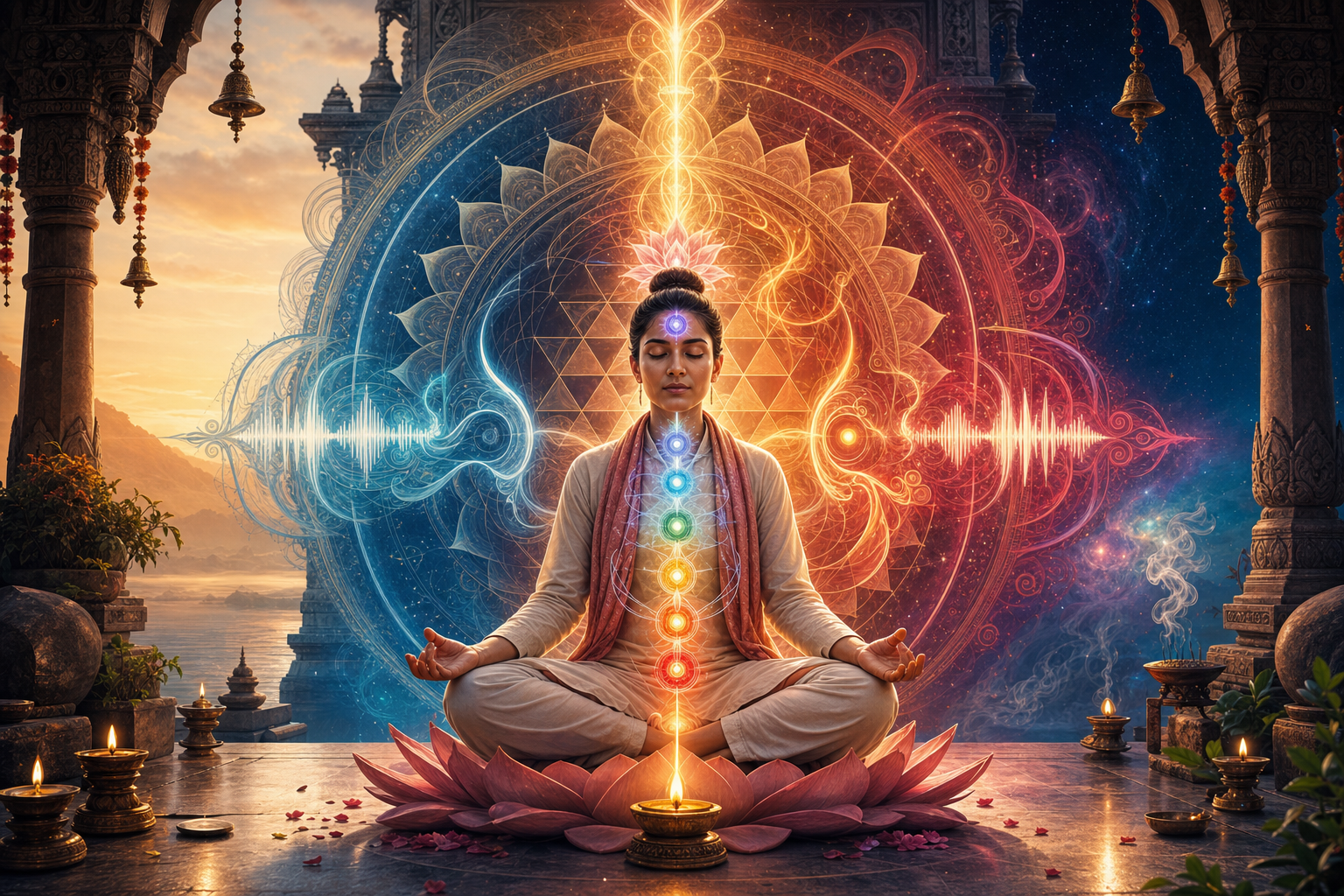
Tantra pays equal attention to body, mind, and soul because it does not treat human life as a problem to be escaped. It approaches embodied existence as a field of disciplined awakening, where the physical organism, the mental world, and the deepest spiritual identity are interdependent dimensions of one reality. In this view, liberation is not achieved by rejecting the body, suppressing the mind, or imagining the soul as disconnected from lived experience. It is pursued by refining all three until ordinary life becomes transparent to higher consciousness.
This is one of the reasons Tantra occupies such a distinctive place within Hindu spirituality. Many religious traditions, including some ascetic currents within Hinduism, have sometimes viewed the body with suspicion. The body has been described as a source of attachment, desire, decay, and distraction. Tantra does not deny these dangers, but it refuses to reduce the body to them. It argues that the same body that can bind a person through unconscious craving can also become an instrument of awareness, devotion, mantra, meditation, and transformation.
At its deepest level, Tantra is not merely a set of esoteric rituals. It is a sophisticated spiritual framework that studies the relationship between consciousness and energy, Shiva and Shakti, Purusha and Prakriti, stillness and dynamism. The human being is understood as a microcosm of the cosmos. What exists in the universe also exists in subtle form within the practitioner. Therefore, the body is not treated as a disposable shell, the mind is not treated as an enemy, and the soul is not treated as a distant abstraction. Each is a doorway into the same sacred reality.
The Tantric emphasis on the body begins with a simple but profound observation: every spiritual practice available to human beings is mediated through embodiment. Breath, posture, voice, attention, sensation, gesture, diet, sleep, sexuality, memory, emotion, and nervous system regulation all belong to embodied life. Even the repetition of a mantra requires the tongue, breath, ear, or inner faculty of sound. Meditation requires a seated body, a breathing body, and a nervous system capable of sustained attention. Tantra therefore regards the body as the temple in which spiritual discipline becomes possible.
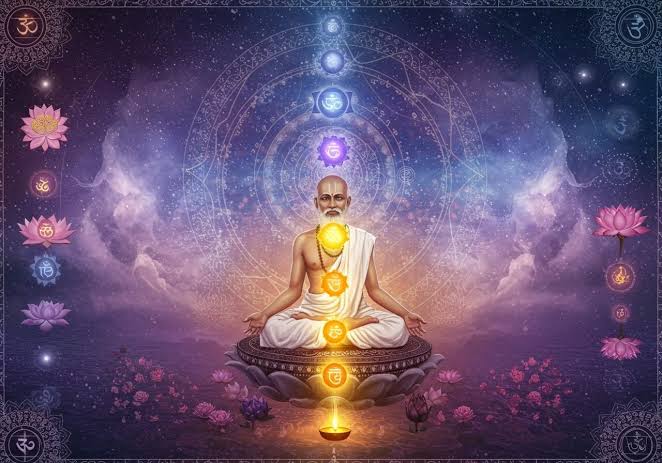
This is why many Tantric traditions speak of the body in sacred anatomical language. Concepts such as chakras, nadis, prana, kundalini, bindu, and subtle centers are not merely symbolic decorations. They represent a yogic map of embodied consciousness. The practitioner is invited to observe how energy moves, where attention becomes blocked, how desire becomes habit, how fear contracts the body, and how disciplined practice can transform instinct into insight. Whether interpreted metaphysically, psychologically, or ritually, this map insists that spiritual life must include the body rather than bypass it.
The body is also central because Tantra values direct experience. It does not rely only on belief, intellectual assent, or inherited identity. Its practices are meant to be enacted, repeated, felt, refined, and integrated. A mantra is not simply studied; it is recited until sound alters awareness. A mudra is not simply described; it is performed until gesture and intention align. A yantra is not simply admired; it is contemplated until geometry becomes a support for concentration. Ritual is not theatrical display; it is disciplined embodiment of metaphysical truth.
This embodied approach does not mean indulgence. A common misunderstanding is that Tantra sanctifies every impulse simply because it honors the body. Classical Tantric discipline is far more demanding. It requires preparation, initiation, ethical restraint, attention to purity of intention, guru guidance in many lineages, and the ability to transform energy rather than be ruled by it. The body is honored not as an excuse for compulsion, but as a sacred instrument requiring training, reverence, and responsibility.
The mind receives equal attention because it is the interpretive field through which experience is organized. A restless mind turns even sacred practice into distraction. A fearful mind misreads power as danger. An ego-driven mind can turn ritual into vanity. A confused mind mistakes symbol for superstition or sensation for realization. Tantra therefore pays close attention to mental discipline, not by despising thought, but by clarifying it.
In Tantric sadhana, the mind is trained through mantra, visualization, dhyana, breath awareness, ritual sequencing, concentration on deities, and contemplation of sacred diagrams. These practices are not random. They reshape attention. They replace scattered mental movement with patterned awareness. They give the mind a sacred form to inhabit so that it gradually ceases to function as a field of disorder. In this sense, Tantra is deeply psychological, even when it uses theological and ritual language.
The use of mantra illustrates this clearly. Mantra is sound, meaning, vibration, memory, and concentration held together. When repeated with discipline, it affects the body through breath and resonance, the mind through repetition and focus, and the soul through sacred orientation. A mantra is therefore not only a word or phrase. It is a method for bringing body, mind, and consciousness into a single current of practice. This is one reason mantra occupies such a central place in Tantric traditions.
Visualization practices also reveal Tantra’s careful treatment of the mind. A deity in Tantric meditation is not merely an external figure. The deity functions as a living symbol of divine qualities, cosmic principles, and awakened potentials within consciousness. By meditating on Shiva, Devi, Bhairava, Tripura Sundari, Kali, or other forms according to lineage and tradition, the practitioner does not simply imagine divinity. The mind is trained to perceive reality through a sacred pattern rather than through ordinary fragmentation.
This is where Tantra differs from purely moralistic approaches to spirituality. It does not assume that transformation occurs only by commanding the mind to be good. It recognizes that the mind is shaped by impressions, samskaras, desires, fears, memories, and inherited patterns of attention. Therefore, it offers ritual, sound, breath, image, posture, and devotion as means of reconditioning consciousness. The mind is not crushed; it is educated.
The soul, or the deepest spiritual identity of the person, remains the ultimate reference point. Tantra does not honor the body and mind for their own sake alone. It honors them because they are expressions and vehicles of consciousness. In many Shaiva and Shakta Tantric traditions, the individual self is not absolutely separate from the supreme reality. Spiritual practice uncovers the recognition that the same consciousness shining in the individual is rooted in the cosmic principle of Shiva, while the dynamic power of manifestation is Shakti.
This metaphysical vision gives Tantra its holistic character. If consciousness and energy are not enemies, then body and spirit cannot be absolute enemies either. If the universe is a manifestation of divine power, then embodied life cannot be dismissed as spiritually worthless. If Shakti pervades existence, then matter, sensation, thought, and emotion can all become material for awakening when approached through discipline. The soul is not discovered by fleeing creation, but by seeing creation correctly.
The relationship between body, mind, and soul can be understood through the movement from gross to subtle. The physical body is the most visible layer. The breath and vital energy form a subtler layer. The mind, emotions, and imagination are subtler still. Beyond them lies witnessing consciousness, the spiritual center that is not exhausted by bodily change or mental fluctuation. Tantra works through these layers carefully, recognizing that neglect at one level affects the others.
This layered understanding resonates with broader Hindu concepts such as the pancha kosha, or five sheaths, and the distinction between sthula sharira, sukshma sharira, and karana sharira. While not every Tantric school uses identical terminology, the principle is similar: human existence is multidimensional. Food, breath, thought, wisdom, bliss, karma, memory, and consciousness are intertwined. A complete spiritual path must therefore address more than belief. It must address the full architecture of human life.
Such a view also helps explain why Tantra developed detailed methods rather than abstract doctrine alone. It is concerned with transformation in practice. If the body is tense, impure in habit, or dominated by inertia, practice is affected. If the breath is disturbed, the mind becomes unstable. If the mind is scattered, mantra loses depth. If the ego appropriates spiritual power, the soul’s recognition is obscured. Tantra therefore seeks integration because fragmentation weakens sadhana.
The equal attention given to body, mind, and soul is also visible in ritual worship. A Tantric puja may include purification, nyasa, mantra, visualization, offerings, breath regulation, deity invocation, inner worship, and external worship. Each step corresponds to a transformation in the practitioner. The body performs the ritual, the mind holds the meaning, and the soul is oriented toward union with the divine. Ritual becomes a technology of integration rather than a mere sequence of religious actions.
Nyasa is especially important in this context. In nyasa, mantras are ritually placed upon parts of the body, sacralizing the practitioner’s embodiment. The practice communicates a radical theological insight: the body can be recognized as a seat of divinity. This does not mean the ordinary ego is divine in an inflated sense. It means that the body, when purified by awareness and mantra, is no longer experienced as spiritually alien. It becomes aligned with sacred presence.
Kundalini symbolism further demonstrates Tantra’s integrative vision. Kundalini is often described as latent spiritual energy, associated with Shakti, resting at the base of the subtle body. The ascent of kundalini through the chakras is a symbolic and experiential account of awakening. It involves bodily sensation, energetic movement, psychological purification, emotional release, concentration, insight, and spiritual expansion. Whether approached devotionally or philosophically, kundalini cannot be reduced to only body, only mind, or only soul. It belongs to all three.
For this reason, responsible Tantric traditions emphasize preparation. Breathwork, mantra, ethical discipline, diet, devotion, steadiness, humility, and guidance are not optional ornaments. They protect the practitioner from imbalance. A powerful practice performed by an unprepared mind or an unstable body can produce confusion rather than clarity. Tantra’s holistic nature is therefore not sentimental. It is practical and technical: the whole person must be prepared because the whole person is involved.
The emotional dimension of Tantra is often overlooked, but it is central to understanding why the tradition feels so humanly complete. People do not live as disembodied intellects. They carry grief in the chest, fear in the belly, shame in posture, longing in the breath, and memory in the nervous system. A spirituality that speaks only to doctrine may leave these layers untouched. Tantra recognizes that transformation must reach the places where life is actually felt.
This gives Tantra a strong relevance for modern discussions of mind-body connection, mental health, somatic healing, and holistic well-being. While classical Tantra should not be reduced to modern wellness language, its insights are strikingly contemporary. It understands that attention changes experience, breath influences mental state, ritual shapes identity, sound affects emotion, and disciplined embodiment can alter consciousness. These observations are not merely theoretical; they are confirmed through practice across generations of sadhakas.
At the same time, Tantra must be protected from shallow popularization. In modern global culture, the word Tantra is often narrowed to sexuality or exoticized spirituality. This distortion obscures the vastness of Tantric traditions, including temple worship, mantra shastra, Sri Vidya, Kashmir Shaivism, Kaula traditions, Shakta theology, Buddhist Vajrayana parallels, ritual manuals, philosophical texts, and yogic disciplines. Sexual symbolism exists in some Tantric contexts, but it is neither the whole of Tantra nor a license for casual indulgence.
A careful academic reading shows that Tantra is diverse, historically layered, and internally disciplined. There are right-hand and left-hand streams, householder and ascetic expressions, temple-centered and internalized practices, devotional and non-dual philosophies. Some schools emphasize ritual purity, others transgressive symbolism, and still others subtle meditation. Yet across many of these forms, the same broad principle appears: the human being is not divided into hostile compartments. Body, mind, and soul must be understood together.
This principle also supports unity among Dharmic traditions. Hindu Tantra, Buddhist Vajrayana, certain yogic streams, Jain disciplines of embodied restraint, and Sikh emphasis on remembrance while living in the world all challenge the idea that spirituality must be divorced from daily life. These traditions differ in theology and method, and their differences should be respected. Yet they share a civilizational intuition that transformation must be lived, practiced, embodied, remembered, and integrated into conduct.
Within Hinduism, Tantra also helps bridge the gap between renunciation and participation. It does not deny the value of vairagya, self-discipline, or liberation from attachment. However, it asks whether renunciation must always mean rejection of the world. In many Tantric traditions, the deeper renunciation is not hatred of the body, but freedom from unconscious identification. The practitioner may live in the world, worship through the body, use the mind skillfully, and still seek moksha.
This approach has special significance for householders. Not every seeker can abandon family, work, society, and responsibility. Tantra offers a path in which ordinary life can be ritualized and spiritualized. Food, speech, relationship, work, worship, sleep, sexuality, and service can be brought under awareness and dharma. This does not make discipline easier; in many ways it makes it more demanding. It asks for consciousness in the middle of life rather than only in withdrawal from life.
The body, then, becomes a site of responsibility. It must be cared for, purified, steadied, and used in service of sadhana. The mind becomes a site of refinement. It must be trained, observed, corrected, and concentrated. The soul becomes the site of recognition. It must be uncovered beneath layers of ignorance, ego, and restless desire. Tantra’s genius lies in refusing to isolate these processes. Bodily discipline without inner awakening becomes mechanical. Mental clarity without embodiment becomes fragile. Spiritual aspiration without psychological honesty becomes escapism.
The triadic balance of body, mind, and soul is also visible in the Tantric understanding of Shakti. Shakti is not merely power in the political or physical sense. It is the dynamic principle by which consciousness manifests as universe, life, thought, language, sensation, and spiritual ascent. To honor Shakti is to honor the sacred energy moving through existence. This naturally includes the body that acts, the mind that knows, and the soul that recognizes its source.
In Shaiva Tantric thought, Shiva without Shakti is often described as pure stillness, while Shakti is the power of manifestation. Their unity is not only a theological image; it is a map of spiritual experience. The practitioner discovers still awareness amid movement, silence amid mantra, transcendence amid embodiment. Body, mind, and soul are not collapsed into one another, but harmonized in a higher unity. This is the sacred triad at the heart of Tantric practice.
Tantra also pays close attention to speech, because speech links body, mind, and consciousness. Spoken mantra uses the vocal body. Mental mantra uses subtle attention. Realized mantra points beyond ordinary thought into pure awareness. Sanskrit phonetics, bija mantras, and ritual recitation all show that sound is treated as a bridge between matter and spirit. The voice becomes a disciplined channel through which inner and outer worlds meet.
Another important feature is Tantra’s respect for symbolism. Symbols are not treated as decorative additions to religion. A yantra, a deity form, a ritual gesture, a chakra diagram, or a sacred syllable condenses metaphysical insight into a form the body and mind can engage. This is pedagogically powerful. Human beings learn not only through abstract logic, but through rhythm, image, repetition, movement, and reverence. Tantra uses all these modes to guide the practitioner toward spiritual recognition.
The ethical dimension should not be ignored. Because Tantra works with powerful aspects of human life, it requires maturity. Desire, anger, fear, pride, and attachment are not casually celebrated. They are observed, ritualized, sublimated, and transformed. The aim is not to become more self-indulgent, but more awake. A Tantric practitioner who lacks humility, compassion, and self-control has misunderstood the path. True integration strengthens dharma rather than weakening it.
This point is essential in contemporary settings where spiritual language can be used to justify ego. Tantra’s respect for the body is not body-worship in a superficial sense. Its respect for the mind is not intellectual vanity. Its respect for the soul is not vague mysticism. It is a disciplined system in which each dimension is purified by the others. The body grounds the mind. The mind directs the body. The soul gives both their ultimate orientation.
Tantra’s holistic vision also offers a corrective to modern fragmentation. Contemporary life often separates health from spirituality, psychology from ritual, intellect from devotion, and private experience from sacred tradition. Tantra suggests that these separations are incomplete. A person may be physically active but spiritually empty, intellectually sharp but emotionally restless, religiously observant but disconnected from the body, or spiritually curious but mentally undisciplined. A complete path must bring these dimensions into relationship.
This does not mean every person must become a Tantric initiate or adopt specialized practices. Many Tantric methods require proper lineage, preparation, and context. However, the underlying insight has broad value: spiritual life becomes deeper when it includes the whole person. Breath should support prayer. Conduct should support meditation. Thought should support devotion. The body should support dharma. The soul should remain the guiding center of all practice.
In this sense, Tantra is both ancient and urgently relevant. It speaks to people who feel divided within themselves, who experience the body as a burden, the mind as a battlefield, and the soul as a distant hope. Tantra answers by saying that these are not three unrelated problems. They are three dimensions of one human journey. Healing, discipline, knowledge, devotion, and liberation must move together.
The central lesson is that Tantra honors the body because embodiment is the ground of practice. It honors the mind because awareness must be trained and purified. It honors the soul because the aim of practice is spiritual recognition, liberation, and union with the divine. None of the three can be neglected without distorting the path. The sacred triad is not a poetic metaphor alone; it is a practical framework for complete transformation.
Therefore, Tantra pays equal attention to mind, body, and soul because it sees the human being as an integrated expression of cosmic reality. The body is the temple, the mind is the altar of awareness, and the soul is the light toward which all practice is directed. When these three are brought into harmony through mantra, meditation, ritual, ethical discipline, and devotion, Tantra becomes not an escape from life, but a profound awakening within it.
Inspired by this post on Hindu Blog.






Leave a Reply
You must be logged in to post a comment.