

A class on Śrīmad Bhāgavatam 8.12.25–28, associated with HH Bhanu Swami, directs attention to one of the most psychologically intense passages in the Eighth Canto: the episode in which Lord Śiva encounters Mohinī-mūrti, the enchanting form of Lord Viṣṇu. The title alone points toward a subject that is not merely mythological or devotional, but deeply technical in its treatment of consciousness, desire, divine illusion, and spiritual humility. These verses belong to the chapter traditionally known as “The Mohinī-mūrti Incarnation Bewilders Lord Śiva,” and they require careful reading because the narrative is easily misunderstood when detached from its theological and literary setting.
The broader setting is the famous churning of the ocean of milk, the samudra-manthana, where devas and asuras cooperate in pursuit of amṛta, the nectar of immortality. After the nectar appears, Viṣṇu manifests as Mohinī-mūrti to protect cosmic order and prevent the asuras from misusing divine power. Later, Lord Śiva, having heard of this extraordinary form, desires to see it personally. The encounter that follows in Śrīmad Bhāgavatam 8.12 is therefore not a casual tale of temptation; it is a theological demonstration of how even the greatest beings honor the Supreme’s inconceivable potency.
Verses 25–28 describe the point at which Śiva becomes overwhelmed by Mohinī’s beauty. In the traditional translation preserved by the Bhaktivedanta VedaBase, the verses show that his discrimination is temporarily overcome, his senses become agitated, and he pursues Mohinī with intensity. The Sanskrit terms are especially important. Phrases such as apahṛta-vijñānaḥ, “deprived of clear discernment,” and pramuṣitendriyaḥ, “the senses being disturbed or carried away,” frame the event as an analysis of consciousness under the pressure of desire. This is why the passage remains powerful for readers: it does not treat desire sentimentally, but as a force that can disturb even a mind trained in austerity, meditation, and cosmic responsibility.
At the same time, the passage should not be read as a sectarian insult against Lord Śiva. Within Vaiṣṇava theology, Śiva is revered as a great devotee, a cosmic governor, and one of the most exalted personalities in sacred literature. In many Hindu traditions, Śiva is worshipped as the embodiment of renunciation, compassion, yogic mastery, and divine power. The Bhāgavatam does not diminish that greatness. Rather, the episode reveals a subtler point: the Lord’s own divine energy, when revealed as māyā or yogamāyā, is beyond the control of ordinary calculation. Even the greatest may become an instrument through which a spiritual principle is taught.
This is where the narrative becomes especially relevant to dharmic unity. Śaiva, Vaiṣṇava, Śākta, Smārta, Jain, Buddhist, and Sikh communities have often developed distinct vocabularies for discipline, attachment, restraint, liberation, and awakening. Yet the practical insight is widely shared: the untrained mind can be captured by appearances, and inner freedom requires vigilance. In the Bhāgavatam, this principle is dramatized through divine līlā; in Buddhist analysis, craving is examined through the language of tṛṣṇā; in Jain ethics, restraint and non-attachment are central to purification; in Sikh thought, attachment to māyā is overcome through remembrance, humility, and grace. The passage therefore becomes more meaningful when read as a shared dharmic meditation on desire rather than as a narrow sectarian comparison.
Verse 25 begins with Śiva’s discernment being overpowered by Mohinī’s presence. The image is startling precisely because Śiva is no ordinary ascetic. He is the lord of yogīs, the one who sits absorbed beyond social convention, ornamented with ashes, serpents, and the symbols of transcendence. If such a being can become momentarily absorbed in the power of divine enchantment, the ordinary practitioner has little reason for arrogance. The passage dismantles spiritual pride. It teaches that austerity, knowledge, social status, scriptural learning, and even mystical accomplishment do not automatically make one immune to subtle disturbance.
Verse 26 portrays Mohinī moving away, smiling, hiding among the trees, and not remaining in one place. The scene has the movement of classical sacred drama. Mohinī is not merely an object of attraction; she is the Lord’s own bewildering potency in embodied form. Her elusiveness has symbolic depth. Desire often functions in this way: it promises completion, then moves away; it appears reachable, then changes shape; it gives the mind an image to chase while preventing lasting satisfaction. The text’s literary brilliance lies in presenting this psychological truth through vivid narrative rather than abstract theory.
Verse 27 compares Śiva’s pursuit to that of an elephant following a she-elephant. This comparison is deliberately earthy and embodied. The Bhāgavatam often uses natural imagery to explain states of consciousness. Here the elephant metaphor communicates the weight, momentum, and force of sensory compulsion. Desire is not presented as a small intellectual error; it is experienced as a powerful movement of the whole psychophysical organism. The body, senses, imagination, and ego converge into pursuit. For spiritual practice, this is a sober observation: ethical life cannot depend only on good intentions formed in calm moments. It requires disciplines strong enough to function when the mind is heated.
Verse 28 is the most difficult and must be handled with care. It describes Śiva seizing Mohinī, despite her unwillingness, and embracing her. A responsible reading cannot romanticize the action. The narrative uses discomfort to expose the danger of uncontrolled impulse. In its theological setting, Mohinī is Viṣṇu’s divine manifestation and the entire episode is a līlā meant to reveal the power of the Lord’s energy. In ethical reflection, however, the verse also warns that desire, when divorced from self-command, can violate dignity, restraint, and relational awareness. This makes the passage unexpectedly contemporary. It invites serious reflection on consent, self-mastery, and the difference between sacred attraction and possessive grasping.
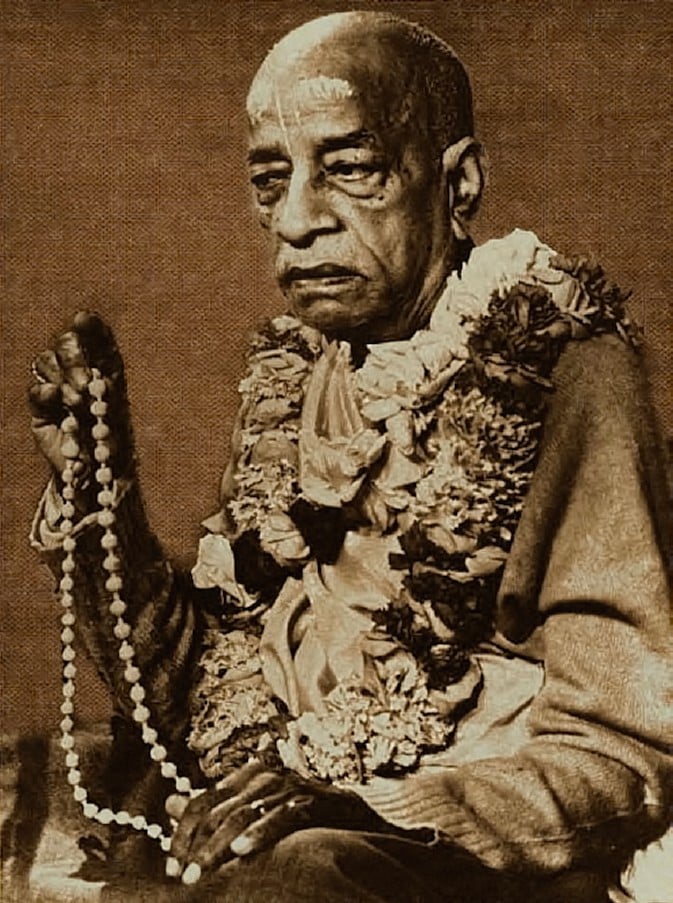
HH Bhanu Swami is widely respected for careful scriptural explanation, especially in Gauḍīya Vaiṣṇava contexts where Sanskrit, commentary, and philosophical structure are treated with precision. A class on these verses would naturally bring attention to the layered meaning of māyā, kāma, vijñāna, and bhakti. These terms cannot be reduced to simple English equivalents. Kāma is not merely desire in the neutral sense; it is self-centered craving when detached from dharma. Vijñāna is not only information; it is realized discrimination. Māyā is not a crude illusion that makes the world nonexistent; it is divine power that can veil, reveal, test, and instruct. Bhakti is not sentimentality; it is disciplined, loving orientation toward the Supreme.
The episode also illustrates a central feature of Purāṇic pedagogy: sacred literature often teaches through paradox. Śiva, the supreme ascetic, becomes the one who demonstrates the vulnerability of ascetics. Mohinī, the form of beauty, becomes the teacher of detachment. The apparent fall becomes a revelation of divine power. The emotionally charged narrative becomes a technical lesson in metaphysics. Such paradoxes are not literary accidents; they are part of the Bhāgavatam’s method of leading the reader beyond simplistic moralism into deeper theological intelligence.
For many readers, the most relatable dimension is the experience of knowing better and still being pulled by habit. The human mind often carries sincere values, scriptural knowledge, and moral aspiration, yet a single image, memory, fear, ambition, or attachment can disturb clarity. The Bhāgavatam refuses to flatter the practitioner. It acknowledges that the senses are powerful and that spiritual maturity is tested not in theory but in moments of pressure. This honesty is one reason the text continues to speak across centuries.
The passage also places humility at the center of spiritual life. If Śiva’s encounter with Mohinī teaches anything, it is that no one should consider themselves beyond examination. The practitioner who thinks, “This cannot happen to me,” may already be in danger. The healthier conclusion is different: constant remembrance, disciplined association, self-study, and surrender are necessary at every level. This is not a pessimistic view of human nature. It is a realistic one, and realism is often the beginning of compassion.
In Vaiṣṇava interpretation, the Lord’s energy is both protective and corrective. Mohinī protects the devas from the asuras during the distribution of nectar, and later Mohinī corrects any tendency to underestimate divine power. The same energy that preserves cosmic order also reveals the limits of individual mastery. This dual function is important. Divine grace does not always arrive as comfort. Sometimes grace arrives as exposure, allowing hidden pride or latent attachment to become visible so that deeper purification can begin.
This reading is also useful for understanding the relationship between knowledge and realization. Śiva certainly possesses knowledge. Yet the verses show a temporary interruption of practical discernment. The distinction matters. Scriptural learning may establish the map, but realized steadiness is the ability to remain aligned when the terrain becomes difficult. In this sense, Śrīmad Bhāgavatam 8.12.25–28 becomes a study in applied spirituality. It asks whether knowledge has entered the reflexes, the senses, the imagination, and the heart.
The story also has a social dimension. Communities often revere spiritual figures, teachers, monks, priests, scholars, and public leaders. Reverence has value when it is anchored in dharma, but it becomes dangerous when it creates the fantasy that admired figures cannot be tested. The Bhāgavatam offers a more mature model. Greatness is honored, but not sentimentalized. Even exalted beings remain meaningful because they participate in līlā, demonstrate principles, and point beyond themselves toward the Supreme Reality.
For dharmic traditions, this maturity is essential. Unity does not require erasing theological differences, nor does it require flattening Śiva, Viṣṇu, Devī, the Tīrthaṅkaras, the Buddha, or the Gurus into interchangeable symbols. Unity is stronger when traditions can honor difference while recognizing shared ethical concerns: restraint, compassion, truthfulness, humility, non-possessiveness, remembrance, and liberation from ego-driven compulsion. This passage contributes to that larger conversation by showing how sacred narrative can awaken self-knowledge without encouraging contempt for another path.
From a technical theological standpoint, Mohinī-mūrti also raises the question of form and transcendence. The Supreme is not limited by material categories, yet divine form can appear within the world to accomplish a purpose. Mohinī’s beauty is not ordinary sensuality; it is a divine manifestation through which cosmic and pedagogical purposes are fulfilled. The confusion arises when the observer relates to divine form through possessive desire rather than reverent recognition. The same manifestation that liberates one consciousness may bewilder another, depending on orientation.
This principle has practical consequences for devotional life. Beauty, music, ritual, image, temple architecture, mantra, and sacred story can elevate consciousness when approached with reverence. The same sensory channels can bind consciousness when approached through consumption and ego. The difference is not always in the object; it is often in the disposition of the observer. The Bhāgavatam therefore does not teach hostility toward the senses. It teaches purification of the senses through devotion, discipline, and right relationship.
The episode should also be read in continuity with what follows. Śiva later regains composure and recognizes the extraordinary nature of Viṣṇu’s potency. His greatness is not canceled by the episode; in fact, his greatness is revealed in his ability to understand what has happened. A lesser person might respond with denial, anger, or blame. Śiva’s stature lies in his capacity to recognize divine arrangement. This is one of the most important spiritual lessons in the chapter: recovery after bewilderment is possible when humility replaces defensiveness.
In everyday terms, this is profoundly relevant. People are not defined only by moments of disturbance, but by whether they learn from them truthfully. A lapse can become a doorway to deeper self-knowledge if it is met with honesty. The dharmic response is neither despair nor self-justification. It is purification, recommitment, and clearer dependence on divine grace. Such an approach protects both personal integrity and communal trust.
Thus Śrīmad Bhāgavatam 8.12.25–28 stands as a demanding passage on desire, humility, and the mystery of divine energy. It asks the reader to honor Lord Śiva without sentimental simplification, to understand Mohinī-mūrti without reducing divine beauty to ordinary attraction, and to examine the mind without denial. Its enduring value lies in this combination of theological depth and psychological realism. The verses remind every practitioner that dharma is not merely a cultural identity or intellectual position; it is the disciplined transformation of perception, desire, and action in the presence of the Divine.
Further reading may begin with the Bhaktivedanta VedaBase entries for ŚB 8.12.25, ŚB 8.12.26, ŚB 8.12.27, and ŚB 8.12.28, read alongside the full chapter context of “The Mohinī-mūrti Incarnation Bewilders Lord Śiva.”
Inspired by this post on Dandavats.









Leave a Reply
You must be logged in to post a comment.