
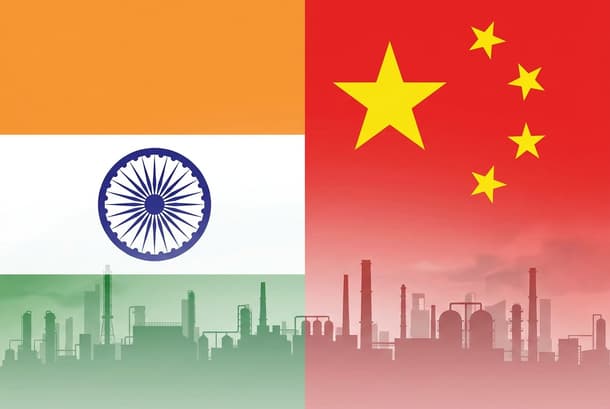
China’s industrial rise offers India a demanding lesson: public subsidy can build national capability only when it is tied to research, technical depth, disciplined execution, and measurable domestic value creation. Money alone cannot manufacture competence. A state can finance land, machinery, tax concessions, concessional loans, and grand announcements, but it cannot purchase a semiconductor ecosystem overnight if the underlying scientific, managerial, and supply-chain foundations are weak.
The collapse of Hongxin Semiconductor Manufacturing Co. in Wuhan remains one of the clearest warnings. The project promised advanced 14-nanometre and 7-nanometre chip production, attracted enormous nominal investment, and acquired expensive lithography equipment. Yet the enterprise lacked the research base, engineering maturity, credible operating history, and governance safeguards required for such a technically unforgiving industry. A celebrated industrial dream quickly turned into an abandoned facility, unpaid workers, and a public lesson in the danger of confusing capital expenditure with technological capability.
For India, the significance is not that China failed. China has also built formidable strength in solar equipment, batteries, electric vehicles, telecommunications, shipbuilding, high-speed rail, electronics assembly, and increasingly in semiconductor packaging and mature-node manufacturing. The more useful point is subtler: China succeeded where subsidy was embedded within a wider ecosystem of learning, manufacturing discipline, export pressure, research accumulation, and state monitoring. It failed where local governments treated industrial policy as a race to announce factories before firms had mastered the science, process control, and market logic behind them.
This distinction matters deeply for Bharatiya industrial policy. India is entering a phase in which the state is again willing to shape markets through Production Linked Incentive schemes, semiconductor support, defence indigenisation, electronics manufacturing programmes, green energy incentives, and public procurement. This shift is necessary. A large civilisation-state cannot rely permanently on imported machinery, foreign intellectual property, externally controlled supply chains, and low-value assembly. Strategic autonomy requires manufacturing capability. Manufacturing capability requires technology. Technology requires sustained research and development.
The central rule should therefore be simple: no R&D, no subsidy. This does not mean every small firm must run a frontier laboratory before receiving help. It means that public support should be conditional on a credible pathway to learning. Firms receiving incentives must show investment in product development, process engineering, patents where relevant, design teams, testing capacity, supplier development, workforce training, and collaboration with universities or national laboratories. Subsidy must reward capability creation, not merely capacity announcement.
China’s experience shows the difference between industrial policy as theatre and industrial policy as statecraft. Theatre produces ceremonial groundbreakings, oversized investment figures, and empty factory shells. Statecraft asks harder questions. Who owns the core technology? What proportion of value addition is domestic? What process knowledge is being accumulated? Which suppliers are being upgraded? What is the yield, defect rate, energy intensity, export performance, and learning curve? What happens if foreign equipment, software, or components are suddenly denied?
Semiconductors make this logic especially visible because chip manufacturing is not a normal factory business. A fabrication plant is a tightly controlled scientific environment in which materials science, optics, chemistry, software, clean-room discipline, metrology, equipment maintenance, and process integration must work together at extraordinary precision. Even established global leaders require decades to master advanced nodes. A new entrant cannot leap from ambition to 7-nanometre production by importing one expensive machine and hiring a few well-known executives. The same principle applies, with different intensity, to aerospace, batteries, pharmaceuticals, defence electronics, robotics, medical devices, and advanced materials.
India’s policy challenge is to avoid two opposite errors. The first error is old-style statism, in which public money protects inefficient firms indefinitely and treats commercial failure as a reason for more support. The second error is market fundamentalism, in which the state refuses to build strategic capacity and expects private firms to absorb risks that no individual company can rationally bear. A serious Bharatiya approach must sit between these extremes. It must be pro-market, but not passive; pro-industry, but not captured by industry; ambitious, but not gullible.
Production Linked Incentive schemes have already demonstrated that well-designed incentives can shift investment decisions, especially in electronics, pharmaceuticals, telecom equipment, solar modules, drones, and automotive components. The next stage must be more demanding. Incremental production is useful, but it is not enough. India must increasingly link incentives to design ownership, domestic components, tooling capability, indigenous process improvement, export competitiveness, and measurable productivity gains. Otherwise, the country risks subsidising assembly while the highest-value layers remain abroad.
China’s subsidy system has produced both world-class outcomes and visible distortions. International assessments have repeatedly noted that Chinese firms in several sectors receive unusually high levels of direct and indirect state support, including cheap credit, land concessions, tax relief, grants, and procurement advantages. This has helped Chinese firms gain market share in sectors such as solar panels, electric vehicles, batteries, and shipbuilding. Yet the same system has also encouraged overcapacity, weak firms, local protectionism, and projects that survive because credit is politically available rather than commercially justified.
India should study this record without imitation or moral panic. The lesson is not that subsidies are inherently harmful. The lesson is that subsidies without discipline become a tax on national seriousness. Public money must create a capability that remains after the subsidy ends. If a firm becomes competitive only because it receives incentives, the policy has created dependence. If a firm uses incentives to climb the technology ladder, deepen supplier networks, raise productivity, and compete globally, the policy has created national wealth.
A robust Indian model should begin with transparent eligibility. Any major industrial subsidy should require a technology plan, not just a financial plan. The applicant should explain what knowledge gap it will close, what domestic capability it will create, what technical milestones it will meet, and what proportion of expenditure will go into R&D, tooling, testing, certification, workforce development, and supplier upgrading. The state should not merely ask how many units will be produced; it should ask what India will know how to do after those units are produced.
The second requirement is milestone-based disbursement. Large upfront support creates moral hazard. Subsidies should be released when firms meet verifiable targets: pilot production, yield improvement, localisation of key inputs, successful certification, export orders, patent filings where meaningful, technology transfer absorption, or independently audited R&D spending. Such a system allows the state to support risk without rewarding failure disguised as scale.
The third requirement is clawback. If a recipient diverts funds, inflates investment claims, fails to meet agreed technical milestones, or shuts down after receiving support, the government should recover part of the subsidy through enforceable contracts. This is not hostility toward industry. It is respect for taxpayers, workers, and serious entrepreneurs who compete honestly. Industrial policy must carry consequences.
The fourth requirement is independent technical evaluation. Bureaucratic review alone is insufficient in frontier sectors. India needs panels that include engineers, scientists, manufacturing veterans, supply-chain experts, financial specialists, and domain-specific technologists. A semiconductor proposal should be examined by people who understand process nodes, lithography constraints, yield curves, equipment dependencies, chemicals, gases, wafers, packaging, design ecosystems, and export controls. A battery proposal should be evaluated by people who understand chemistry, cycle life, safety, mineral supply, recycling, and manufacturing quality. Technical ignorance is expensive.
The fifth requirement is patient but finite support. Technology development takes time. A country cannot demand instant profitability from every strategic sector. However, patience must not become permanence. Each scheme should define review points, sunset clauses, and performance thresholds. Firms that learn should receive deeper support. Firms that only lobby should exit the queue.
India’s civilisational perspective can enrich this debate. Bharatiya thought has long respected knowledge, skill, discipline, and duty. A dharmic view of economics does not treat wealth creation as a narrow private act; it sees productive work as part of social responsibility. When public resources are used, the recipient carries an obligation to the wider society: to build competence, create employment, reduce dependence, train people, and strengthen the nation. Subsidy without contribution violates that moral economy.
This is where unity among dharmic traditions also has practical meaning. Hindu, Buddhist, Jain, and Sikh traditions differ in theology and practice, yet each honours disciplined effort, ethical conduct, learning, restraint, and service. Industrial policy, though technical in form, ultimately rests on these virtues. A nation that subsidises shortcuts weakens its own character. A nation that rewards tapasya in research, precision in manufacturing, and integrity in public finance builds durable strength.

The emotional dimension should not be ignored. Behind every failed industrial project are workers who relocated, families who believed in a future, engineers who joined in hope, local communities that expected development, and taxpayers whose money carried the risk. The story of a failed fabrication plant is not just a balance-sheet event. It is a wound in public trust. India cannot afford to make industrial policy a playground for speculative promoters or politically connected intermediaries.
At the same time, excessive fear of failure would be equally damaging. Frontier sectors involve uncertainty. Some projects will fail even under honest management. The correct goal is not zero failure; it is intelligent failure. A failed project should still leave behind trained workers, usable infrastructure, technical learning, supplier capability, and institutional knowledge. Waste is not the same as risk. Risk is acceptable when it teaches; waste is unacceptable when it merely transfers public money into private hands.
India’s semiconductor mission illustrates the stakes. The country has strengths in chip design, software, engineering talent, and electronics demand. It is now building assembly, testing, marking, packaging, and fabrication capacity. This sequence is sensible if it is treated as an ecosystem strategy rather than a prestige race. India need not begin by pretending to match Taiwan’s most advanced nodes. It can build strength in design-linked incentives, mature nodes, compound semiconductors, sensors, power electronics, packaging, embedded systems, automotive chips, defence electronics, and trusted supply chains. The ladder matters more than the slogan.
R&D intensity remains a structural concern. India has world-class islands of excellence, but national expenditure on research and development remains low compared with the ambitions of a major technological power. Public research institutions, private firms, universities, defence laboratories, startups, and manufacturing companies must be connected more effectively. The Anusandhan National Research Foundation and similar efforts can become important only if they bridge laboratory research and industrial application. A paper published, a prototype tested, a process improved, and a product commercialised must be seen as stages of one national mission.
Private sector participation is crucial. In many advanced economies, the largest share of R&D comes from firms competing in demanding markets. Indian industry has often preferred licensed technology, imported machinery, or low-risk services over deep product innovation. That pattern must change. Public subsidy should therefore nudge companies toward in-house research, joint development with institutes, long-term engineering teams, and original intellectual property. The state should not fund firms that refuse to invest in their own future.
Universities must also be brought into the industrial policy framework. A serious manufacturing nation cannot separate classrooms from factories. Engineering institutions should work with industrial clusters on materials testing, quality control, automation, embedded systems, process improvement, and product design. Students should see manufacturing not as a fallback career but as a high-skill national vocation. Apprenticeships, doctoral industry fellowships, shared laboratories, and regional technology centres can help convert demographic strength into productive capability.
Another lesson from China is the importance of local government capacity. Chinese provinces and cities often compete aggressively to attract industrial projects. This can accelerate infrastructure and cluster formation, but it can also create reckless duplication and weak scrutiny. Indian states are increasingly competing for electronics, electric vehicles, data centres, defence corridors, renewable energy, and semiconductor investments. This competition is healthy only if state governments develop technical evaluation capacity and avoid the temptation to announce projects that are financially impressive but technologically hollow.
Industrial policy must also be linked to public procurement. Defence, railways, energy, telecom, health systems, and digital infrastructure can create demand for domestic products. However, procurement should not become protection for poor quality. Indian firms must receive opportunities, but those opportunities should come with standards, testing, after-sales obligations, cybersecurity requirements, reliability metrics, and export ambitions. National preference should raise capability, not lower expectations.
Export discipline is equally important. A firm that sells only in a protected domestic market may never learn global efficiency. Export markets force attention to cost, quality, certification, delivery, design, branding, and service. India should therefore connect subsidies to export performance where appropriate, while also recognising that strategic sectors such as defence electronics or critical infrastructure may require different metrics. The wider principle remains: firms must face demanding users.
There is also a geopolitical dimension. The age of frictionless globalisation has ended. Supply chains are being reorganised because of strategic distrust, export controls, sanctions, pandemic memories, and national security concerns. China used industrial policy to reduce dependence on others; the United States, Japan, Europe, South Korea, and Taiwan are also using public policy to secure critical industries. India cannot stand aside and pretend that markets alone will guarantee resilience. Yet India must ensure that its response is intellectually disciplined and fiscally responsible.
The better Indian path is selective depth. Instead of subsidising every fashionable sector, India should identify areas where national demand, talent, security need, and export potential intersect. These include electronics components, semiconductors, power electronics, advanced batteries, grid equipment, green hydrogen systems, defence technologies, drones, space systems, pharmaceuticals, medical devices, agricultural technology, and critical minerals processing. In each sector, policy should map the value chain and target the points where capability gaps are most damaging.
Transparency will determine public legitimacy. Citizens are more likely to support industrial policy when they can see why a firm was selected, what obligations it accepted, what milestones it met, and what public benefit emerged. A public dashboard for major incentive schemes could track investment, jobs, R&D spending, domestic value addition, export performance, technology milestones, and subsidy disbursement. Such transparency would discourage inflated claims and help serious companies distinguish themselves from subsidy seekers.
India should also avoid the glamour trap. Advanced manufacturing is not built only through spectacular mega-projects. Tool rooms, testing labs, metrology centres, component suppliers, maintenance firms, chemical producers, machine builders, logistics providers, and skilled technicians are equally important. A country that wants fabs must also care about gases, wafers, ultrapure water, spare parts, clean-room discipline, packaging substrates, design tools, and reliability testing. Industrial strength is granular.
The slogan “No R&D, No Subsidy” should therefore be understood as a governance principle, not a rhetorical flourish. It asks whether public support is creating knowledge. It asks whether firms are learning. It asks whether workers are being skilled. It asks whether India is moving upward from assembly to design, from design to process control, from process control to intellectual property, and from intellectual property to global standard-setting. Without that upward movement, subsidy becomes expenditure. With it, subsidy becomes investment.
China’s failures warn against haste. China’s successes warn against complacency. India must absorb both lessons. The country needs ambition large enough to build strategic industries, humility deep enough to respect technical complexity, and discipline firm enough to protect public money. Bharatiya industrial policy should not be a copy of Beijing, Washington, Brussels, Tokyo, Seoul, or Taipei. It should be rooted in India’s own strengths: engineering talent, entrepreneurial energy, democratic accountability, civilisational respect for knowledge, and a vast domestic market.
The final test is simple. Ten years after a subsidy is granted, what remains? If the answer is only a closed factory, unpaid loans, and a press release, the policy has failed. If the answer is a skilled workforce, stronger suppliers, export-ready firms, domestic intellectual property, deeper research networks, and greater national resilience, the policy has served its purpose. India’s industrial future depends on making that distinction before the money is spent, not after the damage is done.
Inspired by this post on Hindu Post.











Leave a Reply
You must be logged in to post a comment.