
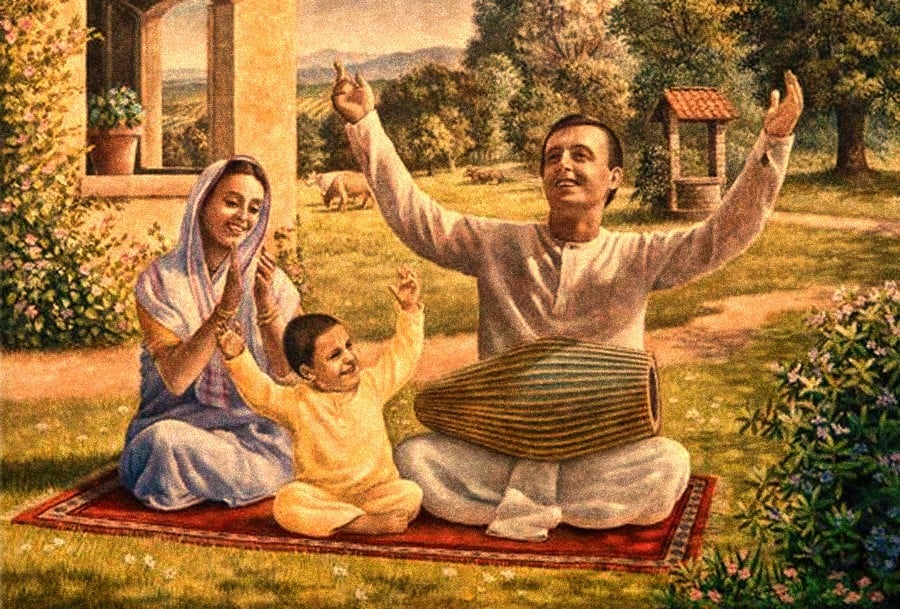
Srimad Bhagavatam, Canto 7, Chapter 14, presents household life not as a compromise with spiritual life, but as one of its most demanding disciplines. The chapter, traditionally titled “Ideal Family Life,” begins with Maharaja Yudhisthira asking Narada Muni a practical and deeply human question: how can those who live at home, surrounded by responsibilities, uncertainty, affection, labor, wealth, guests, ancestors, ritual obligations, and social duties, still move toward liberation according to the Vedas?
This question remains strikingly modern. A householder today may not stand in a royal assembly, yet the pressures are familiar: livelihood, family expectations, emotional attachment, social status, property, consumption, time scarcity, and the constant fear that spiritual life must wait until everything else is settled. Narada Muni’s answer rejects that assumption. In the Srimad-Bhagavatam, the home becomes a field of dharma when earning, feeding, giving, worship, restraint, and social care are aligned with the Supreme.
The central teaching is that a grhastha must work, but the fruits of work should be offered to Krsna, Vasudeva, rather than consumed as private entitlement. This does not deny livelihood or family duty. It reorders them. Wealth, food, learning, land, ritual, hospitality, and affection are treated as entrusted resources. The household is therefore not merely an economic unit; it is a sacred institution meant to support body, mind, society, ancestors, living beings, and ultimately spiritual realization.
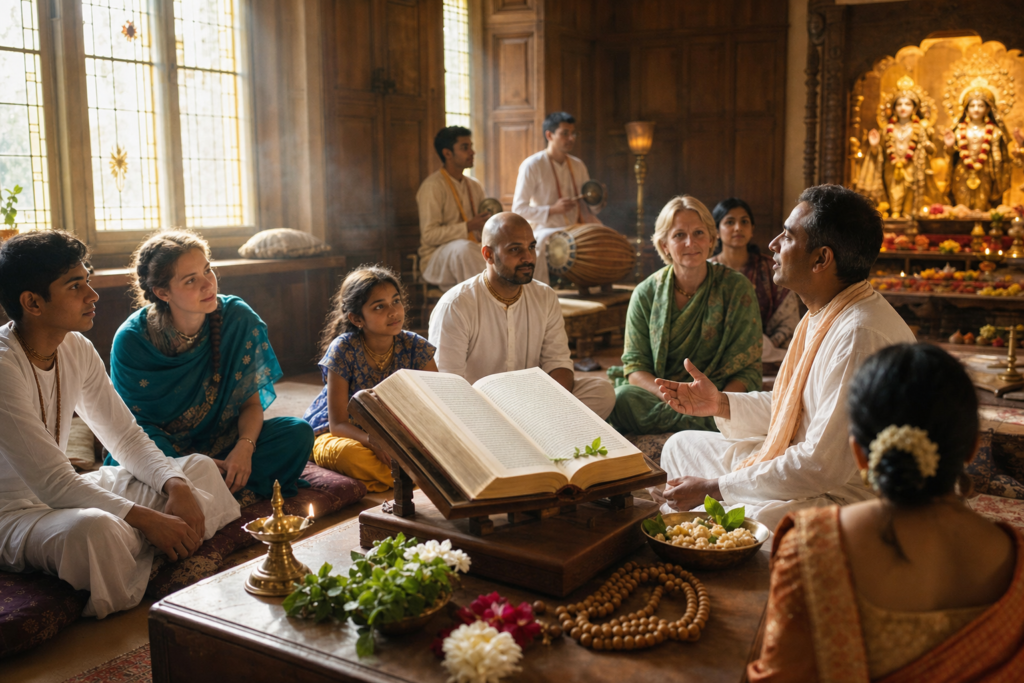
Narada Muni places association with saintly persons at the beginning of household discipline. The grhastha is instructed to repeatedly seek the company of devotees and to hear the activities of the Supreme Lord and His incarnations as narrated in Srimad-Bhagavatam and the Puranas. This is a technical principle of bhakti: consciousness is shaped by association, sound, memory, and repeated orientation. A home that hears sacred narratives becomes different from a home governed only by consumption, competition, and anxiety.
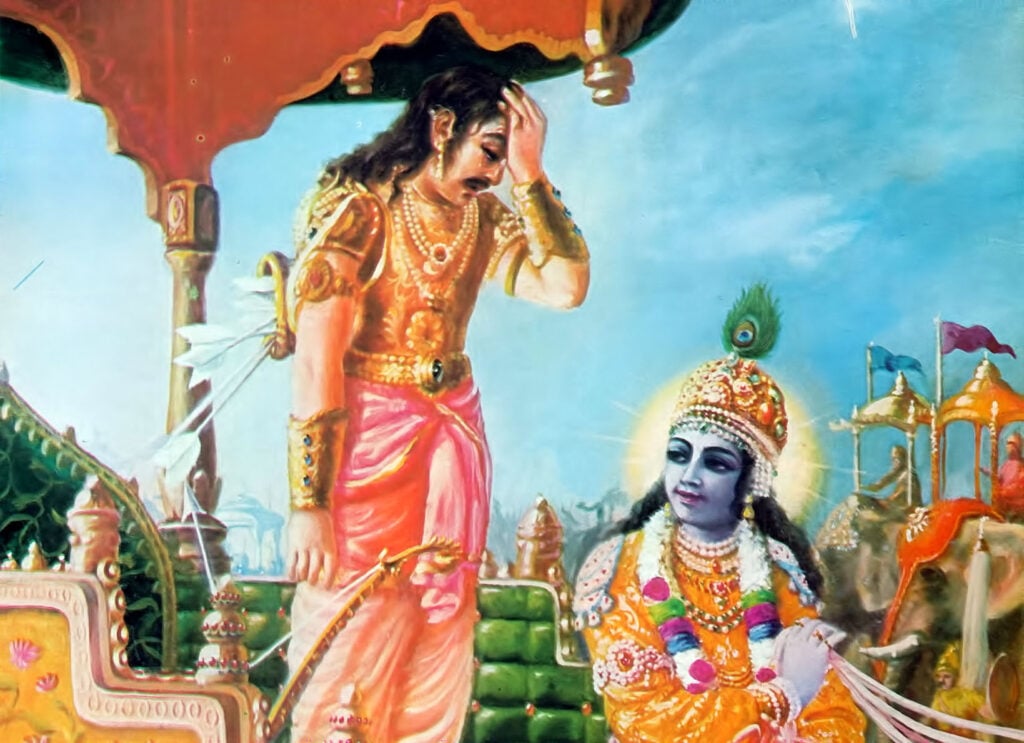
The chapter’s discussion of detachment is often misunderstood if read superficially. Detachment does not mean neglecting spouse, children, parents, guests, or dependents. It means performing obligations without allowing possessiveness to become the center of identity. Narada’s comparison to a person awakening from a dream is psychologically precise: what once seemed absolute is gradually seen in proportion. Family love is honored, but it is not allowed to eclipse the eternal purpose of life.
For this reason, the ideal householder is described as outwardly engaged and inwardly free. Such a person earns enough to maintain body and soul, participates in society, responds kindly to relatives, and appears affectionate in ordinary dealings. Yet internally, the person does not build a burdensome life that leaves no room for sadhana, study, charity, hospitality, and self-knowledge. This is a disciplined simplicity, not social withdrawal.
Narada’s instruction to keep one’s program of life simple has unusual relevance in an age of overstimulation. Friends, relatives, children, and social circles constantly suggest new obligations, purchases, ambitions, and markers of prestige. The text advises courteous external agreement where appropriate, but firm internal discernment. The householder must not turn life into a heavy machinery of endless acquisition. In dharmic language, the purpose of life is not fulfilled by complexity alone.
The ecological dimension of the chapter is equally important. Natural resources are described as gifts arranged by the Supreme Personality of Godhead for the maintenance of all living beings. Rain, earth, fields, mines, seas, atmosphere, and unexpected provisions are not presented as objects for unlimited exploitation. They are part of a moral order. One may claim what is needed for maintaining body and soul, but the desire to possess beyond rightful need is treated as theft against the wider creation.
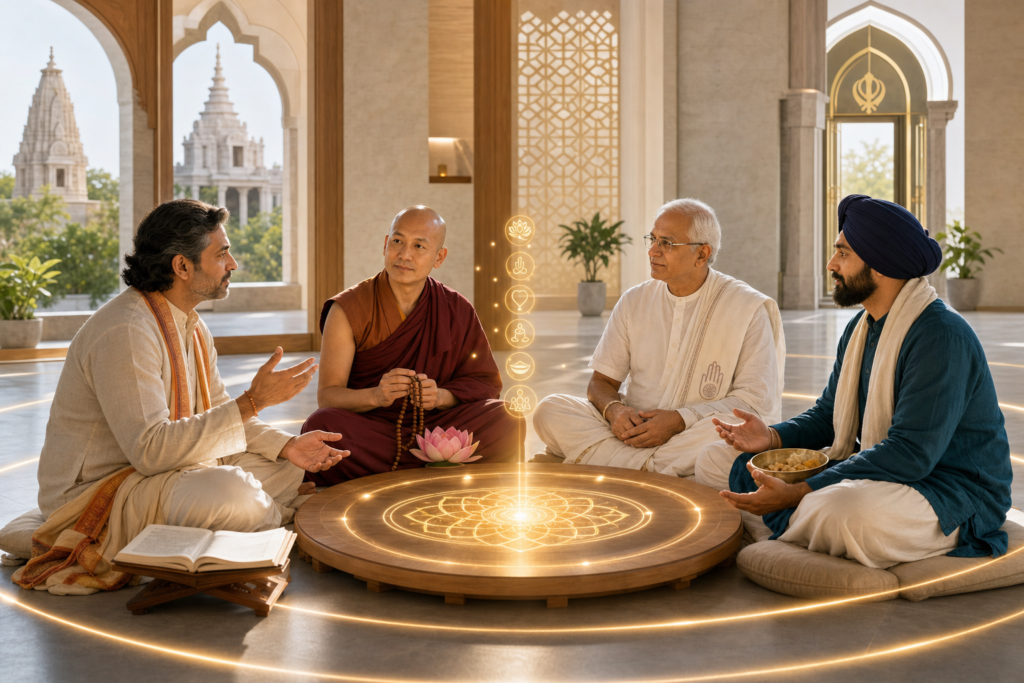
This teaching connects with the dharmic principles of aparigraha, restraint, ahimsa, and responsible stewardship. Hindu, Buddhist, Jain, and Sikh traditions each preserve powerful disciplines around moderation, compassion, service, and non-possessiveness. Srimad-Bhagavatam expresses this through bhakti theology: because all beings are connected to the Supreme, resources must circulate in ways that sustain life rather than inflate ego.
The chapter’s compassion toward animals is direct and uncompromising. Deer, camels, asses, monkeys, mice, snakes, birds, flies, dogs, and other beings are not to be dismissed as disposable. The text asks the householder to see how little essential difference there is between dependent children and innocent animals when both require protection, food, and care. This is not sentimentalism; it is metaphysical ethics. If the Supreme is present in all beings as Paramatma, cruelty toward life is spiritually incoherent.
Narada Muni also warns against ugra-karma, work driven by aggressive ambition, violence, and excessive strain. Even in household life, one should not labor obsessively for religiosity, economic development, or sensory satisfaction when those pursuits become detached from liberation. The point is not laziness. The point is proportionality. Work is necessary, but work that destroys inner balance, harms others, and binds the mind to endless desire defeats the higher purpose of grhastha dharma.
The social responsibility of the householder is therefore central. The home is expected to feed and support guests, the poor, the vulnerable, socially marginalized persons, animals, and dependents according to capacity. In this vision, hospitality is not a decorative virtue; it is a structural duty. Food becomes prasada when offered to the Lord, and it becomes social dharma when distributed with reverence. The kitchen, dining space, and threshold of the home become places of worship through service.
The chapter’s strong language about attachment to one’s spouse should be read through its ascetic and philosophical purpose. It is not a dismissal of marriage, nor a denial of mutual respect. It is a critique of possessive obsession, especially when attachment becomes so intense that judgment, duty, parents, teachers, and spiritual obligations are sacrificed. In dharmic family life, husband and wife are not objects of ownership. They are partners in discipline, hospitality, restraint, and God-centered living.
Narada’s contemplation on the temporary nature of the body belongs to a long Indic tradition of vairagya. The body is honored as an instrument of dharma, but it is not treated as the final self. Physical beauty, status, and sensual fascination are unstable. The body returns to the elements. The Supreme Being, by contrast, is all-pervading like the sky. Such reflection is meant to reduce delusion, not produce contempt for embodied life.
The practical antidote to possessiveness is prasada and yajsa. The householder is advised to eat sanctified food and perform the five daily forms of sacrifice, traditionally understood as duties toward the Supreme, sages, ancestors, living beings, and human society. These practices train the mind to see life as received, not owned. When food, knowledge, wealth, and time are consecrated, household life becomes a discipline of gratitude.
The daily worship described in this chapter is broad and layered. One should worship the Supreme Being situated in everyone’s heart, and on that basis honor demigods, saintly persons, ordinary human beings, living entities, forefathers, and the self. This is a sophisticated theological structure. The many forms of reverence do not fragment the sacred; they reveal the Supreme within the many. It is a vision of unity in diversity, a principle deeply resonant across Sanatana Dharma and wider dharmic civilization.

Where wealth and knowledge are available, yajsa should be performed according to the sastras. The chapter affirms sacrificial offerings into fire, but it also gives special importance to feeding qualified brahmanas and distributing prasada to other beings. The sacrificial ideal is therefore not limited to ritual precision. It includes learning, purity, hospitality, nourishment, and the recognition that the Supreme is pleased when beings are cared for with sanctified intention.
The section on sraddha and ancestral rites shows how family life extends across generations. The householder is not an isolated individual but a link in a chain of birth, memory, obligation, and gratitude. The text names auspicious times such as Makara-sankranti, Karkata-sankranti, Mesa-sankranti, Tula-sankranti, Aksaya-trtiya, Kartika, Magha, Sravana-naksatra, Anuradha, Uttara-phalguni, Uttarasadha, Uttara-bhadrapada, janma-naksatra, and other sacred alignments. These timings integrate cosmic order, ritual memory, and family continuity.
Technically, these observances reflect the Vedic concern with kala, or sacred time. Seasonal transitions, lunar days, naksatras, eclipses, sankrantis, and ancestral periods are treated as moments when human action can be harmonized with a larger order. The text’s claim is not merely calendrical. It teaches that short human life gains depth when actions are aligned with remembrance, purification, charity, worship, and gratitude toward those who came before.
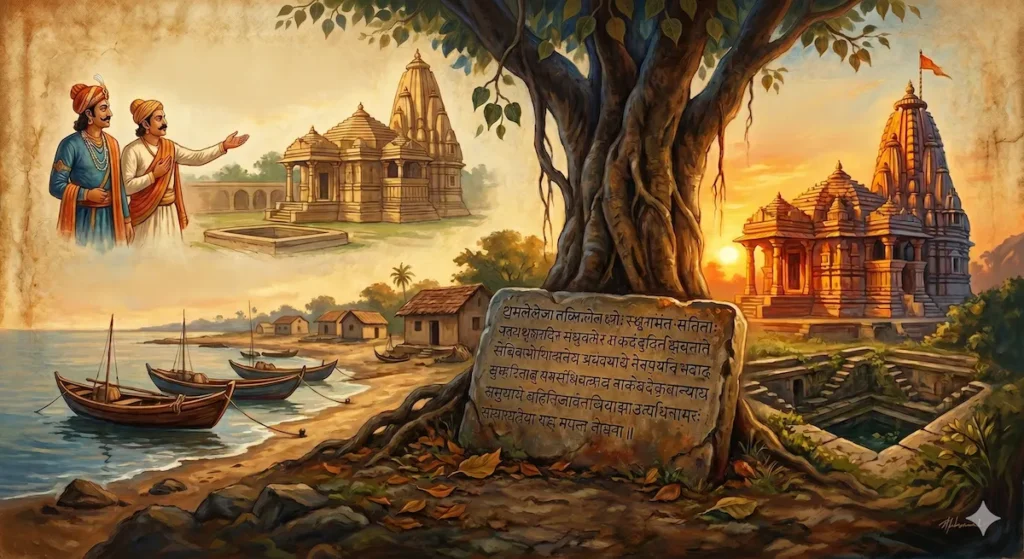
Sacred geography is then introduced as another support for religious performance. Narada Muni identifies places where a Vaisnava is present, temples where the Deity is installed, communities of learned brahmanas practicing austerity, education, and mercy, and sacred rivers praised in the Puranas. The home is important, but pilgrimage expands the moral imagination. It reminds the householder that life is not confined to private walls; it belongs to a sacred landscape.
The places named in the chapter include Puskara, Kuruksetra, Gaya, Prayaga, Pulahasrama, Naimisaranya, the Phalgu River, Setubandha, Prabhasa, Dvaraka, Varanasi, Mathura, Pampa, Bindu-sarovara, Badarikasrama [Narayanasrama], Citrakuta, Mahendra, Malaya, and other holy regions associated with Lord Ramacandra, mother Sita, Krsna, sages, rivers, and sacred memory. Such places function as archives of dharma. They preserve theology in geography, history in ritual, and devotion in collective memory.
The chapter also recognizes sacred centers beyond India where Krsna consciousness is practiced and Radha-Krsna Deities are worshiped. This is significant for the modern Hindu diaspora. The sacred is not reduced to ethnicity or geography alone. Where worship, learning, prasada, kirtana, seva, and sincere devotion are present, a place can become spiritually potent. This principle helps preserve Hindu spirituality across continents while maintaining continuity with the Puranic sacred geography of Bharatavarsha.
Narada Muni then returns to the central theological claim: Krsna, Acyuta, is the root of the cosmic tree. When the root is nourished, the entire tree is nourished. In the same way, worship of the Supreme Personality of Godhead is understood to honor all living beings because all beings rest in Him and arise from Him. This is not a rejection of compassion toward the world; it is the metaphysical foundation for such compassion.
The teaching on Paramatma deepens this idea. The Supreme resides with the living being in many bodily forms: human beings, animals, birds, saints, demigods, and innumerable other embodiments. The Supersoul gives intelligence according to the capacity of the individual soul. From a philosophical perspective, this explains why ethical life cannot be limited to human convenience. Each body is a residence, and within each residence the divine presence accompanies the jiva.
The introduction of Deity worship in Treta-yuga is explained as a response to declining mutual respect. When people could no longer reliably perceive the sacred in one another, temple worship offered a concrete, disciplined means of reorienting consciousness. The Deity is not merely an object of ritual; the Deity trains the senses, the body, the schedule, the household, and the community toward reverence. Temple culture thus becomes a social technology of remembrance.
Yet Narada gives an important warning: ritual paraphernalia alone does not satisfy the Lord if envy toward devotees remains in the heart. This is one of the chapter’s most practical insights. A person may perform worship externally while remaining harsh, competitive, or disrespectful toward sincere practitioners. The Bhagavata standard is higher. Devotion must refine conduct. Worship without humility becomes spiritually incomplete.
The chapter’s praise of qualified brahmanas should be understood in terms of qualities and responsibilities: austerity, Vedic study, satisfaction, teaching, and service to sacred knowledge. The highest respect is directed toward those who preserve and transmit the glories of the Lord, sanctify society through learning, and live by disciplined conduct. In a contemporary reading, the emphasis falls on character, knowledge, humility, and the ability to guide others toward dharma.
Seen as a whole, “Ideal Family Life” presents a demanding model of Hindu family ethics. It integrates livelihood with offering, property with restraint, food with prasada, ritual with charity, marriage with detachment, ancestry with gratitude, animals with compassion, pilgrimage with sacred memory, and temple worship with humility. It does not romanticize domestic life. It disciplines it. The home becomes ideal only when it becomes porous to the needs of God, guests, ancestors, teachers, vulnerable people, animals, and the wider world.
This teaching offers a corrective to two common errors. One error treats spirituality as possible only by abandoning ordinary life. The other treats family life as successful when comfort, wealth, and reputation are secured. Narada Muni offers a third vision: the grhastha can attain liberation by living simply, serving widely, hearing sacred wisdom, honoring all beings, and offering the results of work to Krsna. This is spiritual realism, not escapism.
For modern readers, the emotional force of the chapter lies in its redefinition of responsibility. A family does not become dharmic merely by preserving identity, celebrating festivals, or performing ceremonies. Those practices matter, but they mature only when they produce compassion, self-control, hospitality, ecological restraint, reverence for ancestors, and respect for spiritual teachers. The ideal home is not measured by luxury. It is measured by how much selfishness it transforms into seva.
The message is therefore both ancient and urgent. In a world marked by loneliness, overwork, consumerism, ecological strain, and weakening intergenerational bonds, Srimad-Bhagavatam offers a household philosophy grounded in restraint, devotion, and universal care. Ideal family life is not passive domesticity. It is an active spiritual discipline in which every meal, earning, guest, ritual, relationship, and act of charity can become a step toward liberation.
Inspired by this post on Dandavats.




Leave a Reply
You must be logged in to post a comment.