

The study of Hinduism, Hindu Dharma, and wider Dharmic traditions becomes intellectually fragile when one method of interpretation is treated as the only legitimate method. The original essay on studying Hinduism through the lens of suspicion raises this concern through two striking examples: a Marxist reading of Varna and Jati, and a psychoanalytic reading of Sri Ramakrishna Paramahamsa. Both examples point toward a larger problem in Hindu Studies: when a scholar approaches a living spiritual tradition with the assumption that its explicit meanings are masks for power, repression, or social manipulation, the inquiry can begin to predetermine its conclusions before the evidence is fully heard.
The term hermeneutics of suspicion is usually associated with Paul Ricœur’s account of modern interpretive traditions shaped by Marx, Freud, and Nietzsche. In broad terms, it refers to a style of interpretation that looks beneath the surface of a text, ritual, institution, or belief to uncover hidden motives. Those hidden motives may be economic interest, social domination, psychological repression, resentment, sexuality, or the will to power. Used carefully, such methods can illuminate real forms of exploitation or self-deception. Used as an exclusive framework, however, they can reduce scripture, philosophy, devotion, yoga, ritual, and spiritual experience to a single explanatory cause.
This distinction is essential. Suspicion is not inherently illegitimate. Every serious tradition of knowledge, including Indian philosophical inquiry, has methods for testing claims, exposing error, and distinguishing truth from delusion. The Nyaya tradition, Buddhist epistemology, Jain anekantavada, Sikh reflection on haumai, and Vedantic analysis of avidya all recognize that perception and interpretation require discipline. The issue is not the presence of critique. The issue is reductionism: the refusal to let a tradition explain itself in its own categories before it is translated into an external ideological grammar.
The first example concerns Varna and Jati, two terms often collapsed into the modern category of caste. Brian K. Smith’s Classifying the Universe is cited for an interpretation in which Varna is treated as a classificatory system produced by a privileged group that placed itself in an advantageous position while presenting the arrangement as sacred knowledge. The quoted argument uses the language of power and classification, suggesting that those who shaped the system also controlled the authority to define reality. In that reading, scriptural taxonomy becomes less an attempt to understand cosmic, ethical, or social order and more a technique of elite self-legitimation.
A Marxist reading naturally looks for the exploiter and the exploited, for class interest beneath religious vocabulary, and for ideology behind metaphysics. In the case of Indian society, Varna and Jati appeared to fit this model with unusual ease. The result was an interpretive pattern in which the Veda, Dharmashastra, Bhagavad Gita, Upanishads, and later Sanskrit literature could be read primarily as instruments of social advantage. Even when such literature contained philosophical depth, poetic refinement, metaphysical subtlety, or spiritual aspiration, those qualities could be dismissed as ornamental surfaces concealing material self-interest.
The problem with this method is not that it notices hierarchy. Social hierarchy existed, and the historical realities of caste practice deserve rigorous, honest, and ethically serious examination. The problem arises when the entire civilizational archive is made to answer only one question: who benefits? Once that question becomes absolute, the intellectual life of India is flattened. The Upanishadic inquiry into Atman and Brahman, the Gita’s teaching on karma yoga and dharma, the Buddhist critique of selfhood, the Jain discipline of nonviolence, and the Sikh insistence on divine remembrance and human equality can all be forced into a narrow story of domination.
Such flattening also obscures the internal plurality of Dharmic civilization. Indian traditions did not speak in one voice on social order, ritual authority, renunciation, devotion, kingship, liberation, or ethics. There were debates between Mimamsa and Vedanta, between Buddhist and Brahmanical philosophers, between Shaiva, Vaishnava, Shakta, Smarta, Jain, Sikh, and many regional traditions. A serious academic approach must account for this diversity. It cannot treat Hinduism or Sanatana Dharma as a single conspiracy of social control without losing contact with the record of actual intellectual disagreement.
There is also a technical distinction between Varna and Jati that is often neglected in polemical writing. Varna, in many textual discussions, is a broad theoretical classification associated with functions, dispositions, and duties. Jati refers to birth-based communities that developed across regions, occupations, and historical circumstances. The lived social realities of Jati were complex, local, and changing. When scholarship merges these categories too quickly, it risks reading later social formations back into earlier textual materials or treating prescriptive literature as if it were always a direct photograph of everyday practice.
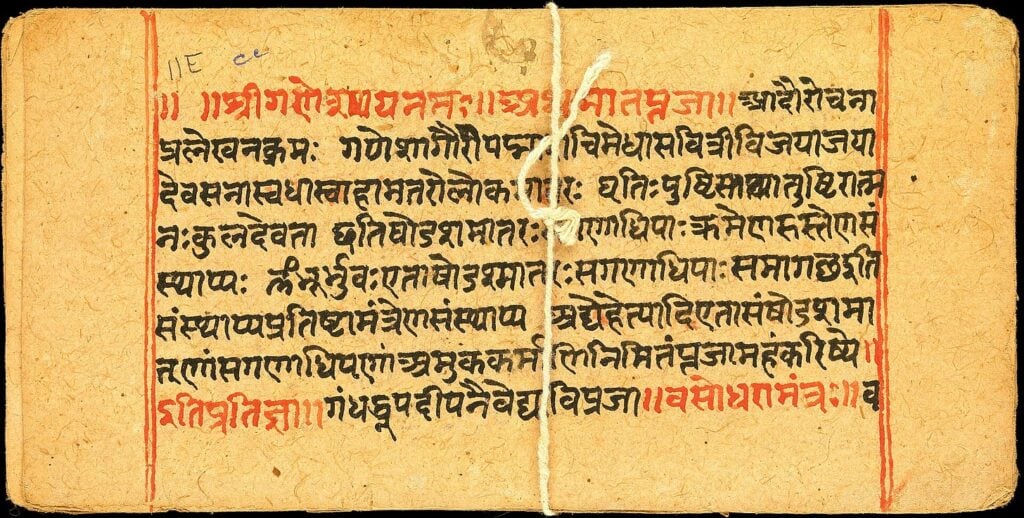
This does not mean that Sanskrit texts should be protected from criticism. It means they should be read with philological care, historical context, and awareness of genre. A verse from a Dharmashastra, a passage from an Upanishad, a narrative from the Mahabharata, and a teaching from the Bhagavad Gita do not function in the same way. Some texts prescribe, some debate, some symbolize, some narrate, some instruct, and some overturn assumptions. Academic integrity requires patient attention to those differences. Otherwise, interpretation becomes accusation with footnotes.
The second example comes from the Freudian stream of the hermeneutics of suspicion. Jeffrey J. Kripal’s Kali’s Child, published in 1995 by the University of Chicago Press, applied psychoanalytic categories to Sri Ramakrishna Paramahamsa, one of modern India’s most revered spiritual figures. The book argued for an erotic and homoerotic dimension in Ramakrishna’s mystical life and teachings. It received the American Academy of Religion’s History of Religions Prize for Best First Book and also generated intense controversy among scholars, devotees, and members of the Ramakrishna tradition.
The original essay cites Kripal’s language about Ramakrishna as a conflicted Tantrika and refers to his mystical experiences as constituted by “mystico-erotic energies.” The concern is not merely that a scholar advanced an unpopular thesis. Scholarship often unsettles inherited assumptions. The deeper concern is methodological: psychoanalytic interpretation can become speculative when applied to a deceased saint whose inner life is reconstructed through translated texts, devotional memory, cultural idiom, and ritual vocabulary rather than through clinical encounter.
Freudian categories are powerful but also historically situated. Concepts such as repression, sublimation, unconscious desire, and erotic displacement emerged within a particular European intellectual and clinical context. When these categories are applied to Bhakti, Tantra, Samadhi, Guru-Shishya relationships, or devotional intimacy, the risk of mistranslation is substantial. A gesture of reverence may be read as erotic code. A metaphor of divine longing may be treated as displaced sexuality. A culturally specific expression of affection may be transformed into evidence of hidden pathology.
This is especially sensitive in the case of Sri Ramakrishna and Swami Vivekananda. Within the Ramakrishna-Vivekananda tradition, their relationship is understood through guru-bhakti, spiritual transmission, renunciation, realization, and service to humanity. Swami Vivekananda’s life work carried Ramakrishna’s teachings into a global idiom, emphasizing the divinity of the soul, the harmony of religions, strength, seva, and the practical application of Vedanta. To reinterpret that relationship primarily through sexual suspicion is not simply to offer another angle. It changes the category of the relationship itself.
The academic controversy around Kali’s Child shows how differently communities can understand the same interpretive act. In parts of the Western academy, the work was received as bold, original, and theoretically sophisticated. Among many devotees and several critics, it appeared as a serious misreading grounded in questionable translation, insufficient cultural context, and an overly sexualized interpretive lens. This divergence reveals a structural problem in religious studies: the criteria of academic novelty can differ sharply from the criteria of fidelity, respect, and lived understanding within a tradition.
A factual and balanced account must also acknowledge that scholars have disagreed among themselves about Kripal’s work. Some defended aspects of his translation and method, while others criticized his conclusions, use of Bengali, psychoanalytic assumptions, and cultural framing. That debate should be studied carefully rather than converted into a simple morality play. Yet the controversy remains an important example of how the study of Hindu saints can become distorted when suspicion is treated as superior to the saint’s own spiritual vocabulary.
For many Hindus, and for many practitioners of Dharmic traditions more broadly, this type of scholarship produces a recognizable wound. Sacred figures are not merely historical objects. They are presences in liturgy, memory, family life, temple culture, meditation, music, and ethical formation. Sri Ramakrishna is not only a subject in a book; he is revered as a realized master. Swami Vivekananda is not only a nineteenth-century reformer; he is a source of courage, intellectual pride, and spiritual discipline. When academic interpretation turns reverence into pathology, the reaction is not anti-intellectual by default. It can be a demand for interpretive fairness.
This point matters for Hindu Studies, but it also matters for Buddhist Studies, Jain Studies, Sikh Studies, and the study of all living religious communities. No tradition should be exempt from critique, but no tradition should be studied only through suspicion. Buddhist monastic discipline cannot be reduced merely to institutional power. Jain tapas cannot be reduced merely to body-negation. Sikh devotion cannot be reduced merely to political identity. Hindu murti puja cannot be reduced merely to projection. Each practice has internal categories, disciplines, philosophies, and lived meanings that deserve primary attention.
A mature academic method should therefore combine critique with sympathetic understanding. It should ask what a tradition says about itself, how practitioners experience it, how its texts use language, how its institutions developed, and where its ideals have been fulfilled or betrayed. It should be capable of naming social harm without denying spiritual depth. It should be able to study power without assuming that power is the only reality. It should be able to interpret symbols without stripping them of sacred meaning before the inquiry begins.
The Indian intellectual world already provides tools for this balance. Purva-paksha, the disciplined presentation of an opponent’s view before responding, requires intellectual honesty. Tarka, debate, pramana, and shastrartha demand that conclusions be accountable to reason and evidence. Anekantavada reminds inquiry that truth may be approached from multiple standpoints. The Gita’s concern with adhikara, context, and inner disposition cautions against superficial reading. These resources do not eliminate the need for modern scholarship; they enrich it by insisting that interpretation must be rigorous and fair.
The hermeneutics of suspicion becomes distorting when it forgets that suspicion is a tool, not a complete philosophy of knowledge. A hammer is useful when the task requires a hammer. It is destructive when every object is treated as a nail. In the same way, Marxist analysis can reveal how economic interests shape institutions, but it cannot exhaust the meaning of moksha, bhakti, yajna, or dhyana. Psychoanalysis can illuminate certain human patterns, but it cannot automatically explain Samadhi, spiritual longing, or the disciplined transformation of consciousness in Yoga and Vedanta.
The study of Hinduism requires a broader intellectual ecology. Philology must speak with philosophy. History must speak with anthropology. Textual study must speak with practice. Community memory must be heard without being romanticized. Devotional testimony must be taken seriously without being made immune to examination. Such a model does not weaken academic rigor; it strengthens it by preventing premature closure.
This approach also helps avoid a common mistake in discussions of Indian civilization: confusing critique of biased scholarship with rejection of scholarship itself. The aim is not to abandon universities, research, translation, or comparative study. The aim is to raise the standard of Hindu Studies and Dharmic Studies so that they are not governed by ideological reflex. A serious field should welcome Sanskrit learning, regional language expertise, practitioner knowledge, archaeology, social history, philosophy of religion, and comparative theology. It should also welcome scholars from Hindu, Buddhist, Jain, Sikh, and other Dharmic backgrounds as producers of knowledge, not merely as informants.
The emotional force of this issue comes from the fact that interpretation shapes public understanding. When Hindu scriptures are repeatedly presented as instruments of oppression, and Hindu saints are repeatedly interpreted through scandal, generations of students may encounter Hinduism first as suspicion rather than as civilization. They may never meet the Upanishadic quest for ultimate truth, the Gita’s disciplined ethics, the Bhakti tradition’s emotional refinement, the Yogic science of consciousness, or the plural worship practices that have allowed many paths to coexist.
At the same time, Dharmic communities carry responsibility as well. A strong response to reductionist scholarship cannot depend only on outrage. It requires language training, publication, debate, institutional support, and careful engagement with primary sources. It requires scholars who can read Sanskrit, Pali, Prakrit, Tamil, Bengali, Punjabi, and other relevant languages with competence. It requires the ability to distinguish criticism that is hostile from criticism that is necessary. Above all, it requires intellectual confidence grounded in knowledge rather than defensiveness.
The more constructive path is not a rejection of the academy but a transformation of its habits. Hindu Studies should be able to examine caste, gender, ritual, power, and politics with seriousness. It should also be able to examine liberation, devotion, metaphysics, sacred aesthetics, mantra, meditation, and guru-parampara without embarrassment. A tradition that produced the Upanishads, Bhagavad Gita, Yoga, Vedanta, Tantra, Bhakti, temple architecture, grammar, logic, poetry, and profound interreligious debate deserves methods equal to its complexity.
In the end, the lens of suspicion teaches one valuable lesson: appearances can deceive. But Dharmic traditions add another lesson: suspicion itself can deceive when it hardens into ego, ideology, or intellectual pride. The task is therefore not to choose between blind reverence and corrosive suspicion. The task is to cultivate disciplined understanding, where critique is precise, context is honored, and sacred traditions are allowed to speak in their own philosophical and spiritual depth.
Reference points for this discussion include the original Dharma Civilization Foundation essay at https://dcfusa.org/2017/05/studying-hinduism-through-the-lens-of-suspicion/, public summaries of Ricœur’s hermeneutics of suspicion at https://en.wikipedia.org/wiki/Hermeneutics_of_suspicion, and bibliographic context on Kali’s Child at https://en.wikipedia.org/wiki/Kali%27s_Child. These references are used only to orient the discussion; the interpretive emphasis remains on the need for balanced, rigorous, and culturally literate Hindu Studies.
Inspired by this post on Dharma Civilization Foundation.



Leave a Reply
You must be logged in to post a comment.