-
Powerful Truth: Why Erasing the Gītā and Yoga Sūtra Wounds Dharmic Unity

This article examines how denying the Hindu belonging of the Bhagavad Gītā and Patañjali’s Yoga Sūtra reflects a deeper problem in modern religious studies. It explains why the colonial history of the word “Hinduism” does not erase the older civilizational continuity of Hindu texts, practices, and lineages. The discussion places the issue within debates on…
-
How Suspicion Distorts Hindu Studies and Why Dharmic Scholarship Needs Balance

This essay examines how the hermeneutics of suspicion can distort the study of Hinduism when it becomes an exclusive academic lens. It explains how Marxist readings may reduce Varna, Jati, Sanskrit texts, and Hindu philosophy to questions of power alone. It also analyzes the controversy around psychoanalytic interpretations of Sri Ramakrishna Paramahamsa and Swami Vivekananda,…
-
The Dangerous Power of Suspicion in Religious Studies and Dharma Traditions

This article examines the hermeneutics of suspicion and its influence on the academic study of religion, especially Hindu Dharma and broader dharmic traditions. It explains how Marx, Nietzsche, and Freud shaped a modern habit of reading religion as disguise, ideology, repression, or power. The discussion acknowledges the value of critical inquiry while warning against methods…
-
Norway’s Modi Cartoon: How ‘Freest Press’ Narratives Enable Hinduphobiaand How to Fix It

Aftenposten’s cartoon of Prime Minister Narendra Modi as a snake charmer revived a colonial stereotype long weaponized against Indians, especially Hindus, and ignited debate about press freedom versus media responsibility. This analysis situates the image within the history of Orientalism and the semiotics of political cartoons, explaining how such racialized coding undermines informed discourse on…
-
Viral WWII Memorial Dance: Outrage, Double Standards, and the Erasure of Indian Sacrifice

A brief dance video by two Indian performers at the National World War II Memorial in Washington, D.C., sparked fierce online criticismsome of it justified on decorum grounds, much of it tinged with xenophobic and Hinduphobic rhetoric. This analysis separates rules-based concerns from racialized targeting, explaining what National Park Service guidance actually permits and prohibits…
-
Clash and Convergence: How Vedic and Western Worldviews Shaped Science, Faith, and History

This long-form essay traces how encounters between Vedic knowledge systems and Western scholarship reshaped global debates on science, faith, and history. It contextualizes John Bentley’s 1825 rebuke of John Playfair within wider conflicts over chronology, authority, and civilizational legitimacy. Readers gain a clear view of India’s mathematical and astronomical achievements, the emergence of Indology, and…
-
Exposing Hinduphobic Tropes: Media Framing of Sai Baba, Maduro, and India’s Colonial Hangover

This analysis examines how Nicolás Maduro’s detention in New York reignited discussion of his spiritual ties to Sri Sathya Sai Baba and how mainstream coverage often frames Hindu and broader dharmic traditions through exoticizing or derisive tropes. It critiques racialized descriptors and the trigger word “Godman,” showing how such language primes readers toward suspicion rather…
-
Hello New York Times: Time to Eat Your Elitism. This is India’s Century.

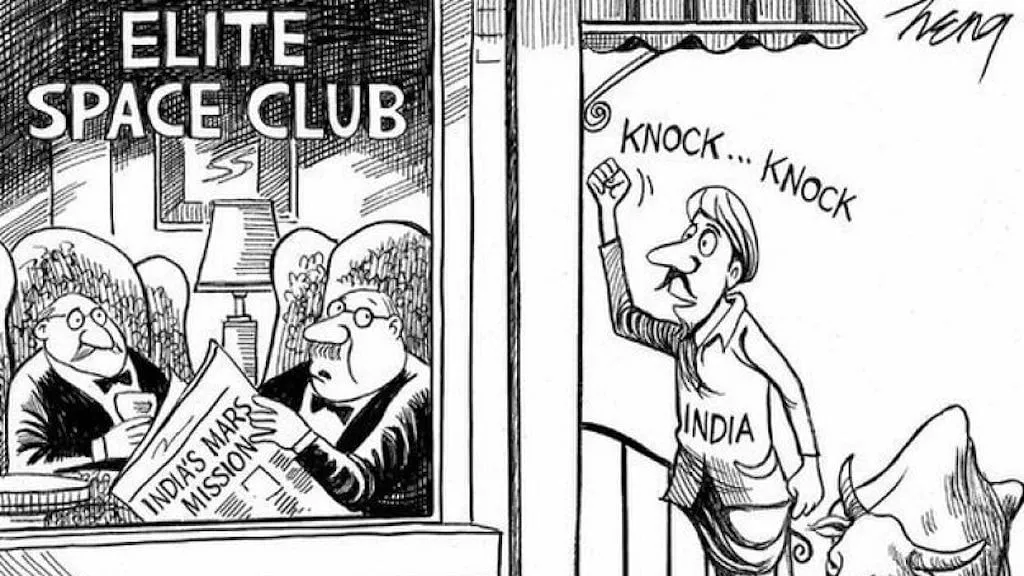
The blog post titled addresses the New York Times’ biased and racist coverage of India over the years. The post discusses how Western media, including the New York Times, has portrayed India as a backward and unscientific country, but recent achievements like the successful Chandrayaan 3 mission challenge that narrative. It delves into historical examples…