
Glimmerings of a Botanical Life: Nature Meditation on the Star Tarot Card
A quiet meditation on the Star Tarot card becomes, in this account, more than a private exercise in symbolism. It becomes a study in attention, ecological awareness, and the subtle ways that inner practice can sharpen perception of the living world. The episode begins after a course on Kabbalah, when a card from the major arcana is selected for sustained contemplation over the course of a year. The card is The Star, traditionally associated with renewal, revelation, hope, vulnerability, and the cleansing movement of water under an open sky.
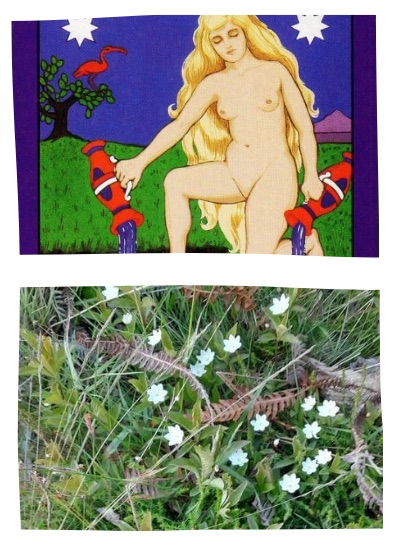
The Star card is often depicted as a nude woman kneeling beside a pool, one foot touching the water and one knee resting on the earth, while two vessels pour water into the land and the pool. Above her shines a large star surrounded by smaller stars. In symbolic terms, the image joins body, earth, water, sky, and celestial order. It suggests receptivity without passivity, purity without withdrawal, and a form of spiritual practice grounded in direct contact with the natural world.
Within a Dharmic frame, the card can be read not as fortune-telling but as a contemplative image. Its value lies in what it evokes: awareness, embodiment, humility, and sustained observation. Buddhist meditation, Hindu dhyana, Jain attentiveness to life, and Sikh reverence for divine presence all affirm, in different vocabularies, that ordinary perception can be refined. A woodland path, a small pool, a plant colony, or a sudden encounter with an unfamiliar flower can become a field of practice when approached with steadiness and care.
The search for a suitable natural setting therefore carries both symbolic and ecological significance. A pool surrounded by sparse vegetation, a tree, and the suggestion of starlight would allow the imagery of The Star to be enacted rather than merely studied. Such an enactment is not theatrical in a superficial sense. It is a disciplined attempt to let the body, landscape, and meditative imagination meet in a single field of attention.
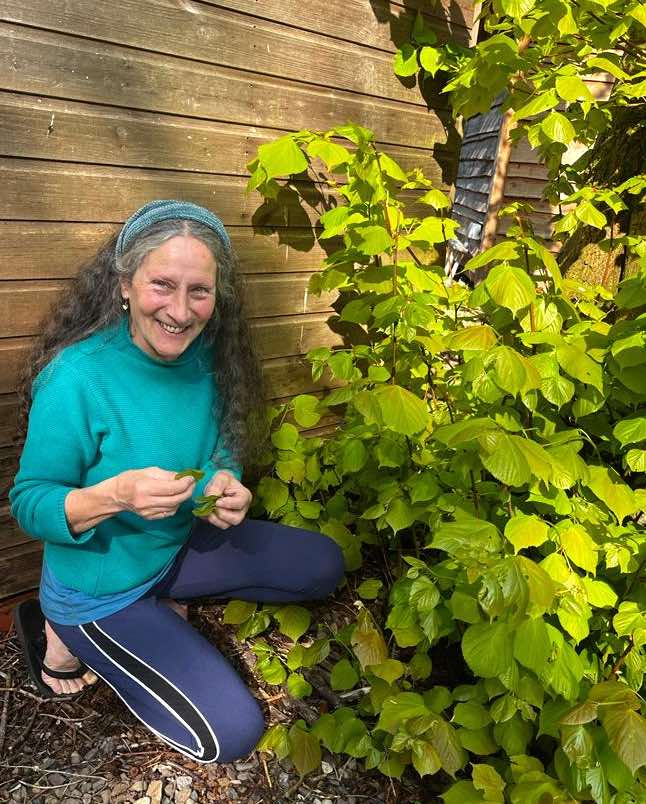
After a short walk through open woodland and heathland, the landscape begins to answer the meditation in its own language. Evening sounds, scent, fading light, and the soft movement of trees create the conditions for a different quality of seeing. The route follows an unfamiliar track, and beside it stands a vibrant aspen, its leaves fluttering in the twilight. The aspen’s movement is important because it interrupts habitual perception. It draws the eye, quiets the pace, and makes the ground visible again.
At that moment, a colony of small, white, star-shaped flowers appears at the feet of the observer. The discovery is striking because of its timing and form. While meditating on The Star, an actual star-shaped flower is found in the landscape. The plants are later identified as Chickweed Wintergreen, also known as European Starflower. Their visual purity, modest scale, and quiet presence make them a botanical counterpart to the symbolic card. The event does not need to be exaggerated into miracle; its force lies in the meeting of disciplined attention and ecological specificity.
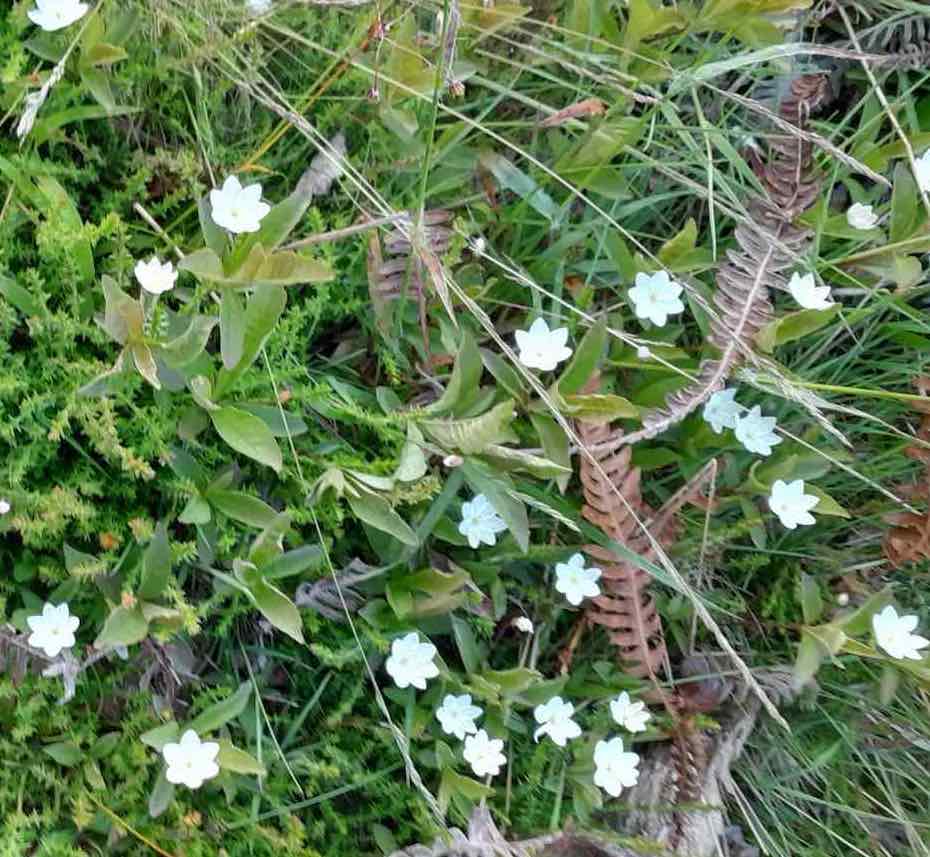
European Starflower is commonly associated with cool, open, lightly wooded habitats, particularly in northern and montane regions. It is a delicate plant, typically bearing a white, star-like flower above a whorl of leaves. Its beauty is restrained rather than dramatic. Such plants are easily missed by hurried walkers, yet they become unforgettable when encountered through careful observation. This is one reason nature meditation can be so powerful: it does not require invention, only enough stillness to notice what is already present.
The botanical significance of the finding is considerable. The plant is described as rare in the South of Scotland, with the specific site having a historical record from 1866. That detail changes the encounter from private delight into ecological evidence. A small colony of flowers becomes a bridge between nineteenth-century botanical recording and contemporary field observation. In an era of habitat loss and climate change, such records matter because they help trace persistence, movement, disappearance, and recovery within local ecosystems.
The discovery leads to contact with Robin Cowe, the botanical recorder for Berwickshire. His visit the following day gives the event a valuable scientific dimension. Field botany depends on careful identification, local knowledge, and accurate recording. Personal wonder alone is not enough; it must be joined to verification. In this sense, the episode offers a useful model for spiritual ecology: deep feeling and disciplined evidence need not oppose each other. Reverence for nature becomes stronger when supported by careful naming and responsible documentation.
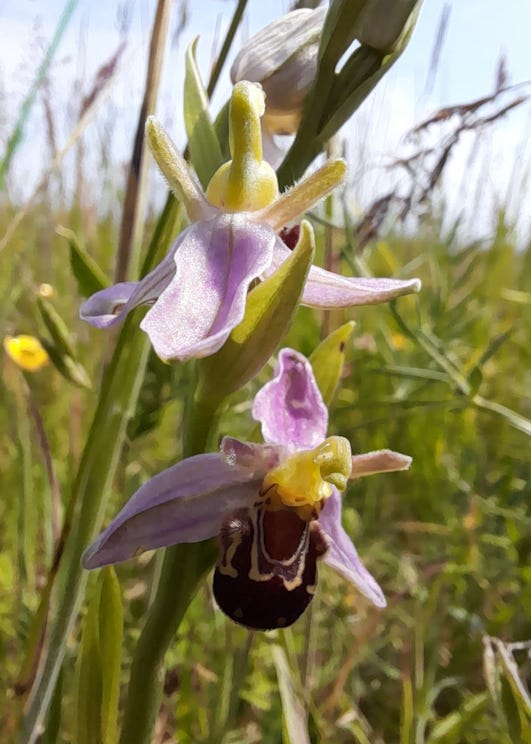
Several hours are then spent exploring nearby biodiverse places and discussing unusual plants and habitats. The conversation turns, intriguingly, toward bee orchids. Bee orchids are remarkable plants, well known for their flower structure, which resembles a bee and participates in a complex evolutionary relationship between form, attraction, and reproduction. In many regions they are associated with calcareous grasslands, open ground, disturbed soils, and warm microhabitats. Their presence in a place where they have not previously been recorded raises immediate ecological questions.
Two days later, the narrative shifts from woodland and heathland to the edge of Berwick, where a car repair creates an unexpected interval of waiting. A brownfield site near an industrial estate becomes the next field of discovery. This setting is important. Biodiversity is often imagined only in ancient woods, remote hills, or protected reserves, but post-industrial and disturbed landscapes can sometimes host rare or surprising plant communities. Poor soil, sparse grass, and open conditions may create niches for species that struggle in richer, more competitive habitats.
There, among grasses and wildflowers, a bee orchid is noticed. Then the scale of the discovery expands: not one plant, but a large colony, with more than a hundred flowering spikes. The emotional charge of the moment is understandable. Bee orchids are visually arresting, botanically sophisticated, and culturally memorable. Their presence in such numbers at an unexpected northern location suggests more than a casual sighting. A photograph is sent for confirmation, and the identification is accepted as the first recorded occurrence in that area.

This second discovery invites a broader ecological interpretation. Bee orchids moving north may reflect several overlapping factors, including climate change, changing land use, seed dispersal, altered management of verges and brownfield sites, and the availability of suitable microhabitats. Orchid ecology is technically complex because many orchids also depend on relationships with mycorrhizal fungi during germination and early development. A new colony therefore indicates not only the arrival of a plant but the presence of environmental conditions capable of sustaining part of its life cycle.
The suggestion of quorum signalling or quorum sensing adds a further layer of curiosity. In strict biological usage, quorum sensing refers to chemical communication among microorganisms, especially bacteria, allowing coordinated behavior once a threshold population density is reached. Applying the phrase to plants or plant communities is more metaphorical unless specific microbial mechanisms are being discussed. Yet the intuition behind the question is meaningful: living systems communicate, respond, cluster, and adapt through networks that are often invisible to casual perception.
The two discoveries, European Starflower and bee orchid, create a pattern without requiring superstition. The Star card’s mantra, “Be Aware,” becomes practically exact. Awareness is not vague spirituality; it is the trained capacity to notice what is present, to recognize what is unusual, and to respond appropriately. In this case, awareness leads to botanical identification, communication with a recorder, and the strengthening of local ecological knowledge. The contemplative act becomes a contribution to environmental understanding.

Namgyal Rinpoche’s keyword for The Star, Revelation, also fits the sequence. Revelation here does not mean an abstract doctrine descending from above. It means disclosure through encounter. The land reveals a plant last recorded at the site in the nineteenth century. A brownfield site reveals an unrecorded orchid colony. The practitioner’s own mind reveals that careful symbolic meditation can heighten ecological perception. The sacred and the empirical meet in the disciplined act of looking closely.
There is a wider lesson for Dharmic traditions in this account. Hindu, Buddhist, Jain, and Sikh paths each contain practices that refine perception and deepen responsibility toward life. Hindu traditions speak of the sacredness of rivers, trees, mountains, and the elements. Buddhist practice emphasizes mindfulness and interdependence. Jain dharma offers an exceptionally rigorous ethic of non-harm toward living beings. Sikh teachings affirm the presence of the Divine throughout creation and the duty of humble service. Together, these traditions support an ecological spirituality rooted in attention, restraint, gratitude, and care.
The narrative also illustrates why nature meditation should not be reduced to sentiment. When practiced seriously, it can become a method of disciplined perception. It trains the mind to slow down, the eye to distinguish detail, and the heart to remain open without abandoning evidence. The discovery of a rare plant is emotionally moving precisely because it is also real, local, and verifiable. This combination of wonder and accuracy is essential for meaningful environmental stewardship.

In practical terms, the account encourages a form of ecological literacy accessible to ordinary life. One need not travel to a famous wilderness to encounter biodiversity. A nearby woodland, heathland edge, roadside verge, or neglected industrial plot may contain overlooked forms of life. The key is not romantic escape but cultivated attention. Walking slowly, returning to places across seasons, learning plant names, consulting local recorders, and respecting fragile habitats can transform casual movement through landscape into mindful participation in place.
The approaching starlit night, imagined for July or August beneath the Perseids, completes the symbolic arc. The pool, the jugs, the card, the flowers, and the meteor shower all belong to a single contemplative grammar. Water flows; stars appear; plants disclose themselves; awareness deepens. The Star card, interpreted through this experience, becomes less a fixed esoteric object and more a living invitation to renewal through contact with the real world.
What remains most compelling is the humility of the discoveries. The flowers are small. The sites are local. The record depends on careful communication rather than spectacle. Yet these modest events carry a profound teaching. Spiritual insight often arrives not as escape from the world but as fuller participation in it. A rare flower seen clearly, an orchid colony responsibly recorded, and a mantra remembered at the right moment can all become part of the same path of awakening.
Thus, the meditation on The Star becomes a study in awareness, biodiversity conservation, and spiritual ecology. Its central message is simple but demanding: be aware. Be aware of symbols, but also of soil. Be aware of inner states, but also of plant communities. Be aware of revelation, but also of evidence. In that integration, the botanical life and the contemplative life are not separate pursuits. They are mutually illuminating ways of learning how to see.
Inspired by this post on Planet Dharma.











Leave a Reply
You must be logged in to post a comment.