
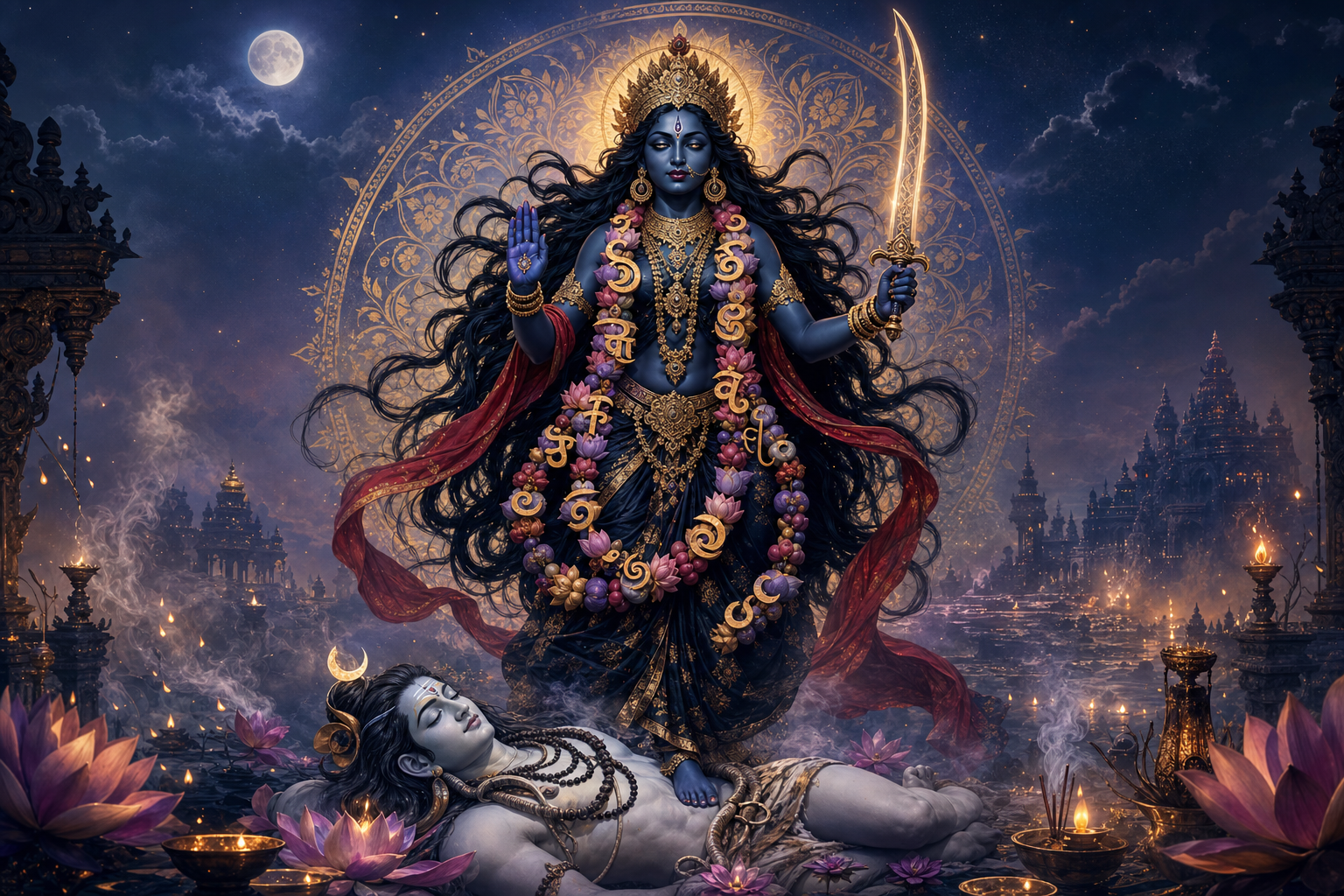
Shri Kali stands within the vast and deeply symbolic Hindu understanding of Devi, the Divine Mother who is both nurturing and formidable. In devotional tradition, she is approached as a fierce form of Goddess Kali, associated with the destruction of adharma, the protection of sincere devotees, and the transformation of fear into spiritual courage. Her name carries both reverence and intensity: “Shri” suggests auspiciousness, dignity, and sacred radiance, while “Kali” points toward time, power, dissolution, and the dark mystery from which renewal becomes possible.
The form of Shri Kali is often understood through the wider theology of Shakti, where the Divine is not distant or abstract but dynamically present as energy, consciousness, and protective force. In many Hindu traditions, Kali is seen as a manifestation of Goddess Parvati, the supreme maternal power who can appear gentle, royal, ascetic, warrior-like, or terrifying according to the needs of cosmic balance. Shri Kali therefore should not be reduced to anger or violence; her fierceness is the disciplined force that confronts cruelty, ignorance, ego, and spiritual darkness.
Within Hindu iconography, darkness does not automatically mean evil. Kali’s dark form is philosophically rich because it suggests the immeasurable, the unbounded, and the reality beyond ordinary perception. Just as the night sky contains the stars, the dark body of Kali symbolizes the womb of existence itself. Shri Kali’s darkness may therefore be read as a sacred mystery: what appears frightening to the ego becomes liberating to the seeker who is willing to confront truth.
Shri Kali’s symbolism is inseparable from the concept of time. The Sanskrit root associated with Kali relates to kala, meaning time, and this gives her form profound metaphysical significance. Time creates, sustains, changes, and dissolves every embodied condition. Kings, empires, bodies, emotions, and identities all move within time. Shri Kali represents the spiritual recognition that no worldly power can resist impermanence, and that liberation begins when one stops clinging to what must inevitably change.
Her fierce appearance is not meant merely to shock the mind; it is meant to educate it. The garland of severed heads, the sword, the extended tongue, the cremation-ground setting, and the disheveled hair found in Kali imagery all function as symbolic teachings. They point to the cutting away of false identity, the humbling of pride, the end of illusion, and the reality of mortality. In this sense, Shri Kali is not a goddess of destruction for its own sake; she is the power that destroys what prevents spiritual clarity.
The sword of Kali is one of her most important symbols. It is commonly interpreted as the weapon of wisdom, discernment, and decisive spiritual action. In daily life, ignorance often survives because it is familiar. Attachment, resentment, fear, vanity, and self-deception can become habits of the mind. Shri Kali’s sword represents the courage required to cut through these patterns without sentimentality. This is why her worship can feel emotionally intense: it asks the devotee to be honest before the Divine Mother.
The severed head in Kali’s hand is also a profound image of transformation. It does not celebrate physical harm; rather, it symbolizes the removal of ahamkara, the ego-principle that mistakes the temporary self for ultimate reality. The head is the seat of self-importance, argument, pride, and narrow identity. In Shri Kali’s hand, it becomes a reminder that spiritual life demands humility. The individual must learn to surrender the false self before the deeper Self can be recognized.
Her garland is often interpreted through letters, speech, and consciousness. In several Tantric interpretations, the garland of heads corresponds to sound, language, and the manifested universe. Speech creates social worlds; words bind communities, transmit scriptures, shape memory, and also produce conflict when used carelessly. Shri Kali’s garland therefore reminds devotees that language itself must be purified. Sacred speech, mantra, truthful expression, and restraint become part of her discipline.
The tongue of Kali has received many interpretations across regions and traditions. It may symbolize the shock of self-awareness, the restraint of destructive force, the consumption of negativity, or the moment in which cosmic power recognizes the presence of Shiva beneath her feet in familiar iconography. Rather than treating the image as literal spectacle, a careful reading sees it as a layered theological statement: Shakti is immense, but her power is not chaotic when united with consciousness.
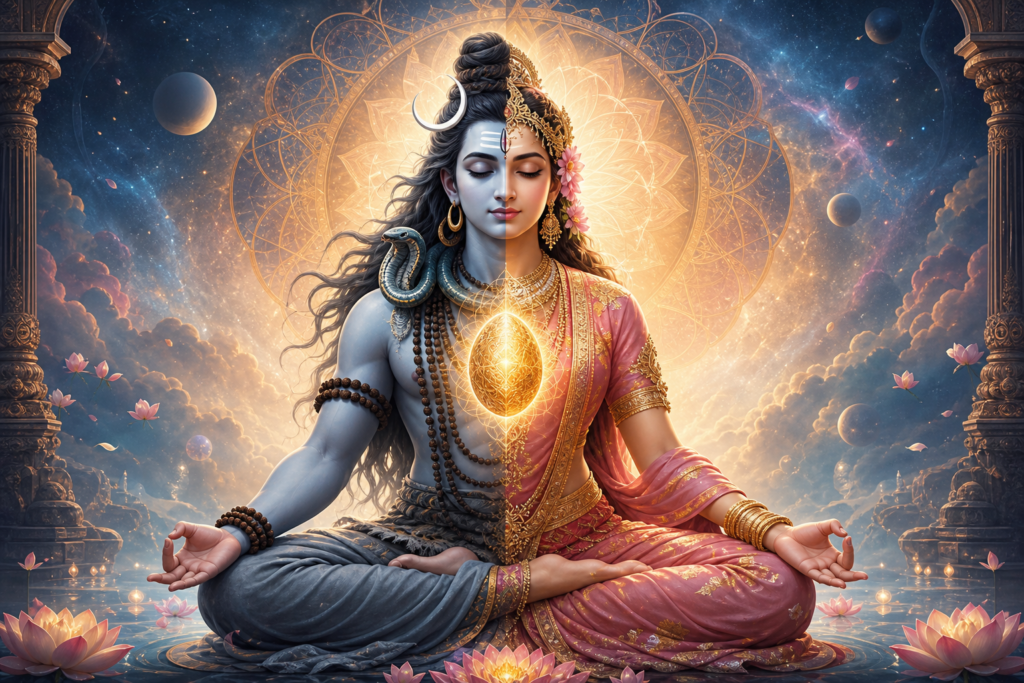
The relationship between Kali and Shiva is central to understanding Shri Kali. Shiva without Shakti is pure consciousness without movement; Shakti without Shiva is power without stillness. Their union expresses a fundamental Hindu insight: reality is both awareness and energy. Shri Kali’s image standing upon Shiva is therefore not a scene of domination in a crude sense. It is a visual philosophy showing that cosmic power acts upon the still ground of consciousness, and that creation requires both transcendence and dynamic manifestation.
As a protective form of the Divine Mother, Shri Kali is invoked by devotees who seek courage in moments of fear, confusion, injustice, or inner weakness. Her protection is not always imagined as comfort in the ordinary sense. Sometimes protection means the removal of illusions one is attached to. Sometimes grace arrives as a disruption that prevents deeper harm. This is one reason Kali devotion remains psychologically powerful: it acknowledges that real healing may require confrontation, not avoidance.
In Hindu spiritual life, the mother is not only tender; she is also the one who corrects, defends, and awakens. Shri Kali embodies this complete maternal power. A mother may soothe a frightened child, but she may also stand fiercely against danger. This duality helps explain why devotees can feel both awe and intimacy before Kali. Her terrifying form does not negate her compassion; it reveals compassion in its most uncompromising form.
The idea that Shri Kali conquers darkness should be understood at several levels. Cosmically, she defeats forces that disturb dharma. Ethically, she represents the destruction of cruelty and deception. Psychologically, she confronts fear, obsession, and self-limiting tendencies. Spiritually, she dissolves avidya, the ignorance that prevents recognition of the Divine. Each level enriches the others, making her symbolism both devotional and philosophical.
The worship of Kali also reflects the broader Hindu acceptance of many valid approaches to the sacred. Some devotees approach the Divine through the sweetness of Krishna bhakti, some through the discipline of Shiva worship, some through the order and prosperity associated with Lakshmi, some through Saraswati’s wisdom, and some through the fearless power of Kali. This diversity is not a contradiction within Hindu Dharma; it is one of its defining strengths. Shri Kali’s path is especially meaningful for those who seek transformation through courage, surrender, and direct confrontation with inner darkness.
Her place within the Shakta tradition is particularly important. Shaktism regards Devi as supreme reality, not merely as a secondary divine figure. In this vision, the universe is alive with sacred power, and the feminine principle is not symbolic decoration but metaphysical foundation. Shri Kali, as Shakti, reveals that the Divine Feminine includes creation, preservation, dissolution, concealment, and liberation. She is not passive beauty; she is the energy by which existence moves.
Tantric traditions have played a major role in shaping Kali’s symbolism. Tantra, in its serious and disciplined forms, does not seek sensationalism; it seeks transformation by integrating aspects of life that ordinary social religion may avoid. Death, fear, desire, limitation, and impermanence become subjects of spiritual inquiry. Shri Kali’s cremation-ground imagery belongs to this world of radical honesty. It teaches that liberation is not found by denying death but by understanding what in the self is beyond death.
The cremation ground is among the most striking elements associated with Kali. It represents the place where worldly distinctions lose their force. Wealth, status, beauty, scholarship, and social identity all end at the same threshold. For this reason, the cremation ground becomes a philosophical classroom. Shri Kali’s presence there reminds the seeker that spiritual maturity begins when one accepts impermanence without despair and seeks the eternal without escapism.
Shri Kali’s association with fearlessness is also central to her meaning. In many images of Kali, the abhaya mudra, the gesture of fearlessness, appears alongside fearsome symbols. This combination is essential. The same form that unsettles the ego offers refuge to the soul. The devotee is invited to recognize that fear often arises from attachment to a false sense of control. When one takes shelter in the Divine Mother, fear is gradually replaced by trust, responsibility, and inner steadiness.
Her symbolism also has ethical implications. To worship Shri Kali while tolerating injustice, cruelty, or dishonesty would be a misunderstanding of her form. Kali is the energy that refuses to let adharma remain hidden. Her worship calls for moral courage, disciplined speech, protection of the vulnerable, and willingness to confront wrongdoing without hatred. In this way, devotion to Shri Kali can become a force for personal integrity and social responsibility.
At the same time, an academic reading must avoid flattening Kali into a modern political symbol or a simple metaphor of rebellion. She is far older and deeper than any single contemporary category. Her power includes metaphysics, ritual, mythology, psychology, aesthetics, and lived devotion. For millions of devotees, Shri Kali is not merely an idea; she is a living presence encountered through mantra, puja, pilgrimage, family tradition, festival, meditation, and crisis.
The emotional power of Shri Kali worship often comes from its honesty about suffering. Many spiritual paths emphasize peace, and rightly so, but human life also contains grief, anger, vulnerability, and fear. Kali devotion provides a sacred language for these experiences without allowing them to become destructive. A devotee standing before Shri Kali may feel that nothing has to be hidden: pain, guilt, confusion, longing, and weakness can all be placed before the Mother who sees through every mask.
This emotional honesty explains why Kali remains relevant in modern life. Contemporary people may not describe their struggles in traditional theological vocabulary, yet they still face anxiety, moral confusion, burnout, grief, injustice, and the pressure to maintain appearances. Shri Kali’s symbolism speaks directly to such conditions. She teaches that transformation begins when the individual stops pretending that darkness is absent and instead brings it into the light of disciplined awareness.
In ritual practice, offerings to Kali vary by region, lineage, and family tradition. Some worship emphasizes flowers, lamps, incense, mantra, and devotional songs. Some traditions include more esoteric practices guided by qualified teachers. The essential principle, however, remains devotion joined with discipline. Shri Kali is not approached casually as a symbol of uncontrolled emotion; she is approached with reverence, humility, and the understanding that sacred power demands ethical seriousness.
Mantra is especially important in Kali worship. Repetition of sacred sound is believed to refine attention, purify the mind, and align the devotee with the deity’s presence. In the broader Hindu understanding, mantra is not merely a word or phrase but a vehicle of consciousness. When associated with Shri Kali, mantra becomes a disciplined way of invoking courage, clarity, protection, and surrender. It turns fear into prayer and scattered emotion into focused awareness.
Shri Kali’s symbolism also contributes to the Hindu understanding of feminine divinity. She challenges narrow assumptions that the sacred feminine must always appear soft, decorative, or domesticated. In Kali, the feminine is cosmic, sovereign, protective, terrifying, compassionate, and liberating. This vision has profound theological importance because it refuses to separate motherhood from strength or compassion from power. The Divine Mother can nourish, but she can also destroy the forces that threaten life and dharma.
The term “Shri” before Kali deserves attention. It gives the fierce form an unmistakable aura of auspiciousness. This is the paradox at the heart of the deity: what appears fearsome is ultimately auspicious when it removes ignorance. The destruction performed by Shri Kali is not nihilistic. It is like the clearing of a field before new growth, the burning away of infection before healing, or the end of delusion before wisdom. Her fierce grace is grace nonetheless.
Hindu scriptures and devotional traditions frequently present divine forms through layered narratives rather than single definitions. Kali appears in different theological settings, including Puranic, Tantric, regional, and folk traditions. These variations should be read as signs of a living religious culture rather than contradictions to be artificially resolved. Shri Kali’s identity grows through worship, storytelling, ritual, philosophy, and community memory. This plurality gives her tradition depth and resilience.
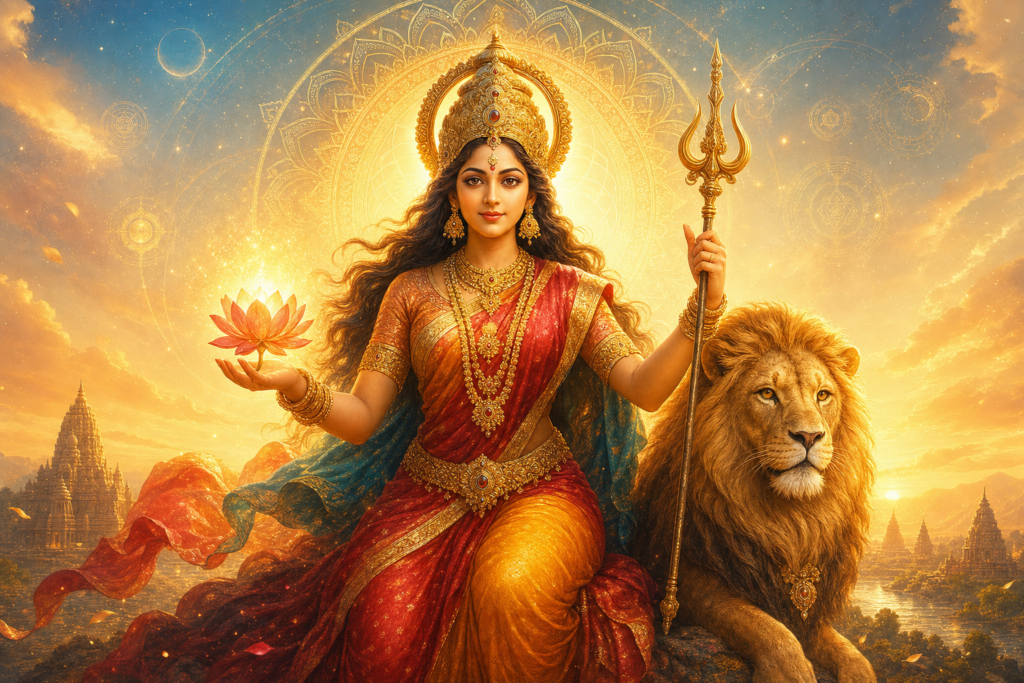
Her connection with Goddess Parvati also reveals the unity of apparently different divine moods. Parvati as the mountain-born goddess represents devotion, austerity, marital harmony, and maternal grace. Durga represents organized martial power against demonic arrogance. Kali represents the most intense form of transformative force. These are not separate divinities in a fragmented sense but related expressions of Devi’s limitless capacity. Shri Kali therefore belongs within a continuum of Shakti, where gentleness and ferocity serve the same cosmic purpose.
The conquest of evil in Kali symbolism is best understood as the restoration of dharma rather than the rejection of any community or tradition. A dharmic reading focuses on qualities and actions: cruelty, greed, arrogance, violence, ignorance, and exploitation are the true enemies. This interpretation supports harmony among Hinduism, Buddhism, Jainism, and Sikhism, all of which in their own ways emphasize discipline, compassion, self-mastery, truthfulness, and liberation from destructive tendencies. Shri Kali’s fierce imagery can therefore be understood as a call to overcome inner and outer adharma while preserving respect for sincere spiritual paths.
From a philosophical perspective, Shri Kali helps reconcile two truths that human beings often hold apart: life is sacred, and life is impermanent. Devotion becomes deeper when it accepts both. If everything changes, then attachment must be purified. If life is sacred, then action must be guided by dharma. Kali’s form unites these insights. She does not allow the seeker to escape into sentimental spirituality, nor does she permit despair before the reality of change.
The symbolism of Shri Kali also has a contemplative dimension. Meditation on her form can function as a disciplined confrontation with fear. The devotee sees the skulls, the sword, the dark body, the open hair, and the cremation ground, and slowly learns not to turn away. This practice can train the mind to face mortality, uncertainty, and moral responsibility. In this way, Kali’s image becomes a mirror: it reveals what the mind fears and what the soul must transcend.
Modern interpretations sometimes describe Kali as a figure of empowerment, and this can be meaningful when handled with care. Her empowerment is not simply personal assertion or emotional intensity. It is rooted in truth, discipline, protection, and surrender to the Divine. Shri Kali empowers by freeing the devotee from fear, falsehood, and dependence on shallow approval. Her strength is not egoic aggression; it is the strength that arises when the individual aligns with dharma.
For household devotees, Shri Kali’s meaning may be intimate rather than abstract. She may be remembered during illness, family crisis, uncertainty, or moments when courage seems exhausted. Her image can remind a person that the Divine Mother is not absent in difficult times. She is present precisely where fear is strongest. This devotional trust gives Kali worship its enduring emotional force across generations.
For scholars and serious students of Hindu Dharma, Shri Kali offers a remarkable example of how religious symbols hold multiple levels of meaning at once. Iconography, ritual, metaphysics, psychology, ethics, and community memory converge in her form. A superficial reading sees only terror. A deeper reading sees protection, wisdom, impermanence, maternal compassion, and liberation. The academic task is therefore not to tame Kali into simplicity but to understand the disciplined complexity of her symbolism.
Shri Kali ultimately represents the fierce grace of the Divine Mother who conquers darkness by exposing it, consuming it, and transforming it. She protects not by preserving every comfort but by guiding the devotee toward truth. Her symbolism teaches that fear can become courage, ego can become surrender, death can become wisdom, and destruction can become renewal when held within the presence of Shakti. In this sense, Shri Kali remains one of the most powerful expressions of Hindu spirituality: terrifying to ignorance, compassionate to the sincere, and eternally auspicious to those who seek liberation.
Inspired by this post on Hindu Blog.



Leave a Reply
You must be logged in to post a comment.