
Aadi Velli refers to the sequence of Fridays in the Tamil month of Aadi (Aadi Masam), a period traditionally dedicated to Goddess Shakti across Tamil Nadu. In 2026, Aadi Velli occurs on five Fridays—an extended cadence of worship that many households and temples in Tamil communities treat as a focused season for Devi upasana (devotional practice). The observance centers on invoking prosperity (śrī), protection (raksha), and inner resilience (śakti), aligning weekly Friday worship with the larger seasonal rhythms of the Tamil calendar.
For 2026, the Aadi Velli dates are: 17 July 2026, 24 July 2026, 31 July 2026, 7 August 2026, and 14 August 2026. These dates fall within the Aadi month, which typically spans mid-July to mid-August in the solar Tamil calendar.
Within popular practice, the first and the third Aadi Friday are widely regarded as especially auspicious. This emphasis, transmitted through household customs and temple lore, reflects the living tradition of prioritizing particular nodes of devotional intensity within the broader cycle of five Fridays in 2026.
Aadi is the fourth month of the Tamil solar calendar and begins when the Sun enters Kataka (Cancer), marking a shift that coincides with the monsoon season and agricultural renewal. Fridays (Velli Kizhamai) are governed by Shukra (Venus), a planetary principle associated with abundance, aesthetics, and harmony. The convergence of Aadi’s seasonal sanctity with the Shukra-linked Friday is why Aadi Velli carries a distinctive devotional charge for Shakti worshippers.
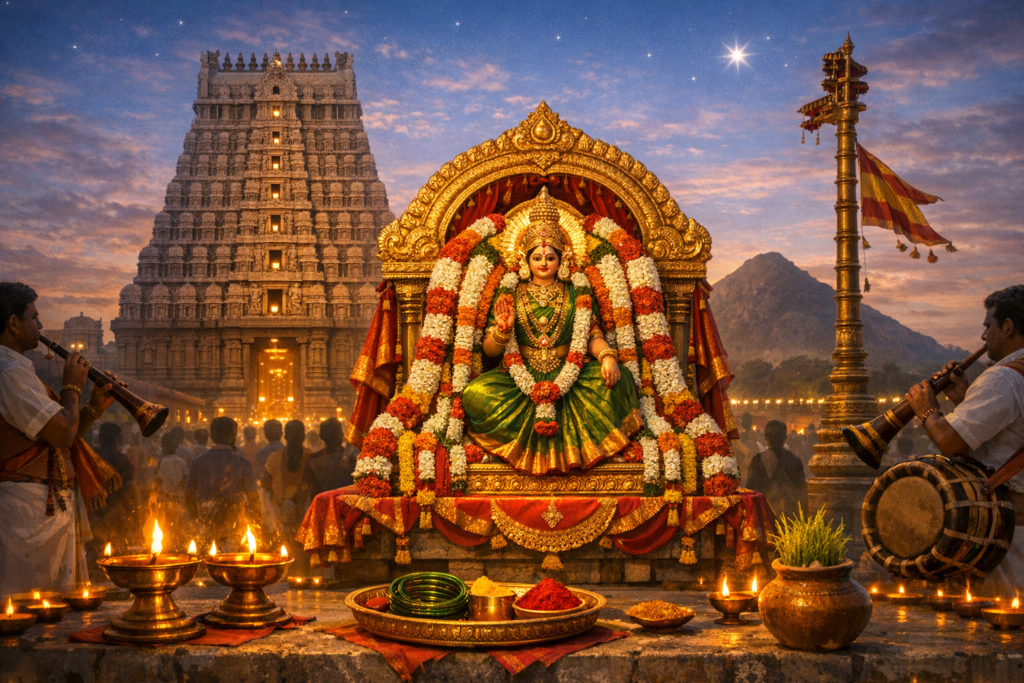
Across Tamil Nadu, Aadi Velli is expressed most visibly in Amman temples—dedicated to deities such as Mariamman, Kaliamman, Kamakshi, Meenakshi, and Visalakshi—where devotees offer Kumkum, turmeric, bangles, and sarees, and light ghee or lemon lamps seeking the Goddess’s grace. Many visit these Shakti temples on each Aadi Velli, integrating darshan, archana, and homa where conducted. The atmosphere blends personal vows (vratam), community fasting, devotional songs (Amman paattu), and seasonal charity.
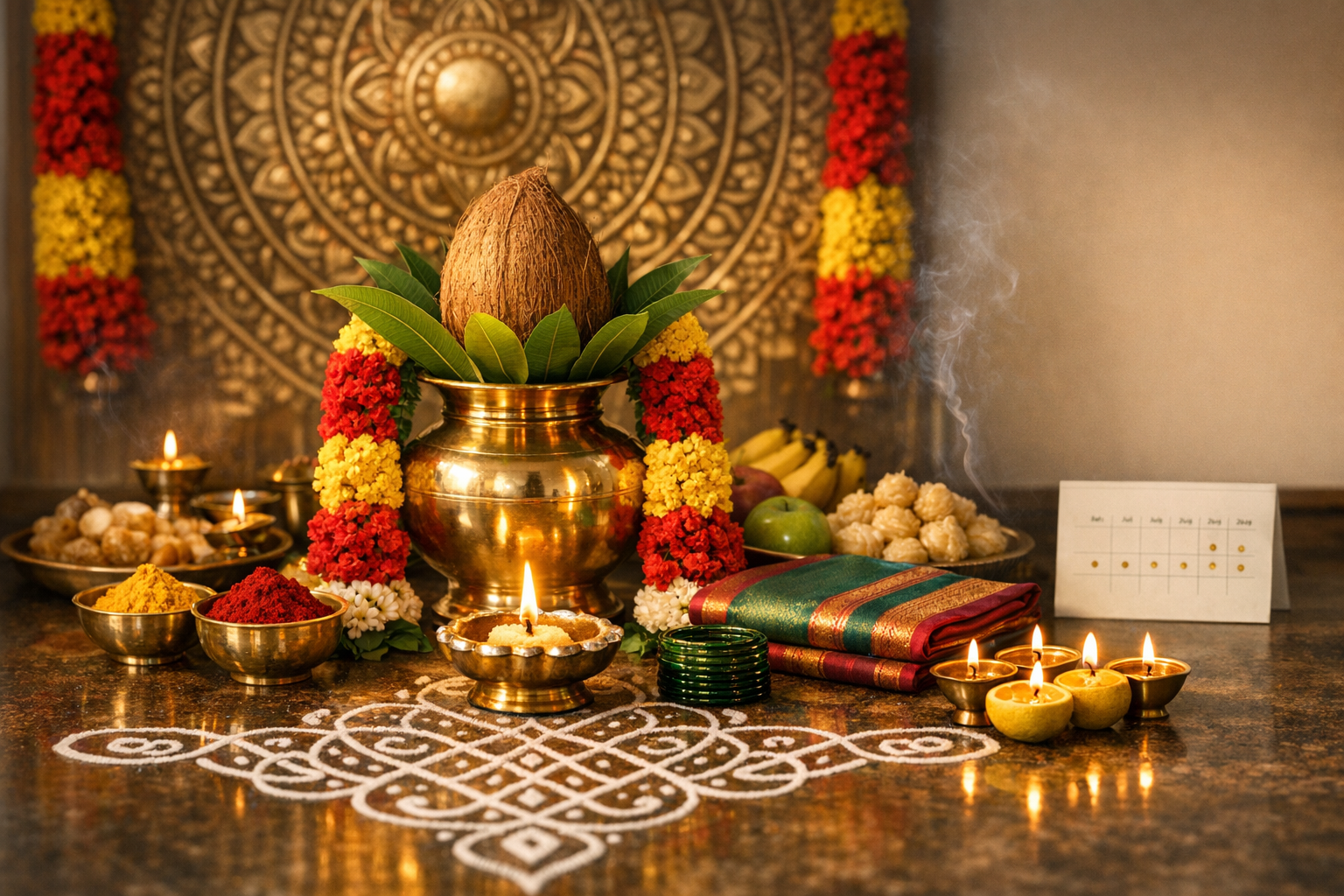
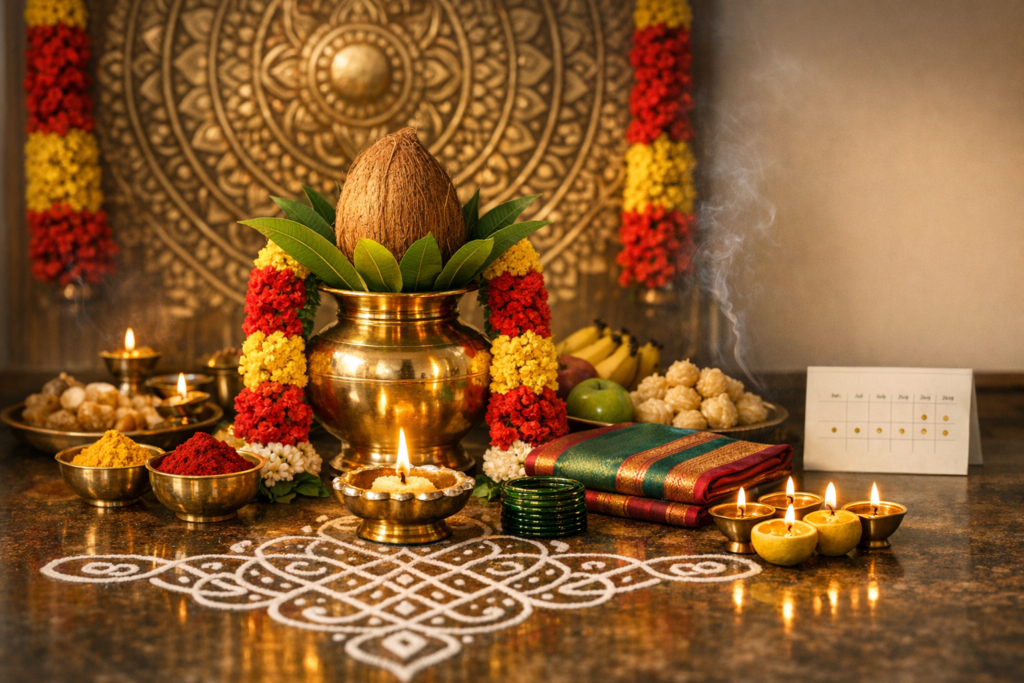
In domestic worship, the Aadi Velli routine often begins with cleaning the prayer space, drawing kolam, and establishing a kalasam (a sanctified pot with mango leaves and a coconut) before the Goddess’s image. Devotees typically perform alankaram (decoration) with red or yellow flowers, apply turmeric and Kumkum, offer fruits and sweets, and then light five or more lamps. Recitations may include Lalita Sahasranama, Durga Saptashati passages (Devi Mahatmyam), or simple mantras such as “Om Aim Hreem Kleem Chamundayai Vichche,” followed by a 108-name Kumkum archana where time and ability permit.
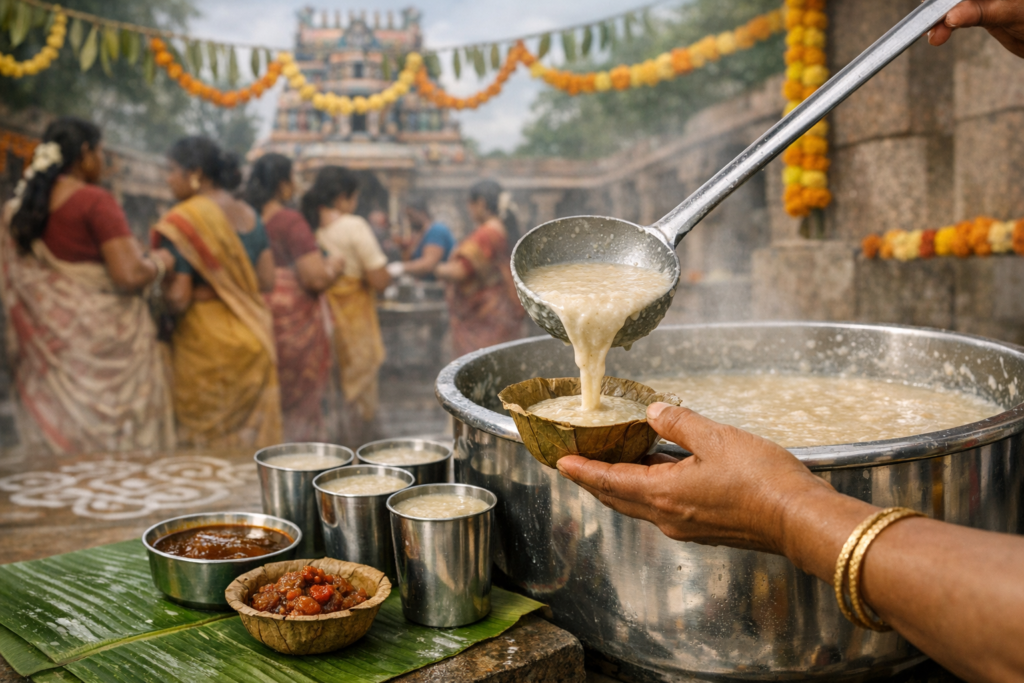
Characteristic offerings of the season include maavilakku (a rice-flour and jaggery lamp molded and lit for Amman), elumichai vilakku (lemon lamps), and naivedyam such as sakkarai pongal, payasam, or sundal. Women commonly tie a protective thread, undertake a partial fast, and perform Sumangali or Kanya puja to honor auspiciousness and the continuity of the feminine principle within family and society. Where elders are present, the day often concludes with blessings and a shared prasad.
Temple-centric Aadi Fridays may feature processions, abhishekam, and special archanas, with certain communities undertaking vow-based observances such as palkudam (milk-pot carrying) or other locally sanctioned rites. While practices vary by district and temple lineage, the unifying leitmotif is devotion to Shakti as protective Mother (Amman), especially at dusk (sandhya) when lighting lamps is considered meritorious.
Aadi Velli sits within a dense cluster of Aadi observances. Aadi Perukku (18th day of Aadi) venerates rivers—especially the Kaveri—and acknowledges ecological abundance and agrarian wellbeing. Aadi Pooram celebrates Andal (Godha), whose life and poetry are integral to Tamil Vaishnava tradition. Aadi Amavasai is significant for pitru tarpanam (ancestral rites). Aadi Krithigai honors Murugan (Kartikeya). Although distinct, these festivals create a month-long field of sacred attention in which Aadi Velli constitutes the Shakti-focused axis.
Socially and emotionally, Aadi is remembered for its shared ethos: households often postpone weddings and large personal celebrations to preserve the month’s spiritual momentum, instead channeling energy into puja, annadanam, and service. In the Tamil diaspora, Aadi Velli offers a cultural anchor—families coordinate time zones to stream temple darshan, adapt offerings to locally available ingredients, and keep continuity through simple home-based rituals without compromising authenticity.
From a dharmic unity perspective, the reverence for the Divine Feminine during Aadi Velli resonates across allied traditions. In Buddhist thought, Tara embodies compassionate, protective energy; in Jain practice, yakshis such as Ambika and Padmavati are venerated as guardians; Sikh teachings uphold profound respect for the dignity and creative role of women within society. These convergences affirm a shared Indic valuation of nurturing power, ethical strength, and ecological care—values mirrored in the Aadi season’s devotion to Shakti.
For 2026 planning, devotees may mark each Aadi Friday on personal calendars and, where possible, align puja with local sunrise or the evening sandhya. It is prudent to consult a regional Panchang for location-specific timings, coordinate temple visits early to manage crowds, and choose eco-conscious offerings (local flowers, reusable lamps, and biodegradable decor) that honor the season’s implicit commitment to ecological balance.
In essence, Aadi Velli 2026 presents five luminous milestones for Shakti worshipers: 17 July, 24 July, 31 July, 7 August, and 14 August. Whether at home or in a temple, the practice centers on gratitude, protection, and inner renewal—harmonizing the Tamil calendar’s seasonal wisdom with Friday’s auspicious current to cultivate prosperity, courage, and collective wellbeing.
Inspired by this post on Hindu Pad.








Leave a Reply
You must be logged in to post a comment.