
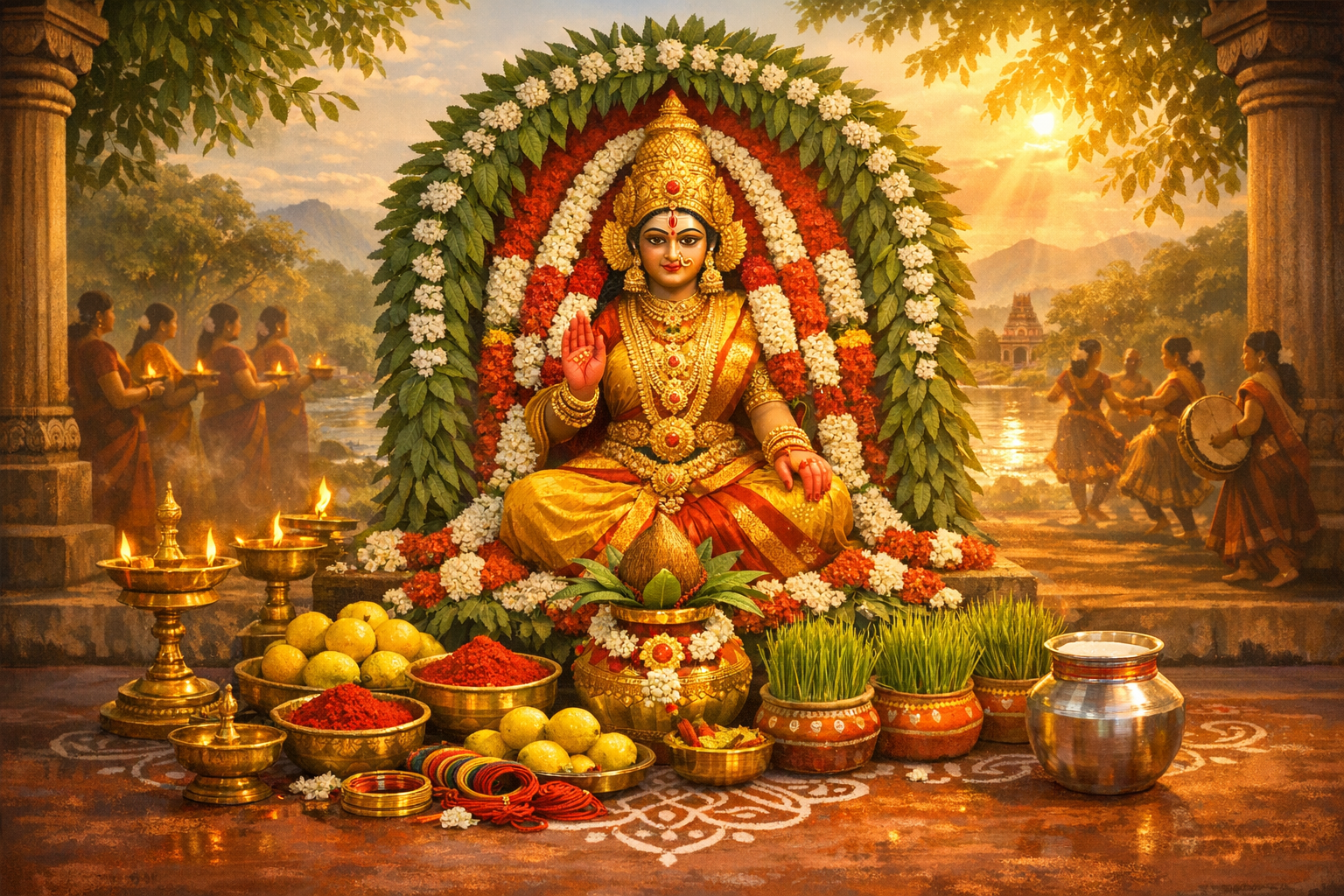
Angala Parameswari Amman Temple, Sathyamangalam, observes the Aadi Month Utsavam with a concentrated sequence of Śakti-centered rituals and community practices that anchor Tamil sacred time between mid-July and mid-August. Rooted in the grama devata tradition, the festival venerates the protective Mother who safeguards families, agrarian rhythms, and the well-being of the locality.
Across Tamil Nadu, many households revere Angala Parameswari Amman (Angalamman) as Kula Deivam (ancestral tutelary deity), a role reflected in the goddess’s many living names and regional forms. Goddess Ankalamma, or Angalamma, is also known as Ankamma or Angamma, Ankali, Angali, Ankala Parameswari and Angala Parameswari. In family memory and oral tradition, additional appellations appear; some lineages even use the honorific “Angala Parameswara Amman.”
The temple’s setting within Sathyamangalam’s riverine-forest corridor—at the gateway to the Western Ghats—mirrors the historical landscape of Amman shrines, which have long been associated with water sources, neem groves, and protective boundary stones. As a local guardian, Angala Parameswari receives seasonal veneration keyed to the monsoon, soil fertility, public health, and social harmony.
In the Tamil calendar, Aadi corresponds broadly to the Sun’s transit through Kataka (Cancer) and is traditionally dedicated to the Divine Mother. The month foregrounds ritual attention to rainfall, rivers, and nourishment for fields and families. Key observances include Aadi Velli (Fridays for Amman), Aadi Chevvai (Tuesdays propitious for Amman worship), Aadi Pooram (aligned with Andal’s sacred day), Aadi Perukku (the 18th day celebrating river abundance), and Aadi Amavasai (ancestral rites).
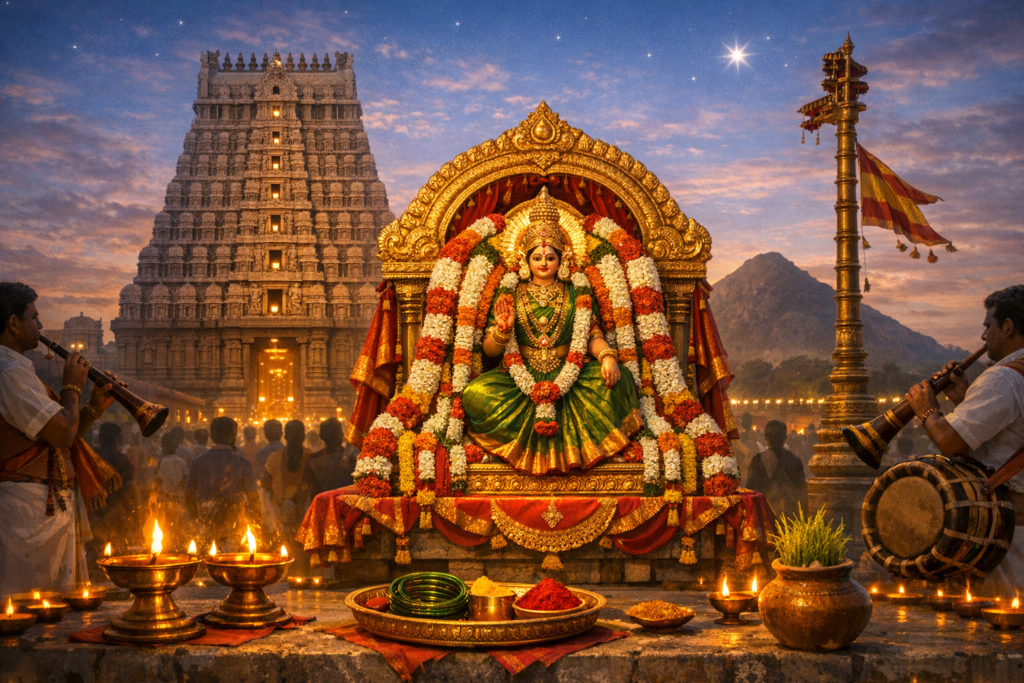
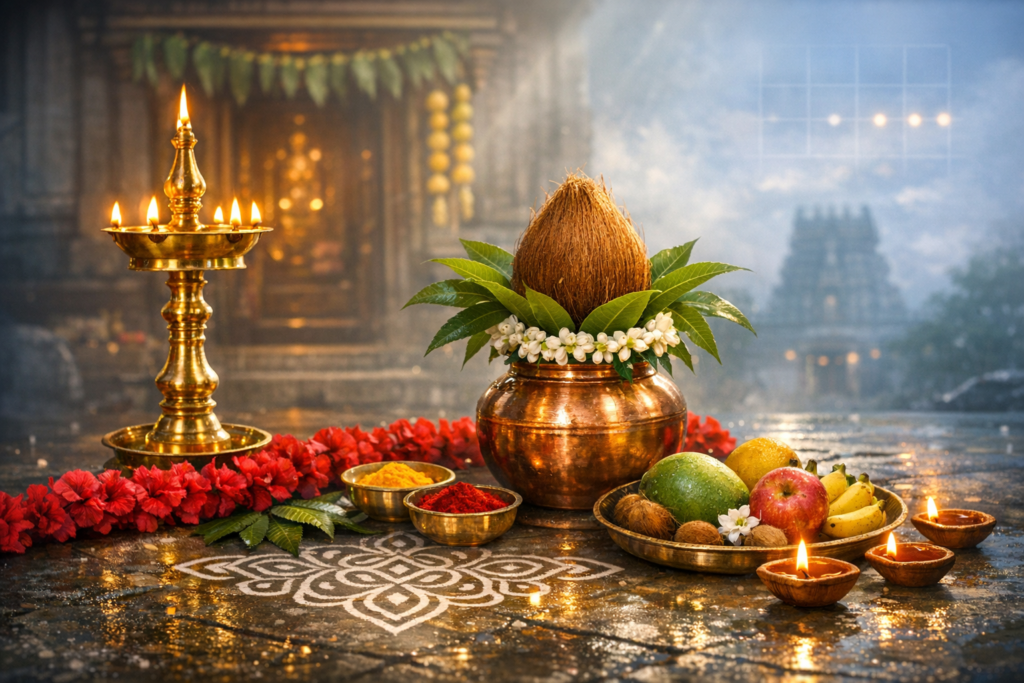
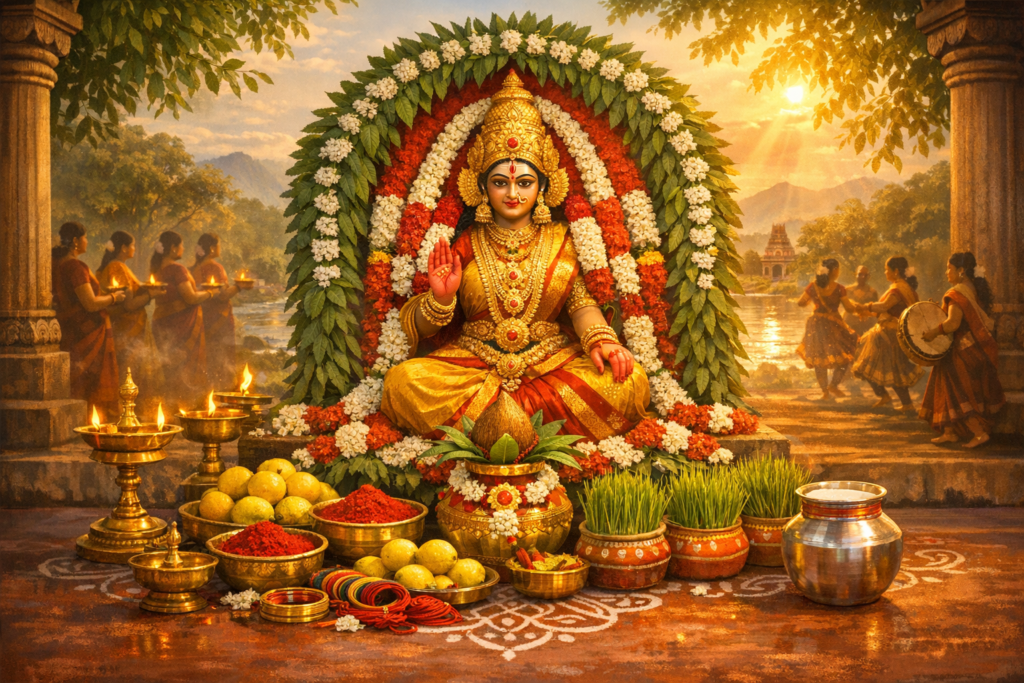
At Angala Parameswari Amman Temple, Sathyamangalam, the Aadi Month Utsavam typically features early-morning abhishekam, elaborate alankaram, kumkum archana, and evening deeparadhana. Abhishekam often employs panchamrita, turmeric, sandal, vermilion water, and sacred ash in locally prescribed sequences. The alankaram highlights neem (veppilai), the turmeric-gold and vermilion-red color palette of auspiciousness, and floral garlands that express Śakti’s potency.
Votive practices intensify during Aadi. Devotees undertake mulaipari (sprouting grains in decorated pots symbolizing fertility), carry paal kudam (milk-pots) or vilakku (lamps), and tie kappu (protective threads) seeking healing and protection. In several Amman traditions across Tamil Nadu—where locally sanctioned—acts such as thee-midhi (fire-walking) and sami aatam (oracular trance, arul vaaku) appear as embodied expressions of vow-fulfillment; where observed near Sathyamangalam, these follow strict temple oversight and time-honored safety norms.
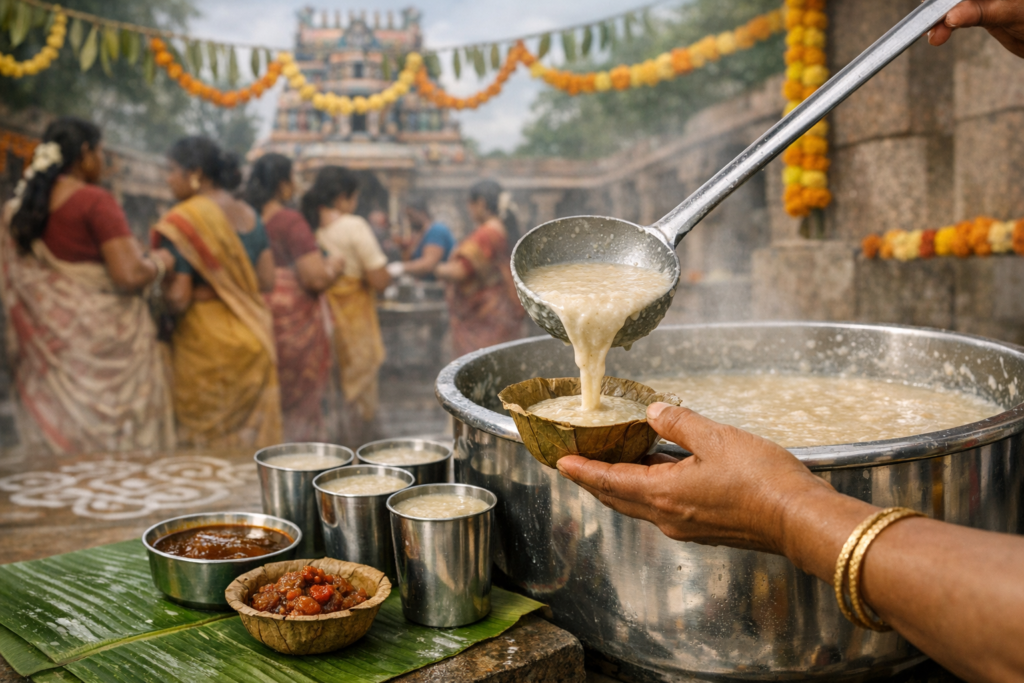
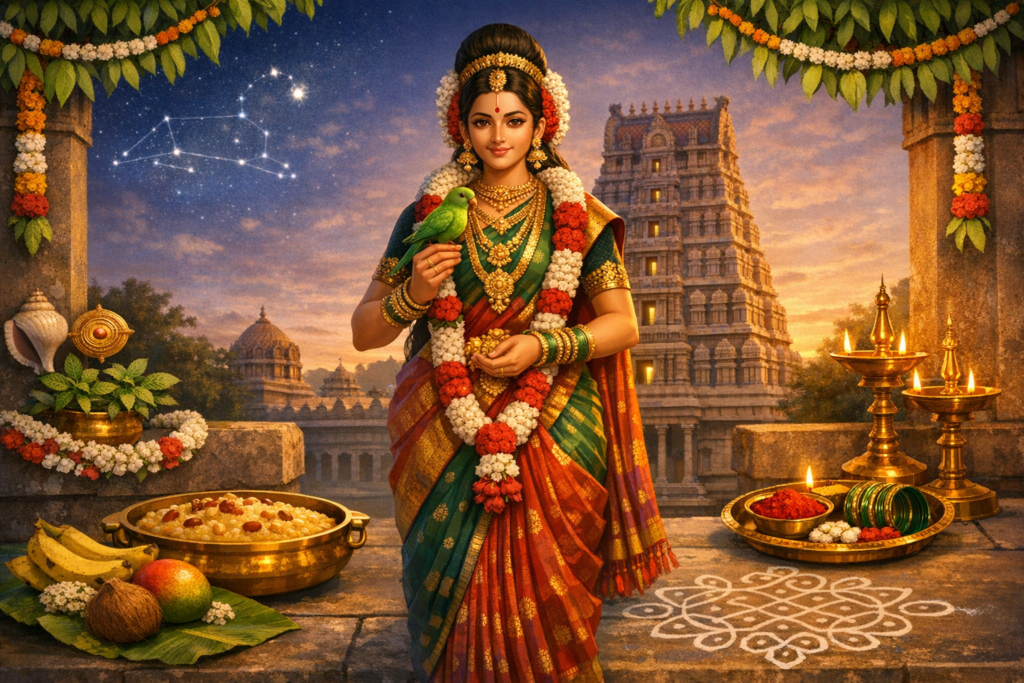
Community offerings align with the Amman idiom of care and plenty. Annadanam, simple prasadam such as koozh, and distribution of neem-infused sacred tokens are common. Vastram (sari offering), thali offerings for marital well-being, bangles to symbolize sumangali auspiciousness, and lemons or turmeric as purificatory tokens reflect the goddess’s guardian role at household and village levels.
As Kula Deivam, Angala Parameswari mediates life-cycle transitions. Families traditionally seek blessings before weddings, house-warmings, pregnancy-related sevanas, and naming ceremonies, reaffirming lineage bonds through annual darshan. Concentrated observances during Aadi allow dispersed kin—including the diaspora—to converge, renew vows, and transmit collective memory across generations.
Theologically, Angala Parameswari is understood as an accessible, protective Śakti whose grace extends from the sanctum to the village threshold. While attributes and narratives vary by sthala-purana and oral lore, an enduring thread is guardianship—warding off epidemics, ensuring potable water, maintaining social concord, and safeguarding crops—concerns that historically shaped the Amman cults of the Tamil region.
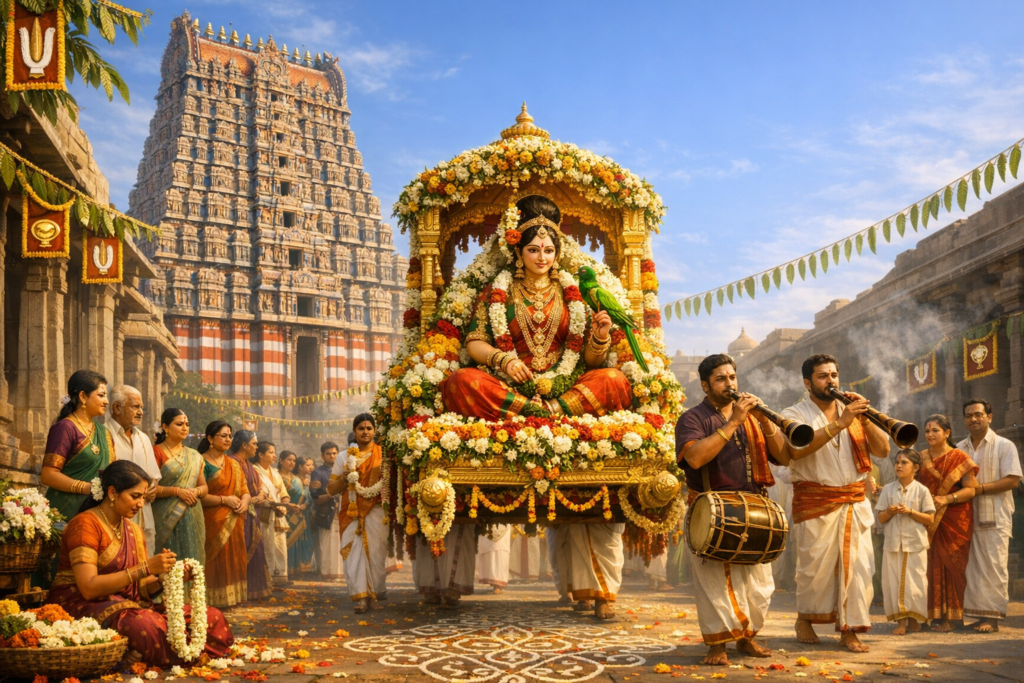
Music and movement mark the festive atmosphere. Parai isai, kummi, kolattam, karagattam, and poikaal kuthirai aattam, where organized, transform pathways into public liturgy. These arts also function pedagogically, encoding motifs of gratitude for rainfall, restraint in consumption, reverence for elders, and collective responsibility for neighborhood well-being.
Aadi’s river- and rainfall-centered rites—especially during Aadi Perukku—align devotion with ecological stewardship. Practices such as offering biodegradable garlands, avoiding plastic at riverbanks, and supporting temple-led cleaning drives harmonize worship with sustainability, an ethic increasingly emphasized by temple communities in and around Sathyamangalam.
In the larger dharmic context, the feminine principle venerated during Aadi resonates across traditions. Buddhism honors compassionate liberative forms such as Tārā; Jain narrative art remembers maternal guardians like Ambikā; Sikh tradition foregrounds seva, equality, and communal nourishment—values mirrored in annadanam and inclusive participation during temple festivals. Read together, these currents affirm a shared civilizational ethos of karuṇā, dharma, and community care.
For those planning darshan during the Aadi Month Utsavam at the Angala Parameswari Amman Temple, Sathyamangalam, customary etiquette includes modest attire, observance of queue discipline, silence within the sanctum, and respect for photography restrictions. Ritual calendars, sevas, and special timings can vary annually; local temple notices should be consulted on arrival for precise schedules.
By interweaving liturgy, folk performance, familial vows, and ecological awareness, the Aadi Month Utsavam reveals how Tamil Śakti worship remains both intimate and public—binding hearth, field, and shrine into a single moral landscape. Devotees frequently describe a palpable sense of maternal assurance: the conviction that Angala Parameswari Amman accompanies daily labor, steadies uncertain seasons, and upholds the dignity of community life.
In sum, the Angala Parameswari Amman Temple, Sathyamangalam, offers during Aadi a comprehensive tableau of Tamil religious culture—ritually exacting yet socially expansive, rooted in local memory yet open to all who approach with devotion. The month’s observances reaffirm a living covenant between devotees and their Kula Deivam, renewing trust in the protective, nourishing embrace of Śakti.
Inspired by this post on Hindu Pad.





Leave a Reply
You must be logged in to post a comment.