What happens after death remains one of the most enduring human questions. Within Hindu scriptures, the Garuda Purana offers an unflinching, often dramatic account of the soul’s transition, replete with descriptions of Yama’s realm, karmic judgment, and narakas (hellish states). At the same time, contemporary spiritual teachers such as Sri Sri Ravi Shankar have described death as a deep, restful transition, akin to sleep. Read together, these perspectives are not contradictory; they illuminate different layers of the same journeyethical, ritual, psychological, and metaphysicalwhile reaffirming a shared dharmic vision of compassion, responsibility, and ultimate liberation (moksha).
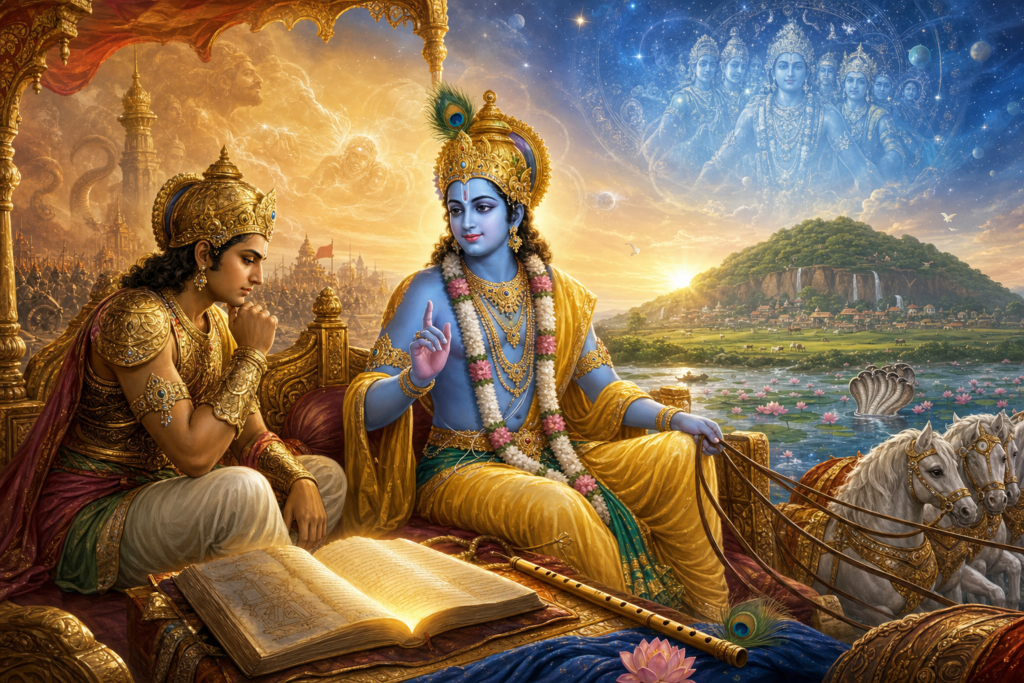
The Garuda Purana, a Vaishnava Mahapurana, is traditionally framed as a dialogue between Bhagavan Vishnu (as Narayana) and Garuda. Its sections on death and the afterlife, commonly referred to as the Pretakalpa, synthesize theology with prescriptive rites (śrāddha, piṇḍa-dāna) and moral instruction. It is best approached as a layered text: part scripture, part ritual manual, and part ethical mirror. Differences in manuscripts and regional practice testify to a living tradition in which teachings are adapted to community needs while preserving core principles of dharma and karma.
At the philosophical core lies the distinction between ātman (the immutable Self) and jīva (the embodied, transmigrating person). The jīva carries subtle impressions (vāsanā) within the sūkṣma-śarīra (subtle body) across births under the governance of karma. Upaniṣadic psychology further situates this within the spectrum of waking (jāgrat), dreaming (svapna), and deep sleep (suṣupti), culminating in the non-dual awareness indicated by the Mandūkya Upaniṣad. When modern teachers speak of death as a “deep sleep,” they echo this canonical mapping: death resembles suṣupti in its cessation of sensory activity, yet the subtle causal continuities of karma remain until knowledge (jñāna), devotion (bhakti), or divine grace culminate in moksha.
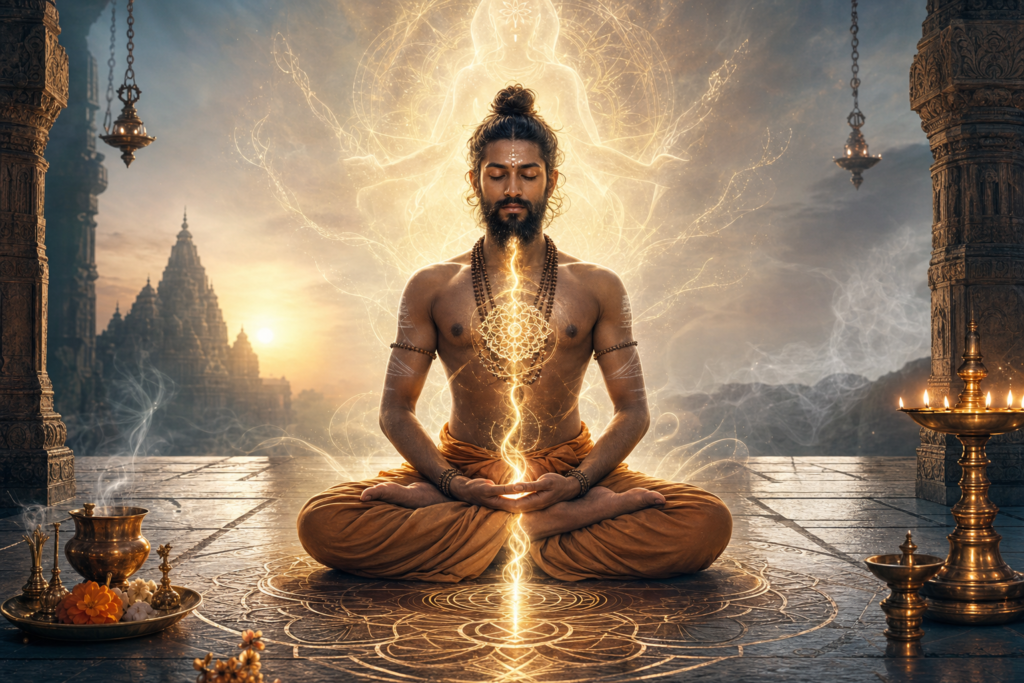
The scriptures describe the dying process as a progressive withdrawal of prāṇa from the senses and limbs. Classical yoga and Vedānta texts speak of nāḍīs (subtle channels) and the brahmarandhra (crown aperture) as symbolic loci for the final outward flow of consciousness. The Garuda Purana’s narrative harmonizes with this metaphysical anatomy: a peaceful, sattvic departure, nurtured by mantra, remembrance of Bhagavan, and the compassionate presence of family, is portrayed as conducive to an auspicious onward journey.
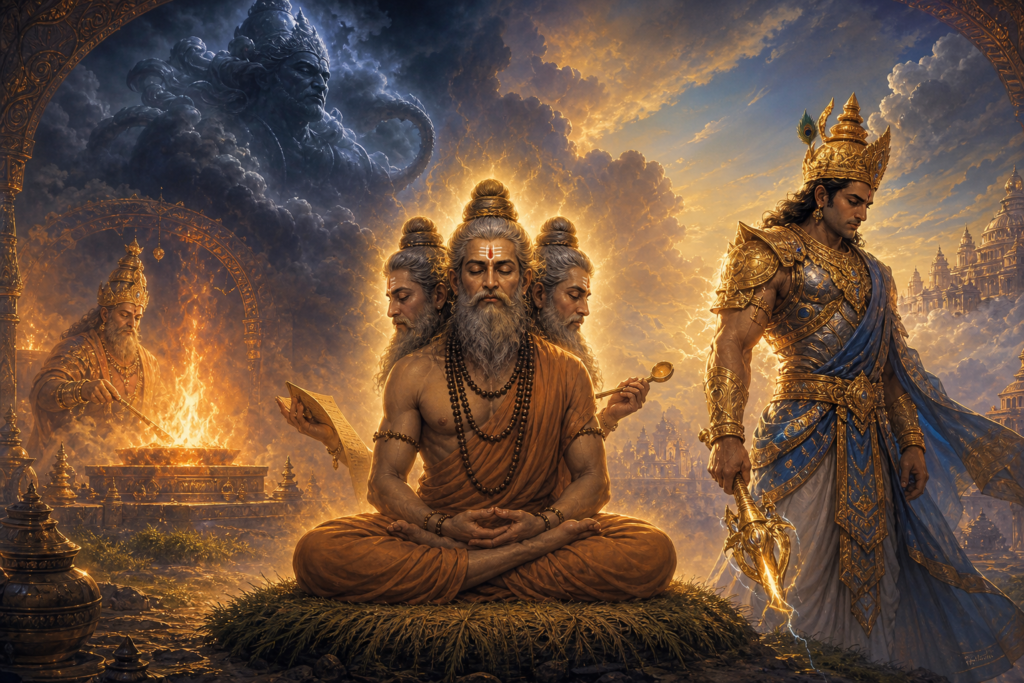
Immediately after death, the Garuda Purana characterizes the jīva as a pretaneither fully departed nor yet assimilated among the pitṛs (ancestral beings). This liminal phase is depicted as highly impressionable, the jīva drawn by its karmic tendencies and soothed or supported by the living through prescribed rites. Descriptions of Yama’s attendants, the crossing of Vaitaraṇī, and encounters with Chitragupta serve a pedagogical function: they dramatize accountability, teaching that actions, intentions, and attitudes are never ethically inconsequential.
The narakas in the Garuda Purananames such as Tāmisra, Andhatāmisra, Raurava, Mahāraurava, Kumbhīpāka, Kālasūtra, and Aśipatravanaare portrayed as corrective states experienced by those whose actions have caused harm. It is methodologically sound to read these passages as both metaphysical and moral. On one level, they assert a cosmic jurisprudence; on another, they function as allegories mapping the psyche: greed burns, deceit entangles, cruelty returns as suffering. In either case, the arc of the narrative is remedial, not nihilistic. The intent is not terror but transformation, reminding readers that saṁskāra (reconditioning through right effort) and śreyas (the truly beneficial path) remain possible.
Balancing this, the text also celebrates puṇya-lokas (meritorious realms) and ultimate refuge in Bhagavan’s grace. For the devoted, remembrance of nāma (divine name), selfless service (seva), and steadfast dharma pave paths beyond transient pleasures or pains. In Vaishnava readings, surrender (śaraṇāgati) opens a way to Vaikuṇṭha, situating liberation within a relationship of love and trust rather than mere metaphysical escape.
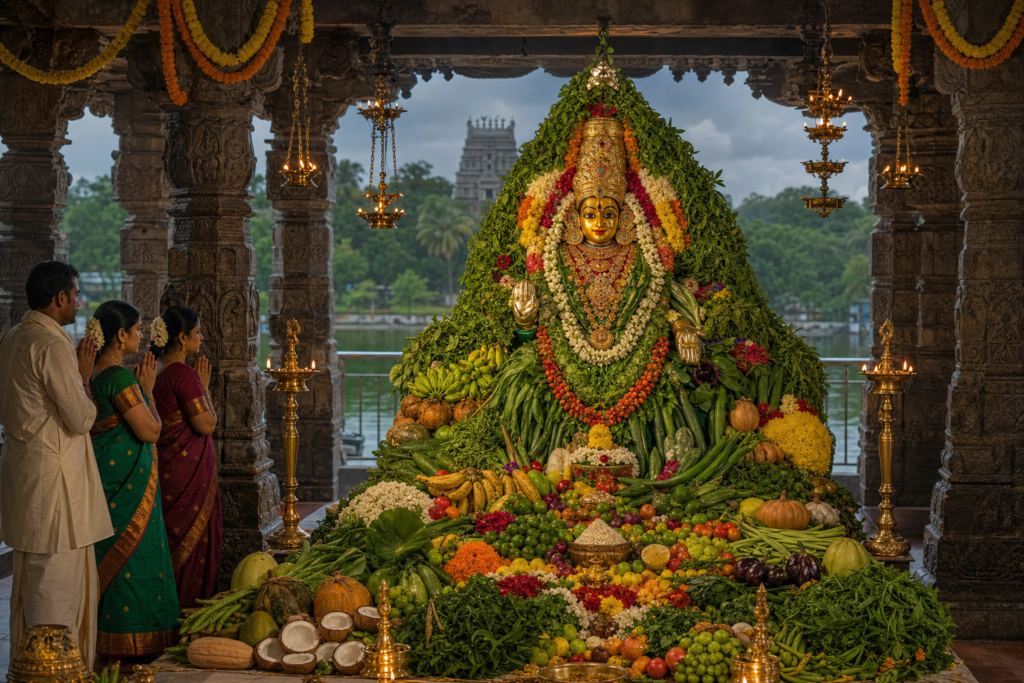
Ritual praxis anchors these metaphysics in communal care. Antyeṣṭi (the final rites), piṇḍa-dāna (offerings of rice-balls), and śrāddha (ancestral memorial rites) are not only symbolic acts; in the Garuda Purana’s worldview, they tangibly aid the preta’s passage. Orthoprax traditionsdrawing variously on the Garuda Purana, Gṛhya Sūtras, and Dharmashastrascommonly prescribe a series of offerings over ten days, culminating in the eleventh-day ceremonies and the sapiṇḍīkaraṇa on the twelfth or thirteenth day (practice varies regionally). Through these rites, the preta is ritually integrated among the pitṛs, and the family’s obligations of love and remembrance are fulfilled.
The text’s ritual ecology extends into the cycle of the year. Annual śrāddha and the fortnight of Pitṛpakṣa frame remembrance, gratitude, and intergenerational continuity as sacred obligations. Even when read allegorically, these observances offer a psychologically luminous function: they create a structured space for grief, closure, and the renewal of familial bonds, gently transforming personal loss into communal meaning.
How, then, can a vision of “frightening” post-mortem realms be reconciled with the serene metaphor of death as deep sleep? The reconciliation is twofold. First, suṣupti in Vedānta is not mere oblivion; it is the cessation of mental modifications while causal potential remains. Death, in this register, is a suṣupti-like interval in the cycle of becoming, until knowledge or grace precipitates freedom. Second, the Garuda Purana’s graphic descriptions serve an ethical-educative function. Their emotional intensity shocks attention toward responsibility, compassion, and restraintthe very disciplines (yama and niyama) that, when lived, make death more “sleep-like” and less turbulent.
Viewed through a comparative dharmic lens, the unifying message becomes even clearer. Buddhism describes transitional states (bardo) wherein clarity and compassion ease passage toward a favorable rebirth or liberation; conscientious living and meditative practice are the means. Jainism emphasizes that the jīva transmigrates in accordance with karma into one of the four gatis (heavenly, human, animal/plant, or infernal), with ahiṁsā and self-discipline as salvific disciplines. Sikh teachings affirm the cycle of birth and death (karmic causality) while pointing to liberation through nām-simran (remembrance of the Divine Name), ethical living, and grace of Vāhigurū. Across these traditions, the shared counsel is unmistakable: live ethically, cultivate awareness, practice compassion, and remember the Divinethen death naturally becomes a gentle doorway, not an abyss.
In lived experience, families often report that the structure of rites and the recitation of mantras provide emotional steadiness. Whether one emphasizes literal metaphysics or symbolic meaning, these practices can act as containers for grief, creating continuity between those who have departed and those who remain. The Garuda Purana’s worldview situates this continuity within dharma: relationships extend beyond a single lifespan, and care can be meaningfully expressed through ritual, charity (dāna), and remembrance.
Practical implications follow. The disciplines of yama (ahiṁsā, satya, asteya, brahmacarya, aparigraha) and niyama (śauca, santoṣa, tapas, svādhyāya, Īśvara-praṇidhāna) are not abstractions; they are daily technologies of character that gradually render the mind clear and the heart soft. When combined with devotion, meditation, and service, they align the jīva with sattvamaking the moment of dying more peaceful and the trajectory of rebirth (if any) more auspicious in karmic terms. From this vantage, the Garuda Purana’s “frightening” passages are best read as compassionate warnings that steer seekers toward choices that minimize suffering for self and others.
In sum, the Garuda Purana’s teaching on what happens after death is not an invitation to fear but to maturity. It affirms accountability without denying grace, ritual care without eclipsing inner realization, and vivid imagery without abandoning philosophical subtlety. Read alongside the broader dharmic familyBuddhist, Jain, Sikh, and diverse Hindu schoolsthe text supports a unifying ethic: cultivate virtue, clarity, and devotion so that the inevitable transition called death resembles a profound, luminous rest, and the soul’s long journey bends toward liberation.
Inspired by this post on Hindu Pad.