Praywho, me? That hesitation is common in contemporary spiritual life, yet within dharmic traditions, prayer is not a peripheral add-on but a central discipline. In the bhakti framework of Hinduism, vandanam (prayer) is recognized as a best practice of daily sadhana that shapes intention, harmonizes thought and feeling, and sustains a living relationship with the Divine. When approached with regularity and understanding, prayer becomes the steady undercurrent that carries other limbs of practice forward.
Classical sources present vandanam as one of the nine limbs of bhakti, alongside sravanam, kirtanam, smaranam, pada-sevanam, archanam, dasyam, sakhyam, and atma-nivedanam (Srimad-Bhagavatam 7.5.23). Bhakti texts further affirm that sincere absorption in even a single limb can carry a practitioner to the highest perfection. This observation is less a slogan and more a precise pedagogical point: the integrity and depth of one practice can entrain the mind and heart so completely that it unlocks the fruit of the whole.
Prayer, considered technically, operates across three axes found throughout the bhakti shastra tradition: sambandha (clarifying one’s relationship to Bhagavan and the sacred world), abhidheya (the actual process of practice here and now), and prayojana (orientation toward the ultimate goal). In this light, vandanam becomes the cognitive, affective, and volitional alignment of the practitioneran integrated gesture of humility, trust, gratitude, self-examination, and surrender.
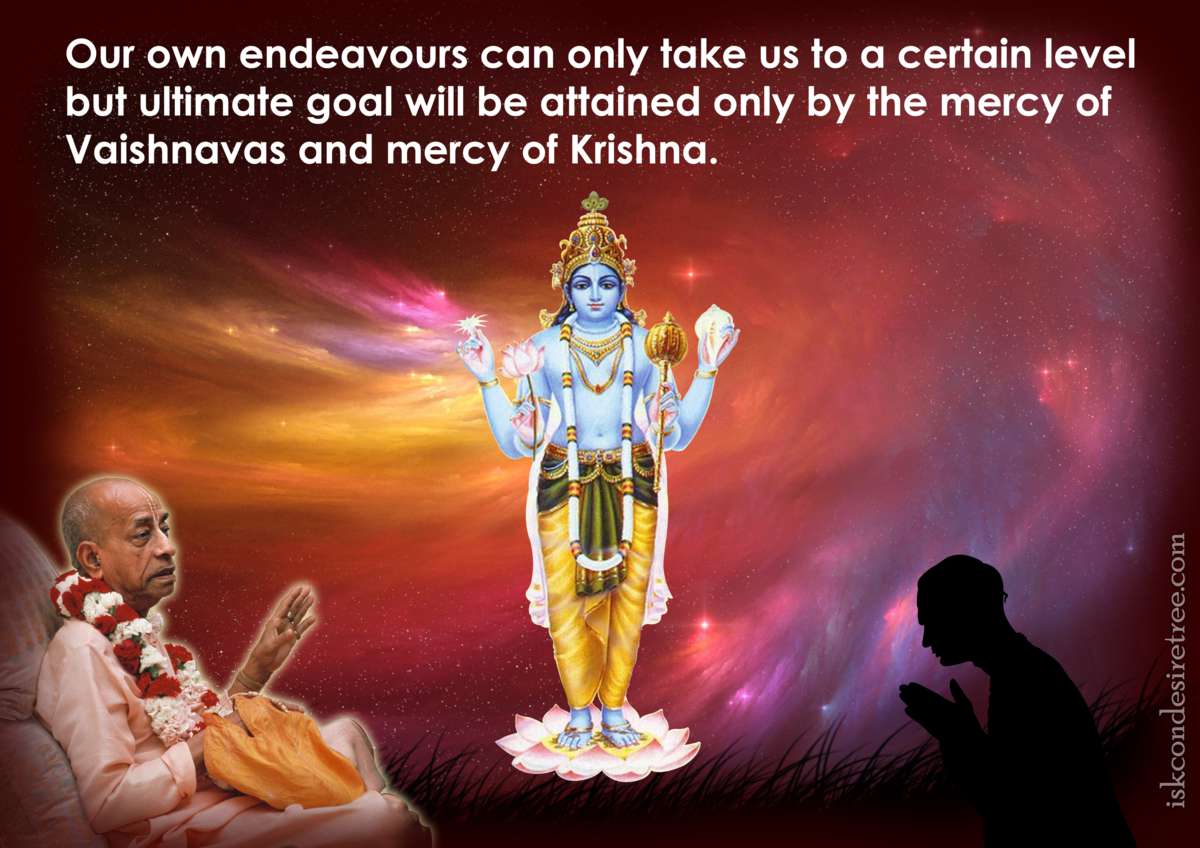
Pranama-mantras offer a concise illustration. Each pranam is a prayer directed to Bhagavan, the Deity, the Ācārya, and the Guru, acknowledging the lineage that transmits realization. The language of pranam establishes reverence, the posture instills humility, and the repetition stabilizes attention. Over time, practitioners report that the simple act of bowing with clear intention recalibrates the inner compass, making the mind more receptive to meaning and the heart more willing to serve.
In Gaudiya Vaishnavism and within ISKCON (International Society For Krishna Consciousness), this insight has been woven into a daily program. Mangal-arati greets the dawn with praise, Tulasi-puja refines devotion, japa immerses attention in nama, and guru-puja roots the day in gratitude to the preceptor. Importantly, the tradition emphasizes reading and contemplating the translations and meanings of the daily prayers. Many find that a measured reading of the vernacular or English translations alone is profoundly purifying and quietly transformative, because meaning is allowed to enter not just the ear but also the conscience.
The mechanics of this transformation are straightforward yet deep. As meanings become familiar, the semantic content of the prayers begins to color perception during the day: reactions soften, intentions refine, and choices increasingly reflect remembered values. In effect, prayer functions as ongoing formation. What begins as recitation evolves into contemplation, and with practice, contemplation matures into an effortless remembrance that travels with the practitioner into work, relationships, and service.
Although framed here through bhakti, this central role of sacred utterance and inward address is shared across dharmic paths. In Buddhism, mettā bhāvanā systematizes heartfelt goodwill that functions prayerfully as a training of intention. In Jainism, the Namokar Mantra grounds humility and honors the perfected beings, teachers, and ascetics, aligning personal conduct with non-violence and restraint. In Sikhism, Ardas articulates collective remembrance, aspiration, and surrender, while Naam Simran internalizes that remembrance as steady awareness. These varied expressions converge on a common arcinvocation, recollection, offering, aspiration, and surrenderforming a unifying grammar of prayerful practice across Hinduism, Buddhism, Jainism, and Sikhism.
For aspirants asking how to begin, a structured, time-efficient protocol is practical and effective. A brief sequence can include: a moment of grounding breath; a pranam that names one’s relationship to the Divine and lineage; an expression of gratitude; a short confession and rectification resolve; a clear sankalpa aligning the day’s duties with dharma; a petition for guidance and steadiness; and a closing act of surrender. Keeping a pocket translation of daily temple prayers, and reading a few lines attentively, helps transfer their meaning from ritual to lived ethic.
Practitioners consistently describe relatable, human benefits. Many note an immediate calming effect after even a few minutes of prayer, a widening of perspective during interpersonal friction, and a gentler inner voice when facing self-criticism. Others recount childhood memoriesfolded hands before a home altar or listening to evening kirtanthat reawaken a sense of safety and belonging when revisited as adults through daily vandanam. These are not sentimental footnotes; they are phenomenological markers of integration that signal the practice is working.
Contemporary research on contemplative practices sheds further light without reducing prayer to physiology. Studies on devotional meditation and compassion-based training report improvements in attentional control, emotional regulation, and prosocial orientation. Measures such as heart-rate variability suggest parasympathetic balance; neuroimaging points to changes in networks associated with salience and self-referential processing. While idioms differ, these findings resonate with long-standing dharmic claims: habitually invoking sacred meaning reshapes perception, inclination, and conduct.
Common obstacles have well-tested remedies. When prayer feels dry, alternating spoken recitation with thoughtful reading restores freshness. When attention scatters, short sessions performed more frequently across the day are preferable to infrequent, lengthy attempts. Doubt is met by steady practice, wise association, and reflective study. The bhakti counsel of utsaha, niscaya, and dhairyaenthusiasm, confidence, and patiencecombined with nairantarya abhyase, unbroken regularity, gradually makes prayer a second nature.
Progress can be observed in simple ways. Quantitatively, track minutes of daily prayer and regularity over weeks. Qualitatively, look for increased remembrance during challenges, quicker recovery after mistakes, spontaneous gratitude, and a deeper impulse to serve. A mature sign is the quiet desire to align choices with dharma even when unobservedevidence that the meanings voiced in prayer have become the mind’s default horizon.
Ultimately, prayer as vandanam complements and deepens all other limbs of practice. It clarifies relationship, purifies motive, and turns everyday tasks into offerings. Read with attention, the translations of daily temple prayers can themselves serve as luminous guides; spoken with sincerity, pranam binds the practitioner to an unbroken current of grace. When approached in this integrated and inclusive spirit, prayer strengthens not only individual sadhana but also the unity and mutual respect that underpin the wider family of dharmic traditions.
Inspired by this post on Dandavats.