
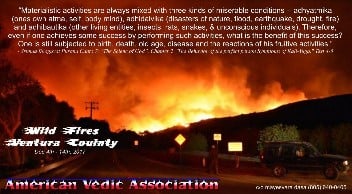
Ventura County recently endured a week many described as the closest thing to hell on earth, with wildfire consuming more than 230,000 acres and destroying hundreds of homes. Such episodes offer a stark reminder of collective vulnerability in an unpredictable world and sharpen a life-and-decision question that demands clarity before the next siren: what, exactly, should be taken when a home is threatened by fire, and in what order.
The clearest answer merges evidence-based disaster planning with humane priorities: protect life first, preserve health and identity second, and safeguard continuity only after safe departure has been assured. This academic yet practical approach, widely reflected in wildfire preparedness doctrine, aligns with the “Ready, Set, Go” model used by several agencies: ready (create defensible space and kits), set (stage and load with situational awareness), go (evacuate immediately when ordered or when conditions deteriorate).
Wildfire dynamics justify this urgency. Spotting embers can travel miles ahead of a flame front, radiant heat can compromise structures from a distance, and shifting wind fields can reverse escape routes within minutes. In the wildland–urban interface (WUI), where homes sit adjacent to fuels, time margins narrow quickly; survival hinges on pre-decided priorities and disciplined execution of an evacuation checklist.
Priority one is life safety: people and pets. Evacuation readiness means agreeing in advance on rally points, transportation for children, elders, and those with mobility needs, and carriers or crates for animals. In practical terms, this is the difference between orderly departure and chaotic improvisation when visibility drops and ash falls.
Priority two is health continuity: prescriptions, medical devices, and essentials for 72 hours. This includes daily medications in labeled containers, inhalers, insulin and cooling methods, EpiPens, hearing aids and batteries, eyeglasses or contacts and solution, and specialized supplies for infants, elders, and persons with disabilities. Smoke conditions make N95 or P100 respirators and saline eye drops more than conveniences; they are protective equipment.
Priority three is identity and rights: papers and digital records. Core items include government-issued IDs, passports, proof of address, insurance declarations, vehicle titles, and a secure digital copy of critical records. A small, encrypted solid-state drive or USB keywith scanned IDs, medical summaries, home inventory, and key financial documentskept in a waterproof pouch shortens claims, restores services, and prevents cascading losses.
Priority four is communications and power: phones, chargers, and power banks. With cellular networks stressed, maintaining battery life, enabling Wi‑Fi calling where possible, and having a secondary communication plan (text trees, prearranged check-ins) preserves coordination. A compact all-hazards or NOAA weather radio provides redundancy for official updates when connectivity falters.
Priority five is basic sustainment: a compact emergency kit that supports three days away from home. Pack water and electrolyte options, calorie-dense shelf-stable foods, a first-aid kit, headlamps with spare batteries, a multi-tool, cash in small bills, duct tape, a whistle, space blankets, and seasonally appropriate clothing. Natural-fiber long sleeves, long pants, sturdy shoes, leather gloves, and eye protection provide a margin against embers and debris during departure.
Priority six is meaning and continuity: priceless items, within time and safety limits. Prioritize a very small setirreplaceable photos, portable heirlooms, sacred objectsonly after every life-safety and identity step is complete, and only if evacuation time remains ample. Non-attachment is a sound safety principle; so is the judicious preservation of memory that sustains families after loss.
Time-constrained scenarios demand tiered packing. In a 10-minute window, evacuate immediately with people, pets, prescriptions, phones and power, IDs, and the pre-staged go-bag. In a 60-minute window, add vital papers, laptops with chargers, the digital backup, a compact clothing set, pet supplies for several days, and a strictly limited set of irreplaceables. If flames, heavy embers, or blocked egress present, skip additions and go.
Vehicle staging multiplies those minutes. Parking nose-out with at least a half tank of fuel, placing go-bags and paperwork in the same trunk location, keeping a paper map marked with two exit routes, and storing N95 respirators and goggles in the glove box convert preparation into faster execution. Backing up to trailers or loading mobility devices the night before a Red Flag Warning can save lives.
Digital resilience protects identity when paper burns. Scan and encrypt key documents, enable multi-factor authentication, and store copies in two places: reputable cloud storage and a physical, encrypted drive kept off-site or in the go-bag. Photograph every room as a quick home inventory; upload these images and store them on the drive. These steps shorten insurance timelines, verify ownership, and reduce stress during claims.
Insurance and documentation can be the difference between recovery and prolonged displacement. Maintain policy numbers, coverage details (including Additional Living Expense), agent contact information, mortgage/lease info, and recent utility bills that verify occupancy. Keep serial numbers or receipts for major items where feasible. Post-evacuation, photograph damage from a safe distance only if authorities permit reentry.
Pets require their own micro-kit: carrier or crate with name and phone number, leash or harness, several days of food and collapsible bowls, medications, vaccination records, and waste bags or litter. Affix contact information to collars and carriers, and keep recent pet photos to help with reunification if separated.
Children and elders often require specific adjustments. For young children, include comfort items, diapers, wipes, formula, and age-appropriate snacks. For elders and persons with disabilities, plan for mobility aids, incontinence supplies, backup charging for medical devices, and printed care instructions. Label essential items with names and contact numbers to mitigate confusion in shelters.
Smoke is its own hazard during wildfire evacuations. N95 or P100 respirators reduce particulate exposure; properly fitted models are most effective. Protective eyewear and lubrication drops help against irritation. Those with cardiopulmonary conditions should minimize exertion outdoors, travel with medications accessible, and prioritize routes with lower smoke density if options exist.
Route planning reduces uncertainty. Identify two or more ways out, anticipate chokepoints, and prearrange family rendezvous locations outside the threatened area. If authorities announce evacuation zones or contraflow routes, follow official instructions; improvised detours can lead into hazardous canyons or dead ends when visibility is low.
Home hardening and defensible space are not evacuation items, yet they influence what can be saved in the long run. Ember-resistant attic vents, Class A roofing, 0–5 feet of noncombustible landscaping, and clear gutters reduce ignition risk. While no mitigation guarantees survival in extreme events, pre-season work buys time for safe departure and increases the odds of post-fire return.
Community coordination amplifies safety. Neighborhood phone trees, shared transportation plans, and mutual check-ins for those living alone ensure no one is left behind. Local community centers, temples, gurdwaras, viharas, and Jain derasars often become informal support nodes, providing information, supplies, and emotional anchoring in line with the spirit of seva.
Ethical priorities from dharmic traditions reinforce the life-first approach. Hindu teachings on aparigraha (non-possessiveness), Buddhist reflections on anicca (impermanence), Jain commitments to ahimsa (non-harm), and Sikh devotion to seva and sarbat da bhala (welfare of all) converge on a single principle: do not endanger life for possessions. This convergence also nurtures compassionate actionsheltering neighbors, sharing transport, and offering food and care across community linesembodying Vasudhaiva Kutumbakam.
Psychological steadiness is a safety tool. Simple practices such as calm, sustained breathing, mantra japa, metta meditation, or simran can lower heart rate, clarify attention, and support good judgment under pressure. In group settings, brief collective silence or a grounding phrase assists decision-making without delay.
After evacuation, inform loved ones via the agreed check-in method, register with local responders if advised, and avoid reentry until authorities declare it safe. Hazards include falling debris, energized lines, hot ash pits, and compromised air quality. Once permitted, document conditions methodically, start claims promptly, and lean on community and faith networks for practical and emotional support.
A compact wildfire evacuation checklist emerges from these principles. It emphasizes staged readiness (go-bag prepacked and reachable), explicit priorities (life, health, identity, continuity), practical protective equipment (N95 or P100 respirators, eye protection, natural-fiber clothing), and digital resilience (encrypted backups, multi-factor authentication). It also treats community support as a core capability, not an afterthought.
The Ventura County experience, and others like it, underscore that preparedness is not alarmism; it is the quiet discipline that preserves lives and dignity when conditions turn. A household that rehearses its plan, validates routes, maintains kits, and coordinates with neighbors transforms fear into actionable confidence and turns a perilous hour into survivable minutes.
Across Hindu, Buddhist, Jain, and Sikh lineages, unity of purpose around compassion, clarity, and courage strengthens this discipline. In that unity, a wildfire evacuation plan becomes more than a checklist; it becomes a shared vow to protect life, uphold dignity, and carry forward memory and meaning togetherwhatever the winds may bring.
Inspired by this post on Dandavats.
