What appears as a simple distinctionVishnu as “Bhagavan” and Shiva as “Ishvara” (Ishwar)in fact opens a careful window into the semantics of Hindu theology, the aesthetics of devotion, and the metaphysics of Vedanta. Read in context, these honorifics do not rank deities; they illuminate complementary facets of the same ultimate reality while safeguarding the freedom of Ishta, the chosen pathway of inner alignment that undergirds Sanatana Dharma’s unity in spiritual diversity.
Bhagavan, in classical Sanskrit usage, names the personal fullness of the Divine. It is etymologically tied to bhaga, the “opulence” or “excellence” that the Vishnu Purana frames as six complete excellencesjñāna (knowledge), aiśvarya (lordship or sovereignty), śakti (creative potency), bala (strength), vīrya (valor or inexhaustibility), and tejas (splendor). When texts call a deity Bhagavan, they emphasize a relational, approachable, and plenary presence whose perfections invite loving devotion and theological contemplation in equal measure.
Ishvara, by contrast, arises from the verbal root īś, “to rule, to master, to be capable.” It foregrounds the Divine as sovereign overlord, the omnipotent and omniscient regulator of cosmos, karma, and dharma. Upanishadic diction captures this with extraordinary succinctness: the Isha Upanishad’s īśāvāsyam idam sarvam frames reality as pervaded and governed by the Lord; Patañjali’s Yoga Sutra (I.24) designates Īśvara as a special puruṣa untouched by afflictions, action, and karmic residues. In Shaiva idioms, the same semantic field flowers in titles such as Maheshvara and Ishāna.
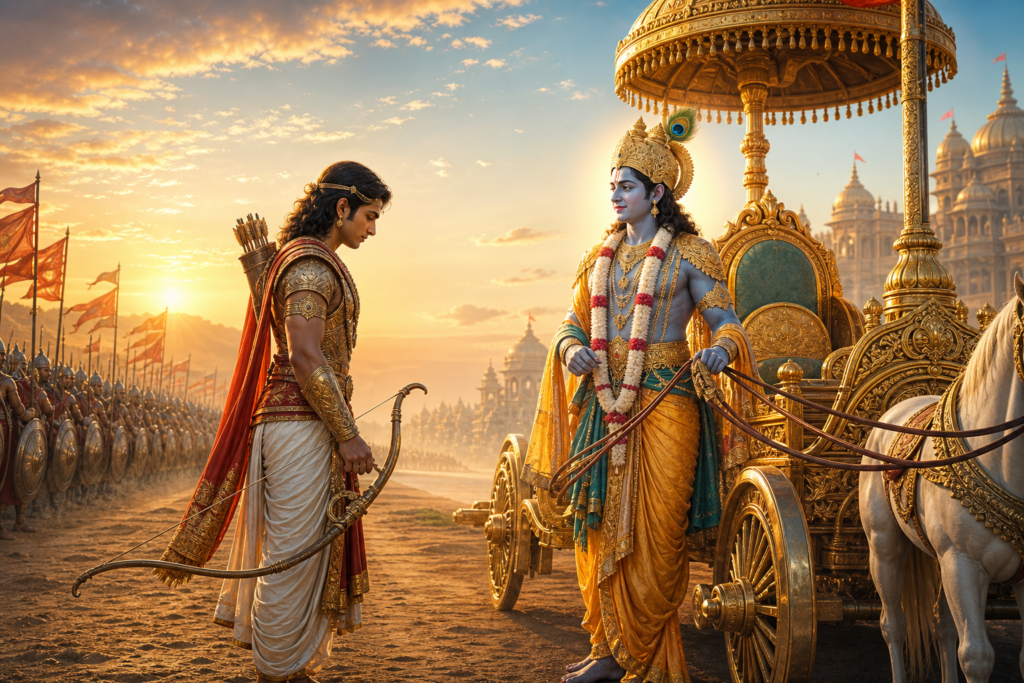
Neither title is exclusive. Vishnu is frequently styled Īśvaraprominently in the Vishnu Sahasranamawhile Shiva is addressed as Bhagavan in Purāṇic and Itihāsa literature. The Bhagavad Gita’s dialogue rubric “Śrī Bhagavān uvāca” centers Krishna (Vishnu) as Bhagavan; texts such as the Bhāgavata Purāṇa and the Skanda Purāṇa reverentially address Rudra/Śiva as Bhagavān or Maheśvara. The language of Hindu scripture is fluid and inclusive: these names are windows, not walls.
The functional distinction, then, lies in emphasis rather than hierarchy. “Bhagavan” highlights the devotional, relational plenitude of the Divine Person; “Ishvara” highlights the cosmic sovereignty and law-ordering intelligence of the Lord. In practice, both emphases belong to the same Absolute and can be predicated of either Vishnu or Shiva without contradiction, a point that the broader Sanskritic archive repeatedly models.
Scriptural usage clarifies the devotional grammar. In the Bhagavad Gita, the honorific Bhagavan frames a personal revelation of the Divine through Krishna’s words, culminating in a theophany of the all-form (Viśvarūpa) that marries intimacy with infinitude. In Śaiva contexts, Upanishadic titlesĪśāna, Maheśvara, Rudraforeground Lordship, pervasion, and auspicious transformation. Both tonalities belong to a single sacred music, differing only in raga and mood.
Within Vaishnavism, the Bhāgavata Purāṇa, Pāñcarātra traditions, and classical Acharyas naturally prefer “Bhagavan” for Vishnu/Krishna to emphasize divine rasa, the aesthetics of loving exchange. The theological profile here prizes the plenary personality of Godhead whose opulences are complete and whose compassion is boundless, thereby inviting bhakti as the highest epistemology of the heart.
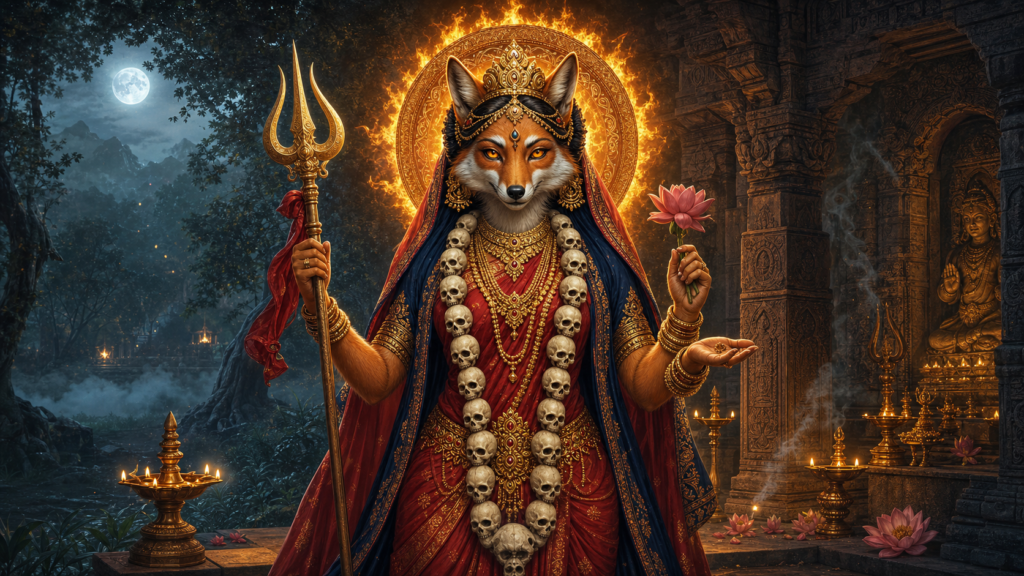
Within Shaivism, “Ishvara” and “Parameśvara” draw attention to Shiva’s sovereignty as Pati, the Lord who liberates the bound soul (paśu) from the fetters (pāśa). In Kashmir Shaivism, Ishvara is also a technical tattva within a refined metaphysical ladder comprising Śiva, Śakti, Sadāśiva, Īśvara, and Śuddhavidyāan elegant map that discloses how absolute consciousness expresses and re-collects itself.
Advaita Vedanta integrates both idioms with distinctive precision. Īśvara is saguna Brahman, the Lord endowed with attributes who upholds cosmic order and dispenses the fruits of karma. Bhagavan is cherished as the personal form through which devotion ripens into knowledge, until nirguṇa Brahman (non-dual Being-Consciousness-Bliss) stands self-revealed. In this hermeneutic, the personal and the absolute are complementary pedagogies of the same Brahman.
Vishishtadvaita uses “Bhagavan” in a relational sense par excellence: Nārāyaṇa is the inner ruler (antaryāmin) and supreme object of devotion whose body is the cosmos itself, yet who is intimately accessible to the devotee. “Īśvara” remains an apt name in this school as well, but the affectionate accent tends toward “Bhagavan,” sharpening the affective edge of surrender (prapatti).
Dvaita Vedanta affirms Vishnu as the supreme Īśvara, categorically distinct from souls and matter. Yet even here, the honorifics do not clash with the broader Sanskrit usage: Bhagavan denotes Vishnu’s fullness and grace; Īśvara denotes His absolute sovereignty. The terminological confluence underscores stability, not strife, across schools of thought.
Smārta traditions, following a non-sectarian reading of Vedanta, practice pañcāyatana-pūjā, installing Shiva, Vishnu, Devi, Ganesha, and Surya on a single altar. Here, the same One shines as Bhagavan, Bhagavati, and Īśvara depending on liturgical context, affirming unity in spiritual plurality without collapsing meaningful distinctions.
The yoga tradition elaborates a complementary soteriology. Īśvara-praṇidhānasurrender to the Lordis among the direct means to still the fluctuations of mind and establish samādhi. Bhakti literature, for its part, teaches that loving service to Bhagavan softens the heart and refines attention, likewise culminating in steady absorption. The paths differ in emphasis, but the goal of liberation converges.
Mantra idioms make the nuance experiential. “Om namo bhagavate vāsudevāya” addresses the plenary personal presence of Vishnu as Bhagavan, drawing the mind toward loving remembrance. “Om namaḥ śivāya,” the five-syllabled mantra, purifies the inner instruments and orients awareness toward the auspicious Lord. Both sensibilities ennoble human life; both are anchored in Vedic revelation; both lead to mokṣa.
The liturgy itself has long celebrated their non-difference. A well-loved śloka affirms: śivāya viṣṇurūpāya śivarūpāya viṣṇave; śivasya hṛdayaṁ viṣṇur viṣṇos ca hṛdayaṁ śivaḥ. The verse voices a devotional metaphysics of non-contradiction in which Hari and Hara are two windows opened to one sky.
Iconography and temple culture embody the same grammar. The composite Hari-Hara mūrti, forms like Śaṅkara-Nārāyaṇa, and shared kṣetras where devotees of both lineages gather demonstrate that language, ritual, and space have always fostered confluence rather than competition. Historical patterns of pilgrimage, festival calendars, and shared stotras likewise index an abiding cultural accord.
Comparative dharmic perspectives reinforce this harmonizing frame. “Bhagavān” functions as a pan-Indic honorific of reverence: Buddhist Sanskrit and Pāli literature address the Buddha as Bhagavān/ Bhagavā; Jaina traditions lovingly hail Bhagavān Mahāvīra; across Sikh bāṇī, the One is praised as Hari, Govind, and Ram, names shared across the Indic theonymic commons. Without erasing doctrinal differences, a deep civilizational courtesy affirms shared aspirations toward truth, compassion, and liberation.
Modern scholarship has shown how over-literal or sectarian parsing of titles can misread premodern usage. Classical Sanskrit is semantically generous and context-sensitive; the same epithet can disclose different facets in different textual ecologies. To read Bhagavan and Īśvara as mutually exclusive is to flatten the richness of India’s intellectual and devotional archives.
For contemporary practitioners, the distinction is practically helpful rather than polemical. When devotion seeks intimacy, Bhagavan signifies relational plenitude; when contemplation seeks cosmic order and moral governance, Īśvara names sovereign lordship. Alternating these lenses across study, japa, and darśana yields a more integrated sādhanā.
A unifying ethic also follows from the doctrine of Ishta. Each soul resonates with a particular form, name, and pathway, and Hinduism dignifies that resonance without demanding uniformity. The result is principled pluralism: many doors, one sanctum; many melodies, one raga of liberation.
In this light, the question “Why is Vishnu Bhagavan and Shiva Ishvara?” resolves into an inclusive answer. In Vaishnava milieux, Bhagavan is the most natural title for Vishnu because the tradition accents divine relationality; in Shaiva milieux, Ishvara is most natural for Shiva because the tradition accents divine sovereignty and auspicious transformation. Yet the archive freely crosses these preferences, calling Vishnu Īśvara and Shiva Bhagavān wherever context invites.
Ultimately, the two honorifics are complementary spotlights on one stage. Bhagavan discloses the sweetness and fullness of the personal Divine; Īśvara discloses the majesty and moral architecture of the cosmic Lord. Held together, they safeguard unity in spiritual diversity across Hinduism’s own house and, by extension, resonate with the broader dharmic family of Buddhism, Jainism, and Sikhism in affirming a civilization where many paths deepen one truth.
Inspired by this post on Hindu Blog.