
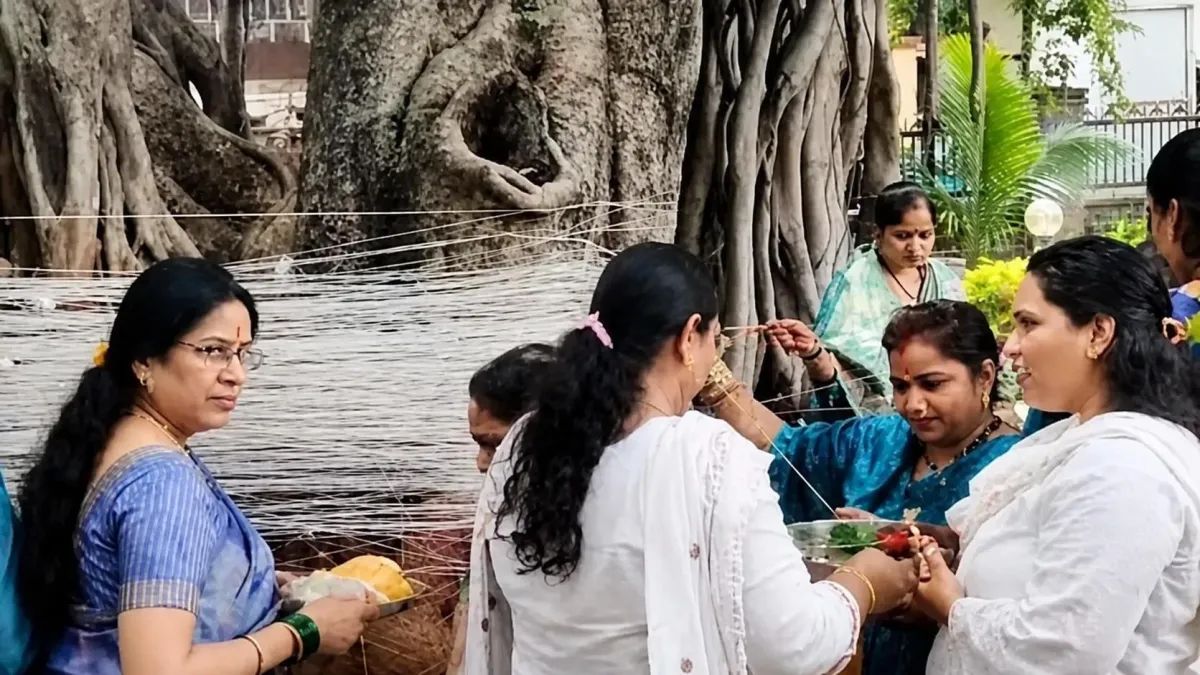
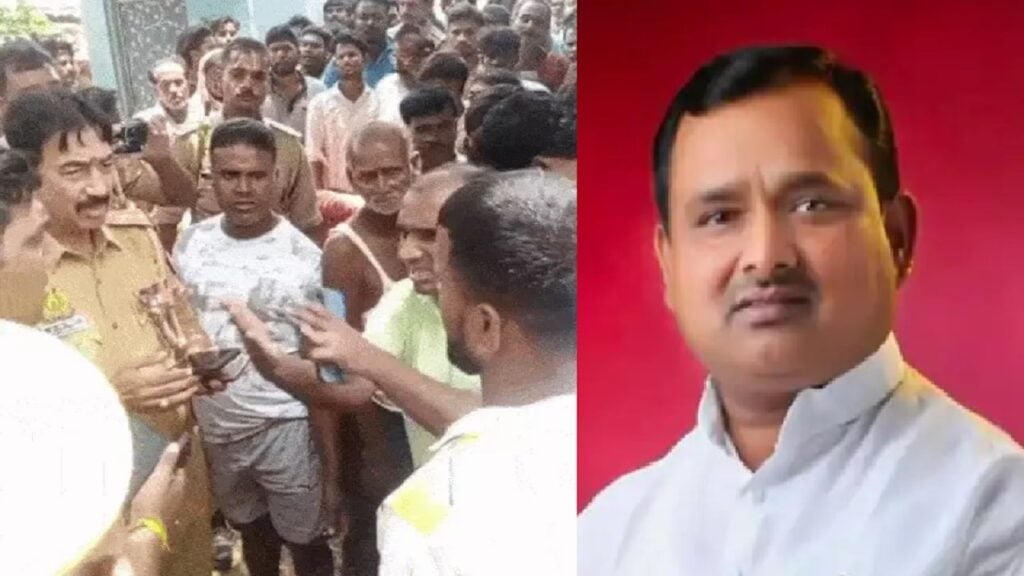
The controversy over BJP Rajya Sabha MP Medha Kulkarni observing Vat Purnima rituals near Pune’s Mahatma Phule Wada raises a larger constitutional and cultural question: can the memory of a revered social reformer be used to restrict a peaceful religious practice that citizens have reportedly followed for decades?
According to the OpIndia report published on 2 July 2026, the dispute began after objections were raised to the performance of Vat Purnima rituals near the historic site associated with Mahatma Jyotirao Phule and Savitribai Phule. The criticism, as discussed in the report, framed Kulkarni’s participation not merely as an individual act of devotion, but as an alleged ideological challenge to the reformist legacy of the Phule couple.
This framing deserves careful examination. Mahatma Phule and Savitribai Phule remain central figures in India’s history of social reform, education, dignity, and women’s empowerment. Their contribution cannot be reduced to a narrow political slogan, just as Hindu religious practice cannot be reduced to a simplistic caricature of social regression. A mature society must be capable of honouring reform while also respecting religious freedom.
Article 25 of the Indian Constitution guarantees freedom of conscience and the right freely to profess, practise, and propagate religion, subject to public order, morality, and health. This principle is not selective. It applies to citizens across communities, including Hindus, Buddhists, Jains, Sikhs, Muslims, Christians, and others. It also applies to elected representatives, who do not cease to possess personal religious rights after entering public office.
The central issue, therefore, is not whether every citizen must personally agree with Vat Purnima. In a constitutional democracy, disagreement is legitimate. Academic critique is legitimate. Social reform is legitimate. What becomes problematic is the attempt to convert disagreement into exclusion by arguing that a voluntary ritual should be prohibited because some activists consider it incompatible with a particular interpretation of a historical figure’s beliefs.
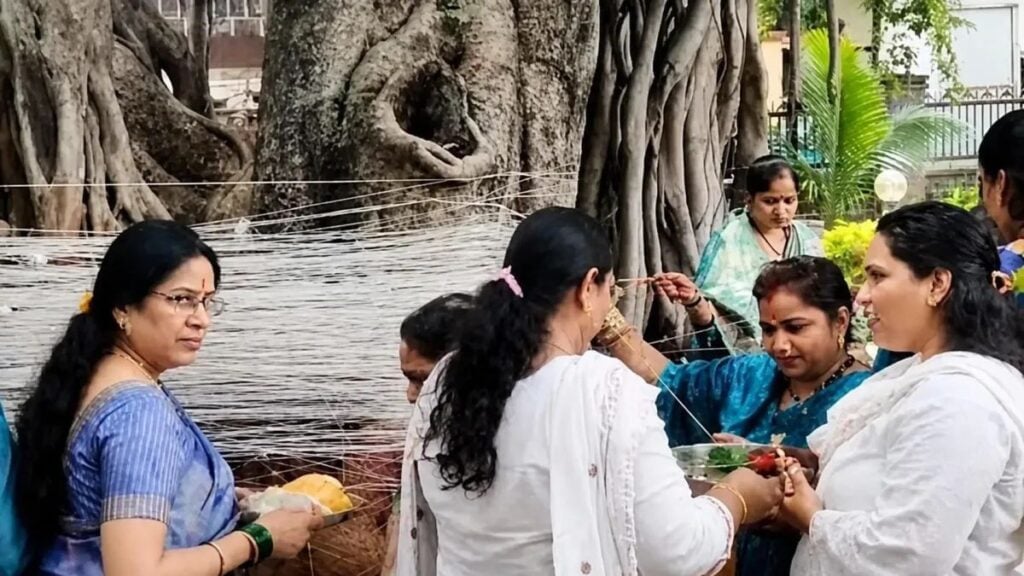
Vat Purnima is observed by many Hindu women with devotion, discipline, and familial symbolism, often around the banyan tree. For some, it is a ritual of prayer for marital well-being. For others, it is a cultural inheritance connecting mothers, grandmothers, neighbourhoods, and local memory. These experiences cannot be dismissed as irrational merely because modern ideological language finds them inconvenient.
The OpIndia report states that the Maharashtra Archaeology Department had initially moved to prevent the ritual at Mahatma Phule Wada by citing the reformist legacy of Jyotirao and Savitribai Phule. It further reports that, after objections from Hindu organisations, local devotees, and women who had observed the tradition for years, the department revised its position and allowed earlier customary practices to continue while asking authorities to maintain law and order.
That reversal is significant because it distinguishes heritage preservation from ideological policing. If a ritual damages a protected monument, threatens public order, or violates law, the state has a legitimate role in regulation. But if the objection is primarily philosophical, the state must be cautious. Public heritage cannot become a tool for selectively suspending constitutional liberties.
The case also highlights a deeper tension in Indian public discourse: the tendency to treat Hindu traditions as uniquely available for suspicion, while similar expressions of faith by other communities are often defended in the language of pluralism and minority rights. A consistent constitutional ethic cannot work this way. Religious freedom must be defended as a universal principle, not as a privilege extended only to some forms of belief.
The invocation of “Bahujan pride” in opposition to the ritual also requires nuance. The Phule legacy is deeply connected with the struggle against social exclusion, caste arrogance, and educational deprivation. Yet it does not follow that Hindu religious observance is inherently hostile to Bahujan dignity. Millions of Hindus from Scheduled Castes, Scheduled Tribes, OBC communities, and other social groups participate in Hindu festivals, temple traditions, local devotions, and family rituals as part of lived cultural identity.
To present Hindu rituals and Bahujan self-respect as automatic opposites risks manufacturing a divide that does not reflect the complexity of Indian society. Social reform and religious belonging have often coexisted in India. Many communities have challenged injustice while retaining devotional practices, local deities, pilgrimage traditions, bhakti poetry, and inherited customs. This coexistence is part of India’s civilisational resilience.
Savitribai Phule’s legacy of women’s education also complicates the criticism directed at Medha Kulkarni. Kulkarni is an educated woman, a public representative, and an active participant in democratic life. If such a woman voluntarily performs a ritual, her choice should not be dismissed as false consciousness simply because it is religious. Women’s agency cannot be celebrated only when women make choices approved by ideological gatekeepers.
There is room for thoughtful critique of ritualism. There is also room for women who find meaning in ritual. A genuinely plural society must hold both truths together. The purpose of reform should be to expand dignity, education, and choice, not to replace one form of coercion with another.
The broader lesson extends beyond one banyan tree, one ritual, or one political leader. Historical personalities such as Mahatma Phule, Savitribai Phule, B. R. Ambedkar, Mahatma Gandhi, Swami Vivekananda, and others continue to shape India’s moral imagination. Yet their legacies cannot supersede the Constitution. They may inspire public debate, but they cannot be used as instruments to deny peaceful citizens their basic freedoms.
India’s dharmic traditions have historically contained argument, reform, devotion, renunciation, ritual, philosophy, bhakti, and dissent. Hinduism, Buddhism, Jainism, and Sikhism all contain internal traditions of ethical reflection and spiritual discipline. Their unity is not built on uniformity, but on the shared ability to accommodate multiple paths of seeking, worship, restraint, service, and truth.
For that reason, cultural conflicts should not be framed in ways that harden caste identities or weaken social trust. A better approach is to protect constitutional freedoms while encouraging reform through persuasion, scholarship, community dialogue, and mutual respect. This path honours both the spirit of social justice and the civilisational depth of Sanatana Dharma and related dharmic traditions.
The Phule Wada debate ultimately reveals the importance of balance. Heritage sites deserve protection. Reformers deserve reverence. Women deserve agency. Communities deserve dignity. Religious citizens deserve equal constitutional treatment. None of these values need to cancel the others.
Medha Kulkarni’s participation in Vat Purnima should therefore be understood within the wider framework of religious freedom, cultural continuity, women’s autonomy, and constitutional equality. The more constructive public response is not to weaponise history against living traditions, but to allow India’s many memories and practices to coexist under the discipline of law and the ethic of mutual respect.
Inspired by this post on Hindu Post.




Leave a Reply
You must be logged in to post a comment.