On 2 May 2026 in Panaji, Goa, YouTuber Gautam Khattar was granted bail after detention over allegedly derogatory remarks concerning St. Francis Xavier. The rapid sequence of detention, public mobilization, and judicial relief transformed a local dispute into a nationally watched Goa bail controversy, with Hindu protests and counter-reactions from other groups shaping a wider discourse on freedom of expression, religious sensitivities, and due process in India.
St. Francis Xavier occupies a singular place in Goan cultural and religious memory. The Basilica of Bom Jesus in Old Goa, which houses his relics, is a symbol of deep reverence for the Catholic community, and periodic expositions attract pilgrims from across India and the world. In this context, remarks—whether critical, careless, or pointed—about St. Francis Xavier are seldom confined to the digital realm; they touch living identities and histories, which explains why online commentary can swiftly generate offline consequences.
Public responses reportedly included peaceful demonstrations, petitions to authorities, and appeals for restraint. Counter-reactions emphasized dignity, the harms of hate speech, and the importance of safeguarding communities from insult or incitement. For many Goans raised in neighborhoods where church bells and temple bells ring within earshot, the episode felt less like a distant controversy and more like a matter of social trust. The emotional undertone was clear: a shared desire to protect harmony while navigating disagreements in a principled way.
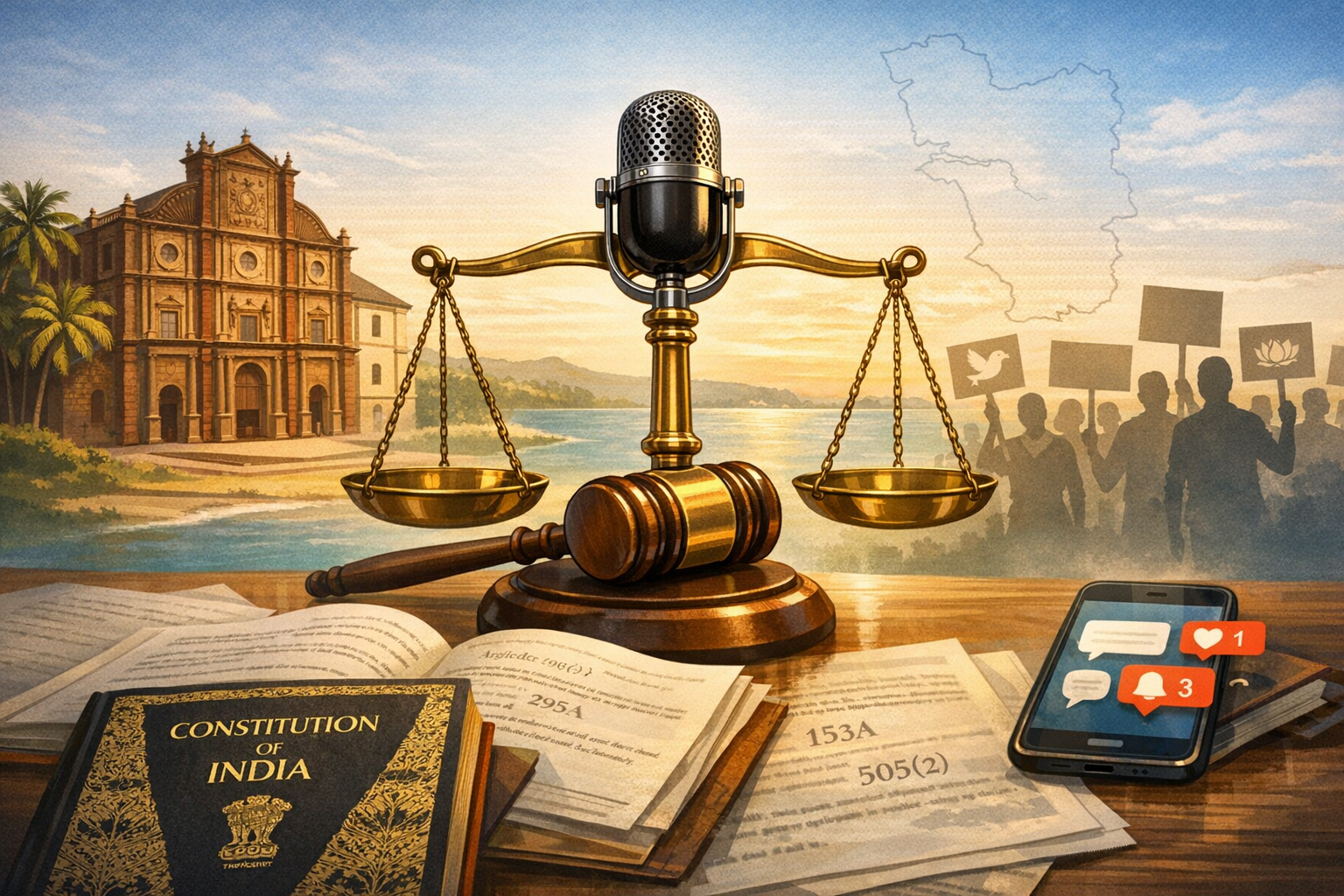
The legal scaffolding is well defined. Article 19(1)(a) of the Constitution protects freedom of speech and expression, while Article 19(2) permits narrowly tailored restrictions for public order, decency, and related grounds. In religion-sensitive disputes, investigators commonly consider provisions such as Sections 295A (deliberate and malicious acts intended to outrage religious feelings), 153A (promoting enmity between groups), and 505(2) (statements leading to public mischief) of the Indian Penal Code, alongside information-technology rules where relevant. Without presuming which provisions, if any, were actually invoked here, it bears emphasis that 295A requires a high threshold of deliberate and malicious intent; courts typically parse the mens rea with care to distinguish between intemperate criticism and unlawful incitement.
Bail jurisprudence further frames such cases. Indian courts have long affirmed that bail is the rule and jail the exception (State of Rajasthan v. Balchand, 1977). Arrest should meet necessity and proportionality standards (Arnesh Kumar v. State of Bihar, 2014; Satender Kumar Antil v. CBI, 2022), and bail decisions weigh gravity of allegations, risk of tampering with evidence, likelihood of absconding, cooperation with investigation, and the need to prevent disorder. Grant of bail does not validate the impugned speech, nor does it foreclose investigation or trial; rather, it preserves the presumption of innocence while the legal process unfolds.
In the digital sphere, constitutional guardrails have been clarified. Shreya Singhal v. Union of India (2015) distinguishes advocacy and discussion from incitement; only the latter is regulable under Article 19(2). Yet social media’s incentive structures often amplify outrage at the expense of nuance, compressing complex histories into polarizing soundbites. When revered figures like St. Francis Xavier are involved, perceived harms intensify due to both religious feeling and the layered memory of colonial-era events in Goa. Responsible practice for creators thus entails verifiable context, avoidance of dehumanizing language, and adherence to India’s legal norms on speech.
Goa’s social fabric has long modeled coexistence: Hindu, Christian, Muslim, Buddhist, Jain, and Sikh families have shared festivals, cuisine, and neighborhood life across generations. This plural ethos resonates with dharmic values central to Hinduism, Buddhism, Jainism, and Sikhism—ahimsa (non-violence), karuna (compassion), anekantavada (many-sidedness), and sarbat da bhala (welfare of all). The present episode offers an opportunity to deepen those commitments: to keep critique rigorous yet humane, and dissent lawful and non-violent, thereby reinforcing interfaith harmony in Goa.
Standards for civic discourse are within reach. A practical triad for creators and citizens alike can mitigate harm while preserving robust debate: truthfulness (evidence-based, fairly contextualized statements), necessity (a clear public-interest rationale), and proportionality (tones calibrated to inform rather than inflame). In discussions of revered figures across traditions, good-faith critique benefits from primary sources, peer-reviewed scholarship, and precise citations; clear disclaimers that the critique targets claims or conduct, not communities or believers, help reduce misinterpretation.
Administrative best practices favor the least-restrictive means. Where feasible, investigators can rely on CrPC Section 41A notices rather than custodial arrest, combine prompt fact-finding with narrow, time-bound orders when necessary to prevent violence, and deploy real-time rumor control. Courts can continue to apply proportionality—a test refined in decisions such as Modern Dental College v. State of M.P. (2016) and Anuradha Bhasin v. Union of India (2020)—ensuring that public order is protected without chilling legitimate critique or religious debate.
Platform governance also matters. Intermediaries can fuse automated detection with domain- and language-competent human review to identify potential 295A/153A risk content, introduce friction through click-through warnings or measured de-amplification, and attach corrective context via links to authoritative sources on history and law. Transparent appeals processes and creator education on constitutional speech standards in India can reduce repeat harm while sustaining legitimate inquiry.
Civil society pathways complement legal and platform responses. Interfaith and intrafaith dialogues that include Hindu, Buddhist, Jain, Sikh, and Christian scholars can uncover shared ethical ground—satya, ahimsa, daya, and seva—and help communities process offense without resorting to escalation. Restorative practices, public clarifications or apologies where warranted, and co-authored statements of mutual respect can mend trust more effectively than cycles of provocation and punishment. Educational institutions in Goa can host teach-ins on digital citizenship and the legal contours of speech, equipping youth to participate responsibly in public life.
Several implications follow. The granting of bail underscores India’s due-process orientation; the protests register legitimate concern for dignity and social peace; the counter-reactions caution against over-criminalizing dissent. A principled balance is achievable: preserve robust historical inquiry and freedom of expression in India, while eschewing insult, stereotyping, and incitement. The dharmic ideal is not silence but disciplined speech—firm on facts, restrained in tone, and oriented to the common good.
Looking ahead, the path to sustainable harmony in Goa rests on three mutually reinforcing pillars: constitutionalism in the courtroom, civic responsibility online, and compassion in everyday neighborhood life. When these pillars hold, disputes like the one involving YouTuber Gautam Khattar can become teachable moments that strengthen—rather than strain—the unity of a plural Republic and the shared values of the dharmic traditions.
Inspired by this post on Struggle for Hindu Existence.