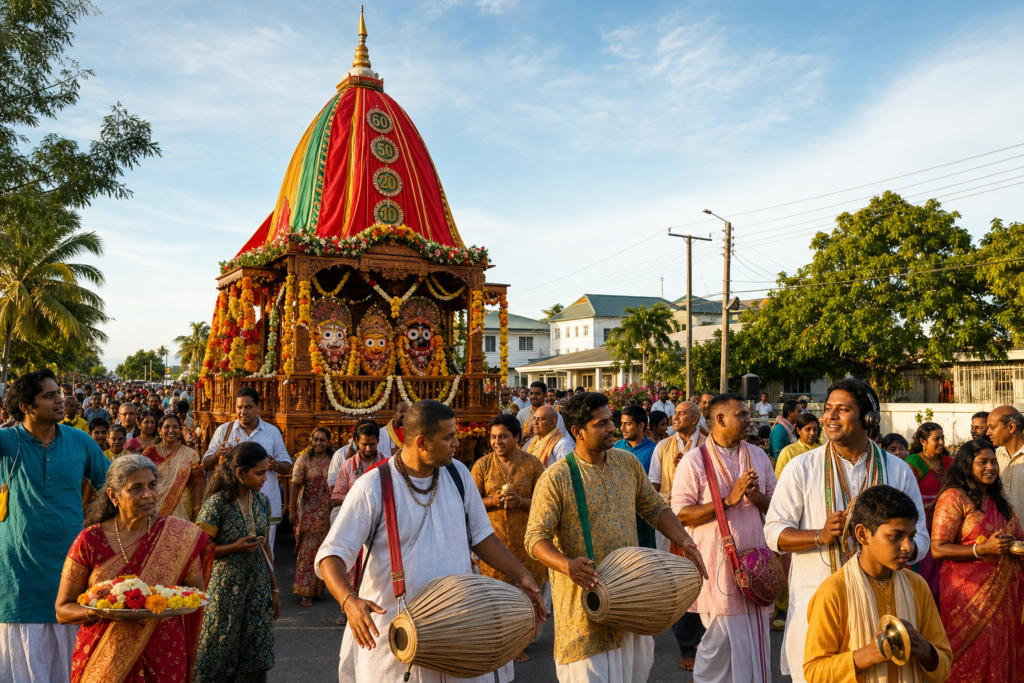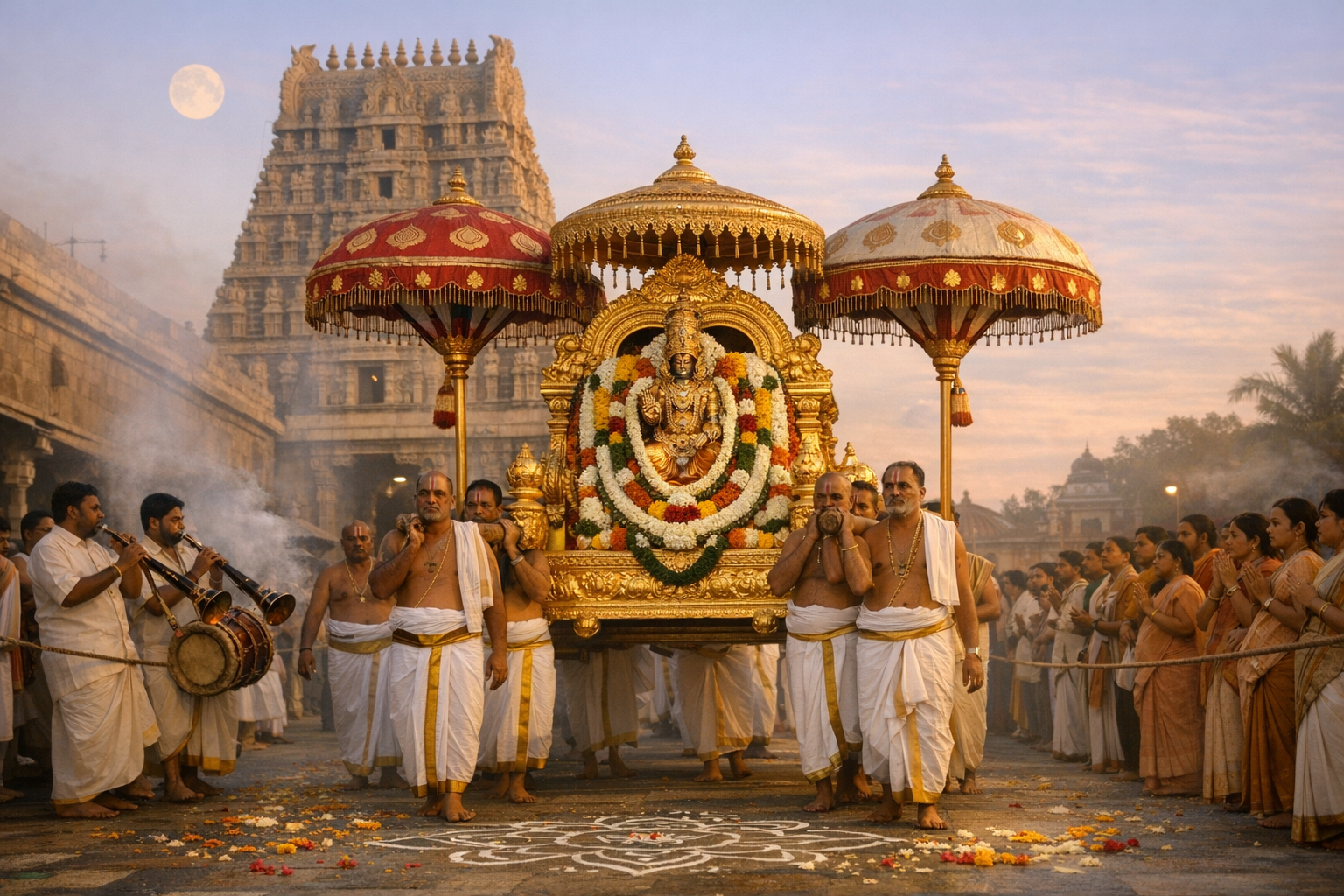
On Chitra Pournami (1 May 2026), the Ponnakalva Utsavam of Sri Govindaraja Swamy will be observed in Tirupati with a dawn-to-dusk sequence of sacred rites and processions. The utsava murti is scheduled to depart Sri Govindaraja Swamy Temple at 6:00 AM, pause for Snapana Tirumanjanam at Ponnakalva Mandapam, and proceed thereafter through the traditional processional route. The journey culminates at Sri Padmavathi Ammavari Temple, Tiruchanoor, with arrival expected by 5:00 PM, followed by temple-prescribed observances.
Ponnakalva Utsavam, aligned with Chithirai Masam, is a distinctive expression of Vaishnava processional culture in South India. It foregrounds the living continuity of temple networks in Tirupati–Tiruchanoor by ritually connecting two prominent shrines under Tirumala Tirupati Devasthanam (TTD). The utsavam’s choreographymovement, anointment, and communal darshanarticulates a theology of presence, grace, and reciprocity between kshetras that devotees experience as a unified spiritual circuit.
Timings frame the devotional arc of the day. The 6:00 AM flag-off from Sri Govindaraja Swamy Temple typically coincides with Vedic recitations and congregational chanting, as devotees gather along the ratha veedhis to witness the deity’s procession. At Ponnakalva Mandapam, Snapana Tirumanjanam is performed, followed by prescribed rituals. The evening arrival at Sri Padmavathi Ammavari Temple around 5:00 PM invites a second wave of community participation and darshan at Tiruchanoor.
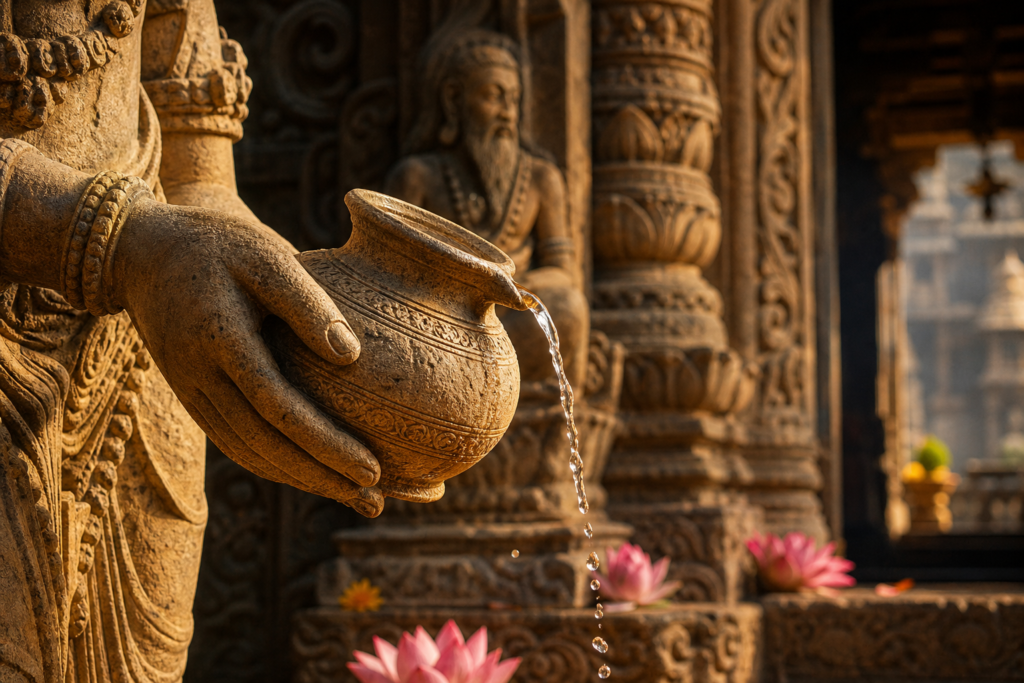
Snapana Tirumanjanam, a “cooling” ceremonial abhishekam, centers the day’s ritual grammar. Priests customarily employ sanctified water and Panchamrita (milk, curd, ghee, honey, and sugar), supplemented by fragrant substances such as sandalwood paste and aromatic dravyas. The anointment is accompanied by mantras from Vaishnava traditionsoften including stotras and the Divya Prabandhamthereby uniting sensory sanctification with scriptural sound. Liturgically, snapana is associated with seasonal well-being (particularly in early summer) and the devotee’s aspiration for purity, equanimity, and auspiciousness.
Ponnakalva Mandapam functions as a designated processional pavilion on the sacred route. Its role in the utsavam is practical and symbolic: a locus where the moving deity is honored through abhishekam and where the community momentarily converges around ritual focus before the yatra resumes. The mandapam setting underscores the idea that sanctity expands beyond the garbhagriha, weaving through the city’s ceremonial arteries.
Chitra Pournami, the full moon of Chithirai Month, is widely regarded in the Tamil region as a time favorable for sacred vows, pilgrimage, and charitable acts. The lunar fullness amplifies collective observance and draws families to temple spaces before dawn. Within Vaishnava praxis, the day’s aestheticsbright lamps, floral garlands, and sandal-fragranced abhishekammirror the fullness of the lunar orb, while reinforcing the devotional ideal of inner illumination.
Sri Govindaraja Swamy Temple, situated in the heart of Tirupati, represents a major Vaishnava center administered by TTD. Inscriptions and architectural layers testify to sustained patronage across medieval and early modern periods. The temple’s ritual calendar is both dense and pedagogical, presenting devotees with varied modes of seva and darshan that embody the core Vaishnava tenets of bhakti, surrender, and service to the divine and community.
The concluding leg to Sri Padmavathi Ammavari Temple, Tiruchanoor, resonates with the theological complementarity of Vishnu and Mahalakshmi. In practice, the movement of the deity toward Tiruchanoor emphasizes inter-shrine coherence and the integrative nature of TTD-managed kshetras. For many pilgrims, planning the day to include darshan at both Tirupati and Tiruchanoor offers a felt sense of completionconnecting mercy (daya), prosperity (shri), and protective grace (anugraha).
Devotees often describe the morning procession as deeply immersive: the muted pre-dawn light, the resonance of nadaswaram and tavil, the cadence of the palanquin, and the fragrance of sandal and tulasi drifting through the streets. Families waiting along the route speak of the shared warmth of communitypassing water to elders, guiding children forward for a glimpse of the utsava murti, and joining the rhythmic chant that turns a city street into a moving sanctum.
Practical guidance can significantly enhance the experience. Arriving by 5:30 AM near the temple precincts usually secures a respectful vantage point for the 6:00 AM departure. Modest attire, removal of footwear where directed, and avoiding crowding at barricades align with temple etiquette. Hydration, sun protection for the afternoon segment, and adherence to announcements by temple authorities contribute to a safe and contemplative observance. Photography policies may vary along the route and within temple premises; compliance with posted norms is encouraged.
The ritual arc of Ponnakalva Utsavam also resonates with broader dharmic values shared across Hinduism, Buddhism, Jainism, and Sikhismespecially reverence for sacred time (purnima), emphasis on inner purification, and community service (seva/dana). Such convergences invite a spirit of mutual respect and unity among dharmic traditions, reminding participants that practices honoring compassion, discipline, and truth have a common ethical horizon.
Environmentally mindful participation aligns with the duty of care upheld in dharmic ethics: using reusable water bottles, minimizing litter along the processional route, and cooperating with cleanliness drives around temple precincts. Small acts of considerationoffering space to children and seniors, maintaining orderly queues, and assisting visitors unfamiliar with local customstransform a large public gathering into an exemplar of shared responsibility.
As an integrated cultural event, Ponnakalva Utsavam on Chitra Pournami offers a holistic encounter with temple traditionscripture in chant, theology in movement, aesthetics in abhishekam, and civility in shared streets. The result is a memorable day that deepens devotional understanding while sustaining the living heritage of Tirupati and Tiruchanoor. Devotees and visitors alike can anticipate a spiritually rewarding experience framed by time-tested ritual care and community warmth.
Schedule note: Processional timings and sequence are based on temple communication for 1 May 2026; local announcements by TTD and the respective temples, if issued, take precedence on the day.
Inspired by this post on Hindu Pad.