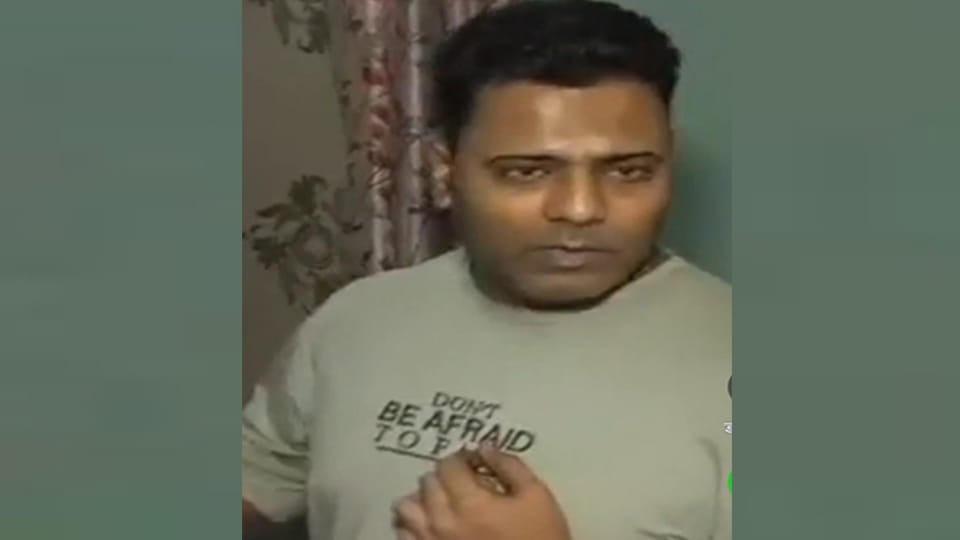
A recent public exchange has brought renewed attention to the intersection of faith, constitutional values, and judicial ethics in India. Sanatan Sanstha’s spokesperson, Shri. Abhay Vartak, has objected to statements made by Shyam Manav concerning a former Chief Justice of India’s visit to a Hindu saint, characterizing the criticism as indicative of ‘double standards.’ The discussion that follows examines the contours of this debate through the lenses of constitutional secularism, religious freedom, ethical expectations for present and retired officeholders, and the imperative of social harmony across the dharmic spectrum.
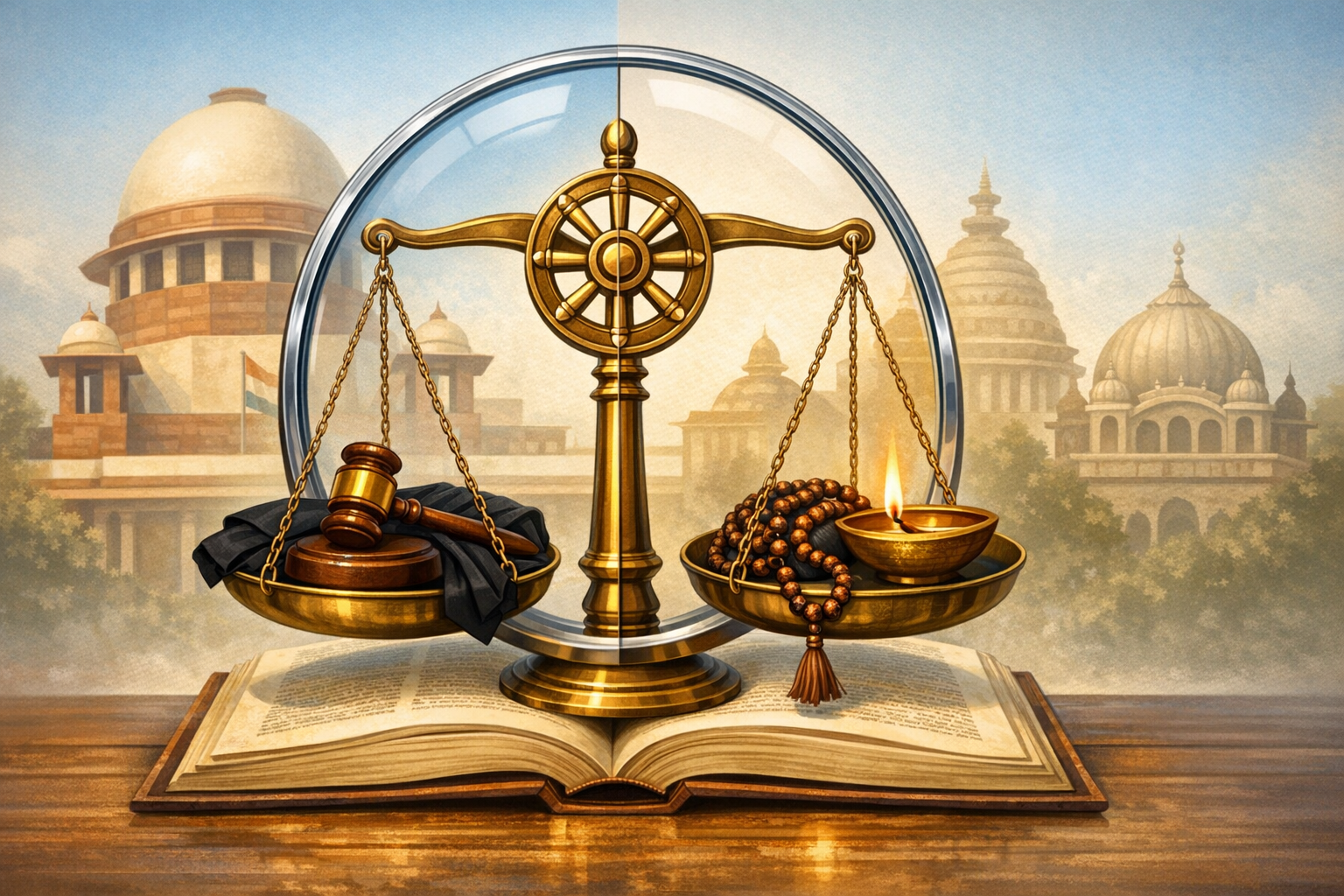
At the heart of the matter lies a familiar tension in Indian public life: how to safeguard both the freedom of conscience (Article 25 of the Constitution) and the integrity of institutions such as the Supreme Court of India. The question is not merely whether public figures may exercise personal faith, but how society interprets the symbolic meaning of such actsespecially when they involve celebrated jurists who, even after demitting office, occupy a unique position in public imagination.
Constitutional secularism in India has long been understood as principled equidistance, not the erasure of religion from public life. In practice, it presumes that interactions with spiritual traditionsincluding darshan, satsang, or participation in community ritualsare legitimate when they do not compromise impartiality in state functions. The visit of a former CJI to a saint, therefore, invites analysis through proportionality: does the act reasonably create an apprehension of bias or institutional prejudice, or does it fall within the personal domain protected by constitutional liberties?
Judicial ethics provide an additional anchor for evaluation. Frameworks such as the Restatement of Values of Judicial Life (1997) and the Bangalore Principles of Judicial Conduct emphasize integrity, propriety, and the avoidance of impropriety or its appearance. These standards apply most stringently while a judge is in office and actively adjudicating. In the context of a retired Chief Justice, the core inquiry becomes one of optics and public trust rather than a strict rule-based prohibition, because there is no statute that categorically bars private spiritual observances post-retirement. Where no live matter, advocacy, or quid pro quo is implicated, the threshold for alleging impropriety must remain high.
This is where the ‘double standards’ argument arises. If public discourse views a retired jurist’s visit to a Hindu saint as problematic, but treats comparable interactions with Sikh granthis, Buddhist bhikkhus, Jain acharyas, or leaders of other faiths as benign, the evaluative standard risks inconsistency. An even-handed benchmarkone that treats all dharmic and non-dharmic traditions with paritybest reflects India’s constitutional ethos and strengthens public confidence that scrutiny is motivated by principle rather than by selective indignation.
It is also essential to distinguish between healthy skepticism and ad hominem critique. Rationalist inquiry and evidence-based criticism have a legitimate place in democratic discourse, including debates on ritual, superstition, or social reform. However, when commentary shifts from evaluating ideas to imputing motives based on a private spiritual visit, the debate risks conflating constitutional rights with insinuations of institutional partiality. Fair critique should track demonstrable links to public decision-making, not assumptions anchored in identity or devotion.
Socially, the Indian experience of faith often includes seeking counsel, solace, or ethical clarity from gurus, sants, acharyas, bhikkhus, and granthis. For many citizens across Hinduism, Buddhism, Jainism, and Sikhism, such visits are less about power and more about personal moral anchoring. Traditions like Anekantavada in Jainism or the Sikh emphasis on seva provide powerful reminders that humility and many-sided understanding can lower the temperature of public disagreement, helping society to distinguish between private spirituality and public partiality.
From a governance perspective, the relevant test is whether an interaction compromises institutional integrity or conflicts of interest. That assessment benefits from objective criteria: the presence of active litigation connected to the spiritual leader or institution; any exchange of benefits; the use of official capacity or platforms; or statements that might suggest predetermination of legal or policy views. Absent these markers, personal religious exerciseby a retired officialshould be presumed to fall within the zone of constitutional protection.
Media and civil society have a responsibility to apply symmetrical standards across traditions and personalities. The same acta visit to a place of worship or a meeting with a spiritual teachershould not be judged differently depending on which community is involved. Such symmetry reflects the spirit of sarva dharma sambhava and reinforces the trust that criticism, when warranted, is anchored in verifiable facts, not in selective narratives.
For commentators and public intellectuals, four habits of responsible critique are especially useful here. First, define the standard explicitly (e.g., appearance of bias or conflict of interest) and apply it universally. Second, separate personal devotion from public decision-making unless a concrete linkage exists. Third, avoid generalizations that stigmatize entire communities or spiritual lineages. Fourth, invite dialogueparticularly with representatives of Hindu, Buddhist, Jain, and Sikh traditionsto illuminate shared ethical concerns and reduce misperceptions.
Sanatan Sanstha’s intervention through Shri. Abhay Vartak underscores a widely felt concern about narrative asymmetry. Whether one agrees or disagrees with Shyam Manav, the legitimacy of his skepticism is best preserved when applied consistently, proportionally, and with due regard to constitutional freedoms. Conversely, Sanatan Sanstha’s call for parity in standards invites a constructive reframing of the conversation around principles rather than personalities.
Ultimately, the question is not whether a former Chief Justice of India may visit a saint, but how society adjudicates meaning in such a visit. A careful, principle-led approachgrounded in Article 25, the ethical guidance that binds the judiciary, and a culturally literate understanding of India’s dharmic heritagecan reconcile private devotion with public trust. When evaluative standards are clear, consistent, and inclusive, they foster Religious Tolerance, uphold the dignity of the Supreme Court of India as an institution, and strengthen the social compact that binds a plural nation.
In conclusion, a path forward rooted in fairness and fraternity is available: affirm the right to personal faith for all, insist on universal standards for ethical scrutiny, and nurture dialogue that honors the shared civilizational values of Hinduism, Buddhism, Jainism, and Sikhism. Such an approach not only addresses the immediate controversy but also contributes to a more balanced, confident, and united public culture.
Inspired by this post on Hindu Jagruti Samiti.