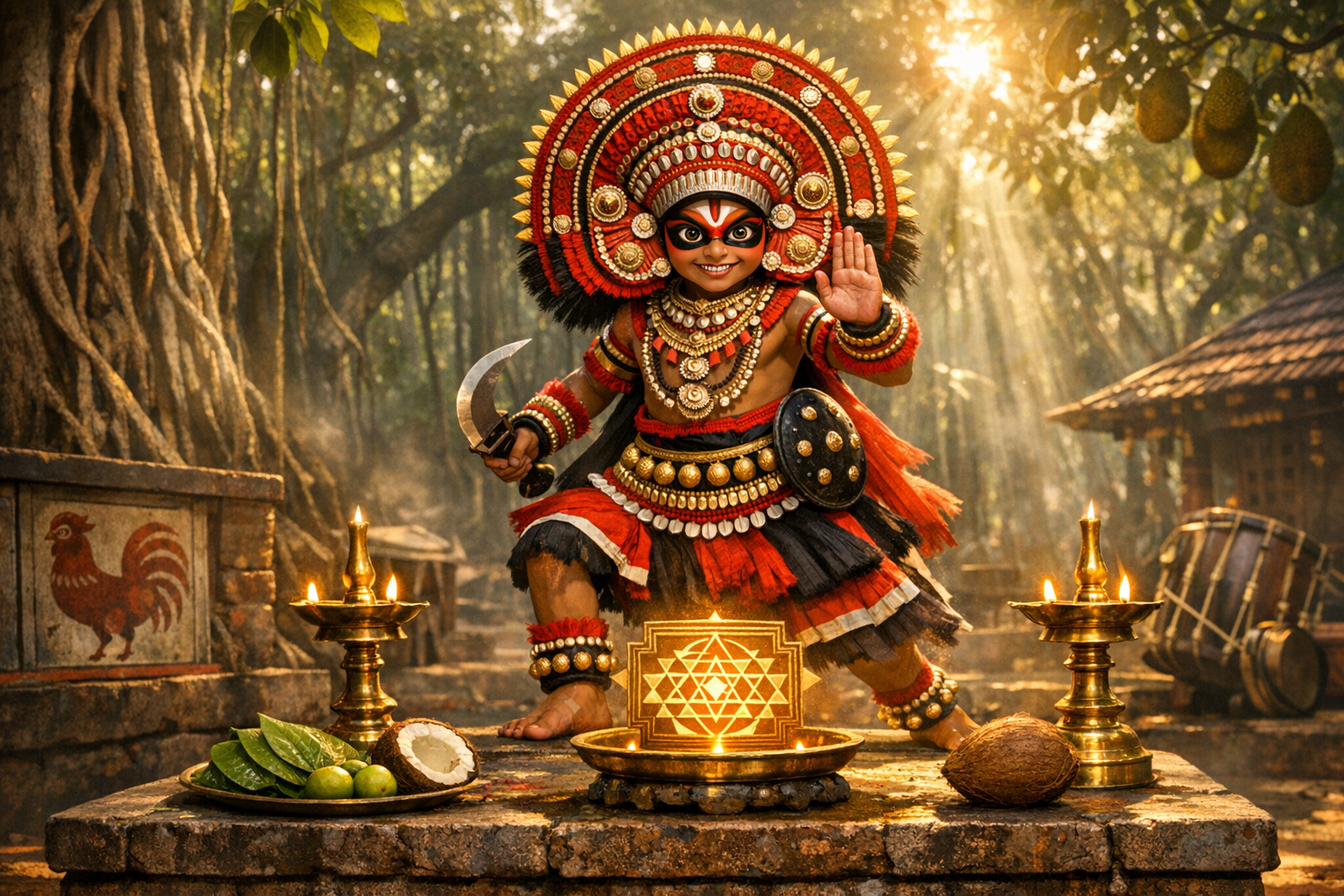
Kuttichathan occupies a distinctive place in the religious landscape of South India, most prominently in Kerala and to a lesser extent in adjoining regions of Tamil Nadu. Neither a mainstream Puranic deity nor merely a local ghost, Kuttichathan is best understood as a spirit-deity (bhuta/daiva) situated at the confluence of folk worship, Kerala’s Tantric ritualism, and the living performance traditions of Theyyam. In shrines (kavu), family altars, and seasonal festivals, this presence functions as a vigilant household protector, a playful yet exacting trickster, and a guardian of moral order within community life.
Within Kerala’s ritual lexicon, Kuttichathan is frequently intertwined with practices framed by Kerala-tantra, a pragmatic and temple-focused stream articulated in manuals such as the Tantrasamuccaya. In this horizon, Kuttichathan is approached through precise ritual sequences, protective mantras, and offerings designed to propitiate and align the spirit’s energy (shakti) with the welfare of individuals and families. The idiom remains unmistakably dharmic: protection of truth, restoration of balance, and compassionate guardianship of the vulnerable.
Etymologically, the term “Chathan/Chāthan” in Kerala folk parlance points to a class of potent, liminal beings—neither demonic in a purely adversarial sense nor benign in a purely ornamental sense. “Kutti” emphasizes a childlike, compact, or diminutive form, signaling both agility and immediacy. This double register—youthful play and fierce protection—shapes the iconography, ritual behavior, and narrative cycles that surround Kuttichathan across districts such as Kannur, Kasaragod, Kozhikode, Malappuram, Thrissur, and Palakkad.
Sacred geography is anchored in two overlapping spheres. First, the kavu—sacred groves and shrines—where Kuttichathan is enshrined in metal, stone, or wood, often alongside Bhagavati and other grama-devatas. Second, the performative sphere of Theyyam and Kaliyattam in North Malabar, where Kuttichathan emerges as a vivid, living icon whose elaborate costume, choreographies, and songs encode mythic memory and ethical guidance for the community. The Thrissur region also sustains a strong cult under appellations such as Vishnumaya Kuttichathan, reflecting a syncretic assimilation of spirit-deity devotion into Vaishnava-tantric idioms.
Mythic narratives about Kuttichathan vary by lineage and locale, yet several themes recur. In one cycle, Kuttichathan is linked to Vishnumaya, emphasizing speedy intervention, invisibility, and moral redress on behalf of devotees in distress. In another cycle, Kuttichathan’s story foregrounds social justice, chastening arrogance and hypocrisy while safeguarding those on the margins. A further motif situates Kuttichathan as a spirit harnessed or tutored by a tantric adept, whose task is to guard thresholds, fields, and families. These plural strands are not contradictions; rather, they exemplify Kerala’s capacious religious imagination, where village memory, temple liturgy, and ritual performance negotiate a dynamic unity.
Idol typologies and materials reflect the functional character of the cult. Small brass or bell-metal images appear in many shrines and domestic altars, favored for durability and ritual purity. Wooden images may be used in contexts where performative mobility is essential, while laterite or stone forms signal local craft traditions. The scale is typically intimate—aligning with the deity’s proximity to domestic life—yet the presence is intensified through ornaments, yantras, and color codes that amplify the icon’s protective ambit.
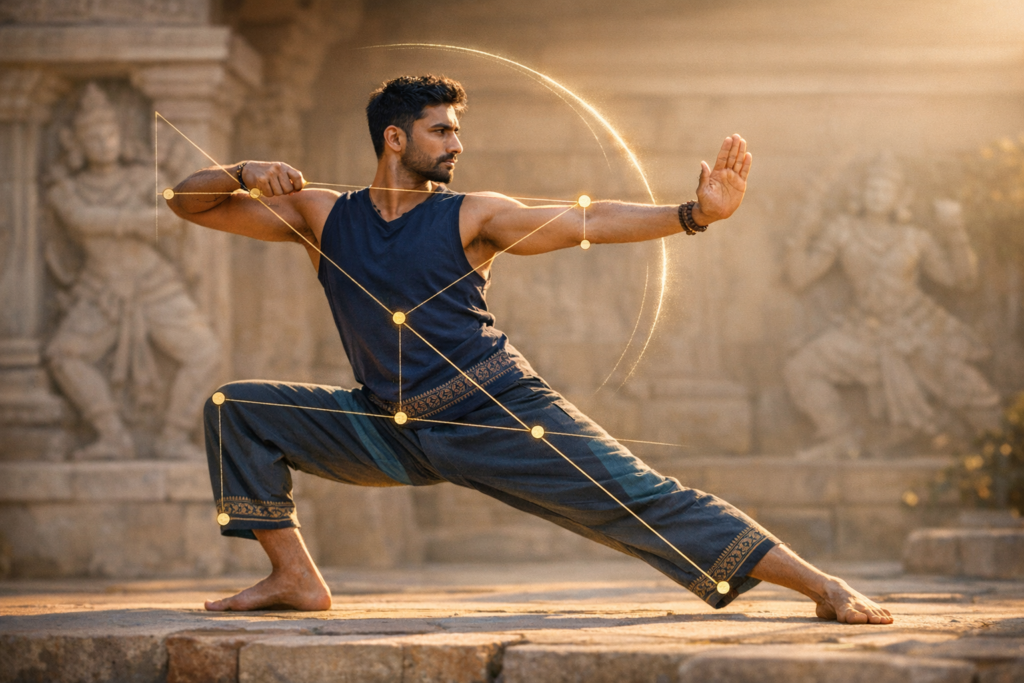
Form and stance emphasize alertness and accessibility. Kuttichathan is commonly depicted as a youthful or dwarf-like figure, compact and dynamic, sometimes slightly bent at the knee as if mid-stride. This kinetic pose communicates readiness to act, a hallmark of spirit-deities associated with rapid interventions, oath-keeping, and the policing of social contracts. Facial features tend toward large, vigilant eyes and an intent gaze—iconic signifiers of unblinking watchfulness over thresholds and promises.
Chromatic symbolism draws from Kerala’s ritual aesthetics. Red pigments and textiles signal rajas—the active, protective energy invoked in rites of guardianship. Black elements stress absorptive, boundary-setting functions; they ritually “take on” and neutralize malevolent forces. White lines or accents temper this power with sattva—clarity and benevolent intention—underscoring that Kuttichathan’s fierceness is ultimately placed in the service of dharma, not caprice.
Headdress and hair vary across shrines and Theyyam lineages. In performative iconography, towering mudi (headgear) and radiating elements denote flame, alertness, and the deity’s far-reaching oversight. In sculptural icons, simpler coronals or hair-knots may appear, keeping the figure agile and close to household realities. The consistent message is one of immediacy: this is a guardian within earshot, not a remote sovereign.
Ornaments further articulate function. Anklets (chilambu) emphasize movement, while girdles and chest-ornaments mark controlled potency. The sonic layer—the jingle of anklets, the strike of cymbals in puja—announces presence and frames the ritual space as protected territory. In several shrines, a waist-belt or chain symbolizes the deity’s readiness to “bind” wayward forces back into lawful order.
Attributes and implements typically include a short sword (val) and a shield (paricha), allegorizing quick defense and disciplined courage. In some images, a staff, trident, or ritual whisk appears, indexing both warding and blessing. Mudras often include abhaya (protection) and varada (boon-bestowal), harmonizing the spirit’s stern watchfulness with generosity toward sincere devotees.
Motifs surrounding the icon may include betel leaves, limes, and lamps—all staples of Kerala’s protective ritual grammar. In several locales, rooster imagery appears in murals or festival art, tied to older sacrificial idioms and timekeeping at dawn; it is iconographically ancillary rather than a fixed vahana. The pedestal space may house a yantra specific to the shrine’s lineage—a geometric circuit sealing and focusing the deity’s field of operation.
Yantric supports for Kuttichathan commonly employ protective geometries: interlocked triangles (shatkona) balancing dynamic and quiescent energies; concentric squares delineating sacred enclosure; and seed-syllables (bija) recited in lineage-specific mantras. Kerala-tantra treats these as functional technologies of sanctity, converting space into a safeguarded corridor through which the spirit-deity’s agency is ethically directed.
Shrine layout reflects the kavu’s ecological and ritual sensibilities. Groves shaded by jackfruit, banyan, or mango trees double as ritual theaters and living altars. A low sanctum or open-air platform (peedam) fronts the icon; the boundary is marked by lamps, tether-stones, and pathways for circumambulation. In this setting, divinity is not separated from landscape but woven through it—an essential feature of Kerala’s temple ecology.
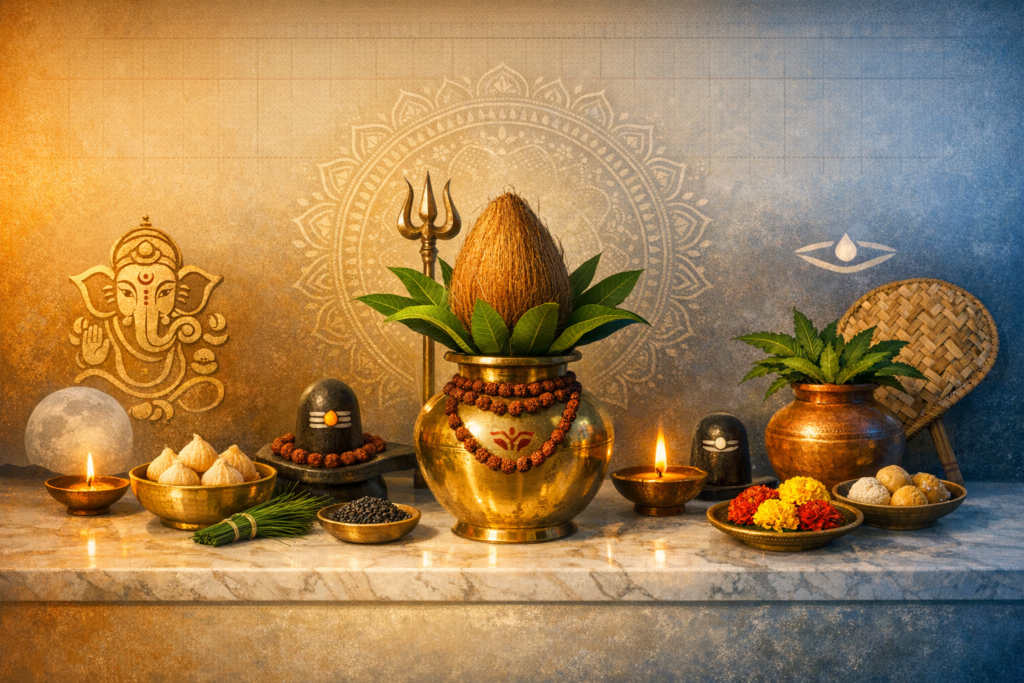
Daily worship (nityapuja) proceeds with lamp offerings (deepa-aradhana), incense, water-libations, and simple nivedyam such as jaggery, bananas, puffed rice, and coconut. The tonal quality is direct and cordial, mirroring the deity’s domestic closeness. Devotees frequently seek help for protection, truthful outcomes in disputes, safe travel, and relief from malefic influences (dosha-nivarana)—petitions that align with the guardian profile.
Kerala’s protective rites also include guruthi, an offering that symbolically addresses the red and absorptive energies required to neutralize harm. In contemporary practice, this is performed with plant-based and symbolic substitutes, maintaining ethical continuity while safeguarding ritual efficacy. The intention is precise: to restore balance, not to indulge violence—an important dharmic boundary in modern temple life.
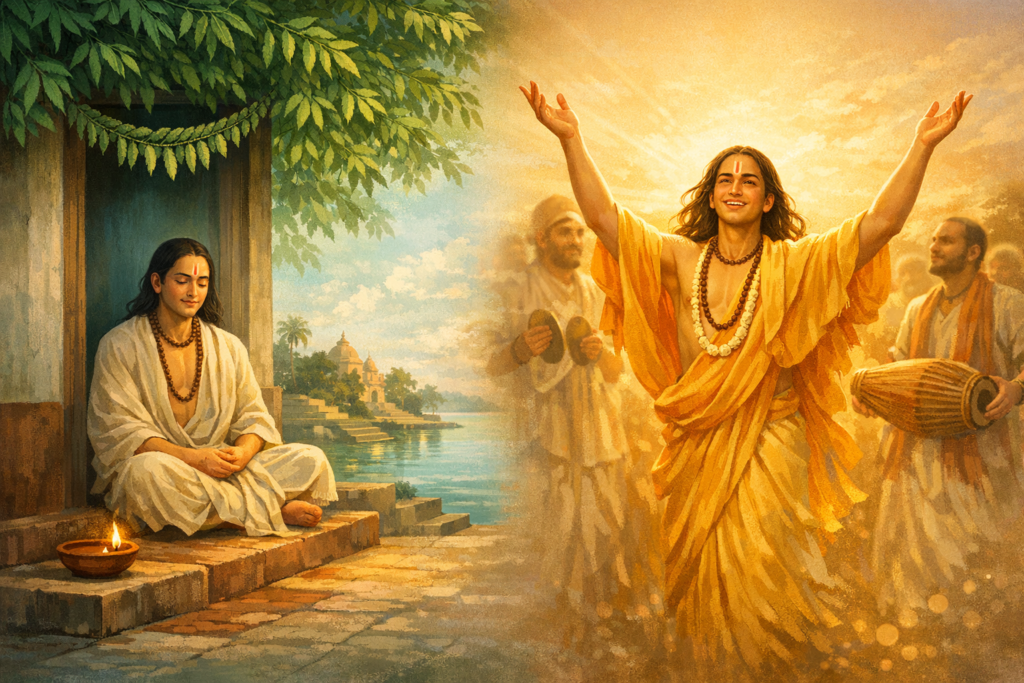
Theyyam renders Kuttichathan as a living, mobile icon. Through layered face-painting (kolam), towering headdress, and choreographed steps, the performer embodies the deity’s speed, acuity, and moral charge. Drum ensembles (chenda, elathalam) give the rite its heartbeat, while narrative songs recount episodes of protection, justice, and transformation. The audience encounters not a distant myth but a proximate ethic: truth must be kept, and the vulnerable must be defended.
Performative iconography in Kuttichathan Theyyam highlights eyes rimmed in red and black, flaring brows, and a mouth poised between smile and growl—visualizing the spirit’s trickster-scholar duality. The choreography alternates between darting movements and frozen vigilance, a grammar of motion that translates the deity’s reputed agility into legible, communal art. Here, iconography is not static depiction but pedagogy in motion.
Community narratives repeatedly affirm the experiential core of Kuttichathan devotion. Householders speak of “quick hearings,” vivid dreams, and a palpable atmosphere shift after vows (vrata) and thanksgiving offerings (vazhipadu). Even in accounts framed as ordinary life—lost documents found, stalled negotiations resolved—devotees interpret outcomes through a moral lens: the deity moves swiftly where sincerity and responsibility are evident.
From a Tantric-ritual perspective, prana-pratishtha (the enlivening of the icon) follows Kerala’s established temple protocols: purification of the site, mantric installation, sealing with yantra, and staged aradhana. Priestly lineages (including non-hereditary specialists in some locales) maintain transmission of mantras and mudras appropriate to Kuttichathan’s protective role. The rite encodes an ethical safeguard: authority over spirits must be yoked to self-discipline and communal benefit.
Diagnostic rites associated with Kuttichathan orbit issues of fear, envy, oath-breaking, and household discord. Remedial liturgies seek release rather than retaliation: offerings are calibrated to de-escalate conflict energies and to re-anchor participants in truthful speech and honorable conduct. The underlying principle resonates with broader dharmic ethics—harm is resolved by restoring inner and outer order, not by amplifying strife.
Socially, Kuttichathan functions as a sentinel of contracts. Vows taken at the shrine carry reputational weight, and breach is believed to invite swift correction. In agrarian memory, such moral surveillance stabilized trust across castes and occupations, reducing transaction costs long before formal adjudication mechanisms reached every village. Oral histories remember the deity not merely as a spirit but as a custodian of social equilibrium.
Comparative dharmic perspectives illuminate shared sensibilities. Across Hinduism, Buddhism, and Jainism, guardian figures—yakshas, kshetrapalas, and shasana-devatas—bridge everyday life and transcendent aims. While theological articulations differ, the ethical through-line remains consistent: truthful speech, non-harm, compassion, and service to community. Read in this light, Kuttichathan’s guardianship complements the broader family of dharmic traditions by upholding a humane order grounded in responsibility and care.
Gendered participation is notable. Women often lead household vows and thanksgiving offerings, interpret dreams, and serve as primary keepers of ritual continuity. In Theyyam contexts, families steward costumes, songs, and performance knowledge across generations, embodying a living heritage that integrates domestic piety, artisanal skill, and public art.
In contemporary practice, Kuttichathan worship shows adaptive vitality. Animal sacrifices—attested in some older accounts—have been widely replaced with symbolic offerings. Urban devotees establish compact home-altars; rural kavus continue to anchor annual festivals. Digital sharing of Theyyam performances has broadened awareness while raising crucial questions about context, consent, and the preservation of ritual integrity.
Iconographic creativity likewise continues. Artisans experiment responsibly with materials and finishes that strengthen durability without diluting traditional grammar. Conservators and local committees collaborate to maintain costumes, headgear, and musical instruments, recognizing that these are not mere props but extensions of the sacred form—integral to how the deity is seen, heard, and felt.
For students of religion and culture, Kuttichathan offers a precise case study in how spirit-deity traditions inhabit a dharmic ecosystem: ritual science (tantra), temple ecology (kavu), and civic ethics (oath-keeping) intersect to produce a resilient social fabric. The “idol,” the “icon in motion,” and the “guardian of speech” are not three different beings but three perspectives on one presence engaged in community welfare.
In summary, the symbolism and iconography of Kuttichathan communicate an ethic of swift protection, moral clarity, and compassionate correction. The youthful, agile form, rajas-red palette, vigilant eyes, protective weapons, and yantric pedestal work together to express a singular commitment: to keep life honest, safe, and dignified. Rooted in Kerala’s cultural heritage and aligned with the inclusive vision of the dharmic family, Kuttichathan’s living cult testifies to a spirituality that is both intimate and expansive—at once household guardian and community conscience.
Inspired by this post on Hindu Blog.