In the Ramayana, Ravana is not merely an antagonist to Sri Rama but a profound exemplar of steadfast self-definition. His life reveals a distinctive philosophy anchored in swabhavaone’s inherent dispositionthrough which he interprets kingship, honor, and destiny. Read as a philosophical case study rather than a simple moral foil, Ravana embodies the paradox of brilliance and blindness: a sovereign whose clarity about his own nature enabled exceptional power, yet whose refusal to recalibrate that nature against dharma ensured a tragic end.
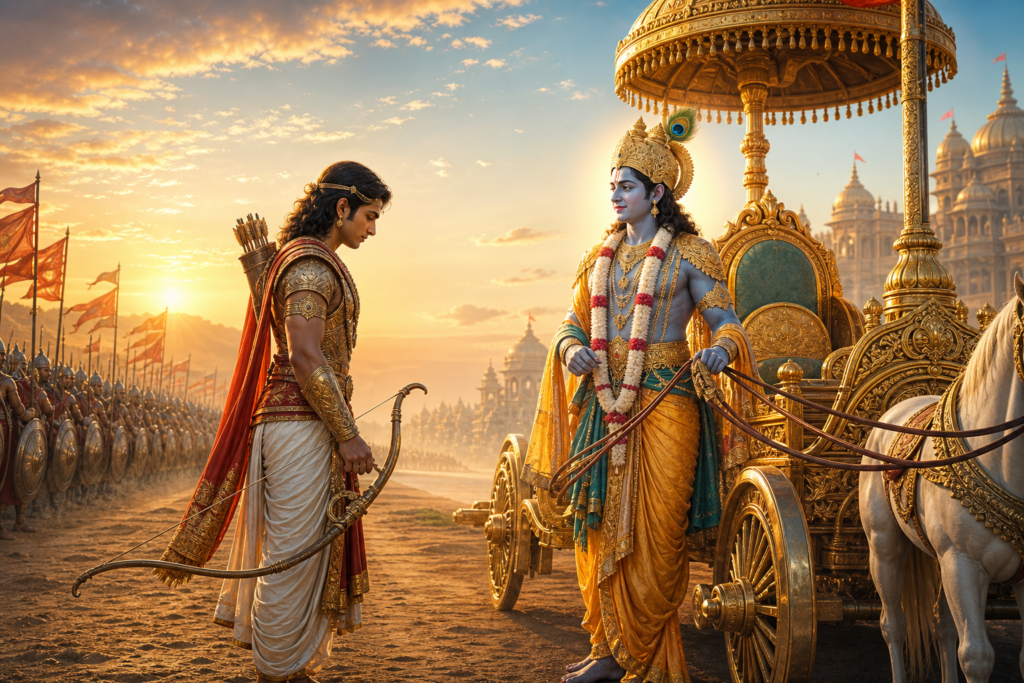
Swabhava, literally “one’s own becoming,” is central to Hindu philosophy and resonates across dharmic traditions. It denotes the deep-seated tendencies, guna-configurations, and capacities through which actions naturally arise. In the Bhagavad-Gita’s ethic of svadharma, a life well-lived is not the suppression of swabhava but its intelligent consecrationaligning inborn tendencies with the moral order. Read this way, the Ramayana stages a perennial question: when does loyalty to inner nature become integrity, and when does it harden into adharma?
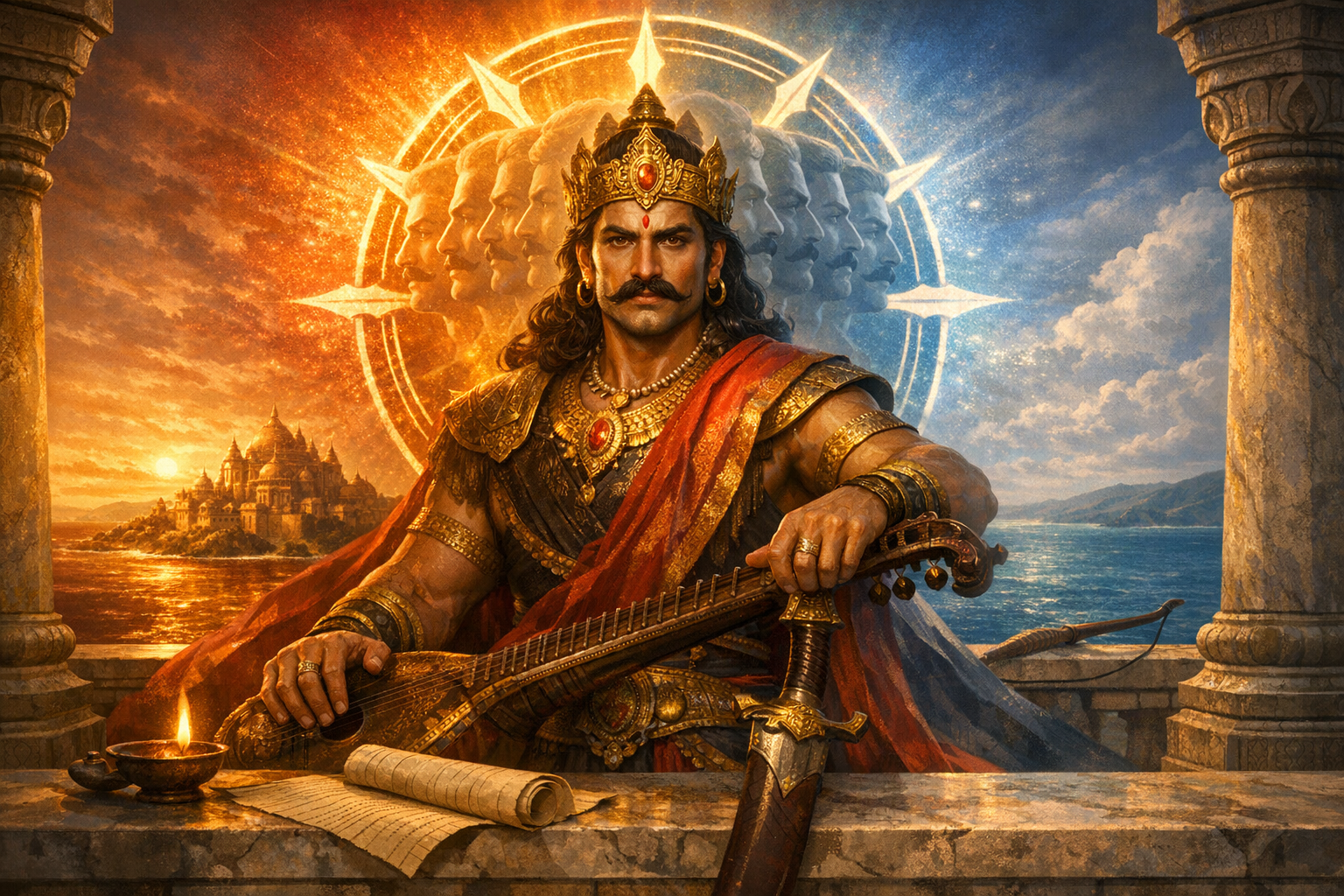
Ravana’s origins already present a synthesis and a tension. Born to the sage Vishrava and Kaikesi of rakshasa lineage, he is both Brahmanical and asura by inheritance. Valmiki’s narrative ascribes to him prodigious tapas, mastery over the Vedas and statecraft, and an artistry that includes music and poetry. These traits complicate any caricature; Ravana stands as a learned ruler whose cultivated capacities magnify, rather than mitigate, the ethical stakes of his choices.
The consolidation of Lankā under Ravana showcases kshatra-dharma at its most formidablefortified defenses, maritime wealth, and administrative order. Yet the king’s great boon, secured through ascetic rigor, becomes a pivot for pride. With invulnerability to gods and most beings, his self-conception acquires the hue of inevitability. The philosophical tension here is classic: strength deriving from discipline later outpaces the discipline that first made strength possible.
Pride (mada, darpa) and passion (raga) then take center stage. The forcible abduction of Sita is not only a political provocation; it is an ethical rupture that sets Dharma and Adharma into bold relief. Even those retellings that soften the literalness of the episode (through ideas such as Maya-Sita) keep the transgression intact at the level of intent. By placing personal desire over just conduct, Ravana crosses a threshold that dharmic reasoning marks as decisive.
What makes the fall tragic is not ignorance alone but coherence without conscience. Ravana persists as if fidelity to his own codehis swabhavawere itself the highest value. In doing so, he mistakes consistency for righteousness. Dharma is not merely an unbending application of temperament; it is temperament refined by viveka (moral discernment), proportion, and responsibility to the wider order.
In the celebrated counsel scenes, especially the exchanges with Vibhishana in Yuddha Kanda, the text illuminates counsel ethics in royal courts. Vibhishana urges a re-alignment with dharmareturn Sita, avert conflict, and restore moral legitimacy. This “Vibhishana Gita counsel to Ravana,” as it is sometimes described in later interpretive traditions, frames governance as a dialogue between might and right. Ravana’s refusal, and Vibhishana’s subsequent sharanagati to Rama, underline a critical norm of kshatra: rulers who will not be corrected by wise counsel are ultimately corrected by consequences.
Maryada Purushottama stands as Ravana’s dialectical counterpart. Rama’s restraint and proportioned response in a Dharma-Yuddha restore order without reveling in violence. The contrast is instructive: a ruler’s greatness lies not in the intensity of assertion but in the rightness of measure. Ravana’s vision is absolute and monologic, while Rama’s is bound by maryadaethical limits that protect both friend and foe.
From the standpoint of aesthetic theory, Ravana activates raudra (fury) and vīra (heroism), but the narrative arc culminates in karuna (pathos). The Natyashastra’s insight is borne out: a complete character must open the space for multiple rasas, enabling reflective self-recognition in the audience. Ravana’s endmajestic, lucid, and unyieldingdelivers a catharsis that is both moral and existential.
A comparative dharmic lens deepens this reading and supports unity among traditions. Hindu philosophy distinguishes swabhava from a merely egoic fixity by insisting on its consecration to dharma. Jain Anekantavada invites many-sided vision, allowing one to see Ravana as both a learned bhakta and an erring king without flattening the paradox. Buddhist analysis of raga, dvesha, and moha (the kleshas) highlights how clinging to a hardened identity fuels suffering and conflict. Sikh thought warns of haumai (ego) and elevates alignment with hukam (cosmic order). Read together, these perspectives converge on a shared counsel: inner nature is real and potent, but it must be illumined, disciplined, and offered to the common good.
Leadership theory, when mapped to this narrative, yields technical clarity. Ravana shows the risk curve of uncorrected overconfidence: (1) capability accumulation (tapas, learning, force), (2) insulation from feedback (boons, fear in subordinates), (3) escalation of commitment to a failing course, and (4) terminal loss of legitimacy. Rama’s model, by contrast, demonstrates anti-fragility through counsel, proportionate force, and ethical signaling that binds allies. The Ramayana thus functions as a casebook in royal statecraft, not merely a tale of personal virtue.
Textual pluralism across the subcontinent and Southeast Asia preserves the broad ethical contour even as details vary. Kamba Ramayanam, Adhyatma Ramayana, and other recensions can reframe emphasis, but none rescues the central mistake: letting urge outrun order. Later lore that presents Lakshmana seeking Ravana’s statecraft wisdom at the end reinforces the paradox. Learning without moral restraint is real power, but it is not safe power.
In cultural memory, Dussehra and Ravana Dahan do not demonize learning or strength; they ritualize the primacy of dharma. The effigy that burns is less a historical person than an inner configurationego enthroned, counsel dismissed, and passion unmoored. Such symbolism is shared, in spirit, by broader dharmic ethics that prize self-mastery over self-assertion.
Taken as a unified dharmic meditation, Ravana’s story teaches that swabhava is the beginning of self-knowledge, not its end. To know one’s nature is necessary; to refine it by dharma is wisdom. The Asura Emperor’s tragic integrityhis refusal to betray his own inner imagetherefore reads as both admirable and admonitory. Integrity without ethical alignment becomes inflexible will; passion without proportion becomes injury masked as glory.
The Ramayana’s enduring power lies in this balanced instruction. It neither erases greatness in order to condemn, nor excuses wrongdoing in order to admire capacity. Instead, it asks readers across Hinduism, Buddhism, Jainism, and Sikhism to bring their distinctive insights into a shared field of conversation, in the spirit of Anekantavada and Vasudhaiva Kutumbakam. That unity of purposemany lenses, one moral horizonis perhaps the text’s most vital legacy for our time.
Inspired by this post on Hindu Blog.