
-
Perception Shapes Destiny: Vibhishana and Ravana on Dharma, Devotion, and Right View
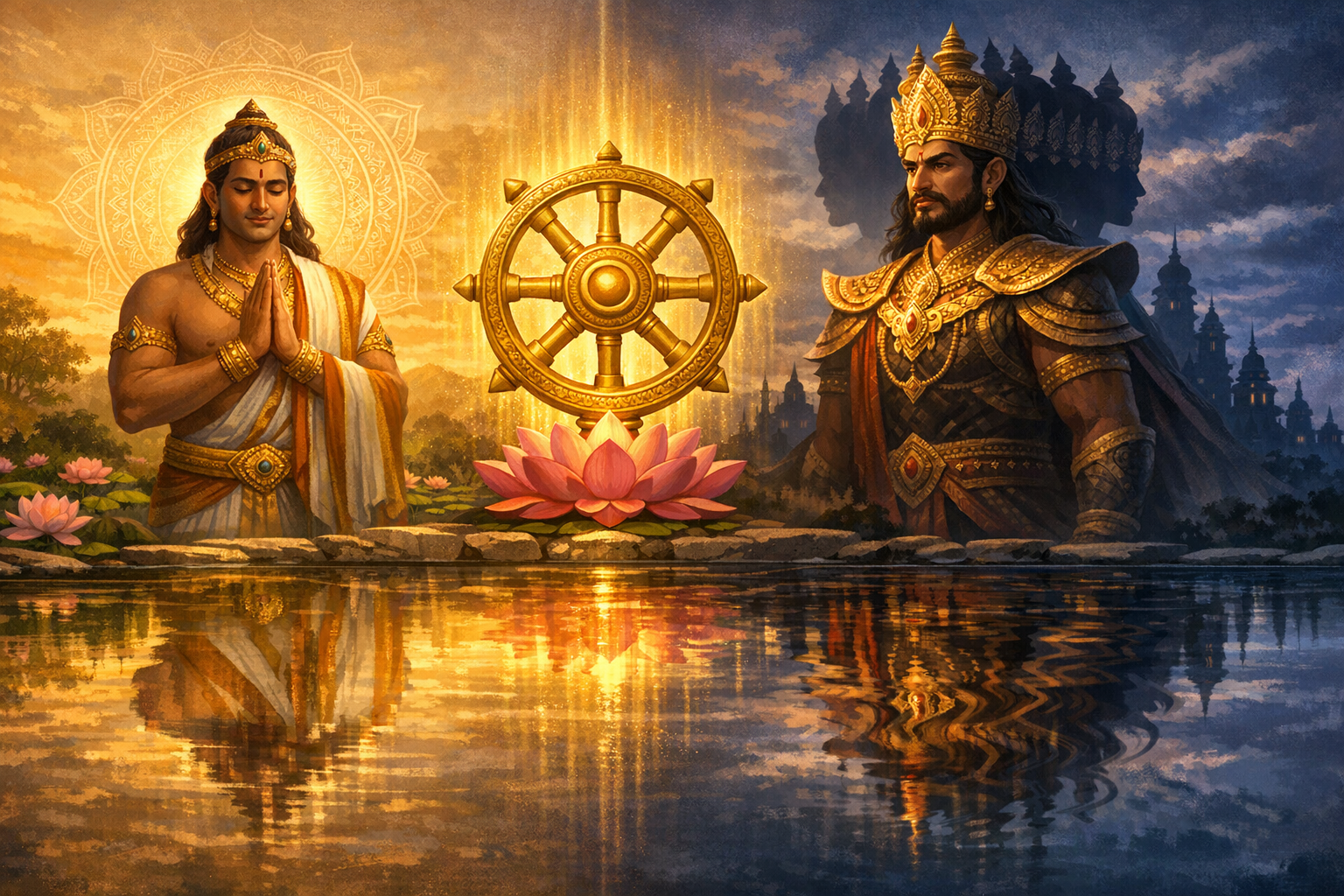
The Vibhishana–Ravana contrast in the Ramayana shows how perception actively shapes devotion, decision, and destiny. Vibhishana’s sattvic clarity leads to ethical counsel, śaraṇāgati to Sri Rama, and the restoration of just kingship. Ravana’s rajasic ambition and tamasic delusion produce cognitive bias, institutional decay, and ruin. The narrative aligns with Buddhist samyak dṛṣṭi, Jain Anekantavada and…
-
Choosing Dharma Over Blood: Vibhishana and Yuyutsu’s Moral Courage in India’s Epics
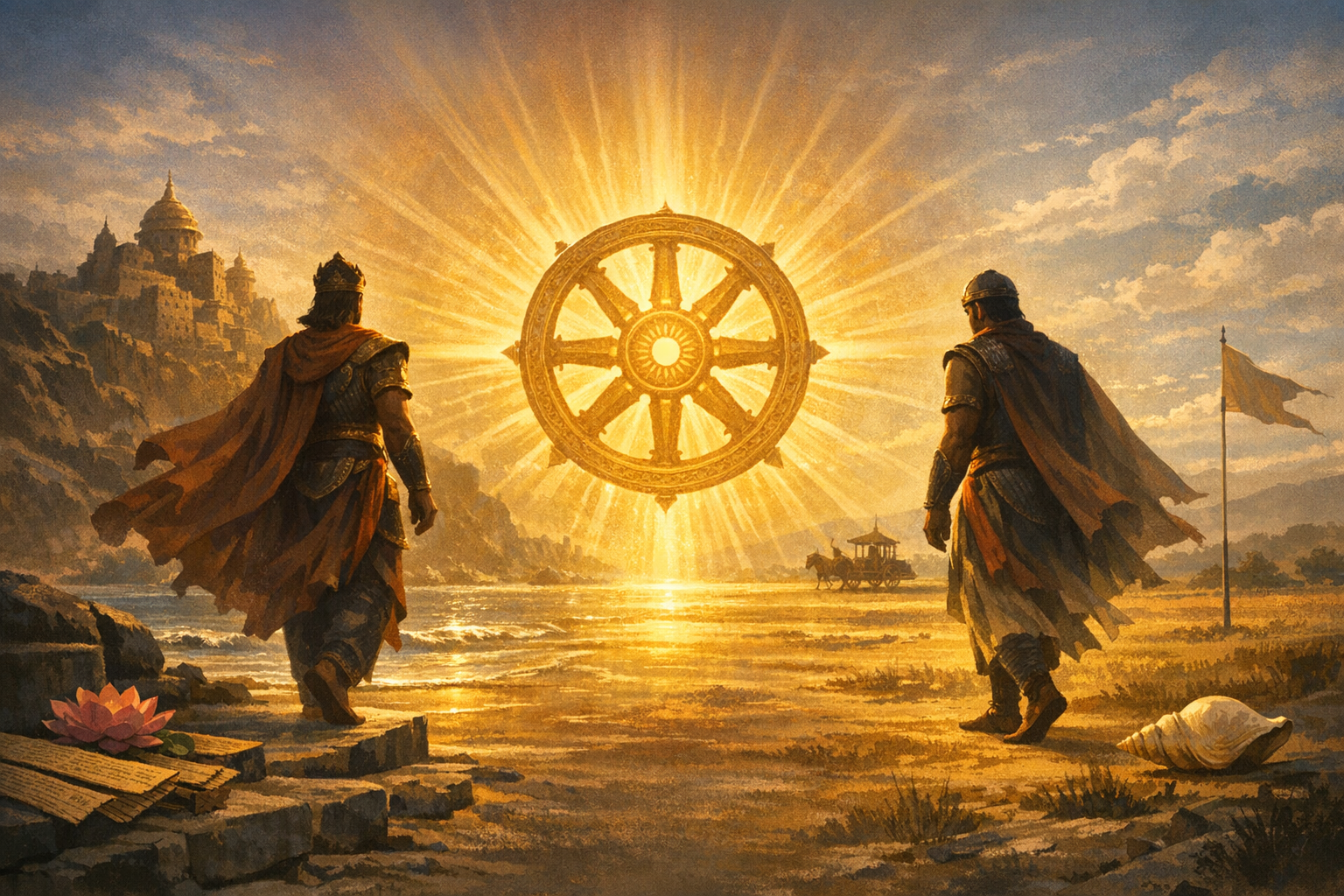
This comparative essay examines how Vibhishana in the Ramayana and Yuyutsu in the Mahabharata choose dharma over kinship, modeling ethical defection that prioritizes truth and justice above partisan loyalty. It analyzes their decisions through rajadharma, kshatra dharma, Vidura-niti, and the just-war ethos of Dharma-Yuddha, showing how both epics legitimize power only when allied with righteousness.…
-
Inside the Impregnable: Golden Walls, Iron Gates, and Hanuman’s Reconnaissance of Lanka
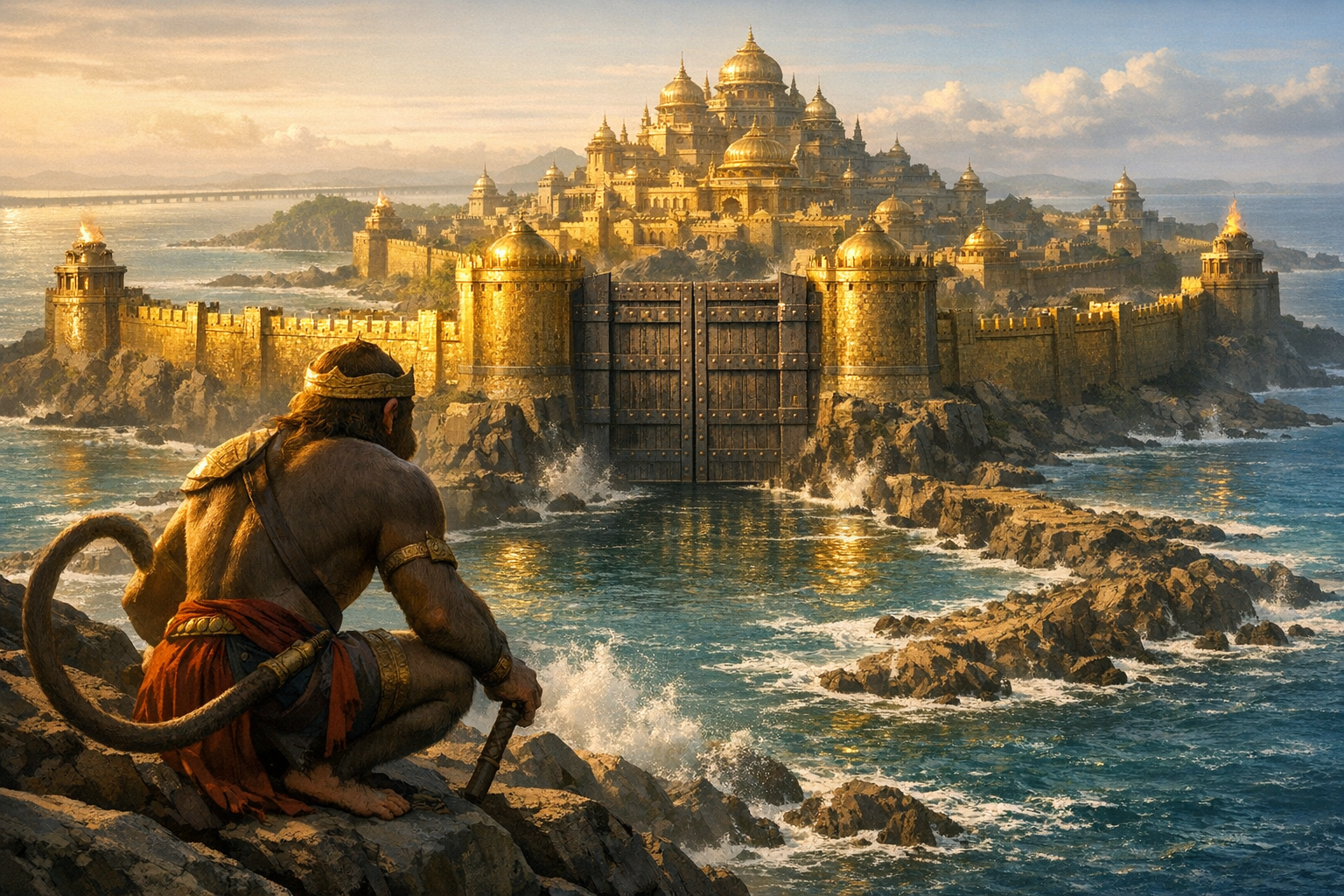
This long-form analysis situates Hanuman’s reconnaissance in the Yuddha Kāṇḍa of the Valmiki Ramayana as a precise military assessment of Lanka’s defenses. It explains Lanka as a classic jala-durga (water fort), where golden walls and iron gates combine spectacle with deterrence. Readers gain a technical view of fortification-in-depth, early-warning systems, ordnance such as śataghnī, and…
-
Kumbhakarna and Vikarna: Tragic Brothers of Conscience, Loyalty, and Dharma in the Epics
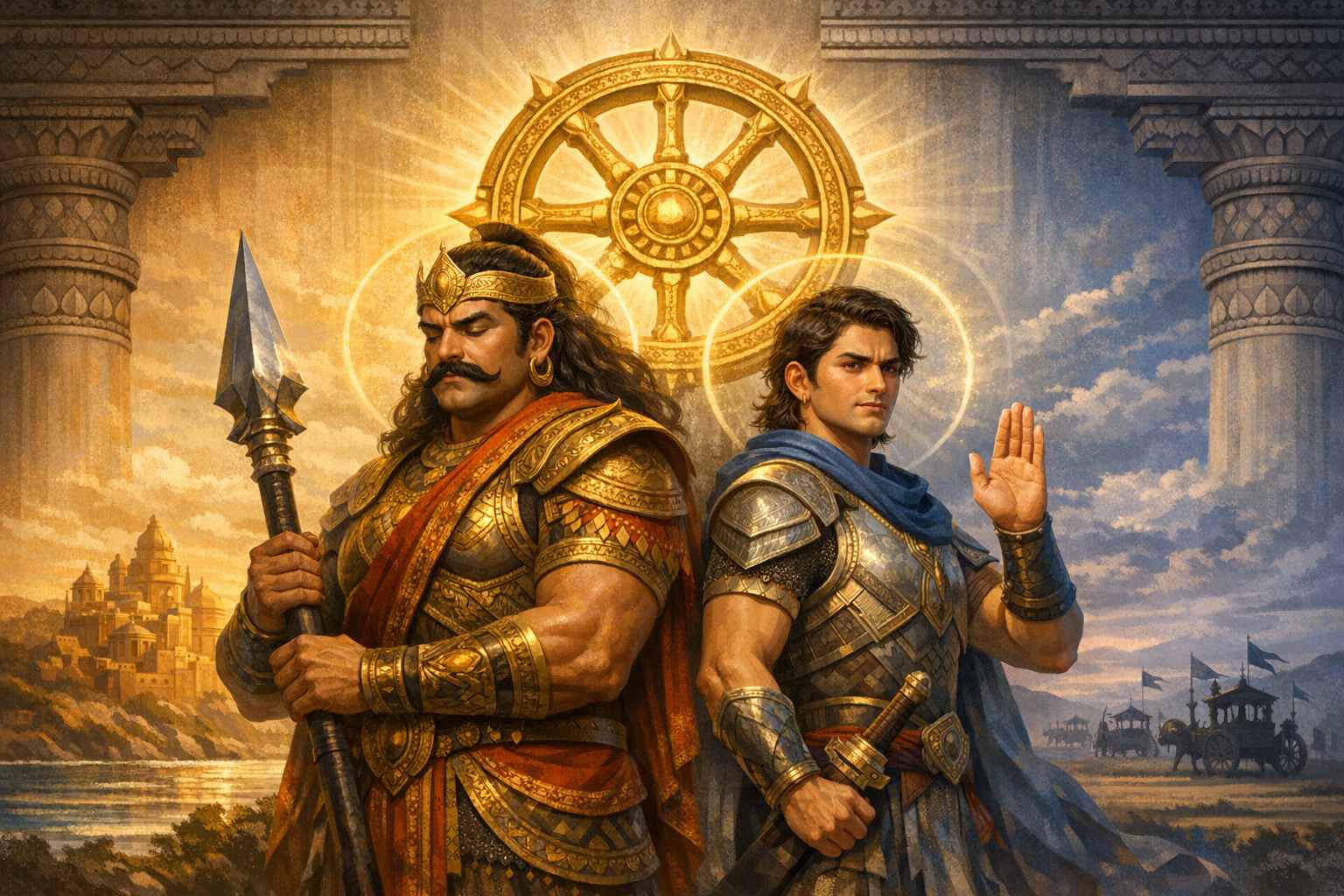
Kumbhakarna (Ramayana) and Vikarna (Mahabharata) embody the epic dilemma between loyalty to kin and loyalty to dharma. This rigorous, text-grounded comparison explains how each man speaks the truth, anticipates disaster, and yet dies fighting for causes he judged unjust. Readers gain a practical frameworkkṣātra-dharma, bandhu-dharma, rāṣṭra-dharma, and ātma-dharmato evaluate conflicts of duty. The analysis connects…
-
Kumbhakarna vs Karna: Loyalty’s Tragic Valor and Vibhishana’s Dharma in the Ramayana

The crisis in Lanka dramatizes a timeless ethical conflict: should loyalty to kin outrank allegiance to universal righteousness? Through Vibhishana’s principled dissent and Kumbhakarna’s tragic loyalty, the Ramayana clarifies how Dharma-Yuddha prioritizes justice over faction. A comparative glance at the Mahabharata’s Karna sharpens this lesson, showing that valor cannot redeem complicity in adharma. Read alongside…
-
Kumbhakarna’s Counsel to Ravana: Timeless Dharma, Restraint, and Leadership Beyond Passion

Kumbhakarna’s counsel to Ravana in the Ramayana distills a core dharmic principle: restraint must govern power. The episode situates kāma (unchecked passion) as the chief contaminant of judgment and urges restitutionreturning Sitaas both moral necessity and strategic prudence. Read through niti and rajadharma, the advice anticipates classical statecraft: choose conciliation before force and align policy…
-
Divine Timing vs Desperation: Kumbhakarna’s Forced Awakening and Ravana’s Catastrophic Folly
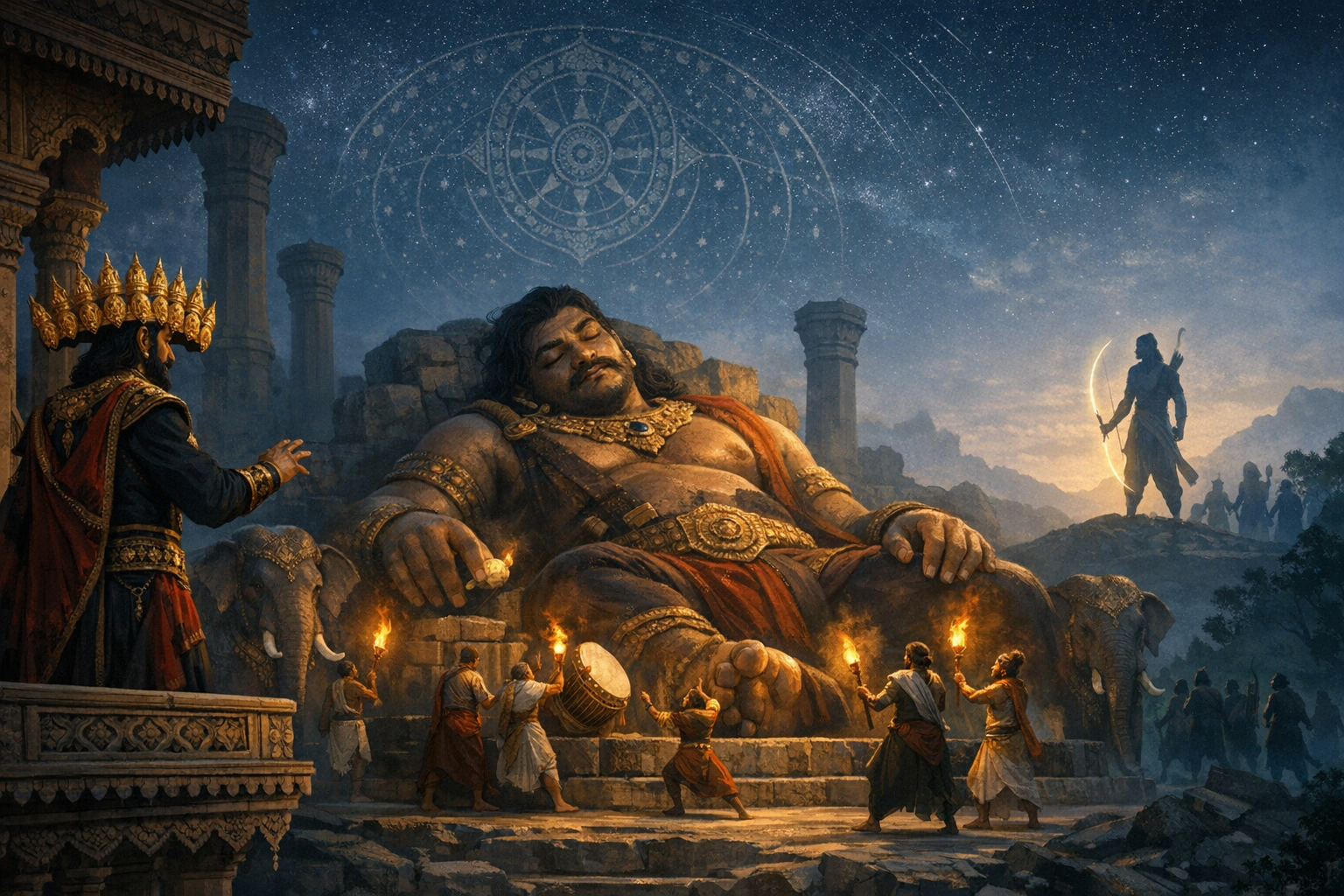
This essay examines Kumbhakarna’s forced awakening in the Ramayana as a study in divine timing and human impatience. It clarifies the nature of his cyclical sleep, traces textual variants, and situates Ravana’s choice within decision theory and dharma-yuddha ethics. The battlefield narrative is read alongside modern sleep science to show how premature activation degrades performance…
-
Kumbhakarna’s Six-Month Slumber: A Tragic Shield, Strategic Weakness, and Dharma in the Ramayana

Kumbhakarna’s six-month sleep in the Ramayana is both armor and Achilles’ heel, a boon that restrains destructive potential while creating a fatal strategic gap when broken. Drawing on Valmiki’s account and later retellings, this analysis clarifies how a slight, divinely guided shift from indrāsana to nidrāsana reconfigures cosmic balance. It explores the symbolism of nidra…
-
Rama vs Ravana: A Dharma-first resolution to the Ramayana’s toughest moral dilemmas
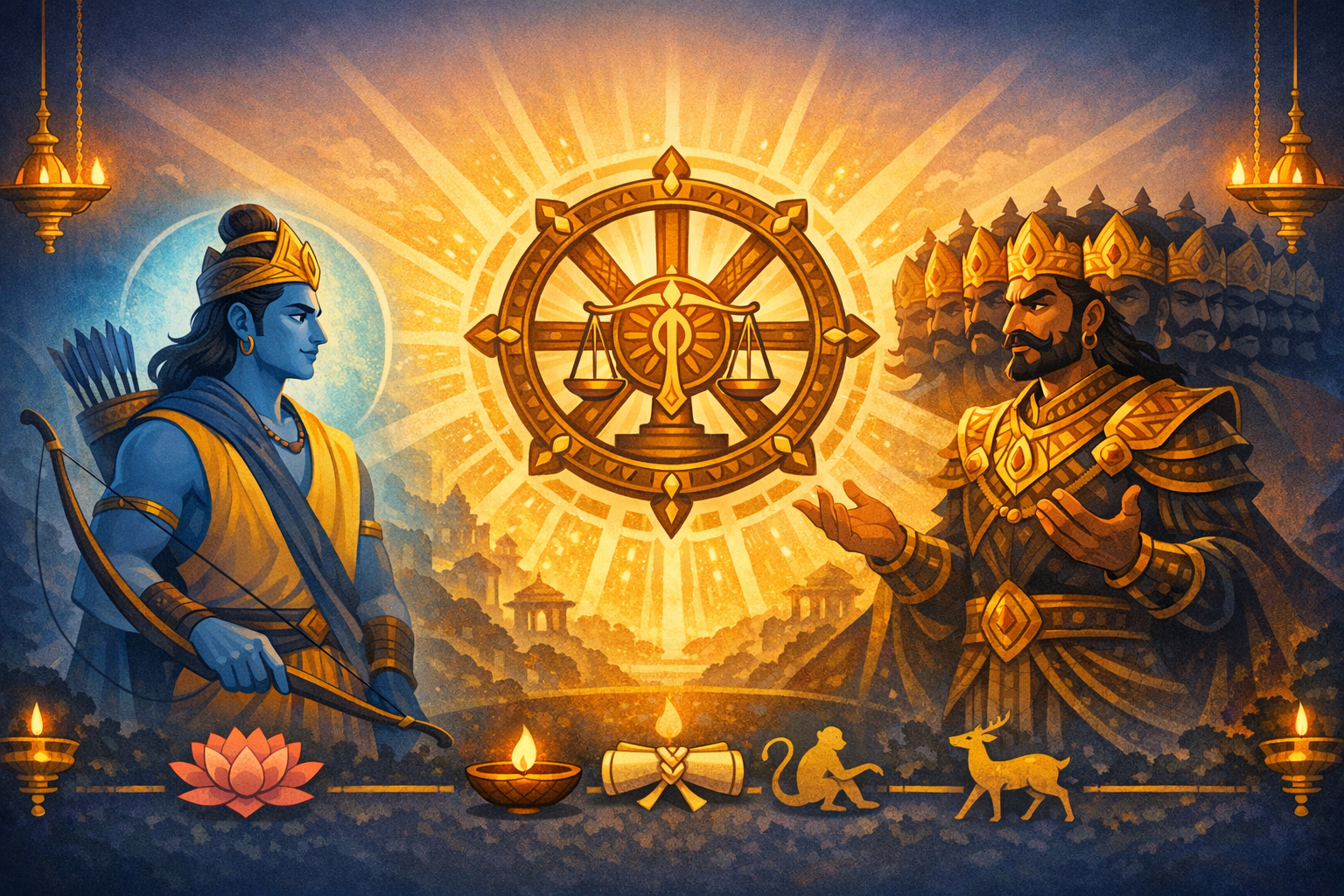
This essay answers the enduring question of why Rama is revered as righteous while Ravana is condemned, even though Ravana was a learned Brahman and Rama faced morally hard choices. It uses a dharma-first framework grounded in the Ramayana to evaluate intention, lawful means, and just ends across contested episodes such as the exile, the…
-
Inside Ravana’s Swabhava: Pride, Passion, and the Tragic Integrity of the Asura Emperor
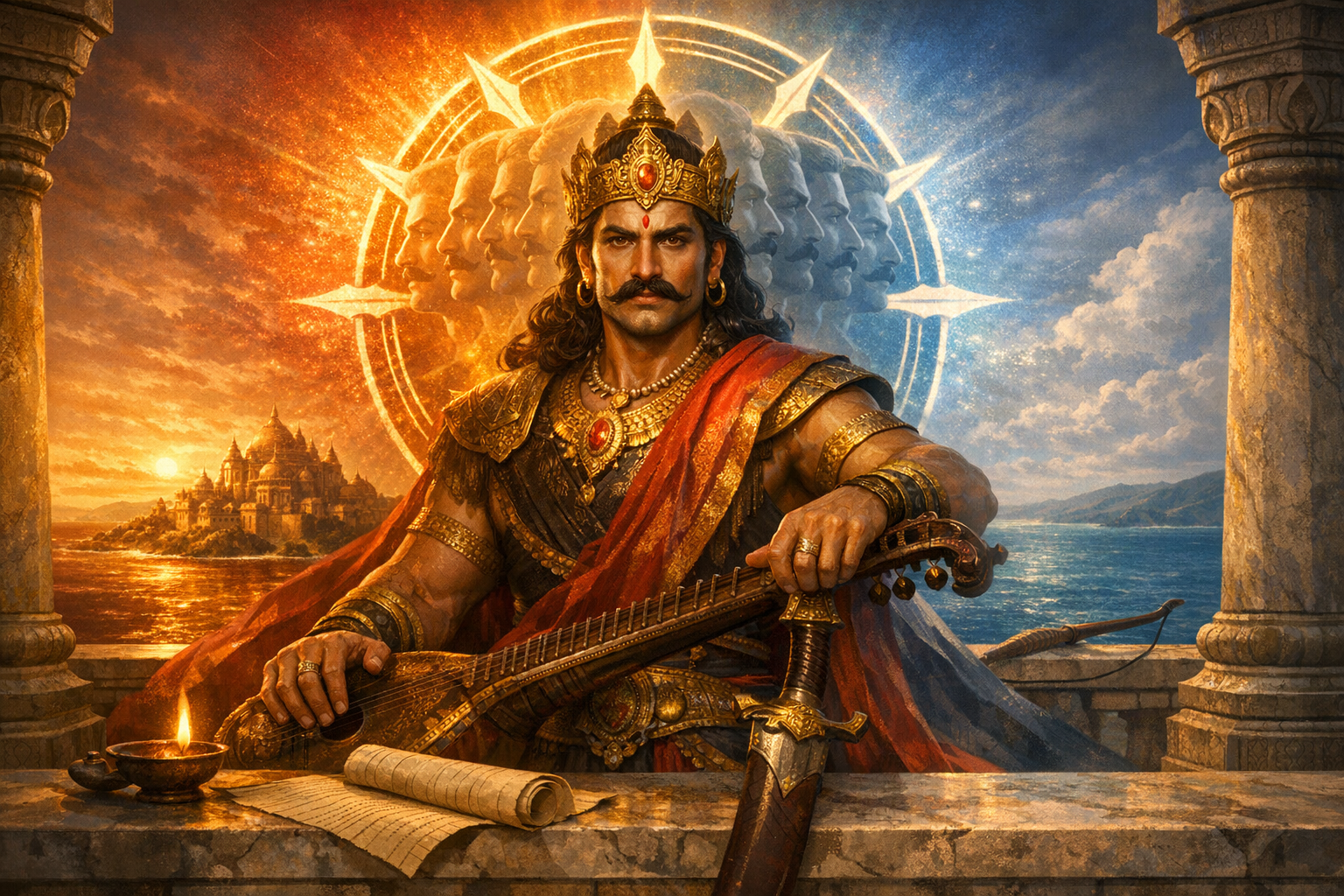
This essay reframes Ravana in the Ramayana as a philosophical study of swabhavainner naturerather than a mere antagonist. It explores how pride and passion, empowered by learning and tapas, evolve into adharma when unrestrained by counsel and maryada. Drawing on Hindu philosophy, Jain Anekantavada, Buddhist analysis of the kleshas, and Sikh reflections on haumai and…
-
Ravana’s Deadly Obsession: Why He Hunted Vibhishana on Day Three of the Ramayana War
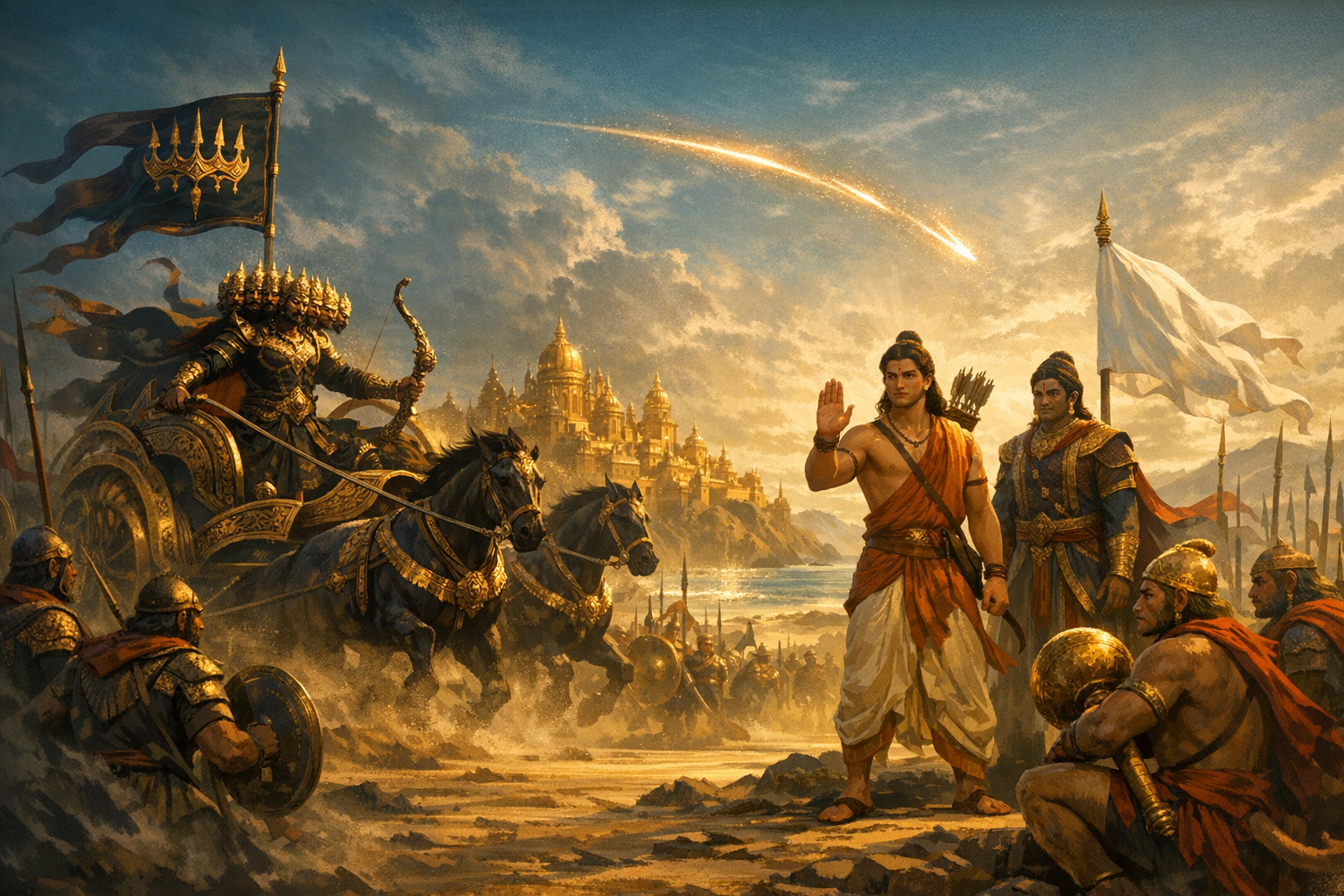
The third day of the Ramayana war is a turning point where Ravana shifts focus from Rama to a high-value insider: Vibhishana. Anchored in the early Yuddha Kanda sequence that follows Prahasta’s fall, the episode shows how a ruler’s fear can reframe an entire campaign. The analysis explains why Vibhishana’s defection matteredethically, strategically, and psychologicallyand…
-
The Day-One Blunder Ravana Signed: A Proud Pact That Crippled Lanka’s Ramayana War Strategy

This analysis examines the opening day of the Ramayana’s Lanka campaign and the strategic pact that shaped it. By consenting to daylight, rules-based fighting and initial restraint on deception, Ravana muted Lanka’s natural advantages in night warfare and illusion. The study situates this decision within dharma-yuddha norms, Arthashastra categories of open versus concealed war, and…
-
Myth-Busting the ‘Traitor’ Label: Vibhishana’s Dharma-First Loyalty in the Ramayana

This analysis challenges the popular notion of Vibhishana as a betrayer and demonstrates, with reference to Ramayana ethics, that his alignment with dharma over family partisanship constitutes exemplary loyalty. It explains how Rajadharma and Sharanagati frame his choice as morally necessary rather than opportunistic. By contrasting Vibhishana with Kumbhakarna and drawing on Dharmashastra principles, it…
-
Ravana’s Hubris and Vasishta’s Warning: How Knowledge Without Humility Ensured Defeat

Framed as “Vasishta’s curse,” this long-form analysis examines how later Ramayana traditions dramatize the collision between Ravana’s brilliance and the dharmic demand for humility. It clarifies textual nuance by distinguishing the core Valmiki Ramayana from regional and oral tellings, reading the “curse” as a pedagogical axiom rather than magical determinism. The essay surveys the ethical…
-
When Kings Fail: Ramayana’s Timeless Blueprint for Rajadharma and Good Governance
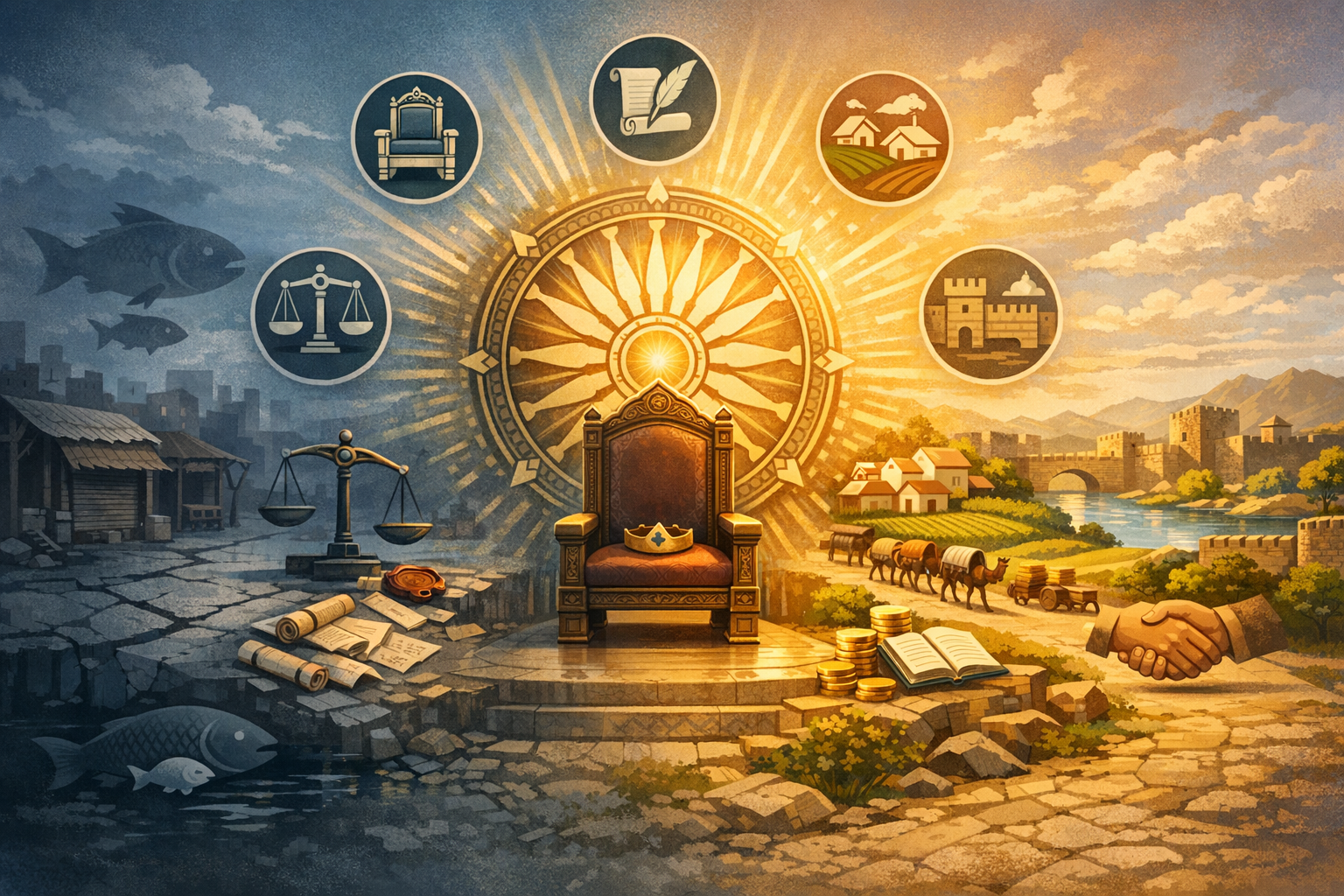
This long-form analysis demonstrates how the Ramayana functions as a living manual of rajadharma, diagnosing the social symptoms of failed leadership and prescribing practical remedies. It explains the timeless concept of matsya-nyāya, the legal vacuum where the strong prey on the weak, and shows how Vibhishana’s counsel to Ravana outlines a ruler’s core duties in…
-
Lanka Kānda in Tulsidas’s Ramcharitmanas: Dharma, Strategy, and Enduring Bhakti

Lanka Kānda in Ramcharitmanas unites poetic beauty with ethical clarity, presenting a dharma-yuddha rooted in diplomacy, restraint, and devotion. Setubandha functions as engineering feat and sacred metaphor, while Vibhīṣaṇa’s refuge models principled dissent and moral courage. Tulsidas’s nuanced handling of Sita’s sanctity and Ravana’s downfall centers compassion over suspicion and ego. The kānda serves as…
-
Ravana’s Fatal Breach of Rajadharma: Desire Over Duty and the Ruin of Lanka’s Statecraft

This long-form analysis examines Ravana’s breach of rajadharma in the Ramayana as a rigorous lesson in Dharmic statecraft. It situates kingship within Hindu, Buddhist, Jain, and Sikh ethical frameworks, showing how a ruler’s personal desire must remain subordinate to public duty. It explains how Ravana’s abduction of Sita, dismissal of counsel, and politicization of private…
-
Ravana’s Abduction of Sita Revisited: Dharma, Curses, and a Deliberate Path to Moksha
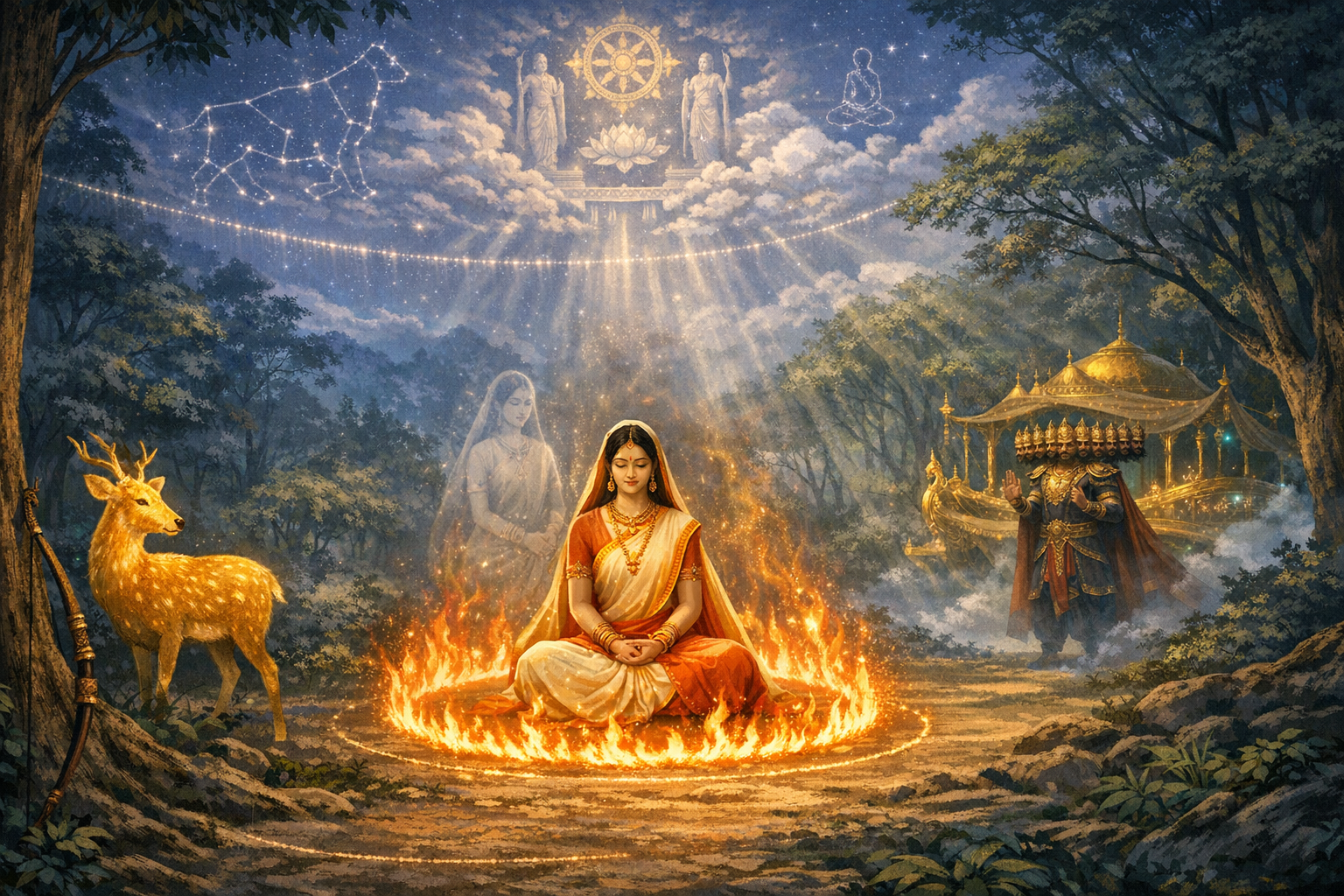
Did Ravana kidnap Sita to be slain by Sri Rama and attain moksha? A careful, text-sensitive study shows that while Valmiki’s Ramayana emphasizes Ravana’s pride and desire, later Puranic and bhakti traditions interpret his fall within a cosmic design of grace. The Jaya–Vijaya doctrine, vaira-bhakti (absorption through enmity), karmic curses, and the Maya Sita motif…
-
Vibhishana Gita: Courageous Counsel on Dharma and Ethical Leadership in the Ramayana

The Vibhishana Gita in the Ramayana preserves the courageous counsel Vibhishana offers Ravana, spotlighting how conscience and dharma guide ethical leadership. As the youngest son of Kaikesi and Sage Vishrava, Vibhishana’s asura lineage underscores that noble character is defined by virtue, not birth. His plea to return Sita to Rama blends moral clarity with strategic…