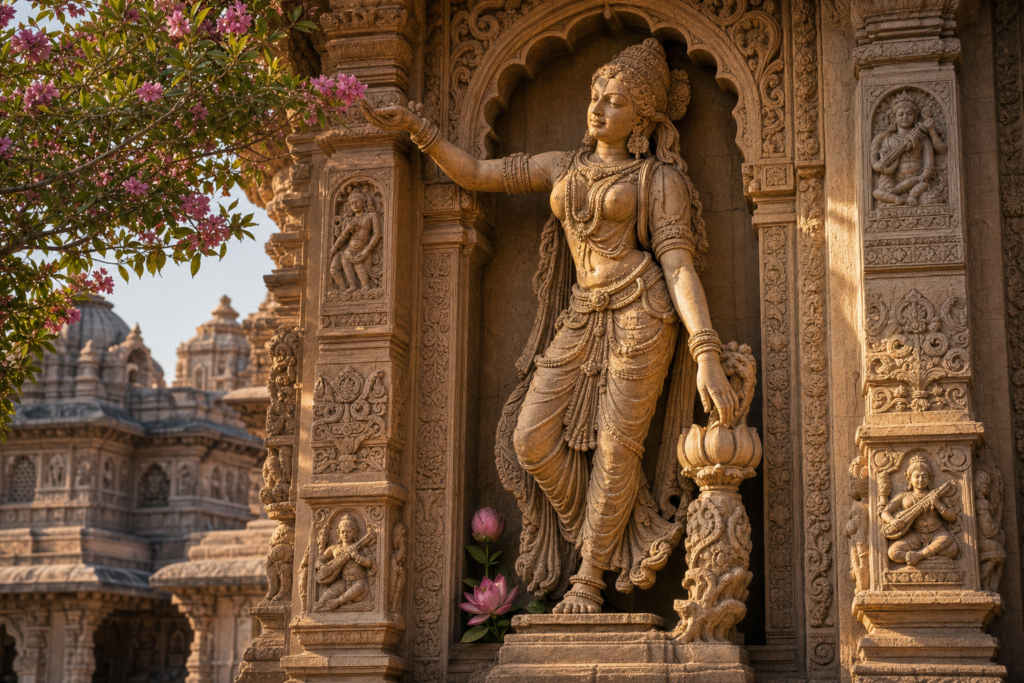
The fourth day of Chaitra Navratri (22 March 2026, subject to regional panchang) venerates Goddess Kushmanda, the radiant source of vitality whose name is traditionally parsed as Ku (subtle), Ushma (warmth), and Anda (cosmic egg). Within the Navadurga tradition, this form symbolizes the primordial spark that sets creation in motion and sustains the universe with compassionate energy and auspicious light.
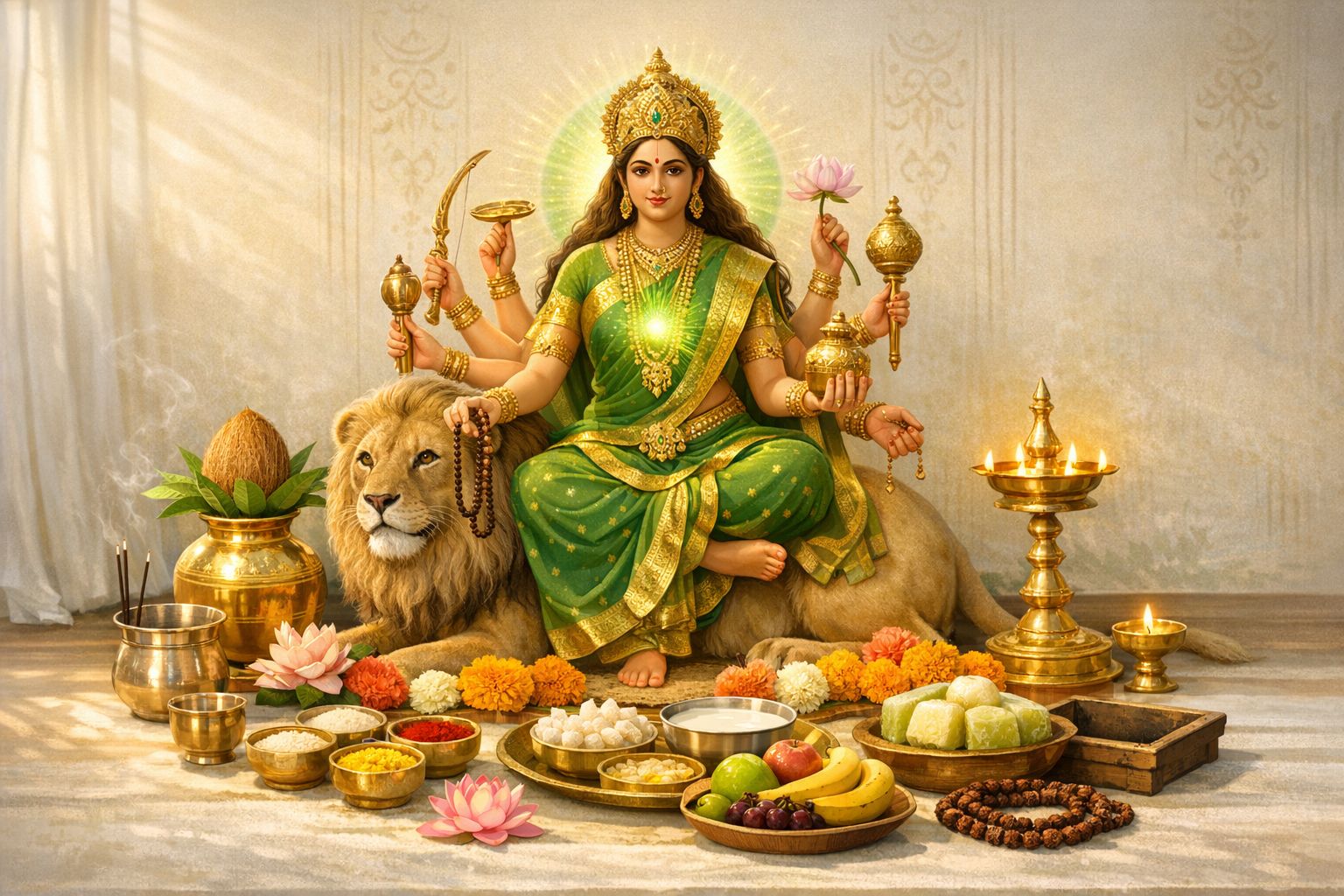
Kushmanda’s iconography commonly presents an eight-armed (Ashtabhujā) form seated upon a lion, bearing instruments of protection and nurture such as the kamandalu, bow and arrow, lotus, amrita kalasha, chakra, gada, and mala. Devotional focus on this form is believed to harmonize health, wealth, and inner equilibrium by aligning the practitioner’s intention with a disciplined ritual process and a heart-centered contemplative stance.
Many lineages associate this day with the Anahata (heart) chakra, emphasizing balanced breath, gratitude, and compassionate action. These values resonate across dharmic traditionsHinduism, Buddhism, Jainism, and Sikhismthrough shared commitments to ahimsa, maitri, daya, and seva. The observance thus becomes a practical pathway to inner clarity that simultaneously nurtures community well-being and inter-tradition harmony.
Panchang context: Day 4 of Navratri corresponds to Chaitra Shukla Chaturthi in most regional calendars. Morning puja after sunrise is traditionally preferred; many also utilize Abhijit Muhurat or other auspicious midday windows and avoid Rahu Kalam. Because local sunrise, tithi transitions, and nakshatra timings vary by location, consulting the regional panchang ensures accuracy in muhurat selection.
Preparatory guidance: A clean, well-ventilated, east- or north-facing space supports sattvic focus. A ghee or sesame-oil lamp, fresh water for achamana, and biodegradable offerings keep the ritual ecologically mindful. Households often choose sattvic hueswhite, green, or yellowfor altar cloths and attire to complement the heart-centered emphasis of the day.
Suggested puja samagri: image or murti of Goddess Kushmanda (Ashtabhujā form if available); kalasha with water, mango leaves, and a coconut; panchapatra and spoon; rice, akshata, kumkum, haldi; incense (dhupa), lamp (deepa), flowers, tulsi or bilva where appropriate by tradition; naivedya items such as seasonal fruits, milk, mishri, and ash gourd (kusmanda/petha) preparations; a japa mala (rudraksha or sphatika); and, if performing homa, small havan kund, dry samidha, ghee, and safe fire tools.
Ten essential observances on the fourth day can be undertaken as a coherent, stepwise sadhana integrating puja-vidhi, mantra, and contemplative practice:
1. Prepare the sacred space: Cleanse the area, spread a fresh altar cloth, and arrange the murti or image of Goddess Kushmanda centrally. Place the lamp to the right, water to the left, and keep flowers, incense, and naivedya within easy reach. This arrangement supports smooth upacharas and maintains ritual mindfulness.
2. Purification and sankalpa: Begin with achamana and a few rounds of calm, even breathing. State a clear intention (sankalpa), for example: asmin shubhe tithau Chaitra Shukla Chaturthyam Navaratri Chaturtha-dine Shri Kushmanda Devi prityartham mama kutumbe sukha-ārōgya-sampad-siddhyartham pujam karishye. Articulating purpose focuses attention, aligns action with value, and deepens the devotional arc of the rite.
3. Kalasha-sthapana and avahana: Install the kalasha with sanctified water, mango leaves, and coconut, symbolizing abundance and protective grace. Invoke the presence of the Devi into the murti or image with gentle avahana and nyasa, recognizing the altar as a living field of worship rather than a static display.
4. Offer Panchopachara or Shodashopachara: According to time and lineage, offer five (gandha, pushpa, dhupa, deepa, naivedya) or sixteen upacharas with attention and care. Even a concise Panchopachara, if performed with steadiness and shraddha, fulfills the devotional objective while preserving ritual integrity.
5. Mantra japa and stotra recitation: Center the practice with the Navadurga mantra for this dayॐ देवी कूष्माण्डायै नमःsupported, where appropriate, by the Navarna mantraॐ ऐं ह्रीं क्लीं चामुण्डायै विच्चे. Practitioners commonly complete 108 repetitions on a japa mala, maintaining a relaxed spine and gently lengthened exhalation for steady concentration.
6. Contemplation on the heart center (Anahata): In many traditions, Day 4 aligns with the heart chakra. A short, guided internal focusbreathing into the center of the chest, cultivating gratitude, and visualizing a soft, emerald or golden radiancesupports emotional clarity. This contemplative frame resonates with dharmic values of maitri/karuna (Buddhism), ahimsa/aparigraha (Jainism), and seva/sarbat da bhala (Sikhism).
7. Parayana from Shakta texts: Devotees often recite portions of the Devi Mahatmyam (Durga Saptashati), following their parampara’s division across nine days. On the fourth day, many complete selections from the Madhyama Charita; others read a full sarga or specific kavachas. The aim is less volume than lucidityclarity of the heart and steadiness of attention.
8. Naivedya and jal-arpan: Offer sattvic bhog suitable for the season and household, followed by water and aarti. The mind’s quality during offering matters as much as the item itself; a simple fruit, milk, or a small ash-gourd preparation given with gratitude holds deep devotional weight.
9. Simple homa (optional, with care): Where feasible and safe, a brief household homa using ghee and samidha may accompany mantra japa. Each mantra repetition can be followed by a gentle “swaha.” Adequate ventilation, fire safety, and minimal smoke are essential; where any of these conditions are not met, homa should be omitted.
10. Vrata, dana, and seva: A light, sattvic vrata (fast) may be observed according to health and age, typically avoiding onion and garlic. Seva amplifies the heart ethos of the dayannadana, distribution of fruits/vegetables (including ash gourd), planting saplings, or supporting local community kitchens reflect dharmic solidarity and practical compassion.
Recommended mantras and short recitations: For core japa, practitioners use ॐ देवी कूष्माण्डायै नमः as the seed of the day’s practice. The Navarna mantra ॐ ऐं ह्रीं क्लीं चामुण्डायै विच्चे is widely revered in Shakta sadhana and may be chanted according to guidance received from one’s lineage. Brief stotras to the Navadurga or compact verses from the Devi Mahatmyam can be included to frame opening and closing salutations.
Bhog traditions for Kushmanda: Offerings often align symbolically with the nameash gourd (kusmanda/petha) in sweet or simple sattvic forms; malpua in some regions; kheer, milk, curd, honey, or mishri where suitable. Households may select one principal naivedya and a small secondary fruit to keep the practice focused and sustainable.
Timing guidelines and muhurat approach: Morning puja after sunrise provides steadiness; Abhijit Muhurat can serve as an alternative for working households. Avoiding Rahu Kalam is customary. Because tithi transitions may shift during the day, consulting a reliable local panchang or temple schedule ensures alignment with regional practice.
Family-friendly and inclusive practice: Many households find that quiet, well-structured puja segments of 20–40 minutes sustain attention for all ages. Encouraging children to offer flowers, light a lamp with supervision, or hold the mala for a few mantras helps transmit practice through experience. Cross-dharma families often frame the observance around universal valuesgratitude, non-harm, and servicethereby deepening shared meaning.
Eco-conscious and safety considerations: Natural flowers and biodegradable offerings reduce waste; clean ghee or sesame oil minimizes smoke. Keep lamps and incense away from fabrics, never leave a flame unattended, and conclude homa completely. Ethical sourcing of samagri and moderation in quantity reflect reverence for the environment as an expression of dharmic stewardship.
Regional variations and adaptability: Shodashopachara sequences, colors of the day, and naivedya preferences vary by region and parampara. The essential principle is clarity of sankalpa and sincerity of offering. Whether the household completes a concise Panchopachara or a more elaborate sequence, the day’s heart-wise emphasis is best served by unhurried attention and gentle devotion.
Concluding reflection: Day 4 of Navratri invites a lived experience of inner warmth translating into outward care. Grounded in clear intention, precise upacharas, steady mantra, and compassionate action, Kushmanda sadhana nourishes personal resilience and collective harmony. The ritual becomes not only an offering to the Divine Mother but also a commitment to embodying light, steadiness, and shared well-being across the dharmic family.
Inspired by this post on Hindu Pad.