Navratri 2026 Day 5 (Panchami) has two widely observed occurrences across the Indic calendar: in Chaitra Navratri on 23 March 2026 (Skandamata Puja) and in Shardiya/Ashwin Navratri on 15 October 2026 (commonly observed as Lalita Panchami/Upang Lalita Vrata in many regions, with Skandamata worship also maintained by numerous households). In Nepal, the festival cycle is known as Dashain, and Panchami marks the fifth day of the daily Durga upasana that culminates in Vijayadashami.
Calendar and Panchang reference: Chaitra Shukla Panchami falls on Monday, 23 March 2026 (approximately, IST/NPT), and Ashwin Shukla Panchami falls on Thursday, 15 October 2026 (approximately, IST/NPT). Because tithi boundaries are astronomical and location-specific, Panchami may begin or end at different clock times across regions; many traditions follow the udaya-tithi guideline (tithi prevailing at local sunrise) for home puja, while temple schedules may adopt madhyahna or bespoke muhurta windows. Devotees are advised to confirm exact local timings with a reliable regional panchang.
Significance of Day 5 in Chaitra Navratri: Skandamata is the maternal and protective dimension of Devi, revered as the mother of Skanda (Kartikeya, Subrahmanya, Murugan). She embodies nourishing compassion paired with dharmic valor, assuring seekers that inner courage is strengthened by calm clarity rather than aggression. The day emphasizes devotion (bhakti) tempered by viveka (discernment), encouraging a balance of steadfast action and serene insight.
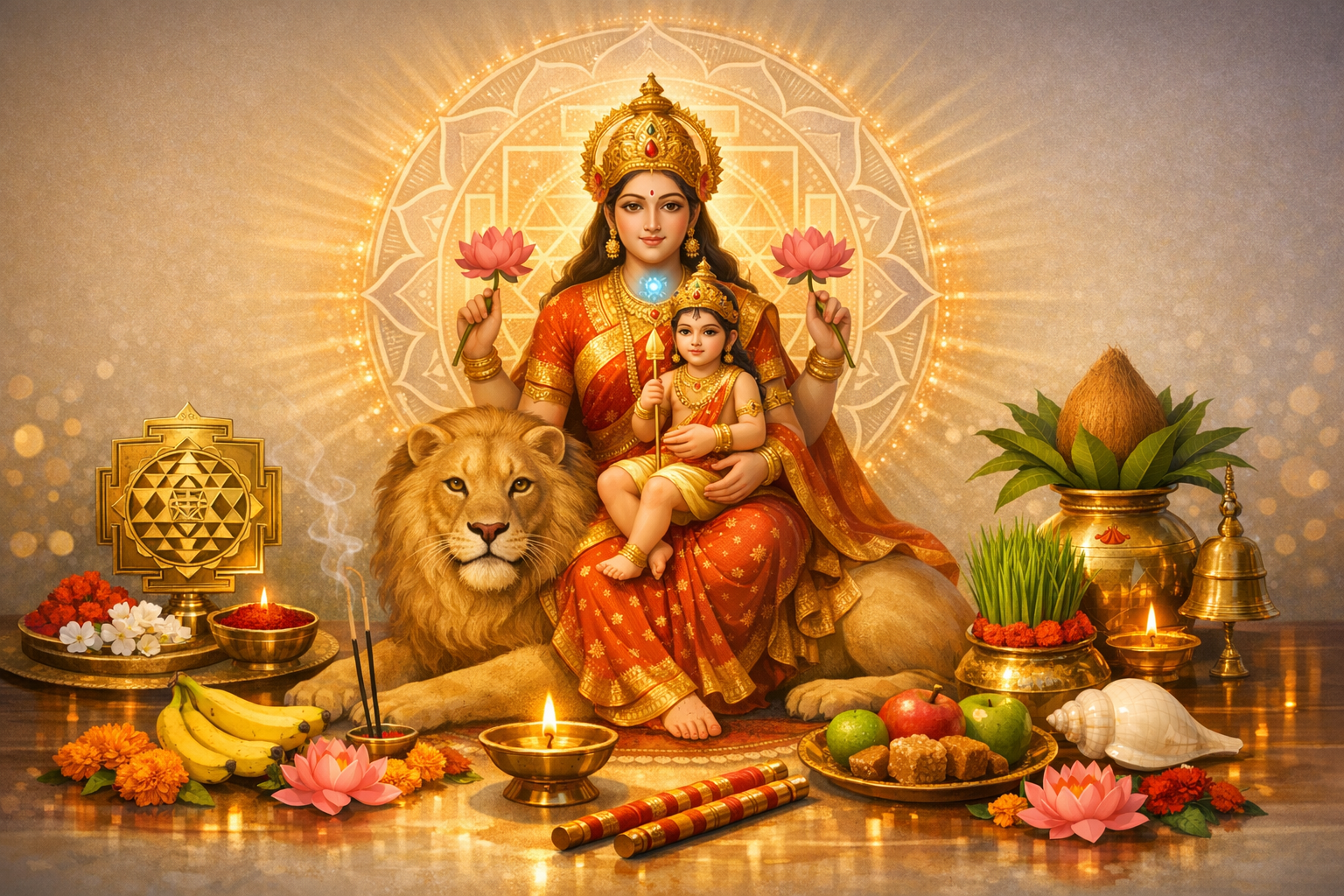
Iconography and theological cues: Skandamata is typically depicted seated on a lion, with Skanda on her lap, and lotuses in her hands—an image that harmonizes shakti (protective energy), karuna (compassion), and pallava (blooming potential). In many Shakta–Yoga expositions, Day 5 is linked with the Vishuddha (throat) chakra, underscoring articulate truth, prayerful recitation, and cleansing speech. The worship therefore integrates sound (mantra), breath steadiness, and focus to align intention with action.
Skandamata Puja Vidhi (Chaitra Navratri Day 5): The sequence below reflects a widely accepted home-puja framework that can be adapted to lineage-specific instructions and household customs.
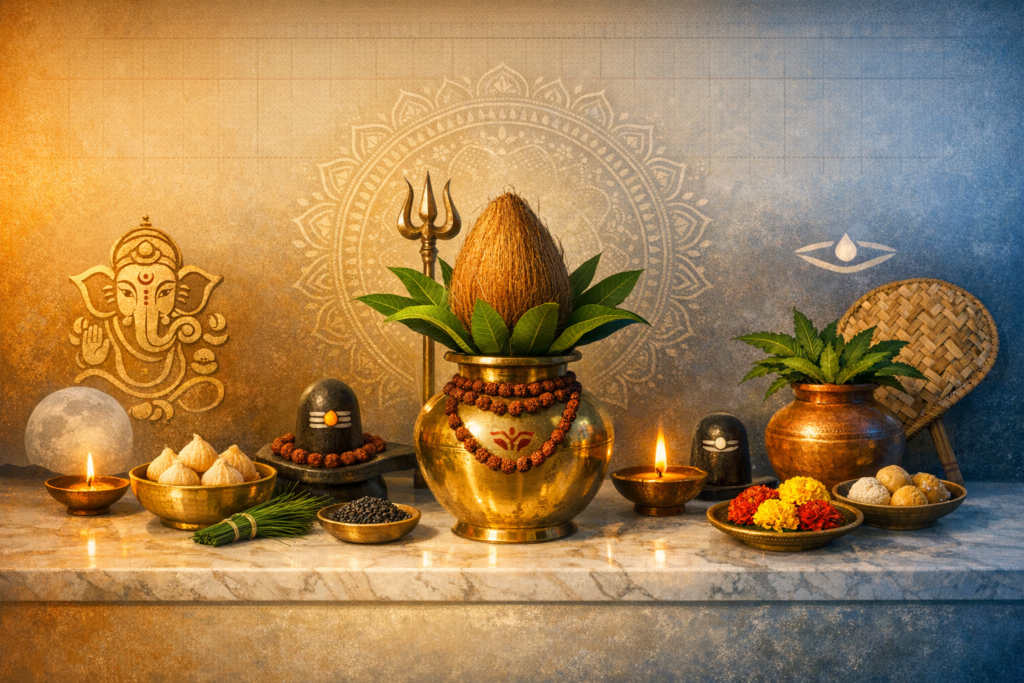
1) Preparation: Clean the altar and puja space, keep the kalasha from Ghatasthapana undisturbed, arrange images/icons of Skandamata, and assemble satvik offerings (fruits, naivedya, flowers—especially lotus if available, and a ghee diya). Maintain a calm, uncluttered environment.
2) Sankalpa: State the sankalpa with date, place, and intention (shraddha and dharma-karya), invoking blessings for personal well-being and collective harmony across all dharmic traditions.
3) Invocation: Light the lamp and incense; invite the presence of Devi in the Skandamata aspect. Offer akshata, pushpa, gandha, and dhoop in the standard panchopachara or shodashopachara sequence as per capacity.
4) Recitation: Chant the moola-mantra “Om Devi Skandamatayai Namah” with one-pointed attention. Many households also recite select chapters of Durga Saptashati (Devi Mahatmyam) on Panchami, or sing stotras praising Devi’s maternal grace.
5) Offerings: Offer seasonal fruits, homemade satvik naivedya, and water. In several traditions, bananas or jaggery-based preparations are considered auspicious offerings for Skandamata.
6) Arati and Kshama Prarthana: Perform arati with devotion and conclude with prayers for forgiveness for any procedural lapses, maintaining humility and gratitude throughout.
Core mantras commonly used on Panchami include “Om Devi Skandamatayai Namah” and the universal refrain “Ya Devi Sarvabhuteshu Shakti Rupena Samsthita, Namastasyai Namastasyai Namastasyai Namo Namah.” Families often add lineage-specific stotras (such as Navadurga stuti) and brief meditation on the lotus-held icon of the Mother and Child to deepen focus and emotional resonance.
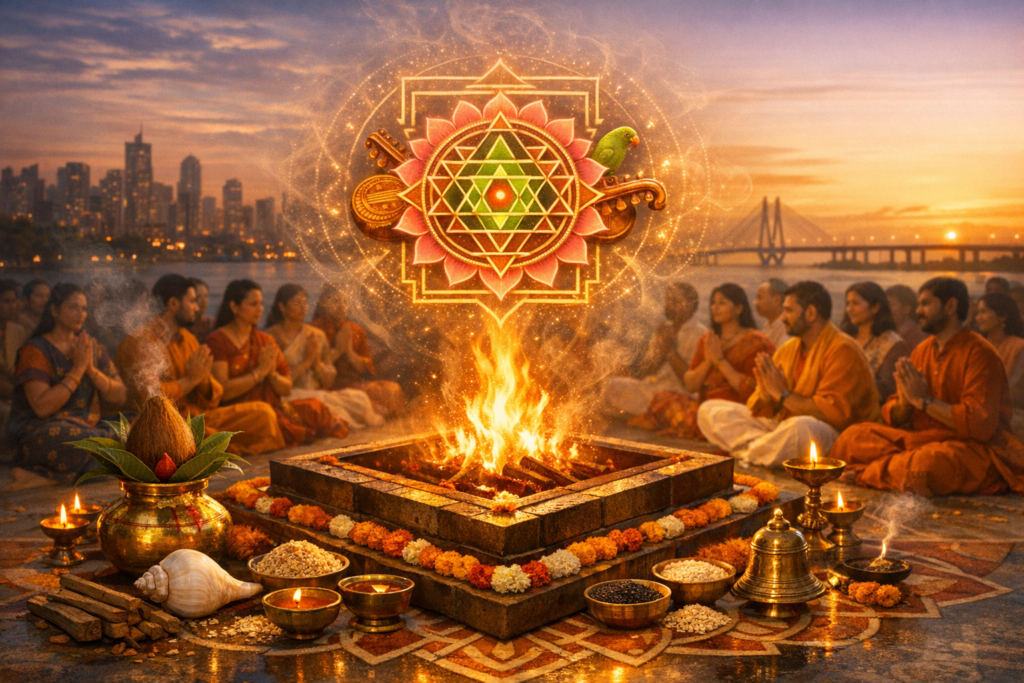
Ashwin Navratri Day 5 (15 October 2026) and Upang Lalita Vrata: In many Shakta lineages, Panchami during Shardiya Navratri is observed as Lalita Panchami/Upang Lalita Vrata, dedicated to Lalita Tripurasundari. The day aligns with Sri Vidya practices centered on Sri Chakra/ Sri Yantra worship, recitation of Lalita Sahasranama and, where tradition permits, Lalita Trishati. The focus is contemplative and precise: combining sound (nama), geometry (yantra), and intention (bhava) to experience Devi as both cosmic order and intimate grace.
Puja emphases for Lalita Panchami: Many households read a set number of names from the Lalita Sahasranama with steady rhythm, offer kumkum and fragrant flowers to the Sri Chakra or Lalita icon, and close with a brief silence to internalize the recitations. Even where Lalita Panchami is the primary observance, Skandamata is commonly remembered as the Navadurga of the day—expressing the complementary qualities of motherly protection (Skandamata) and sovereign beauty and wisdom (Tripurasundari).
Dashain Panchami in Nepal: Panchami marks the fifth day of the Dashain cycle of Durga worship. Households continue daily puja to Goddess Durga and the household kalash, maintaining regular offerings and recitation. The day is an integral step in the continuum that builds toward Maha Ashtami, Maha Navami, and Vijayadashami. As in India, exact liturgical focus can vary by region and family tradition, with an emphasis on continuity, cleanliness, and devotion.
Dharmic unity and shared motifs: The maternal and protective dimension of Shakti celebrated on Panchami resonates across sister traditions. In Buddhism, Tara embodies compassionate, liberative power; in Jain traditions, protective goddesses such as Padmavati and Ambika are venerated as attendants of wisdom and virtue; within Sikh heritage, the concept of Shakti appears in poetic form in compositions like Chandi di Var in the Dasam Granth, where divine power is invoked metaphorically as the force that overcomes adharma. Across communities, the day thus becomes an invitation to honor courage as an ethical quality guided by compassion.
Fasting and dietary observances: Panchami upavasa typically follows a satvik regimen—fresh fruits, milk, root vegetables, and simple grains where permitted by household custom. Onion, garlic, alcohol, and stimulants are traditionally avoided. Many devotees break the fast after the Panchami tithi elapses, or after the day’s main puja is completed in the evening. As always, health needs and local customs take precedence; elders and those with medical conditions may opt for phalahara or a light satvik meal.
Regional cultural expressions: By Day 5 in Gujarat and western India, Garba and Dandiya Raas attain a sustained rhythm of community participation, celebrating Devi through music, movement, and fellowship. In Bengal and parts of eastern India, preparations intensify for the Durga Puja peak beginning with Shashthi, while the Navadurga cycle continues in homes and temples. In southern India, devotees may emphasize Murugan/Subrahmanya associations in Skandamata’s worship, reflecting the pan-Indic name variants of Skanda (Kartikeya, Murugan, Subrahmanya).
Muhurta guidance and practical scheduling: For home worship, many follow the morning window after sunrise, using a calm, unhurried pace rather than chasing minor muhurta shifts. If observing Lalita Panchami with Sri Vidya emphasis, a clean and undisturbed altar is vital; some traditions prefer a quiet midday or early evening slot. For temple attendance, it is best to align with the institution’s published schedule. Where Panchami tithi spans two civil dates locally, the udaya-tithi principle or the tradition-specific directive offered by a family guru/pandit generally guides the decision.
Suggested reflections for the day: Skandamata’s grace is often contemplated as the union of protection and empowerment—encouraging the devotee to act courageously without harshness, to speak truth without injury, and to nurture others without attachment. In the Lalita Panchami frame, reflection on Sri Vidya’s synthesis of sound, form, and intention can deepen an appreciation of how sacred order (rta) expresses itself as beauty (saundarya) in everyday life.
Environmentally conscious practice: Simple, reusable metal lamps, natural flowers, minimal plastic, and biodegradable offerings make the ceremony ecologically considerate. Many families now share prasad in reusable containers, compost flowers, and prefer plant-based dyes for rangoli—affirming that reverence for Devi includes care for the environment (prithvi), the shared home of all beings.
Key dates at a glance (2026): Chaitra Shukla Panchami (Skandamata Puja) on 23 March 2026; Ashwin Shukla Panchami (Lalita Panchami/Upang Lalita Vrata, with Skandamata remembrance) on 15 October 2026; Dashain Panchami in Nepal aligns with Ashwin Shukla Panchami in the Vikram Samvat calendar. Across these observances, the unifying thread is devotion to the nurturing, courageous, and wise presence of the Divine Mother—an ethos that fosters solidarity among Hindu, Buddhist, Jain, and Sikh communities in India, Nepal, and the global diaspora.
Inspired by this post on Hindu Pad.