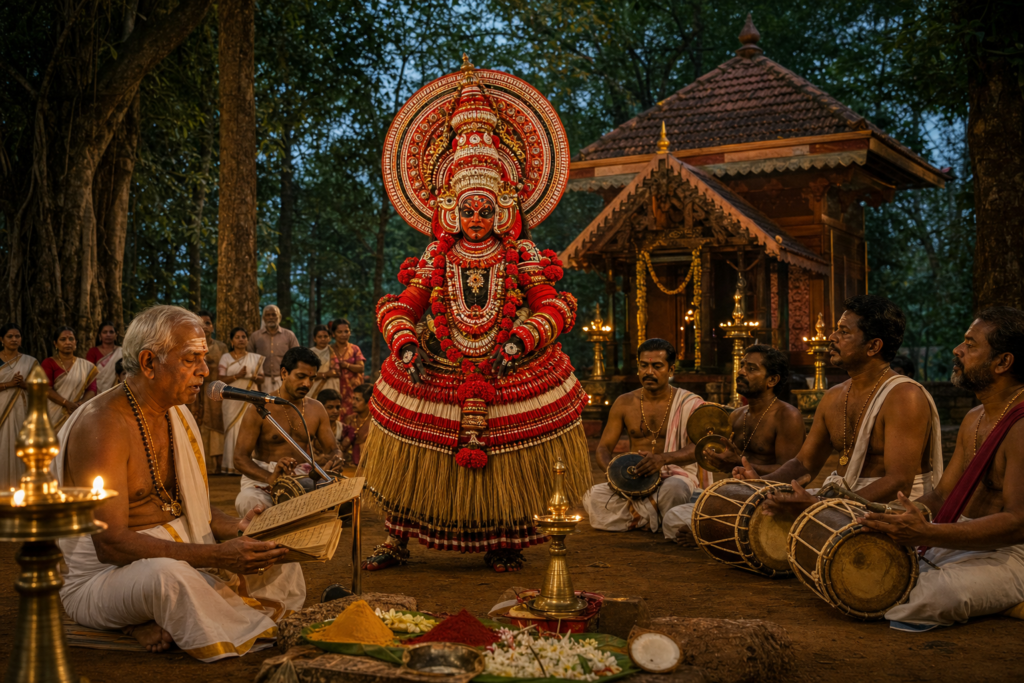
Sri Aurobindo, Indian philosopher, yogi, and spiritual leader, articulates yajna as both outer rite and inner sacrifice, affirming the primacy of inner worship over external ritual when the aim is lasting transformation of consciousness. Developed across The Secret of the Veda, Essays on the Gita, and The Synthesis of Yoga, this vision reframes sacrifice as a disciplined offering of the whole being to the Divine, not merely a ceremonial performance.
In Vedic philosophy, yajna originates from the root yaj, to worship or to offer, and evolves from material oblations to a psychological and spiritual process. Sri Aurobindo shows how the gods represent operative powers of the One Consciousness and how Agni, the sacred fire, signifies the will-force that carries offerings upward. External worship can therefore educate the senses and the mind, but inner yajna converts that education into realized insight.
Distinguishing bahir-yajna and antar-yajna clarifies the trajectory from the gross to the subtle, from sthula to sukshma. External worship organizes life, time, and attention around sacred forms; inner worship reorders the inner instrument, the antahkarana of manas, buddhi, ahamkara, and chitta. When the locus of sacrifice shifts inward, the offering becomes desire, fear, pride, and ignorance themselves, placed into the fire of awareness for purification.
Read alongside the Bhagavad Gita, this teaching demonstrates why rituals done in a spirit of karma yoga prepare the field, while the sacrifice of knowledge, will, and love realizes the goal. The Gita enumerates many forms of sacrifice, including oblations of breath, senses, and works; Sri Aurobindo integrates these into a single movement in which consecration, knowledge, and devotion converge.
Inner worship operates across the five sheaths outlined in Pancha Kosha Viveka. At the level of the annamaya kosha it fosters simplicity and steadiness; in the pranamaya kosha it refines prana through mindful breathing and prana-yajna; within the manomaya and vijnanamaya koshas it clarifies thought and discriminative intelligence; and in the anandamaya kosha it opens to abiding peace and bliss. This graduated inward movement is the engine of chitta-shuddhi, the purification of the mind-stuff.
Agni, reinterpreted inwardly, is the concentrated will to truth and transformation. Offering anger, craving, and inertia into this inner Agni is tapas, a heat that dissolves rajasic and tamasic habit-energies so that sattva, clarity and harmony, can predominate. In this sense, antaryajna is continuous, occurring in the midst of speech, relationship, and work, not only during explicitly religious observances.
External worship remains valuable as scaffolding. Sound, symbol, mantra, image, and gesture entrain attention and cultivate ekagrata, one-pointedness. When performed as ishvara-pranidhana, self-offering to the Divine, the same acts cease to be mechanical and become channels for grace, gradually removing the sense of doership and fruit-seeking that binds action.
A practical synthesis aligns methods from Karma Yoga, Bhakti, Jnana, and Raja Yoga. Works are consecrated at the day’s start; the heart is turned Godward through remembrance and mantra-japa; the intellect studies and contemplates dharma and the Upanishadic and Gita vision; and the mind is steadied through pratyahara, dharana, and dhyana. This integral sequencing, central to Sri Aurobindo’s yoga, turns every domain of life into a living altar.
Breath practices can be understood as prana-yajna, the measured offering of prana and apana into each other until the currents quieten. Sense-restraint functions as indriya-yajna, where attention is withdrawn from dispersion and returned to awareness itself. Speech is refined in vak-yajna when mantra-japa purifies language and intention, preparing the silence in which the inner flame burns steadily.
Inner worship matures through bhakti as the ishta, the chosen form or ideal, becomes a living presence. Love universalizes as compassion and forbearance, replacing narrow self-reference. In the mode of jnana, the witness consciousness illumines mental movements without appropriation, and knowledge becomes a luminous sacrifice that offers ignorance into discernment.
Ritualism becomes limiting only when it hardens into habit divorced from consciousness. Sri Aurobindo cautions that transactions for merit or worldly reward leave the central knot of ego intact. Yajna, in its authentic sense, is not a bargain but a transformation: the very energies that once sought possession are returned to their source, and action is performed for lokasangraha, the welfare and cohesion of the world.
The progression from sthula to sukshma and onward to karana, the causal, can be tracked experientially. Initially, an individual may rely on lamps, incense, sacred spaces, and pilgrimages. Gradually the emphasis shifts to attentive breathing, steady awareness in the heart, and continuous remembrance, until the inner sanctuary travels with the practitioner into every situation, including study, family life, and civic responsibility.
This inner orientation also supports unity across dharmic traditions. In Buddhism, bhavana and vipassana emphasize direct cultivation of mind; in Jainism, samayik and pratikraman enact inner ethical purification; in Sikhism, simran and Naam Japna center consciousness on the Divine Name. Each path honors antaryajna, demonstrating that inner worship is a shared inheritance that strengthens harmony among Hindu, Buddhist, Jain, and Sikh communities.
Ethically, antaryajna expresses itself as yama and niyama embodied: ahimsa, truthfulness, non-covetousness, purity, and contentment. As inner worship deepens, these are no longer externally imposed rules but spontaneous signatures of sattva. Such character transformation is the social fruit of spiritual practice, reinforcing trust, cooperation, and peace.
A simple template can help translate these principles into daily life. Begin with a short external puja or a moment of reverent silence to establish sankalpa; follow with a measured cycle of pranayama to settle prana; continue with mantra-japa to clarify speech and mind; rest as the witness in the heart-center; and finally consecrate the day’s work as karma offered without claim. Over time, the scaffolding can be lightened as the inner flame grows self-luminous.
Markers of progress are practical and observable: more stable attention, quicker recovery from reactivity, transparent motives, ease in forgiveness, and a quiet joy without obvious cause. These signs indicate that chitta-shuddhi is underway and that the altar of worship has shifted from an outer location to the field of everyday consciousness.
By affirming the superiority of inner worship without rejecting the utility of outer forms, Sri Aurobindo provides a rigorous and compassionate framework for Vedic practice in modern life. Inner yajna turns performance into presence, symbol into power, and belief into realized knowledge. In honoring this movement from form to consciousness, dharmic traditions can deepen mutual respect and work together for the welfare of all, fulfilling the ideal of unity in spiritual diversity.
Inspired by this post on Hindu Blog.