A High Court interim injunction has paused Peterborough City Council’s proposed disposal of the New England Complex, the long-standing home of the Bharat Hindu Samaj (BHS) Mandir. On 27 February 2026, Mr Justice Fordham issued temporary relief to maintain the status quo while the court considers the lawfulness of the council’s decision to select the Khadija Mosque (Masjid Khadijah & Islamic Centre) as the preferred purchaser.
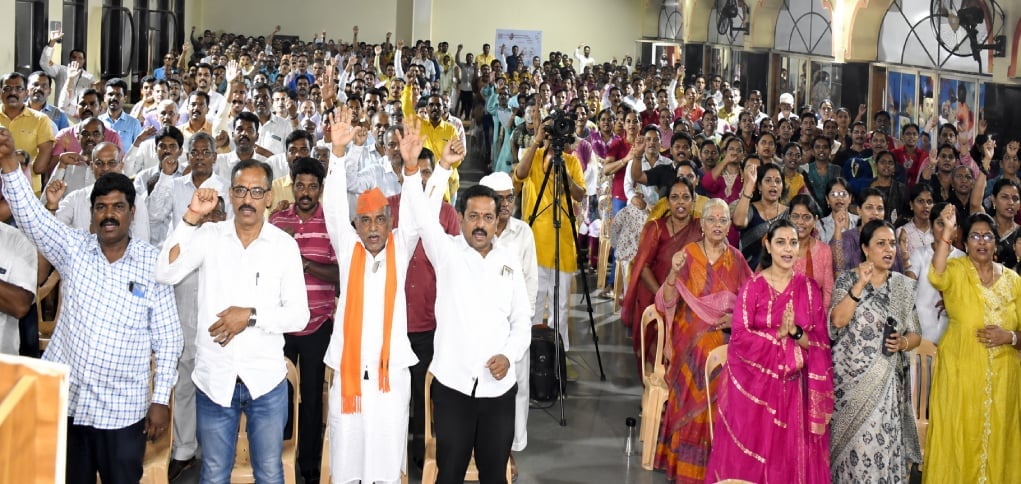
For nearly four decades, the Mandir has served as a spiritual, cultural, and social anchor for Hindus across Peterborough and Cambridgeshire. Established at the site in 1986, BHS reports welcoming more than 17,000 regular worshippers and visitors annually. Weekday programming extends beyond worship to include social and educational offeringssuch as lunch clubs, language and arts classes, and outreach activities that benefit the broader local community.
In late 2025, as part of wider debt-reduction measures, Peterborough City Council resolved to sell the New England Complex following a confidential bidding process. Although the authority initially declined to confirm the buyer’s identity, court documents seen by national media named the Khadija Mosque. The mosque later identified itself publicly as the preferred bidder, and the council stated it would engage fully with the legal process.
Both faith communities have emphasised a constructive tone. Temple representatives noted, “Our fight isn’t with the mosque; our fight is with the council,” and the mosque stated that its focus remains on “acting responsibly, supporting community cohesion, and working constructively with the council and all affected parties.” These positions reflect a shared commitment to interfaith respect, even amid a complex dispute over public asset disposal.
Documented negotiations between BHS and the council took place over several years, including agreed Heads of Terms at various stages. In April 2025, BHS states it was offered an opportunity to purchase the complex for £1.3 million and submitted a bid accordingly. However, in September 2025during Navratrithe council initiated a “best and final offer” process under an evaluation framework weighted 70% financial, 20% social value, and 10% deliverability/future benefit. Such weightings are common in commercial disposals but can be contentious where public bodies dispose of community-serving assets.
Following this process, the Cabinet selected an alternative bidder in December 2025. The decision created the unusual prospect of one faith organisation becoming landlord to another faith tenant at a significant place of worship. While such arrangements are not unprecedented in multi-faith cities, they require careful governance and robust, trust-building safeguards to avoid conflicts of interest and to preserve community access, identity, and dignity.
When the council’s decision was called in for scrutiny, the relevant committee raised several concerns in January 2026. Among them were findings that the Cabinet did not have complete information, that the Equality Impact Assessment (EIA) appeared to be desk-based without direct consultation with the Hindu community, and that the sale should be paused. The committee also advised that the existing tenant should not be displaced before a secure and suitable alternative was identified. In February 2026, the Cabinet reconvened and decided to proceed with the sale, notwithstanding those concerns.
The High Court’s interim injunction is a procedural measure that preserves the position until the legal arguments are set out in writing and the court can determine whether the council’s decision-making process was lawful. In English administrative law, interim relief is guided by the American Cyanamid principles: the court considers whether there is a serious issue to be tried, whether damages would be an adequate remedy if relief were wrongly withheld or granted, and where the balance of convenience lies. The judge’s order indicates that the claim raises arguable points and that irreversible steps should be paused while those points are tested.
Several public law grounds may be engaged. First, the Public Sector Equality Duty (PSED) under section 149 of the Equality Act 2010 requires public authorities to have “due regard” to the need to eliminate discrimination, advance equality of opportunity, and foster good relations between different groups. Courts have clarifiedmost notably in Bracking v Secretary of State for Work and Pensions [2013] EWCA Civ 1345that compliance must be real, evidence-based, and timely, not a tick-box exercise. If consultation with impacted communities was minimal or late, a court may find the PSED was not properly discharged.
Second, the principle of legitimate expectation may arise where public bodies make clear representationsthrough agreed Heads of Terms or similarthat a certain process or outcome will be followed, and communities reasonably rely on those representations to their detriment. This does not guarantee a sale to any given party, but it does require decision-makers to act fairly, to explain departures from prior positions, and to weigh the expectations they have created.
Third, decisions can be challenged for procedural unfairness, failure to take into account relevant considerations (such as documented social value and cultural continuity), taking into account irrelevant considerations, or irrationality. Where disposal frameworks are weighted heavily toward short-term financial return, public bodies must still show they considered social value and equality impacts with sufficient seriousness, particularly for assets that function as community hubs and places of worship.
Relevant policy context includes the Social Value Act 2012, which encourages consideration of broader community benefits in public procurement and related decisions. In the property sphere, some councils deploy community asset transfer (CAT) models or provide long leases at less than market value where there is demonstrable public benefit. While each authority retains discretion, transparent criteria and early engagement with incumbent community tenants often reduce conflict and litigation risk.
If the council’s sale ultimately proceeds to a landlord–tenant arrangement across faiths, good practice would suggest explicit, enforceable safeguards: long-term covenants guaranteeing uninterrupted worship; neutral governance mechanisms for building management; audited community-use agreements; and independent mediation protocols for dispute resolution. Such measures can protect religious autonomy while upholding interfaith harmony and community cohesionprinciples that both the Mandir and the mosque have publicly supported.
The Mandir’s role extends far beyond ritual. It serves as a place where children learn language and culture; where elders find companionship; where families celebrate pivotal life moments and seek comfort in grief; and where health, education, and mental well-being initiatives are offered to the wider public. In policy terms, these are community anchor functions that underpin social capital, resilience, and inclusiondifficult to replicate quickly if substantial displacement occurs.
This case also speaks to a broader, pan-diaspora concern shared across dharmic traditionsHindu, Buddhist, Jain, and Sikhregarding the security and continuity of community spaces that nurture identity, service (seva), and intergenerational transmission of heritage. Ensuring fairness in public decisions about such spaces is not a zero-sum exercise; when handled well, it strengthens interfaith understanding and civic trust for everyone.
Constructive pathways remain available irrespective of the litigation’s outcome. These include renewed good-faith negotiations; transparent publication of evaluation data and equalities assessments; co-designed mitigation plans to prevent displacement; and time-bound transition arrangements if a change of ownership proceeds. Each step can be aligned with the council’s fiscal responsibilities while giving proper weight to equality, social value, and cohesion.
A concise chronology synthesises the sequence: since 1986, BHS has occupied the New England Complex; in April 2025, BHS states it agreed to purchase the site for £1.3 million; in September 2025, the council launched a final tender with a 70/20/10 evaluation model; in December 2025, the Cabinet selected another bidder; in January 2026, a Scrutiny Committee recommended a pause and stronger equalities due diligence; in February 2026, the Cabinet reaffirmed the sale; and on 27 February 2026, the High Court granted an interim injunction pending further argument.
Independent reporting by major outlets has documented these developments and the perspectives of all parties, including the council’s commitment to engage with the legal process and the mosque’s stated priority of community cohesion. Public attention at this stage is rightly focused on the court’s examination of process, transparency, and equalities compliance rather than on any contest between faith communities.
Next procedural steps will include the exchange of formal pleadings and evidence, after which the court may set a timetable for a substantive hearing. Outcomes could include upholding the decision, quashing and remitting it for reconsideration, or encouraging a mediated resolution supported by enhanced safeguards and documented social value commitments.
Whatever the legal conclusion, the core policy lesson is constant: decisions about community-serving religious assets must be procedurally rigorous, equality-led, and socially literate. When public authorities engage early and deeply with affected communities, they safeguard dignity, reduce litigation risk, and advance the shared goals of fairness, non-marginalisation, and community cohesion.
In that spirit, this matter should be understood not as a contest between neighbours of different faiths, but as an opportunity to demonstrate best-in-class governance in a proudly diverse city. Upholding lawful process and transparent, equality-informed decision-making ultimately benefits everyoneHindus, Muslims, Buddhists, Jains, Sikhs, and the wider public who rely on strong civic institutions and harmonious interfaith relations.
Inspired by this post on Hindu Human Rights Blog.