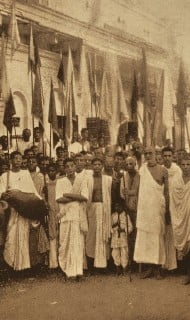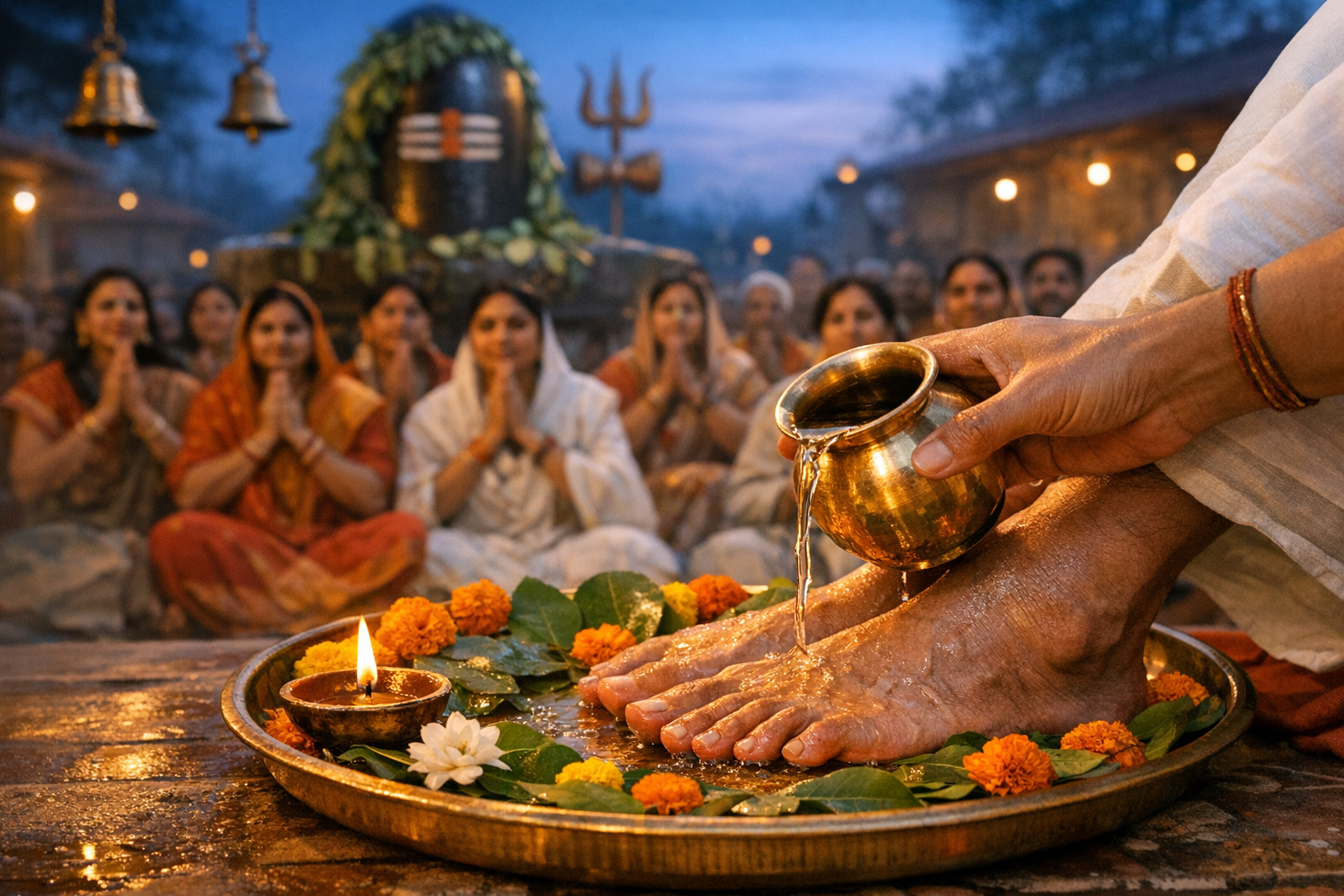
On the auspicious night of Mahashivratri, 272 individuals who had previously converted from Hinduism formally reaffirmed their spiritual alignment with the Hindu way of life at the Bargarh Dham complex in Kharsia, Raigarh district, Chhattisgarh. In a gesture of humility and welcome deeply rooted in Indic ritual etiquette, Prabal Pratap Singh Judev, Akhil Bharatiya Ghar Wapsi Pramukh, washed the feet of the participants, signaling respect, reconciliation, and reintegration into community life.
Mahashivratri—widely observed across India as a night of tapas (austerity), dhyana (contemplation), and bhakti (devotion) to Lord Shiva—often becomes a fulcrum for personal vows and communal renewal. While the festival is primarily a Hindu observance, its underlying values of self-discipline, compassion, and service resonate across the broader Dharmic traditions of Hinduism, Buddhism, Jainism, and Sikhism, which collectively emphasize ethical conduct, non-harm, and community seva. In this sense, the timing of the ceremony added layers of meaning to the participants’ public reaffirmation of faith.
The ritual form of the gathering aligned with long-standing Indic practices that emphasize hospitality and humility. Washing the feet of guests or returning community members (a practice often described in the idiom of pada-puja or charan-seva) embodies the principle of atithi devo bhava, honoring dignity while dissolving hierarchical distance. The ceremony at Bargarh Dham thus framed ghar wapsi as a rite of respectful welcome rather than an assertion of triumphalism, foregrounding personal agency and community embrace.
From a ritual studies perspective, events of this kind serve as rites of reintegration: a structured passage back into a shared symbolic world anchored in samskara (life-cycle ceremonies), mantra, and dharmic ethics. The public, collective setting fosters communitas—a momentary sense of equality and belonging—while the tactile symbolism of feet-washing dissolves boundaries between organizers and participants. Such ritual grammars reinforce the idea that religious belonging is sustained as much by lived practice and shared memory as by doctrine.
Anthropologically, ghar wapsi can be read as a process of identity maintenance through cultural continuity. Many Hindu households preserve intergenerational patterns of worship—fasting on Mahashivratri, offering bilva leaves, undertaking night-long japa and darshan—that cultivate a felt sense of sacred time and moral orientation. In this light, participants’ return functions less as a discrete event and more as a resumption of familiar rhythms, ethics, and rituals transmitted through family, neighborhood, and temple networks.
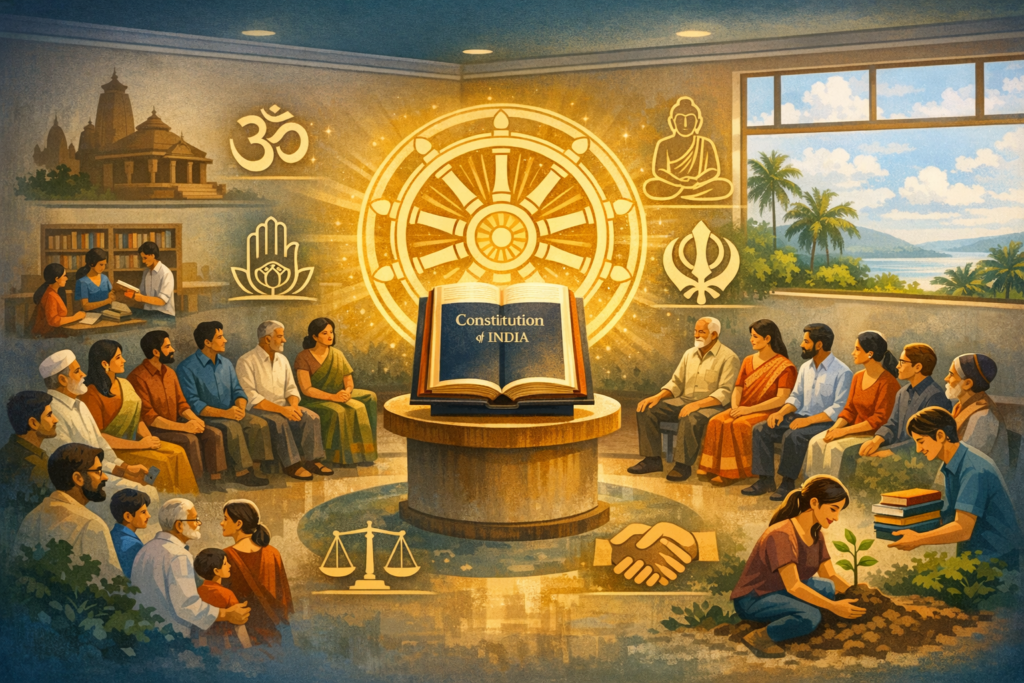
Equally important is the constitutional and ethical context. India’s Constitution guarantees freedom of conscience and the right to freely profess, practice, and propagate religion. Within that framework, any change in religious affiliation—whether conversion or reconversion—must be strictly voluntary, informed, and free of coercion or material inducement. State-level regulations in several parts of India set out procedural safeguards; adherence to such norms protects both individual agency and communal harmony. Framed in this manner, the ceremony in Raigarh sits within a constitutional ethic that centers consent and dignity.
Participants in similar reaffirmation ceremonies often describe a sense of homecoming—an affective blend of relief, continuity, and renewed purpose. The shared liturgy of stotra, yajna or abhisheka where applicable, distribution of prasad, and the reaffirmation of vrata can evoke formative memories of family worship and temple festivals. Even for those who do not undertake extensive ritual observance, the social texture of Hindu festivals—langar-like community meals, collective seva, and intergenerational participation—offers a readily legible path back to community life anchored in dharma.
In a broader Dharmic frame, the values celebrated during Mahashivratri—self-restraint, inner clarity, and compassionate action—align with Jain ahimsa and aparigraha, Buddhist karuna and mindfulness, and Sikh seva and humility. While liturgical forms differ across these traditions, the ethical aspirations converge. Reframing events like this within a Dharmic vocabulary of mutual respect helps reinforce the shared civilizational tapestry of the subcontinent and advances the imperative of unity in religious diversity.
The regional context matters as well. Chhattisgarh’s temple landscapes and vibrant folk traditions have long served as custodians of cultural memory. Venues such as the Bargarh Dham complex in Kharsia act as nodal points for congregational life—sites where ritual, pedagogy, and social support intersect. When ceremonies of reaffirmation occur in such spaces, they naturally tap into existing networks of trust and shared service, from community kitchens to youth outreach and cultural education.
A responsible praxis for organizing reaffirmation events includes several best practices: foregrounding individual consent; ensuring transparent communication about the meaning and implications of the rite; avoiding disparagement of other faiths; and collaborating with civil authorities where procedures require notification or documentation. Building post-ceremony support—study circles, counseling access, vocational help, and volunteer opportunities—sustains the ethical arc from ritual moment to everyday life.
Social cohesion is strengthened when reaffirmation is paired with tangible community-building. Initiatives such as health camps, educational mentoring, women’s self-help groups, and skills development embody dharma in action. The Dharmic traditions converge here: Sikh langar exemplifies service, Buddhist sangha underscores collective care, Jain vows model ethical economy, and Hindu seva organizes volunteer energy—together sketching a non-sectarian pathway to shared welfare.
Narratives around conversion and reconversion often attract polarized commentary. A measured, fact-focused approach—attentive to constitutional rights, local legal frameworks, and individual autonomy—helps maintain civility in public discourse. When ceremonies are framed as freely chosen affirmations of identity rather than as zero-sum contests, they become occasions for strengthening the wider fabric of Indian pluralism, not straining it.
Viewed through this integrative lens, the Mahashivratri ceremony in Raigarh communicates a simple but powerful message: spiritual belonging is ultimately sustained by personal conviction, ethical conduct, and community care. The act of feet-washing performed by Prabal Pratap Singh Judev exemplified a classical ethic of humility; the collective setting offered participants a dignified corridor back to familiar rites and values. Together, these elements advanced the broader civilizational goal of unity across Dharmic traditions while honoring India’s constitutional commitment to freedom of belief.
Inspired by this post on Hindu Jagruti Samiti.