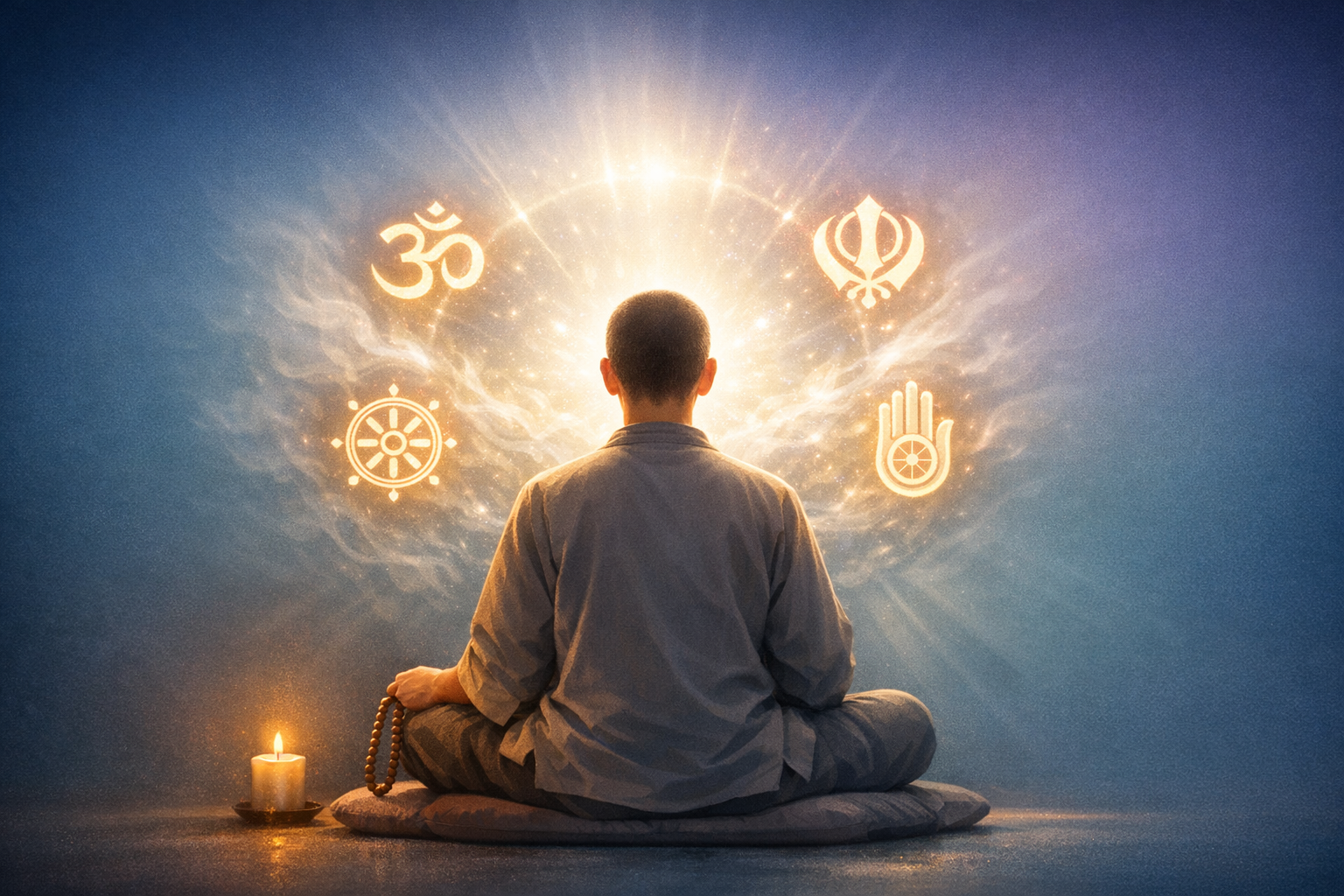
Meditation is a core discipline in Hindu philosophy (Sanatana Dharma) and across the wider dharmic family—Buddhism, Jainism, and Sikhism—yet many practitioners encounter the same inner battles: restlessness, distracting thoughts, emotional agitation, doubt, and a subtle resistance to sitting. This analysis integrates Hindu-Yogic sources with allied dharmic insights and contemporary mind–body findings to present a rigorous and compassionate roadmap for overcoming those obstacles and stabilizing dhyana for inner peace and Self-realization.
Patanjali’s Yoga Sutras set the benchmark for the meditative path by defining yoga as citta-vritti-nirodhah—stilling the fluctuations of the mind. That ideal is realized not through force but through systematic training that refines attention, calms the nervous system, and purifies samskaras (habit-imprints). The Bhagavad Gita affirms the challenge—“chanchalam hi manah” (the mind is restless)—and prescribes steady abhyasa (practice) and vairagya (non-attachment) as the foundational antidotes to mental turbulence.
Patanjali also catalogs the classic obstacles (antaraya) that derail practice: vyadhi (illness), styana (inertia), samsaya (doubt), pramada (heedlessness), alasya (laziness), avirati (overindulgence of the senses), bhranti-darsana (misperception), alabdha-bhumikatva (inability to sustain a stage), and anavasthitatva (instability). These manifest as vikshepa (distraction), often accompanied by duhkha (suffering), daurmanasya (despondency), anga-mejayatva (bodily tremors or restlessness), and svasaprasvasa (dysregulated breathing). Naming them precisely helps target the remedy.
Hindu psychology offers a precise map of the inner instrument (antahkarana): manas (sensory-mind), buddhi (discrimination), ahamkara (I-sense), and chitta (storehouse of memory-samskara). These faculties are modulated by the three gunas—sattva (clarity), rajas (agitation), and tamas (inertia)—and animated by prana (vital energy) flowing in nadis. When rajas rises, attention scatters; when tamas dominates, dullness and resistance prevail; when sattva strengthens, attention, compassion, and insight stabilize.
The kleshas—avidya (misapprehension), asmita (ego-identification), raga (craving), dvesha (aversion), and abhinivesha (clinging)—propel the mind toward conflict. Friction appears both on the cushion (inability to sustain focus, emotional surge) and off the cushion (reactivity in relationships and work). A technical meditation approach therefore pairs attentional training with ethical alignment, breath regulation, and lifestyle cultivation to reduce rajasic–tamasic load and make sattva the default.
Parallel frameworks across dharmic traditions corroborate this map. Buddhism identifies five hindrances—kāmacchanda (sensual desire), vyāpāda (ill will), thīna-middha (sloth–torpor), uddhacca-kukkucca (restlessness–worry), and vicikicchā (doubt)—which echo Patanjali’s antaraya. Jainism locates disturbance in the operation of ghātiyā karmas and prescribes samayik (equanimity practice) and the 12 bhavana (reflections) to pacify them. Sikhism describes the five “thieves”—kāam, krodh, lobh, moh, ahankār—and prescribes simran (Naam japa) and seva to transform them. The convergence underscores a unifying dharmic science of mind.
A brief pre-meditation diagnostic sharpens intervention. Indicators include: sleep debt, stimulants, unprocessed emotions, digital overstimulation, posture discomfort, and irregular breathing. Simple self-assessment questions—“Is the body restless or dull?”, “Is the breath shallow or jerky?”, “What emotion is predominant?”, “What narrative loops are active?”—allow tailoring of technique. Journaling two lines before and after practice clarifies patterns and tracks progress in a data-informed way.
Abhyasa and vairagya form the first principle. Abhyasa is steady, long-duration, unbroken practice (nairantarya) performed with earnestness; vairagya is gentle non-clinging to outcomes, sensations, or insights. Together they retrain attention, normalize boredom, and convert short-term friction into long-term ease. In contemporary terms, abhyasa leverages neuroplasticity; vairagya prevents overinvestment in transient states that destabilize the nervous system and inflate the ego.
Implementation of abhyasa–vairagya favors small, consistent sessions over heroic but sporadic efforts. For example: two daily sits of 12–20 minutes, a defined anchor (breath awareness at the nostrils or a chosen mantra), one gentle redirect per distraction, and a one-sentence reflection. Every sit begins with intention (sankalpa) and ends with gratitude (santosha). This design improves adherence, reduces avoidance, and keeps the arc of practice sustainable.
Devotional orientation (Isvara-pranidhana) powerfully dissolves resistance. In a Hindu context, japa of “Om,” “Rama,” or “Om Namah Shivaya” settles attention; in Sikh practice, simran—repetition of “Waheguru”—serves a parallel role; in Jainism, Navakar Mantra recitation attunes the mind to equanimity; in Buddhism, refuges and metta phrases cultivate warmth. Bhakti quiets ahamkara and transforms effort into offering, which often resolves agitation faster than striving alone.
Ethical groundwork—yama and niyama—reduces rajasic and tamasic turbulence at the source. Ahimsa (non-harm), satya (truthfulness), asteya (non-stealing), brahmacharya (wise energy management), and aparigraha (non-hoarding) simplify life and blunt craving–aversion cycles. Saucha (purity), santosha (contentment), tapas (discipline), svadhyaya (self-study), and Isvara-pranidhana (devotion) stabilize identity and purpose. The Bhagavad Gita’s counsel for moderation (VI.16–17) supports this: balanced food, sleep, recreation, and effort protect the meditative mind.
Breath awareness and pranayama regulate arousal and focus. Slow, even breathing (sama-vritti) around five to six cycles per minute entrains the vagus nerve, calms the heart–mind, and increases attentional dwell time. Nadi shodhana (alternate-nostril breathing) balances hemispheric activity and prana flow; a gentle 1:1 ratio is appropriate for most, with cautious progression. Avoid aggressive techniques when anxious or sleep-deprived, and discontinue any method that produces dizziness or strain.
Posture and somatic stability are non-negotiable. “Sthira-sukham asanam” implies a seat that is both steady and easeful. A straight but relaxed spine, neutral pelvis, released jaw, and unforced gaze reduce muscular micromovements that propagate mental agitation. A 60–90 second body scan and a brief kaya-sthairyam (body stillness) exercise at the start of practice prevent fidgeting and free cognitive bandwidth for dharana (one-pointed attention).
Pratyahara—skillful withdrawal of the senses—protects attention from unnecessary stimuli. Preparatory steps include minimizing notifications, lowering light and noise, and closing the eyes after a softening of the facial muscles. Trataka (steady candle-gaze) can serve as a transitional practice for visually dominant minds. Over time, pratyahara matures into an inward orientation where sounds and sensations are noticed without capture, restoring sovereignty to buddhi.
Dharana and attentional training benefit from clarity about the object. Classic anchors include the breath at the nostrils, the rise–fall at the abdomen, a sacred mantra (japa), or the space between thoughts. Focused-attention practice strengthens stability; open-monitoring develops clarity and equanimity. Anapanasati in Buddhism and breath-centered dhyana in Yoga cultivate the same faculties with different emphases; alternating them judiciously can be skillful once foundational steadiness is present.
Handling thought-storms requires precision. Instead of suppression, label the category (“planning,” “remembering,” “worry,” “judging”), note the associated body felt-sense, and return to the anchor. Sakshi-bhava (witness-awareness) and the neti-neti (not this, not this) reminder prevent identification with passing content. If a thought repeatedly recurs, jot it post-session; the brain relaxes when it trusts that important items will be handled outside the sit.
Stabilizing the heart–mind addresses agitation at its emotional root. Patanjali (I.33) prescribes maitri (friendliness), karuna (compassion), mudita (appreciative joy), and upeksha (equanimity) as direct antidotes to reactivity. In Buddhism, metta and karuna bhavana cultivate similar sentiments; Jain 12 bhavana restore perspective and humility; Sikh chardi kala nurtures resilient optimism. These practices convert emotional heat into warmth and steadiness, elevating sattva.
Doubt (samsaya) and resistance yield to a blend of shraddha (confidence born of reason and experience), virya (energy), smrti (mindfulness), samadhi (stability), and prajna (insight) described in Yoga Sutra I.20. Seeking guidance within a Guru–Shishya framework or a knowledgeable community (sangha) corrects blind spots and prevents unhelpful technique-switching. Minimalism in method and maximalism in consistency is often decisive.
Targeted remedies map cleanly onto specific obstacles. For vyadhi, prioritize rest, medical care, and very gentle breath-led sits; for styana and alasya, use short, upright sessions and light energizing pranayama; for samsaya, study the Bhagavad Gita and Yoga Sutras alongside experiential verification; for avirati, reduce sensory load and emphasize pratyahara; for bhranti-darsana, consult a teacher and favor plain breath awareness; for alabdha-bhumikatva and anavasthitatva, shorten sessions, lower efforting, and increase frequency; for pramada, restore pre-session rituals to prime attention.
Lifestyle foundations carry disproportionate weight. Follow Gita VI.16–17: consistent sleep, moderate sattvic diet, regular movement, limited stimulants, and scheduled digital quiet. Attend to circadian cues (morning light, evening dimness) to improve melatonin and sleep pressure. Resolve interpersonal tensions when possible; yama–niyama compliance lightens karmic load and reduces mental noise. Many cases of “meditation difficulty” resolve when the day is made simpler and kinder.
Safety and nuance matter. If severe anxiety, depression, panic, or trauma symptoms arise, reduce intensity, shorten sits, emphasize grounding exhalations, and consider qualified clinical support. Meditation and therapy are compatible; yogic ethics and breath awareness integrate well with evidence-based care. The dharmic ideal is compassionately realist: proceed steadily, avoid coercion, and measure progress by reduced suffering and increased clarity.
A reproducible session protocol helps practitioners of all levels: 1) Prepare the space (silence devices, adjust light). 2) Sit with a stable base and soft shoulders. 3) Take three slow breaths emphasizing extended exhale. 4) State a simple intention. 5) Scan the body for 60–90 seconds. 6) Settle on one anchor (breath or mantra). 7) Notice distractions without commentary; gently return. 8) If agitation rises, soften the belly and lengthen the exhale. 9) If dullness appears, brighten posture and slightly deepen inhalation. 10) Conclude with maitri or gratitude. 11) Write one observation. 12) Carry one cue into daily life (e.g., two mindful breaths before calls).
A relatable case illustrates the method. A working parent reported persistent restlessness and intrusive planning during evening sits. Shifting practice to early morning, reducing afternoon caffeine, adding five minutes of nadi shodhana before meditation, and ending with two minutes of metta reduced agitation within ten days. Keeping a notepad outside the practice space for post-sit planning eliminated the compulsion to think through tasks during dhyana.
Measuring progress pragmatically replaces perfectionism with precision. Useful markers include: faster recovery after distraction, reduced emotional reactivity off the cushion, improved sleep quality, fewer compulsive device checks, and easier return to the breath or mantra. Weekly journaling of session length, perceived stability (0–10), and dominant hindrance creates a personal dataset that makes invisible gains visible and strengthens shraddha.
Frequent mistakes and corrective cues are well known. Over-efforting creates strain; soften the chest and be 5% less intense. Chasing experiences destabilizes; return to plain breath awareness. Mixing techniques prematurely fragments attention; stay with one core method for a cycle of 40 days. Ignoring posture invites fidgeting; reestablish kaya-sthairyam for one minute. Skipping yama–niyama keeps rajas–tamas high; re-anchor in honesty, kindness, and simplicity.
Taking meditation off the cushion completes the training. Short pauses before difficult emails, mindful walking between rooms, one compassionate response where irritation would arise, and periodic japa in transit turn ordinary life into continuous pratyahara and dharana. Karma yoga—serving without claim to the fruits—unburdens the mind and aligns daily conduct with the meditative aim of inner freedom.
One river, many streams: Hinduism, Buddhism, Jainism, and Sikhism converge on practical means to pacify the mind—ethical clarity, breath awareness, mantra or simran, compassion training, equanimity, and steady community-supported practice. Respecting diverse forms while recognizing a shared science of mind strengthens inter-dharmic unity and provides practitioners with a flexible, robust toolkit to meet their unique inner terrain.
In sum, inner battles during meditation are not signs of failure but invitations to precision. With abhyasa and vairagya, pratyahara and pranayama, yama–niyama and bhakti, and the supportive reflections of allied dharmic traditions, restlessness subsides, distracting thoughts lose their grip, emotions soften, doubt clears, and resistance transforms into readiness. The result is a steady, compassionate, and lucid mind—fit for dhyana and the realization of the Self.
Inspired by this post on Hindu Blog.