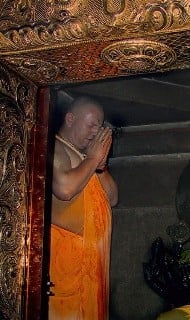
Within the Ramayana tradition, Lakshmana is revered as “INDRAJIT SAMHARA MOORTHY”—the one who slew Indrajit (Meghanada), the formidable son of Ravana. This epithet captures a decisive moment in the Lanka war, when resolve, strategy, and devotion converged to uphold dharma against a seemingly invincible adversary.
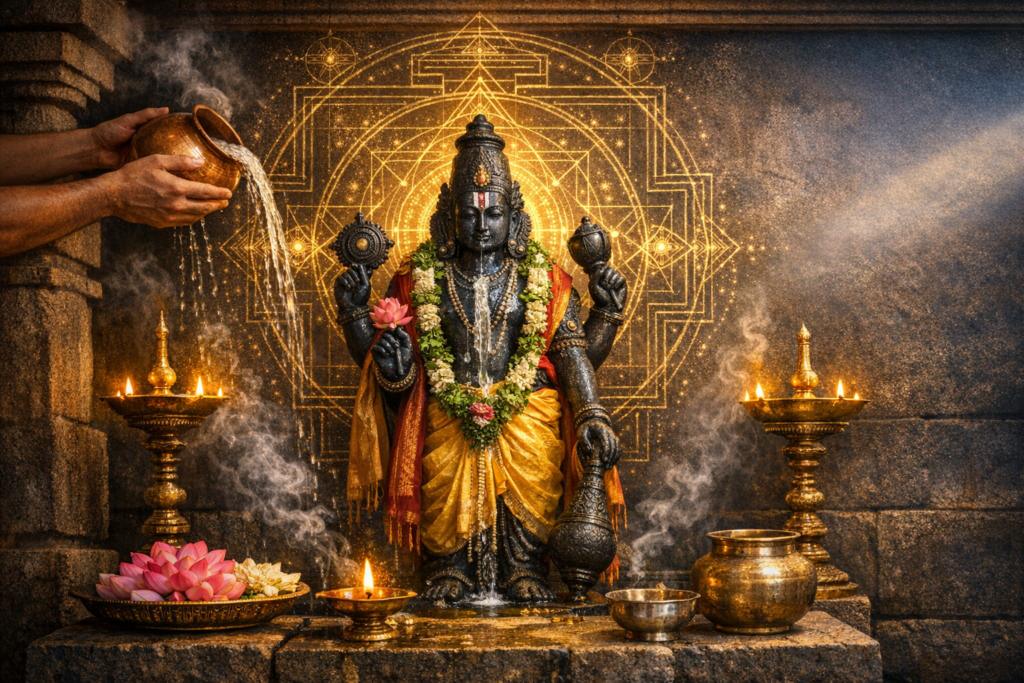
Indrajit, renowned for mastery over astras and maya, sought invincibility through a sacred yajna (yagna) at Nikumbila, invoking the grace of the holy mother, Ma NIKUMBILA. Guided by Vibhishana’s counsel and supported by Hanuman, Lakshmana reached the ritual ground at the critical hour, disrupted the rite before its completion, and then engaged Indrajit in open combat. In that Dharma-Yuddha, Lakshmana’s discipline and valor prevailed, and Meghanada fell on the battlefield.
The episode is often framed as an ethical turning point in the war. Intervening in the Nikumbila yajna did not express disregard for sacred worship; rather, it prevented the acquisition of a destructive boon that would have prolonged adharma and untold suffering. In this sense, the act aligns with the Ramayana’s moral architecture, where right intention, proportionate action, and protection of life are paramount.
Lakshmana’s role here illustrates key virtues celebrated across Indian epics: unswerving seva to Sri Rama, strategic clarity under duress, and steadfast courage. The coordinated effort—Vibhishana’s insight, Hanuman’s strength, and Lakshmana’s precision—demonstrates that even the most daunting trials in the Ramayana are met through wise counsel, teamwork, and righteous resolve.
For many readers and devotees, this story offers both emotional resonance and practical insight. The figure of “INDRAJIT SAMHARA MOORTHY” becomes a symbol of inner strength: the capacity to interrupt harmful patterns at their source and to choose the path of dharma when expedience tempts otherwise. Such reflections make the narrative relatable, whether one approaches it as scripture, cultural heritage, or a guide to ethical living.
Seen through the shared values of Hinduism, Buddhism, Jainism, and Sikhism—courage grounded in compassion, disciplined mind, and selfless service—the slaying of Meghanada offers a unifying lesson. It affirms that true victory arises not merely from force but from right intention and moral clarity that safeguard the common good.
As a touchstone of cultural memory, the episode is remembered in temple traditions, recitations, and community discourse on the Ramayana. Invoking Lakshmana as “INDRAJIT SAMHARA MOORTHY” honors both the historical-poetic moment and its enduring message: uphold righteousness, act with integrity, and stand together in the face of adversity.
In sum, Lakshmana’s triumph at Nikumbila—his defeat of Indrajit (Meghanada) under the gaze of Ma NIKUMBILA—continues to inspire. It invites a disciplined, compassionate approach to conflict, encouraging unity across dharmic paths and reminding that the light of dharma endures when courage, wisdom, and devotion move in harmony.
Inspired by this post on Hindu Pad.