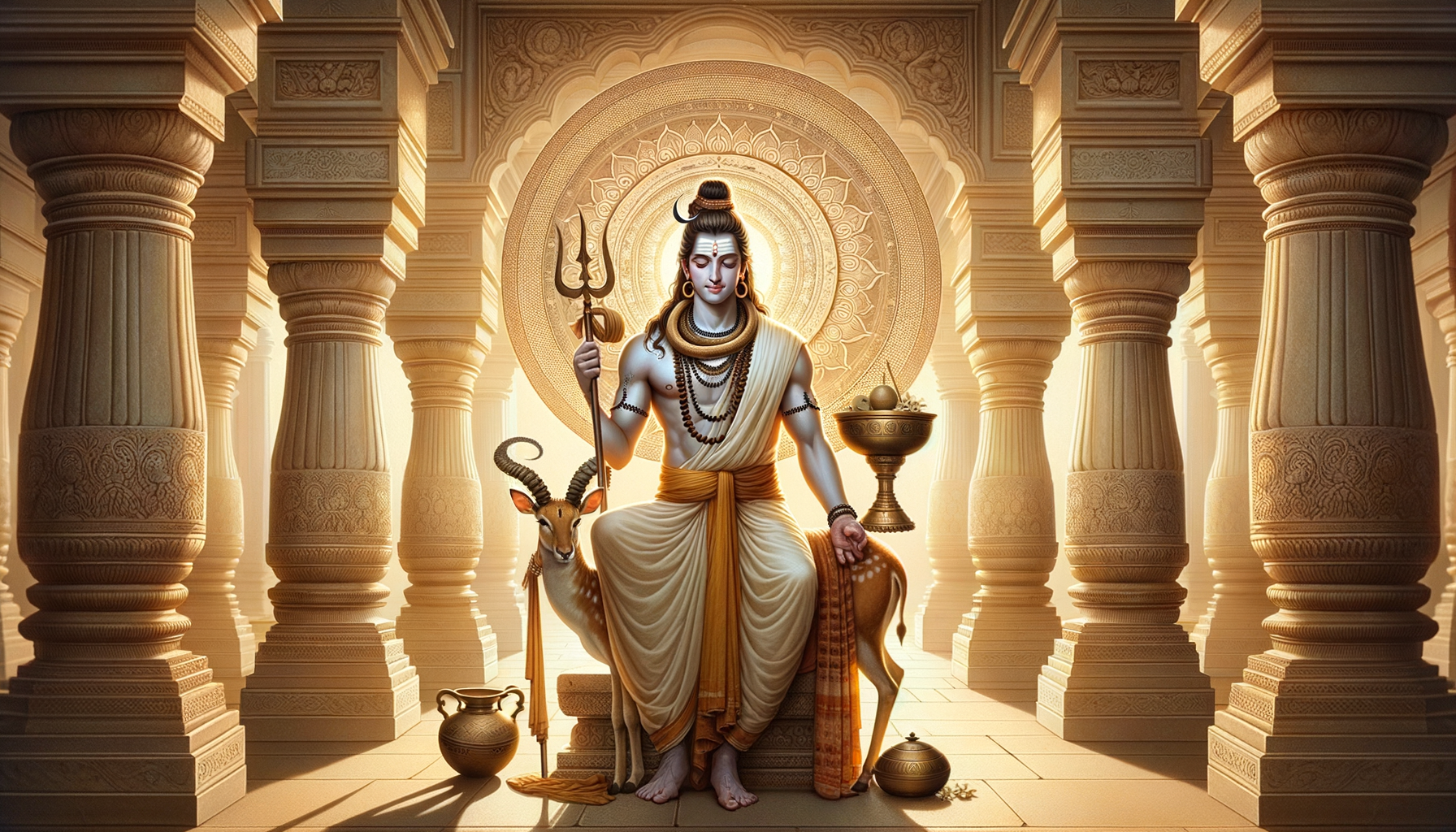
Bhikshatanamurti, the Bhikshatana murti of Lord Shiva, signifies the Supreme Mendicant and embodies an ascetic ideal that transcends the literal sense of “beggar.” In this form, Shiva is understood as the compassionate wanderer who receives alms not out of need but to teach aparigraha (non-possession), humility, and the sanctity of giving. The concept holds a revered place in Shaivism and Hindu iconography, presenting a potent meditation on detachment and service to all beings.
The term “mendicant” in this context points to the spiritual discipline of the ascetic—one who consciously renounces accumulation and ego. Bhikshatanamurti represents Shiva’s movement through the world as a benevolent presence, dissolving pride, offering grace, and reminding communities that true wealth rests in compassion, not in possessions. The form is often invoked to reflect on how the giver and the receiver are spiritually equal, each sanctifying the other through the act of dana (generosity).
Traditional narratives across regions present Bhikshatanamurti with subtle variations while preserving a shared essence. Many accounts describe Shiva wandering from place to place as an austere yet gracious figure, turning everyday encounters into spiritual instruction. Some Puranic and regional tellings link this form to acts of penance and to the humbling of arrogance among sages, thereby emphasizing that divine purpose is fulfilled through compassion and the quiet dismantling of ego. These stories reinforce the insight that ascetic grace can be both challenging and deeply healing for those who encounter it.
Iconographically, Bhikshatanamurti is widely depicted in South Indian art, notably in Chola bronzes, as a youthful and radiant ascetic. He is often shown carrying a begging bowl (kapala) and a staff, and in some representations an antelope (mriga) or a damaru. Bare feet symbolize groundedness and nearness to all beings, while minimal adornment signifies cultivated simplicity. Each attribute carries layered meaning: the bowl invites reflection on receiving as a form of grace; the staff embodies spiritual discipline; and the ascetic bearing communicates inner freedom beyond material attachment. Such imagery anchors the form within the broader vocabulary of Hindu iconography while conveying universal lessons in humility.
Philosophically, Bhikshatanamurti highlights aparigraha and vairagya (dispassion) as living principles. By accepting alms, Shiva reframes charity as sacred exchange rather than one-sided benevolence. In this view, the so-called “giver” learns humility and shared humanity, and the “receiver” blesses the act by transforming it into worship. This insight encourages communities to see everyday gestures—offering food, time, attention, or protection—as pathways to spiritual refinement.
In lived practice, devotees often relate to Bhikshatanamurti through dana, annadana, and seva, finding that small acts of service cultivate interior stillness and compassion. The form gently invites reflection on personal habits of consumption, inspiring simplicity and ethical stewardship. Many attest that contemplating Shiva as the Supreme Mendicant turns routine giving into an intentional ritual, where gratitude and humility reshape the heart.
The mendicant ideal also resonates across dharmic traditions. The Buddhist ideal of the bhikshu, the Jain discipline of the muni, and the Sikh ethos of seva and langar all honor compassion, simplicity, and care for the community. Read in this light, Bhikshatanamurti becomes a bridge of understanding among Hinduism, Buddhism, Jainism, and Sikhism—affirming unity in spiritual diversity and a shared commitment to dignity, non-possessiveness, and service. Such harmony strengthens the broader dharmic family, nurturing mutual respect and common purpose.
Contemporary relevance is clear: in an age of excess, Bhikshatanamurti offers a contemplative counterpoint grounded in minimalism, ethical consumption, and mindful generosity. This form encourages choosing sufficiency over accumulation, reverence over entitlement, and community well-being over isolated gain. By integrating these values into daily life—through mindful giving, equitable sharing, and ecological responsibility—individuals and communities align with the enduring wisdom of Shaivism while honoring the wider dharmic emphasis on compassion.
Ultimately, the Bhikshatana murti of Shiva presents a profound spiritual lens: wandering yet centered, minimal yet overflowing with grace, humble yet transformative. It invites sustained contemplation that refines character, strengthens inter-dharmic unity, and deepens devotion. In recognizing Bhikshatanamurti as the Supreme Mendicant, seekers find not deprivation but an abundant path—one that dignifies giving and receiving, and one that turns every encounter into an occasion for wisdom, empathy, and peace.
Inspired by this post on Hindu Pad.