
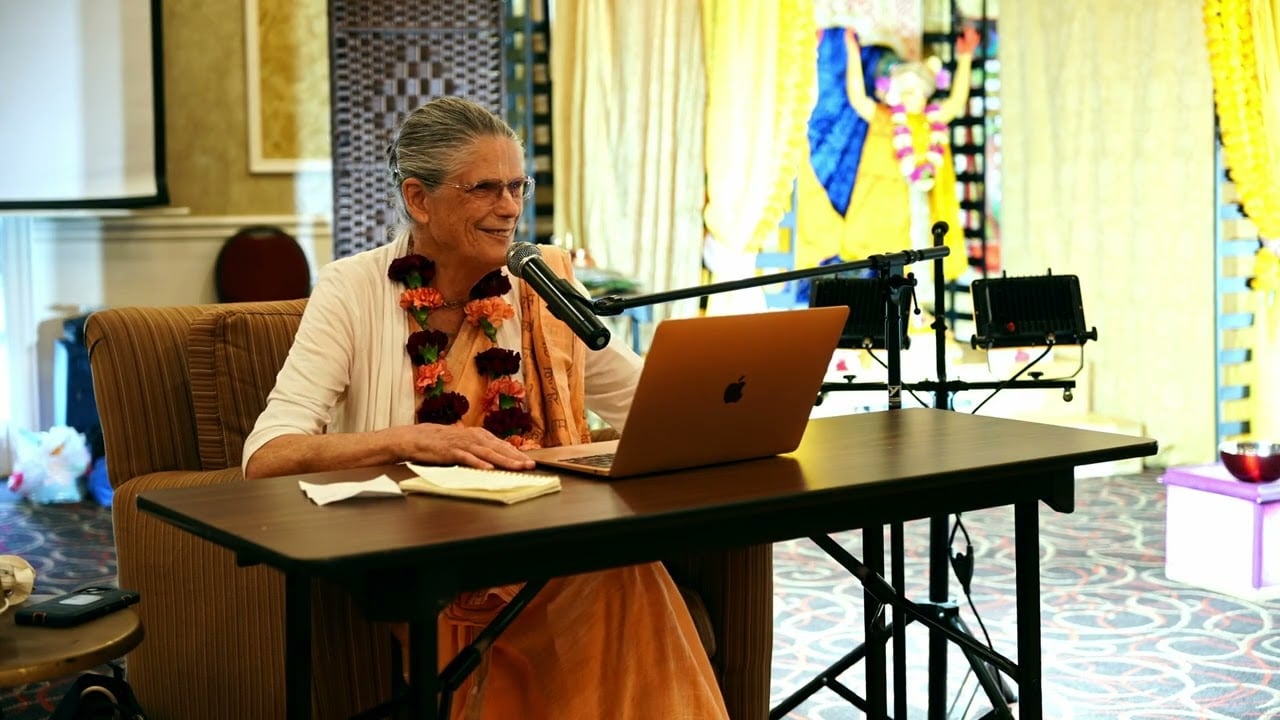
Vaishnava Sanga Festival 2025, scheduled for August 1–4 and presented via the ISKCON Ottawa community, offers a concentrated immersion in bhakti-yoga and the living culture of Gaudiya Vaishnavism under the guidance of HG Malati Prabhu. The gathering is designed to deepen practice, scholarship, and community bonds through sadhu-sanga, the scripturally commended association with advanced practitioners.
Within the Vaishnava tradition, sanga is not a social luxury but a theological necessity: sadhu-sanga catalyzes sraddha (faith), stabilizes sadhana (daily practice), and fosters prema (divine love). Gaudiya Vaishnava sources repeatedly underscore that hearing (sravanam) and chanting (kirtanam) in the company of devotees accelerate spiritual insight and ethical transformation.
HG Malati Prabhu is recognized across ISKCON as a senior leader grounded in decades of service, cross-cultural outreach, and compassionate mentorship. Her facilitation at the festival situates classical teachings within contemporary realities, making the time-honored guidance of parampara (disciplic succession) accessible and actionable for householders, students, and professionals alike.
A four-day sanga of this kind typically interweaves collective kirtan, japa meditation, scriptural study, and seva (service) into a cohesive learning arc. Participants commonly experience an iterative rhythm: dawn sadhana to anchor attention, mid-day study to refine understanding, and evening nama-sankirtana to integrate devotion and community energy.
Nama-sankirtana, the congregational chanting of the Hare Krishna maha-mantra, functions both as a devotional liturgy and an embodied contemplative practice. Call-and-response formats, attentive listening, and modulation of tempo create shared affect and cognitive synchrony, a dynamic widely observed to enhance group cohesion and emotional resilience.
Japathe personal, mindful chanting on beadsinvites precision of articulation, one-pointed attention to sound, and steady breath. Practitioners often employ techniques such as soft yet clear enunciation, stable posture, and gentle breath regulation to reduce cognitive drift, cultivating steadiness (nistha) over the course of multiple rounds.
Scriptural study in Gaudiya Vaishnavism is both textual and transformational. Readings from the Bhagavad-gita and Srimad-Bhagavatam are conventionally presented through the lens of guru-sadhu-sastra (teacher, realized practitioners, and canonical texts), ensuring interpretive fidelity while inviting reasoned dialogue on dharma, devotion, and practical ethics.
The nine primary processes of bhaktisravanam, kirtanam, smaranam, pada-sevanam, arcanam, vandanam, dasyam, sakhyam, and atma-nivedanamframe a holistic curriculum for the festival. Each modality contributes a distinct discipline of heart and habit, enabling participants to adopt sustainable routines when they return to daily life.
Vaishnava etiquette (vaisnava sadacara) receives careful emphasis: humility, respect for all beings, and the cultivation of dasanudas (servant-of-the-servant) identity. Guidance on avoiding offenses (aparadha) in chanting, deity worship, and interpersonal conduct provides the moral architecture that protects and nourishes devotion.
Seva-centered learning integrates devotion with competence. Typical festival environments reinforce practical servicekitchen support, hospitality, music, and logisticsdemonstrating how everyday skills become instruments of sadhana when offered with intentionality and gratitude.
HG Malati Prabhu’s leadership visibly affirms the breadth of participation within ISKCON, including the vital contributions of women and families. The tone is simultaneously rigorous and welcoming, reflecting the Gaudiya ethos that genuine spiritual growth is inseparable from community care and mutual upliftment.
Prasadamthe sanctified vegetarian offeringis not only central to the devotional economy but also a pedagogy of compassion and sattva (clarity). Thoughtful menu design, mindful distribution, and gratitude practices turn shared meals into living seminars on ahimsa (non-harm) and interdependence.
Unity in spiritual diversity is a guiding principle for the festival’s ethos. While rooted in Sanatana Dharma and Gaudiya Vaishnavism, the gathering recognizes resonances across dharmic traditions: Sikh naam-simran and kirtan’s shared devotion to the Divine Name, Buddhist cultivation of karuna (compassion) and mindful presence, and Jain emphasis on ahimsa and disciplined ethics.
Such shared valuesseva, compassion, truthfulness, and inner disciplineenable dialogue without dilution. The festival thus models unity without uniformity, affirming that distinct practices across Hinduism, Buddhism, Jainism, and Sikhism can complement and enrich one another within a broader dharmic family.
From a learning-design perspective, a multi-day sanga supports layered outcomes: immediate affective uplift through chanting, mid-range behavioral shifts via daily practice templates, and long-term worldview refinement through systematic study and good association. These tiers correspond to the Gaudiya progression from sraddha to prema, offering a coherent developmental map.
Contemporary research on contemplative sound suggests that rhythmic chanting can support autonomic balance, potentially engaging the vagus nerve and improving markers of stress resilience. While the festival’s core claims are spiritual, attendees frequently report clarity, calm, and social connectedness that align with these emerging findings.
Sustainable and compassionate operations frequently accompany Vaishnava festivals, including zero-waste goals, plant-based menus, and responsible sourcing. These practices align ethics with ecology, translating scriptural reverence for life into measurable environmental stewardship.
For households and students, the festival often provides primers on habit formation: setting a fixed japa time, introducing concise daily reading, and maintaining kirtan as a weekly family anchor. These micro-disciplines make the macro-vision of bhakti-yoga realistic and durable.
Seminars commonly address applied topicsrelationships as service, vocation and dharma, digital distraction and mindful practicebridging classical siddhanta (settled conclusions) with contemporary life. The result is a practical spirituality that rewards inquiry and invites responsible freedom.
A defining contribution of HG Malati Prabhu is the ability to distill lived lessons from decades of service within the Hare Krishna Movement while retaining the sweetness of bhakti-rasa. The teaching style is marked by scriptural fidelity, cultural sensitivity, and a persistent call to compassionate action.
Taken together, the Vaishnava Sanga Festival 2025 offers a rare opportunity to experience bhakti in its full ecology: sound, study, service, community, and conscience. Anchored by HG Malati Prabhu and supported by the ISKCON Ottawa milieu, the four days promise depth, clarity, and a renewed commitment to unity across dharmic paths.
For seekers, families, and long-standing practitioners alike, the festival functions as both retreat and launchpadclarifying purpose, refining practice, and strengthening bonds that continue well beyond August 1–4.
Inspired by this post on Dandavats.
