
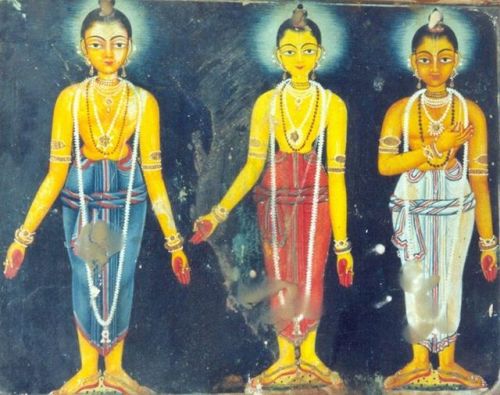
Gauranga Meditation, situated within the Bhakti Tradition of Gaudiya Vaishnavism, integrates contemplative visualization with mantra-based remembrance (nama-japa) and congregational chanting (sankirtana) to refine attention, soften the heart, and stabilize ethical conduct. In the broader field of Hindu spiritualityand in dialogue with dharmic counterparts in Buddhism, Jainism, and Sikhismthis method cultivates a devotional phenomenology in which perception, emotion, and meaning cohere as a disciplined spiritual practice rather than an unstructured reverie.
The meditation is framed by a recurring, yearning inquiry that organizes both method and aspiration: “When will Lord Gaurahari appear in my meditation and lovingly place His lotus feet within my darkened heart?” This inquiry is not a demand for visionary spectacle but a contemplative catalystan affective question that trains the mind toward humility (dainya), service (seva), and sustained remembrance (smarana), the recognized indicators of maturity in devotional practice.
Poetic imagery functions as a precise contemplative map. Descriptions such as “His golden effulgence eclipses the splendor of one million lightning flashes” and “His face is so stunningly beautiful that the full autumn moon wants to hide in embarrassment” encode an aesthetic grammar in which luminosity signifies boundless compassion (karuna), moral clarity, and the intuitive recognition of the sacred. These metaphors are read not as empirical claims but as theological semiotics guiding visualization, breath, and feeling toward integrative absorption (samadhi) aligned to devotion.
The comparison “His eyes are like two bumblebees, irresistibly drawn to the glistening lotus flower of Lord Jagannatha’s smiling face” communicates a contemplative reciprocity: Sri Gaurahari’s attention is fixed on Jagannatha (Krishna), and the practitioner’s attention follows that gaze. In classical Indian poetics (alankara), the bumblebee-lotus motif encodes sweetness and attraction (madhurya-rasa). Practically, the image trains visual attention to a stable, tender focal point and anchors affect in delight rather than strain.
“As He ecstatically chants the Holy Name of Lord Krishna, He is tossed about by high waves of ecstasy in the ocean of love. Streams of tears flow from His eyes.” In Gaudiya Vaishnava theology, such signs correspond to ashta-sattvika-vikaras (involuntary devotional transformations) arising from bhava (devotional emotion) and prema (consummate love). Practitioners are advised to cultivate the conditions for sincere chantingsteady posture, regulated breath, ethical restraintwithout imitating external symptoms; when genuine, affect is a by-product of alignment, not its performance.
“When He dances, the restless movements of His feet amaze even Lord Shiva, the supreme dancer. The dust arisen from the earth covers Sri Gauracandra as Bhumi’s beautiful offering of flowers.” Dance here denotes the kinetic overflow of devotion within sankirtana. The reference to Shiva (Nataraja) signals a civilizational synthesis: ecstatic movement, rhythmic breath, and sacred sound cooperate to entrain attention while honoring the whole dharmic family’s shared esteem for embodied spiritual expression.
In a gesture that condenses longing (viraha-bhava) and direct address, He calls repeatedly: “O Krishna, O Mukunda, Murari, O Vanamali – where are You now?” Each epithet focuses contemplation on a precise theological facetMukunda (bestower of liberation), Murari (vanquisher of the demon Mura), Vanamali (the forest-garlanded Lord). Mudra-like uplifted hands intuitively incline breath and spine, reinforcing wakeful attention and heartfelt supplication without coercing emotion.
“The light radiating from His lotus toenails uproots the darkness in the hearts of everyone who remembers Him even slightly… His compassionate words and glance completely drive out all fear of material existence.” Interpreted contemplatively, “darkness” denotes confusion (moha) and reactive fear (bhaya). The imagery suggests that remembrance (smarana) and mantra attenuate cognitive rumination, while compassion-centered visualization increases perceived safety (an internal analogue of the classical abhayafearlessnessgesture), a finding echoed by contemporary contemplative science.
“Lord Gaurahari is more purifying than the celestial Yamuna, sweeter than madhuka nectar, and more cooling than the winds from the Ganga.” River, nectar, and breeze function as comparative metaphors: purification indicates ethical clarity and reduced reactivity; sweetness points to intrinsic motivation (rasa) over mere willpower; cooling names the settling of agitation (tapas as heat transmuted to insight). Comparable metaphors pervade wider dharmic literature, underlining shared sensibilities about inner cleansing and the restoration of equanimity.
“Like a mother who does not distinguish between her various children, He is full of affection for everyone who merely turns to Him.” This is the Gaudiya principle of audaryaboundless magnanimityframing the lowest threshold for entry: a turn of attention (even slight) merits compassion. Theologically, this discourages elitism; practically, it makes the discipline accessible to newcomers and deepens humility among the advanced. Its ethic converges with ahimsa (Jainism, Hinduism), maitri and karuna (Buddhism), and sarbat da bhala (Sikhism’s universal goodwill).
A practical protocol for Gauranga Meditation supports both devotional integrity and psychological stability. Begin with a clear sankalpa (intention) oriented toward the welfare of all beings and the cultivation of humility, truthfulness, and service; ethical framing (yama–niyama) is not ancillary but constitutive of the method. Establish a steady seat (asana), lengthen exhalation, and practice a few rounds of nadi-shodhana (alternate-nostril breathing) to balance autonomic arousal.
Proceed to mantra-japa or soft chanting (kirtan). Many adopt the Hare Krishna maha-mantra or remembrance of Sri Gauranga and Nityananda, allowing articulation, breath, and attention to synchronize. Visualize Sri Gaurahari’s “golden effulgence,” His “eyes like two bumblebees,” and the “lotus flower of Lord Jagannatha’s smiling face,” letting the imagery guide a gentle, affectively warm focus at the heart. If emotion intensifies, retain easeful breath; if it wanes, return to the mantra’s cadence without judgment.
Conclude with a brief inner offering: dedicate any benefit to the good of all beings and, where relevant, translate insight into concrete seva (service) and dana (generosity). As a daily discipline, this closes the loop between contemplation and conduct, the classical mark that meditation is ripening into character.
Convergences across dharmic traditions strengthen both rigor and unity in spiritual diversity. Sikh practice emphasizes kirtan and Naam Simran (remembrance of the Divine Name), Buddhism develops metta-bhavana (loving-kindness cultivation) and chant-based recollection, while Jain samayika stabilizes equanimity alongside sacred formulas such as “Om Namo Arihantanam.” Without collapsing doctrines, these resonances validate sound, breath, and ethically framed attention as a shared civilizational grammar of transformation.
Empirical research on mantra and chanting practices suggests reductions in stress reactivity, improvements in heart-rate variability (an index of vagal tone), and enhanced attentional stabilityphysiological correlates of the text’s claims about fearlessness and clarity. Within such a framework, the images of “cooling breezes,” “uplifted darkness,” and “nectar-like sweetness” become experientially testable metaphors for reduced sympathetic overdrive, improved mood regulation, and prosocial motivation.
Progress in this path is assessed less by rarefied visions and more by ethical and affective outcomes: decreases in anger (krodha), greed (lobha), and envy (matsarya); increases in compassion (karuna), friendliness (maitri), and service (seva). The perennial question“When will that Lord appear in one’s meditation and place His lotus feet within the heart?”is answered not by spectacle but by the steady emergence of humility, fearlessness, and loving conduct toward all beings.
The poetic source that inspired this analysis places the longing voice into memorable lines“O Krishna, O Mukunda, Murari, O Vanamali – where are You now?”and affirms that even “slight remembrance” draws compassion. Read within an academic and contemplative lens, these lines invite practitioners across Hinduism, Buddhism, Jainism, and Sikhism to meet on common ground: sound, breath, devotion, and ethics harmonized for personal and collective well-being.
(Inspired by a meditation attributed to Sacinandana Swami; devotional phrases retained to preserve the original contemplative cadence.)
Inspired by this post on Dandavats.
