
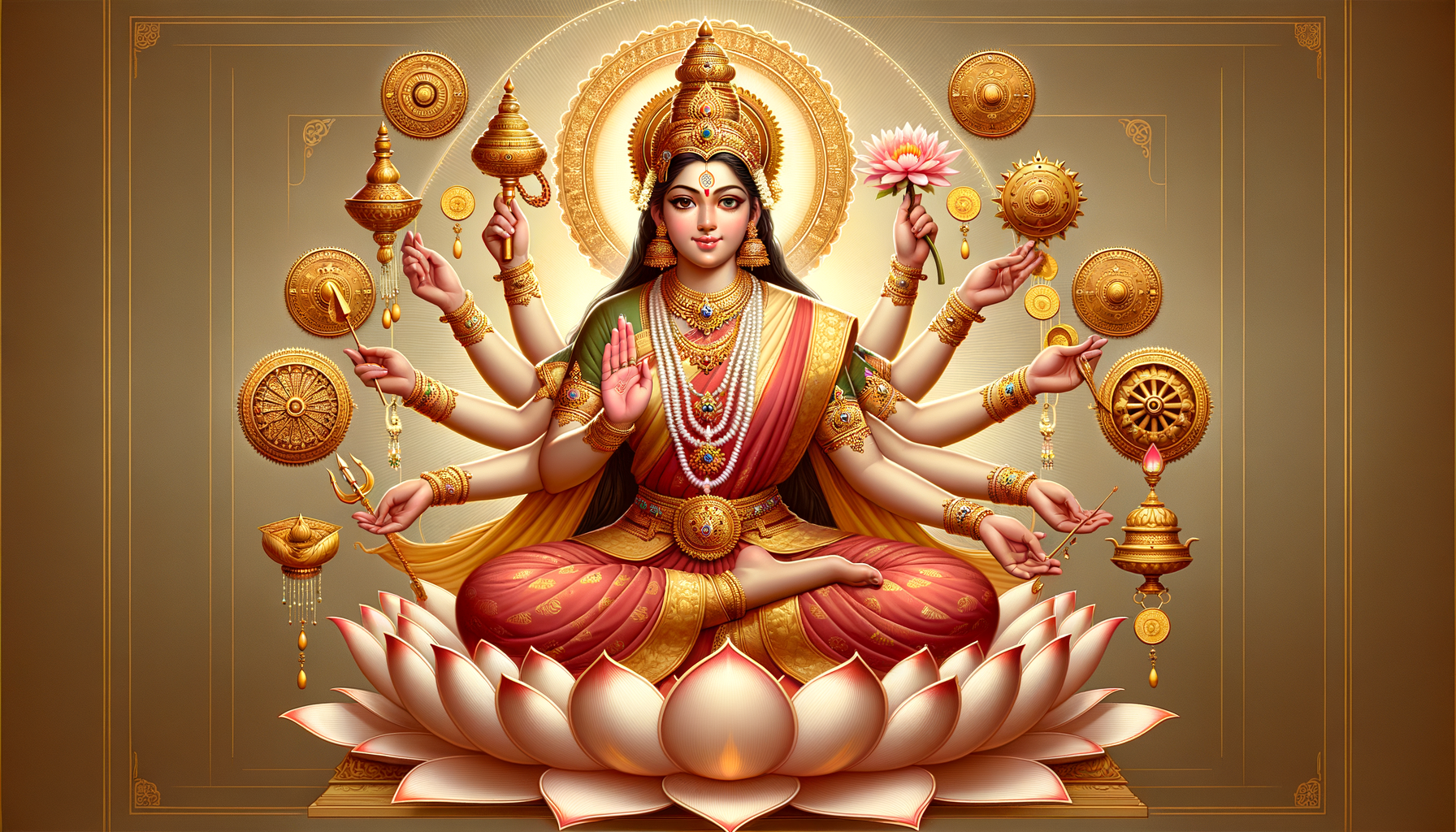
Dhanalakshmi, the benevolent aspect of Goddess Lakshmi associated with wealth and well-being, is revered for uniting material abundance with ethical living. Across temples, scriptures, and lived tradition, her imagery invites contemplation on how prosperity matures when anchored in dharma, compassion, and responsibility.
Two principal iconographic forms of Dhanalakshmi are widely observed: a four-armed form and a six-armed form. Both convey the same core insighttrue wealth encompasses resources, virtue, and fearlessnessand each deploys distinct symbols to illuminate that ideal.
In the four-armed depiction, Dhanalakshmi holds the discus (chakra), the lotus (padma), a pot of gold coins, and displays the abhaya mudra (gesture of reassurance). The chakra signifies righteous action and the sovereignty of time; the padma represents purity and the unfolding of inner potential; the pot of coins symbolizes material resources obtained and used ethically; the abhaya mudra grants assurance, signaling protection and the courage to act for the good.
In the six-armed form, Dhanalakshmi holds a conch (shankha), discus (chakra), bow and arrow, pot (kalasha), lotus, and the abhaya mudra. The shankha evokes auspicious sound and awakening to duty; the chakra reiterates disciplined power aligned to dharma; the bow and arrow indicate focus, skill, and purposeful effort; the kalasha conveys fullness, fertility, and the sustainable flow of resources; the lotus embodies spiritual purity amidst worldly life; and the abhaya mudra centers the devotee in fearlessness and trust.
Together, these symbols articulate a coherent philosophy of prosperity. Wealth is not merely accumulation; it is the harmonious integration of integrity (chakra), purity of intention (padma), competence and resolve (bow and arrow), replenishing abundance (kalasha), sacred auspiciousness (shankha), and steady courage (abhaya mudra). Such integration transforms possessions into instruments of service.
Devotees often describe a palpable sense of reassurance in the presence of Dhanalakshmi’s abhaya mudra and a renewed commitment to ethical earning, mindful spending, and generous giving. Common practicessuch as recitation of mantras, quiet visualization, acts of dāna (charity), and seva (service)are understood as practical extensions of her symbolism, aligning daily life with inner abundance.
These meanings resonate across dharmic traditions. The lotus and the gesture of fearlessness appear in Buddhist and Jain art as emblems of purity and compassionate courage, while the Sikh emphasis on honest work and selfless service complements Dhanalakshmi’s vision of wealth with responsibility. Such shared motifs underscore a unifying ethic: prosperity blossoms where wisdom, non-harm, and service converge.
Applied to contemporary life, Dhanalakshmi’s symbols encourage disciplined effort, transparent stewardship of resources, and kindness toward others. Whether in households, communities, or institutions, the teachings suggest that stability and growth become enduring when guided by dharma and directed toward collective well-being.
By contemplating the four-armed and six-armed forms together, devotees and learners gain a clear framework: cultivate inner clarity, act with skill, protect what is entrusted, and share generously. In this view, Dhanalakshmi is not only a source of wealth but a living reminder that prosperity is safest and most meaningful when it uplifts all.
Inspired by this post on Hindu Blog.
