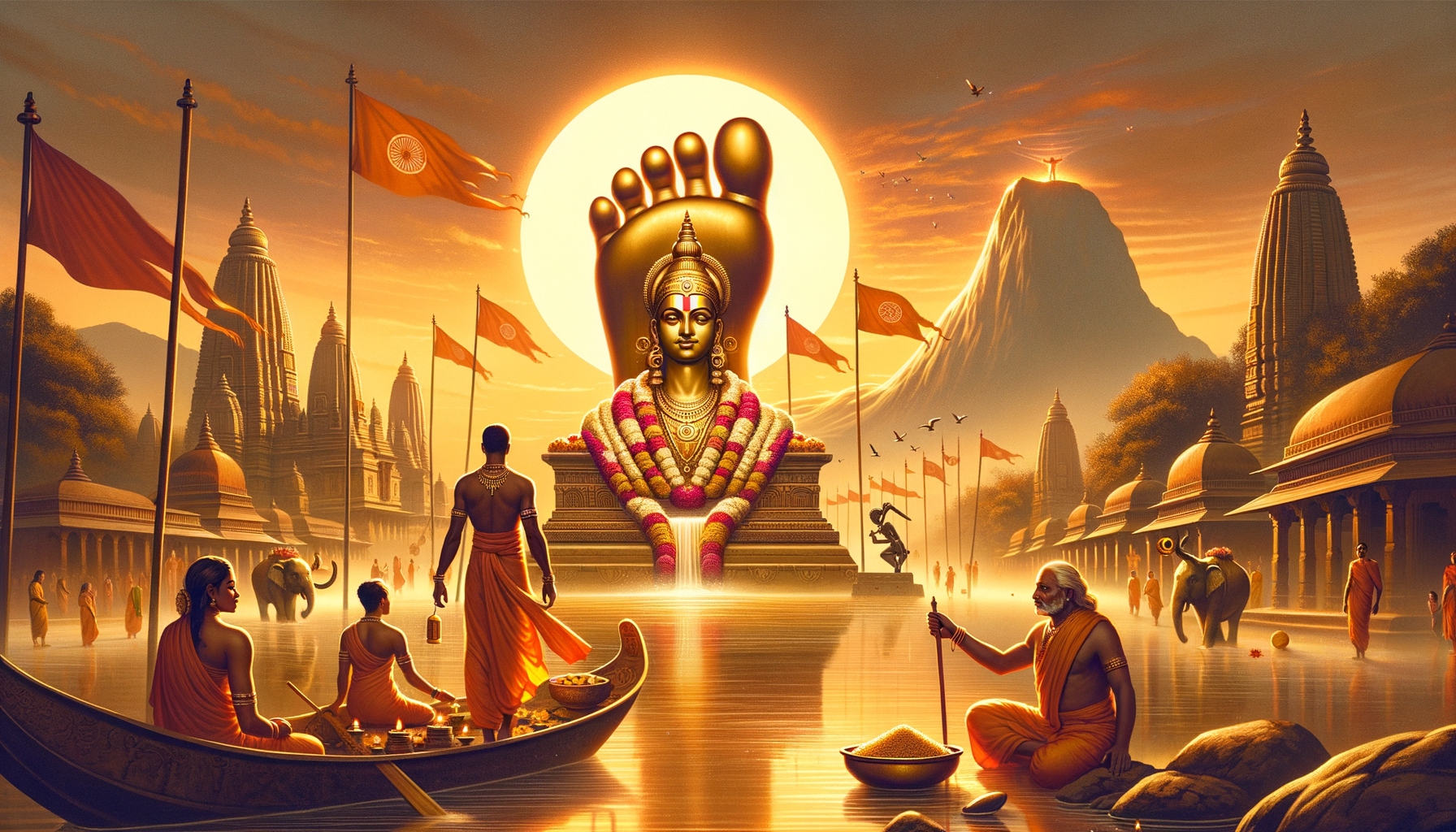
The Gayasura Katha, a revered strand of Hindu mythology, highlights devotion, ethical resolve, and the transformative power of tapas (austerity). In this narrative, Tripurasura, described as the father of Gayasura, is portrayed as a steadfast devotee of Lord Vishnu. After Tripurasura’s passing, Gayasura ascends the throne and, following the same path of bhakti, undertakes intense penance to propitiate Vishnu. As a result of his severe tapas, he attains an extraordinary boonimmortalityframed as freedom from death at the hands of anyone, at any time.
Classical tellings emphasize how Gayasura’s unwavering piety radiates sanctity so profound that it threatens to dissolve the very distinctions between merit and liberation. Concerned that mere sight of him might grant instant moksha, the devas seek Vishnu’s guidance. In many regional and Purāṇic retellings, Vishnu tests Gayasura’s humility by asking him to lend his body as the ground for a grand yajña. Gayasura consents without hesitation, embodying the dharmic ideal that true power is realized through surrender to righteousness rather than domination.
These accounts link the episode to the sacred geography of Gaya, where Vishnu’s footprint (Vishnupad) is venerated. The narrative explains why rites of remembranceparticularly śrāddha and pind-dānperformed at Gaya are considered supremely efficacious for ancestral welfare. While Gayasura cannot be slain due to the boon, he is anchored by Vishnu’s presence, and in return, a counter-boon sanctifies the site: those who perform ancestral rituals at Gaya aid their forebears on the path toward liberation. This is why Gaya remains a pivotal tirtha-yātra destination in the Hindu pilgrimage tradition.
Interpreted academically, the Story of Gayasura illuminates an enduring theme across dharmic traditions: liberation arises not from force but from ethical self-offering, discipline, and compassion. Similar motifsself-restraint, remembrance, gratitude, and inner transformationresonate within Hinduism, Buddhism, Jainism, and Sikhism, nurturing a shared ethos of non-harm, service, and spiritual humility. Read through this lens, the katha becomes a bridge across communities, reinforcing unity through common moral aspirations rather than sectarian difference.
For contemporary seekers and families, the narrative offers relatable guidance. Rituals at Gaya embody gratitude toward ancestors, strengthen intergenerational bonds, and focus the mind on duty (dharma) and compassion. Pilgrims often describe the Vishnupad Temple’s atmosphere as a reminder that devotionlike Gayasura’sturns personal strength into collective wellbeing. Such practices complement inner disciplines (tapas, japa, and meditation) that are valued throughout India’s spiritual landscape.
As with many Puranic narratives, versions of the Gayasura Katha vary by region and source; nevertheless, the core message remains stable: devotion to Lord Vishnu, the ethical use of power, and the sanctification of Gaya as a site where rituals aid departed ancestors. Integrated keywords such as Gayasura Katha, Story of Gayasura, Tripurasura, Lord Vishnu, Vishnupad Temple, Gaya, moksha rites, and pind-dān reflect the narrative’s cultural and spiritual significance while assisting readers in discovering these themes within the broader tapestry of Indian cultural heritage.
Inspired by this post on Hindu Pad.