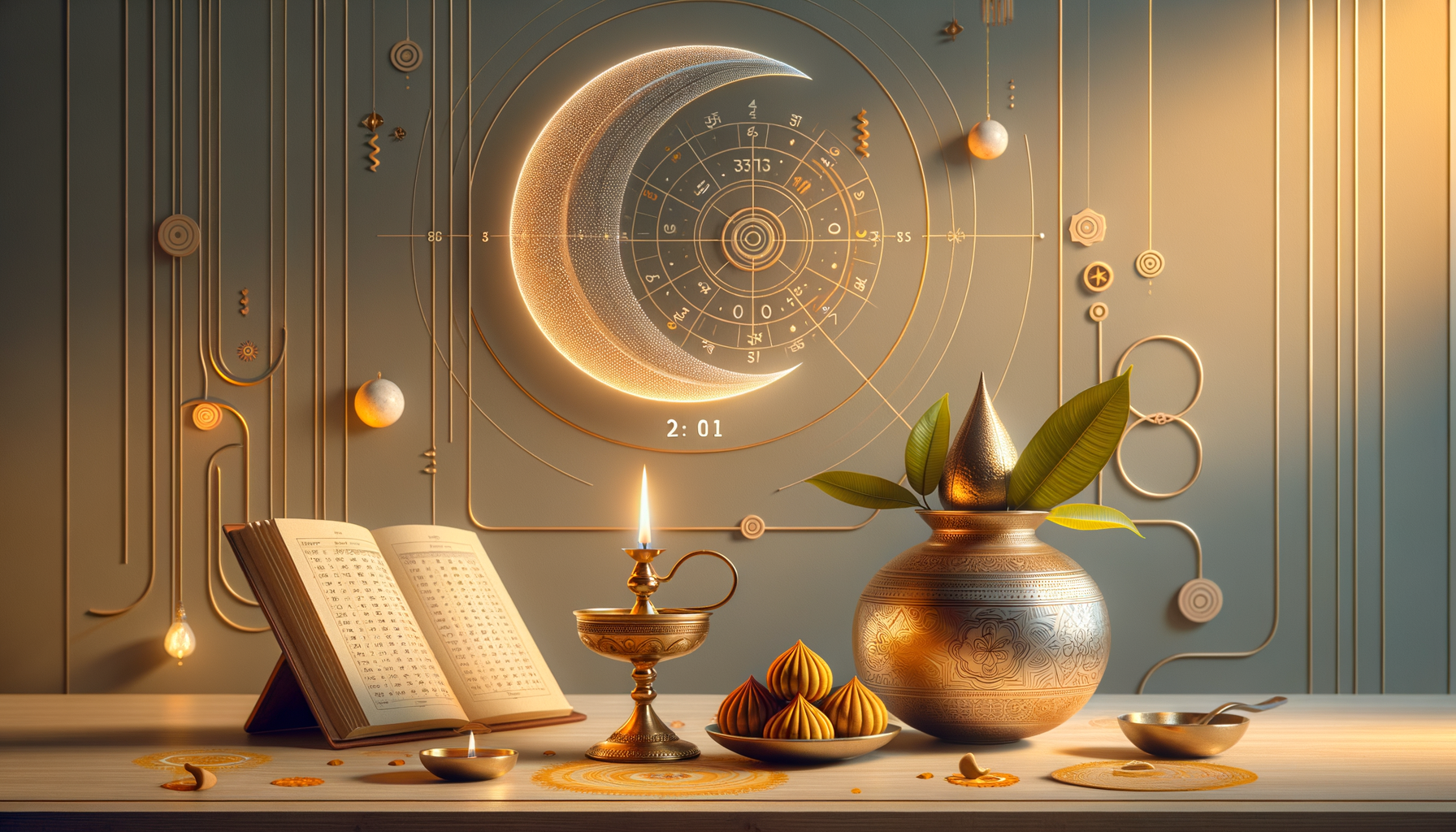
On Thursday, January 22, 2026, the tithi transitions in the Shukla Paksha (waxing phase of the moon). Shukla Paksha Tritiya prevails until 2:01 AM local time, after which Shukla Paksha Chaturthi continues for the remainder of the day in most regions, according to the Hindu calendar (Panchang).
In the traditional reckoning of time, Tritiya and Chaturthi mark successive lunar days that shape everyday observances across households. Chaturthi in the Shukla Pakshaoften honored as a monthly Vinayaka Chaturthi in many regionsinvites simple, contemplative worship and steady routines that promote clarity and resolve. While practices vary, many communities associate Chaturthi with calm beginnings and disciplined intention-setting in alignment with the waxing moon.
Because Panchang computations may differ by locality, the exact transition time can show minor regional variation. For practical observance, the post-2:01 AM span on January 22 can be treated as Shukla Paksha Chaturthi in most areas. Those planning rituals or public events are advised to confirm details such as sunrise-based calculations, local time corrections, and any regional conventions in a trusted regional Panchang.
These lunar markers hold shared relevance across dharmic traditionsHinduism, Buddhism, Jainism, and Sikhismthrough the broader Indic heritage of lunar timekeeping. By honoring such rhythms, communities cultivate a sense of unity, ethical mindfulness, and collective well-being grounded in time-tested cultural wisdom.
Individuals seeking auspicious starts (Shubh Muhurat) on Chaturthi commonly choose calm, unhurried periods after the tithi begins, integrating quiet prayer, study, or service. As Nakshatra and Rashi specifics are Panchang-dependent and vary by region and calculation method, consulting a local almanac or temple notice board remains the most reliable approach for precise coordination of activities.
In summary: Thursday, January 22, 2026 features Shukla Paksha Tritiya until 2:01 AM, followed by Shukla Paksha Chaturthi for the rest of the day. Observances typically emphasize steadiness, focus, and gentle devotion consistent with the lunar ascent. For detailed Nakshatra, Rashi, and localized Shubh Muhurat windows, a region-specific Panchang should be used to align plans with community practice and the day’s exact celestial configuration.
Inspired by this post on Hindu Blog.