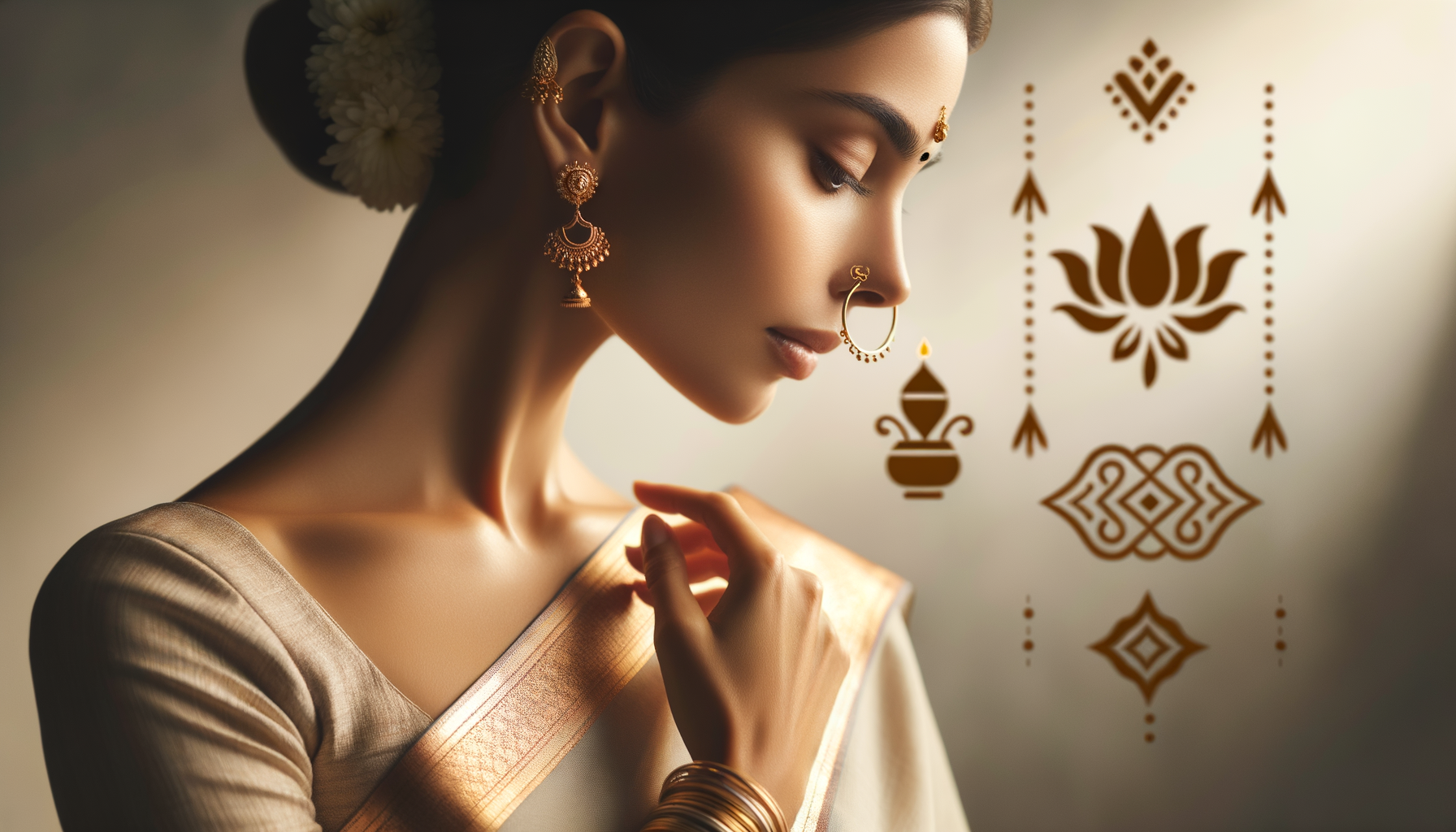
Wearing a nose ring (nath, mukkuthi, bulak) is an ancient practice in India and remains a living tradition within Hinduism. Across regions, it is regarded as auspicious, a symbol of dignity and continuity, and a gentle invocation of Shakti. Many households uphold the belief that a sacred nose ring strengthens a woman’s well-being and, by extension, supports harmony and resilience in marital life. While not mandated by scripture, its cultural resonance is profound, sustained by ritual memory, family customs, and regional aesthetics.
Historical and regional variations reveal a rich visual language. Maharashtrian nath designs, Punjabi and Rajasthani styles (including septum ornaments in distinct communities), and South Indian studs called mukkuthi reflect localized craftsmanship and social identity. Placement varies—left or right nostril, and occasionally the septum—often aligned with community norms. Nose rings are worn during weddings, festivals, and life-cycle events, linking personal adornment with shared celebration.
In the context of vivaha (marriage), the nose ring complements other Hindu customs such as the mangalsutra, bangles, and sindoor, collectively signifying suhaag, commitment, and prosperity. Families may present it as a cherished gift during ceremonies, and its presence at vrata and festival observances (for example, during Navaratri) underscores its role in reaffirming auspiciousness and familial bonds. These practices function as samskaras of remembrance—ritual ways of honoring ancestry, place, and belonging.
Classical Ayurvedic discourse and associated folk knowledge often link the left nostril with reproductive health, giving rise to the traditional belief that piercing on that side supports menstrual ease and childbirth. Such associations are presented in cultural practice as time-honored wisdom rather than clinical prescription, illustrating how symbolism, well-being, and daily life have long been interwoven in Hindu traditions.
At an ethical and devotional level, the nath is frequently interpreted as a homage to the sacred feminine. It can be seen as a quiet vow to uphold grace, self-mastery, and care for community—values that resonate across Hindu spirituality. Many remember elders blessing the ornament as a conduit of auspiciousness, while contemporary wearers may choose minimalist forms to balance tradition with professional life. Both choices reflect svadharma—responsible action aligned with one’s role and context.
A spirit of unity emerges when viewing the nose ring across South Asia’s dharmic tapestry. While doctrinal teachings vary, women in Buddhist, Jain, and Sikh communities in the region also engage with nose ornaments as part of cultural heritage, especially during weddings and festivals. In this sense, the nath operates less as a point of difference and more as a shared cultural signature—affirming dignity, continuity, and community ties that transcend sectarian boundaries.
Contemporary practice highlights mindful choices: selecting ethically crafted pieces that support artisans, honoring regional forms to avoid superficial appropriation, and observing temple and workplace etiquette. Many families pass heirloom nose rings across generations, keeping stories alive alongside the ornament itself. Such care reflects a broader dharmic sensibility—reverence for tradition expressed with sensitivity to time, place, and person.
Respectful adoption rests on understanding and intention. Consulting elders about regional styles, learning the symbolism behind designs, and aligning decisions with personal conviction ensure that adornment remains meaningful. Equally important is honoring individual agency: some may not wear a nose ring by preference or profession, and that choice sits firmly within the dharmic emphasis on truthfulness, compassion, and mutual respect.
In sum, the cultural and spiritual significance of the nose ring in Hinduism lies in its layered symbolism—auspiciousness, marital commitment, and a living bond with heritage. It is an emblem of cultural continuity that invites unity across dharmic traditions, offering a graceful way to celebrate identity while nurturing harmony within families and communities.
Inspired by this post on Hindu Pad.