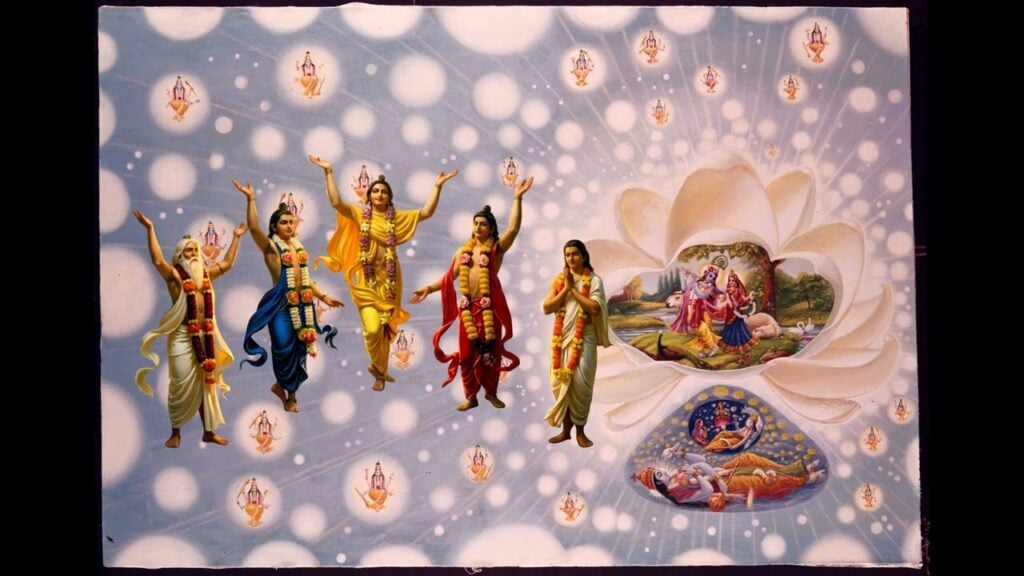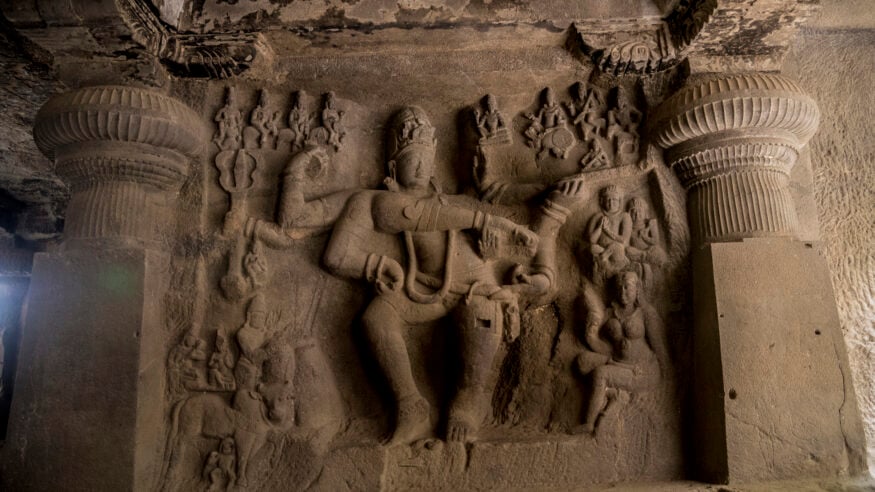
Choosing a direction at a crossroads illustrates a central principle of spiritual life: certainty alone does not move a person forward. In practice, progress requires both clarity of understanding and willing engagement of the heart. Within the bhakti tradition, this integration of head and heart becomes decisive, transforming hesitation into purposeful movement toward Krishna.
Spiritual growth may be described as a journey of the heart from attachment to worldly objects toward deepening attachment to Krishna. Such a journey advances on the strength of philosophical conviction that steadies choices when material allurements compete for attention. The Bhagavad-gita functions as a reliable map in this process, guiding seekers toward durable happiness by revealing foundational truths about reality and the self.
Bhagavad-gita 10.08 presents Krishna as the source of everything, and 10.41 explains that the charm found in any object reflects his splendor. This perspective reframes worldly attraction: by choosing devotion to Krishna, one does not lose pleasure but connects with its source, accessing a fuller, more stable joy. The recognition of Krishna’s all-attractiveness thus transforms choice into confident commitment.
Nevertheless, conviction by itself does not complete the journey. Bhakti-yoga channels emotion toward Krishna, aligning the heart with insight. As practitioners invest whatever devotion they can in remembrance, kirtan, japa, and seva, many report a felt reciprocationexperienced as satisfaction and purification. This experiential loop encourages deeper investment, reinforcing attraction and gradually loosening the grip of fleeting enticements.
This synthesis of cognition and compassion resonates across Dharmic traditions. Sikh practice of Naam simran, Buddhist cultivation of metta, and the Jain emphasis on maitri-bhava each mirror an ethic in which disciplined understanding elevates loving intention, and loving intention animates disciplined understanding. Honoring such shared sensibilities fosters unity in spiritual diversity while allowing each pathbhakti-yoga includedto flourish on its own terms.
In practical terms, steady study of the Bhagavad-gita (sravana), reflective contemplation (manana), and heart-centered practices such as kirtan, japa, and daily seva help unite discernment and devotion. Over time, this integration makes life’s “forks” less daunting, decisions clearer, and the inner landscape more peacefulso that the movement toward Krishna becomes both intellectually grounded and emotionally wholehearted.
Inspired by this post on Dandavats.