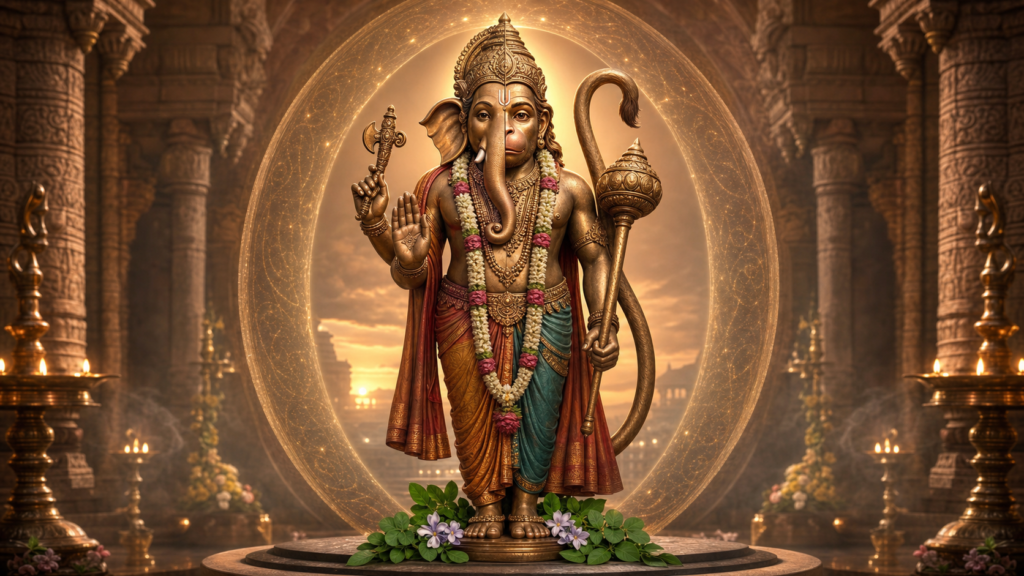
Vatapi Ganapati at Tiruchenkâtankudi, near Nannilam in Tamil Nadu, occupies a singular place in South India’s sacred geography. Identified as a Tevara Shivastalam known as Ganapatishvaram, the site is celebrated in the Saiva canon and continues to draw pilgrims, heritage enthusiasts, and scholars alike for its layered history and devotional continuity.
The shrine’s prominence is anchored in the Tevaram tradition. Tamil Saivite Saints of the 1st millennium CE revered this sacred place in hymns, situating it within the early map of Tamil Saiva worship. The textual memory preserved in these hymns lends both historical depth and theological nuance, underscoring how liturgy and landscape intertwine in Tamil religious culture.
Local tradition maintains that Sirutondarrevered among the Nayanmar and remembered as a distinguished generalbrought the image of Ganapati from Vatapi and installed it here, leading to the epithet “Vatapi Ganapati.” While the details sit at the confluence of history and hagiography, the narrative conveys a wider truth about cultural exchange, the mobility of sacred icons, and the making of living heritage in Tamil Nadu.
At Ganapatishvaram, Shiva is venerated as the presiding deity, while the Ganesha shrinehonored as Vatapi Ganapatiembodies a potent blend of legend and devotion. The name Ganapatishvaram itself gestures to the close theological relationship between Shiva and Ganesha, illuminating a temple ecology where sectarian boundaries give way to integrated worship.
Visitors frequently describe a contemplative stillness within the temple precincts: the cadence of recited hymns, the resonant ring of bells, and the visual presence of age-worn stonework cultivate an atmosphere conducive to reflection. In this setting, devotion translates into an embodied experiencegrounding, clarifying, and quietly transformativewhile offering a meaningful point of connection for families, students of religion, and cultural travelers.
As a custodial node in Tamil Nadu’s cultural heritage, the temple exemplifies the continuity of sacred practice across centuries. Its Tevara identity sustains ritual life, while its storied associations encourage responsible heritage appreciation, documentation, and preservation. Together, these elements invite both pilgrims and researchers to read the site as text: a palimpsest of faith, memory, and place.
The values that radiate from Tiruchenkâtankudireverence, ethical living, and the pursuit of wisdomresonate across dharmic traditions. In highlighting shared ideals such as compassion, discipline, and inner clarity, the temple provides a platform for mutual respect and unity among Hindu, Buddhist, Jain, and Sikh communities, strengthening a culture of interrelated learning and harmony.
Situated near Nannilam, the temple remains accessible yet serene, bridging the everyday life of the region with the enduring pulse of sacred time. For those seeking to understand Tamil Saivism, engage living traditions of worship, or experience the aesthetic and spiritual poise of a Tevara Shivastalam, Vatapi Ganapati at Ganapatishvaram offers a concise, illuminating entry point.
Inspired by this post on Hindu Pad.